Expert Urges Senate to Pass CLARITY Act for National Security Interests

cryptonews.ruPublicado em 2026-08-10Última atualização em 2026-08-10

Resumo

Former U.S. Defense Secretary Mark Esper is urging the Senate to urgently pass the Digital Asset Market Clarity Act (CLARITY Act), framing it as a critical national security issue. Esper, who served under President Trump, argues the bill extends crucial U.S. dollar transaction controls into the digital asset ecosystem. He warns that failure to pass it risks losing transparency in international financial flows, undermining U.S. sanctions effectiveness, and ceding ground to China, which is advancing state-controlled digital payment systems. Esper emphasizes that stablecoins, often backed by U.S. Treasuries and processing billions, are central to this new financial landscape. The CLARITY Act would apply Section 311 of the USA PATRIOT Act to digital assets, helping prevent sanctioned regimes like North Korea and criminal syndicates from exploiting offshore loopholes. Furthermore, he contends the legislation would foster U.S.-led innovation in cryptocurrencies, allowing American companies to set the rules for the next financial era, much like the private sector built the internet. With time running out, Esper calls on the Senate to lead and pass the bill for the President's signature.

While the Digital Asset Market Clarity Act, widely known as the CLARITY Act, awaits a potential Senate vote in September, former Department of Defense officials have emphasized the relevance of this initiative to defense.

Mark Esper, who served as U.S. Secretary of Defense in Donald Trump's first administration, emphasized that the implications of the CLARITY Act extend far beyond the financial services realm and touch upon the U.S. defense complex tied to the dollar.

Esper stressed that the CLARITY Act would establish appropriate provisions extending the controls currently applied to dollar-denominated transactions to the digital asset ecosystem, and that failing to pass it risks losing transparency into international financial flows and the related ability to apply sanctions.

"That's why the CLARITY Act, now pending in the Senate, is not just a financial services bill. It is also a national security bill, and it should be treated as such and passed urgently," he noted in a recently published article.

Stablecoins play a unique role in this new system, as settlements worth billions are already being conducted through them, rivaling the world's largest credit companies, with the majority of their value backed by U.S. Treasury bonds.

In Esper's view, inaction in preserving American dominance in this sphere would allow China, which is already investing in state-controlled digital asset-based payment systems, to set its own rules and ultimately undermine the dollar's role as the de facto standard for savings and settlements.

The CLARITY Act extends the application of Section 311 of the U.S. Patriot Act to the digital asset ecosystem, providing several benefits in combating illicit actors. "This will work to stop North Korea, criminal syndicates, and sanctioned regimes from using offshore loopholes to bypass America's financial perimeter," he said.

No less important, Esper emphasizes that the CLARITY Act will allow cryptocurrency innovation to remain on U.S. soil, enabling American companies to develop protocols for deploying digital assets and achieve dominance in the same way the internet was built: by a U.S.-focused private sector.

"We have a narrow window to set the terms of the next financial age ourselves, not inherit them from our rivals... The Senate must take the lead. It must pass the CLARITY Act and send it to the President for signature," he concluded, despite the diminishing time to pass the CLARITY Act.

end-content
Perguntas relacionadas

QWho is Mark Esper and what is his position regarding the CLARITY Act?

AMark Esper is the former U.S. Secretary of Defense under President Donald Trump. He strongly advocates for the CLARITY Act, arguing it is a national security bill that should be passed urgently.

QWhat is the primary defense-related concern that the CLARITY Act aims to address, according to the article?

AThe primary defense concern is maintaining the transparency of international financial flows and the efficacy of U.S. sanctions. The Act aims to prevent U.S. adversaries like North Korea, criminal syndicates, and sanctioned regimes from using offshore loopholes in the digital asset ecosystem to bypass the U.S. financial perimeter.

QHow does the article connect the CLARITY Act to competition with China?

AThe article states that inaction could allow China, which is investing in state-managed digital asset payment systems, to set its own rules and ultimately undermine the U.S. dollar's role as the de facto global standard for savings and transactions.

QWhat specific U.S. law does the CLARITY Act seek to extend to the digital asset ecosystem?

AThe CLARITY Act seeks to extend Section 311 of the U.S. Patriot Act to the digital asset ecosystem.

QBesides national security, what other benefit does Mark Esper attribute to the CLARITY Act?

AHe argues that the Act will preserve cryptocurrency innovation within the United States, allowing American companies to develop protocols and achieve dominance in the digital asset space, similar to how the private sector built the internet.

Leituras Relacionadas

Stock Price Doubles Within the Year, Plummets 20% After Resumption, Baolai Medical's 'Chip Backdoor Listing' Script Ends

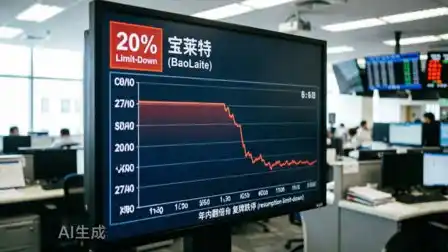
On August 10, 2026, BPL (300246.SZ) resumed trading after a nearly week-long suspension and immediately fell by a 20% limit-down. This plunge was triggered by the termination of a planned controlling stake transfer, dashing earlier market speculation. In January 2026, Zhejiang Quwei Zhihe Partnership entered as a significant shareholder, sparking hopes. Investors speculated that its backer, Weigu Information—a specialized "little giant" company in high-reliability solid-state storage chips—might be seeking a backdoor listing through BPL. This "cross-industry restructuring" expectation fueled a strong rally, with BPL's stock price more than doubling in 2026 prior to the halt. However, the deal was called off on August 7, directly causing the sharp sell-off. Underlying BPL's vulnerability is its fundamentally weak business. The company, a medical device firm, is mired in losses, having reported three consecutive years of net losses totaling over 200 million yuan. Its core hemodialysis business is squeezed by government procurement price cuts, while growth in its patient monitor segment has stalled. Furthermore, BPL faces imminent debt pressure with convertible bonds worth approximately 218 million yuan due in September 2026, and its current stock price is far below the conversion price. The failed control transfer may represent a delayed release of negative news, but BPL's core challenges remain: reversing operational losses and addressing its urgent liquidity crisis.

marsbitHá 4m

Stock Price Doubles Within the Year, Plummets 20% After Resumption, Baolai Medical's 'Chip Backdoor Listing' Script Ends

marsbitHá 4m

Moore Threads, Having Just Raised 8 Billion, Is Already Planning a Hong Kong IPO

On August 9th, Moore Threads announced plans for a Hong Kong IPO alongside a strong first-half 2026 earnings report. Listed on the Shanghai STAR Market in December 2025 as the "first domestic GPU stock," the company raised 8 billion yuan. Its stock price initially surged but has since fallen 40% from its peak. This decline followed market concerns over its use of substantial idle raised funds for low-risk financial products instead of promised projects. The company's H1 2026 revenue reached 1.74 billion yuan, a 147.4% year-over-year increase, already surpassing its full-year 2025 revenue. This growth is attributed to strong demand for AI and full-feature GPUs, particularly its Kuae AI computing clusters. Despite the revenue surge, Moore Threads remains unprofitable on a non-GAAP basis, with a net loss of 115 million yuan after adjustments. R&D and sales expenses grew significantly. The proposed Hong Kong listing aims to support its global strategy, attract international talent, and improve corporate governance, following the path of other Chinese tech firms pursuing dual listings. However, its港股 IPO valuation may face challenges as international investors could benchmark it against peers like Biren Technology, potentially demanding a discount. In summary, while Moore Threads is expanding rapidly and strategically seeking a港股 listing for global growth, it continues to face profitability challenges amid high costs and market skepticism about its capital allocation and valuation.

marsbitHá 26m

Moore Threads, Having Just Raised 8 Billion, Is Already Planning a Hong Kong IPO

marsbitHá 26m

Hassabis Predicts: AI's 'Move 37' in Mathematics is Only a Matter of Time

Demis Hassabis, the co-founder of DeepMind, predicts that AI achieving a "Move 37" level breakthrough in mathematics—solving a major unsolved problem like a Millennium Prize problem—is only a matter of time. He draws a parallel to the pivotal "Move 37" in the 2016 AlphaGo vs. Lee Sedol match, where AI's unconventional play challenged human understanding. Conversely, Lee Sedol's "Move 78" victory highlighted human resilience and the potential for human-AI collaboration. The article details AI's rapid progress in mathematics. Starting from basic arithmetic errors in 2023, AI systems like AlphaProof and Gemini Deep Think reached gold-medal levels in the International Mathematical Olympiad by 2025. The shift from problem-solving to genuine research began in 2025, with AI (e.g., GPT-5, Claude Fable 5) contributing key ideas to solve or refute long-standing conjectures like the Erdős problem 848 and the Jacobian conjecture. In 2026, AI achieved breakthroughs such as OpenAI's solution to the plane unit-distance problem and DeepMind's Aletheia agent autonomously tackling multiple open problems. Hassabis envisions a "centaur" era of science, where human intuition guides AI in complex, less-verifiable fields like biology and drug discovery. While AI can enhance human creativity and efficiency, as seen in post-AlphaGo围棋, there is a risk of over-reliance diminishing human judgment. The core challenge is for humanity to find its own "Move 78"—leveraging AI while maintaining critical insight and direction.

marsbitHá 29m

Hassabis Predicts: AI's 'Move 37' in Mathematics is Only a Matter of Time

marsbitHá 29m

Trading

Spot
活动图片