Making AI Products Is No Longer the Hard Part; Being Seen Is: Developers, Web3, and Chinese AI Opportunities at mu Shanghai

marsbitPublicado em 2026-05-19Última atualização em 2026-05-19

Resumo

The article discusses the shifting challenges of AI entrepreneurship, based on insights from the mu Shanghai AI WEEK event in May 2026. As AI tools drastically lower the barrier to creating product prototypes, the core difficulty for startups has moved from "how to build" to "who to build for"—finding real users, sustainable business models, and community engagement. The event itself was structured as an extended, immersive developer community space rather than a traditional conference, attracting a global mix of participants (40% AI, 20-30% Web3). This format emphasized deep networking and collaborative creation over one-way presentations. A key observation is that with powerful models and coding assistants becoming ubiquitous, execution is less of a moat. The new scarce resource is judgment—identifying valuable, defensible scenarios where an application won't be quickly rendered obsolete by the next model update. This pushes competition downstream to distribution, user acquisition, and commercialization. Notably, many Web3 practitioners are migrating into AI, bringing with them expertise in community building, global collaboration, and grassroots marketing—skills highly relevant as AI apps fight for visibility. Meanwhile, opportunities in AI hardware, robotics, and embodied intelligence are seen as more durable, leveraging China's robust manufacturing and supply chain ecosystem as a key advantage. The article notes that major Chinese model companies (like MiniMax) are n...

Author: Frank, PANews

At most technology conferences, the most common question is "who released what." But at the mu Shanghai AI WEEK in May 2026, the frequent question PANews heard was more practical: As AI makes it increasingly easy to build product prototypes, what has truly become the hardest part of entrepreneurship?

What made this event special was that it didn't feel like a standard conference, but more like a temporarily constructed developer space. There were few booths, few corporate pitches, and no fixed topics. A large number of overseas developers flew to Shanghai from Argentina, Silicon Valley, Japan, or Southeast Asia, just to connect with Chinese developers, model companies, investors, and the local ecosystem over the course of a month.

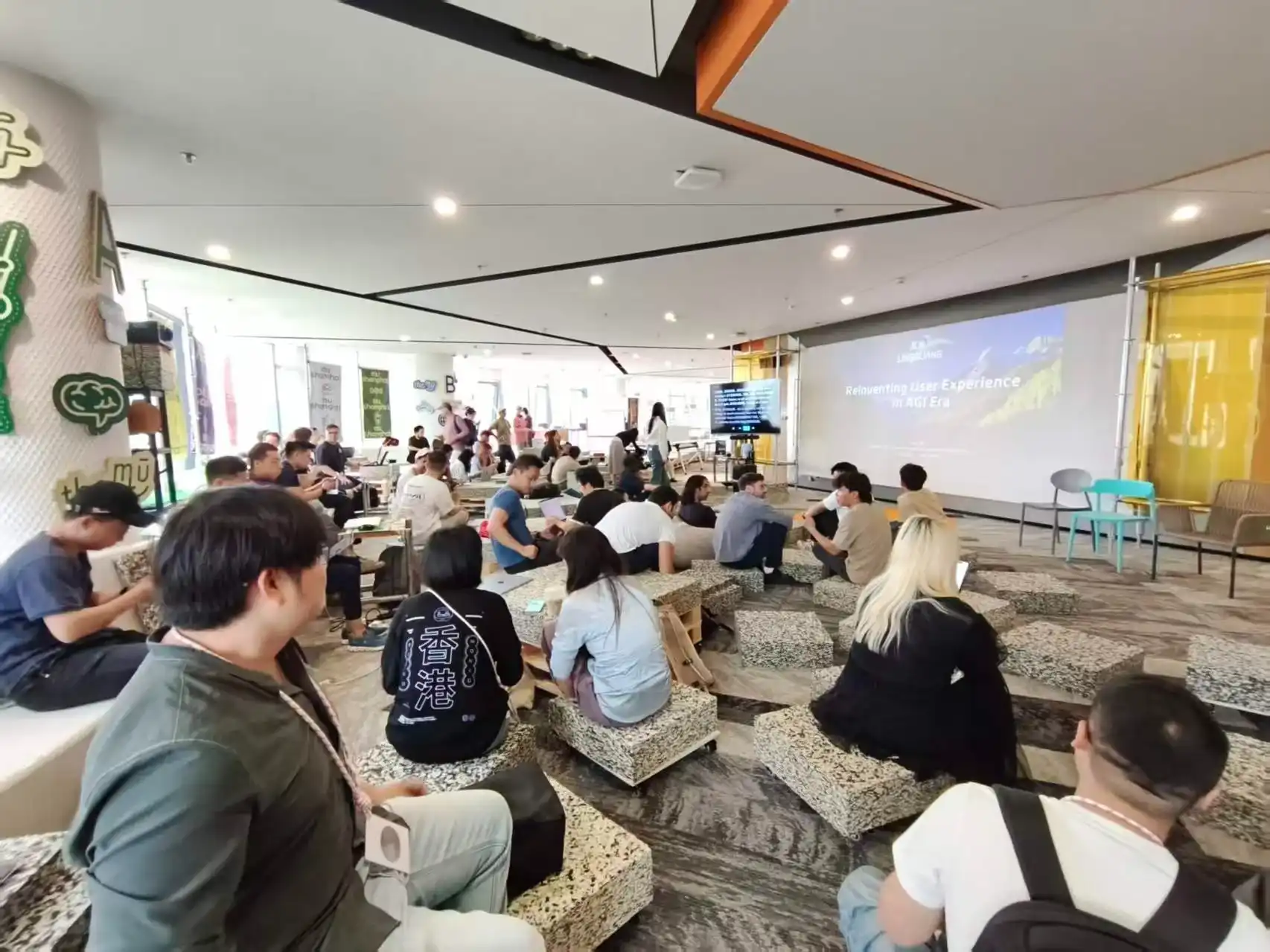
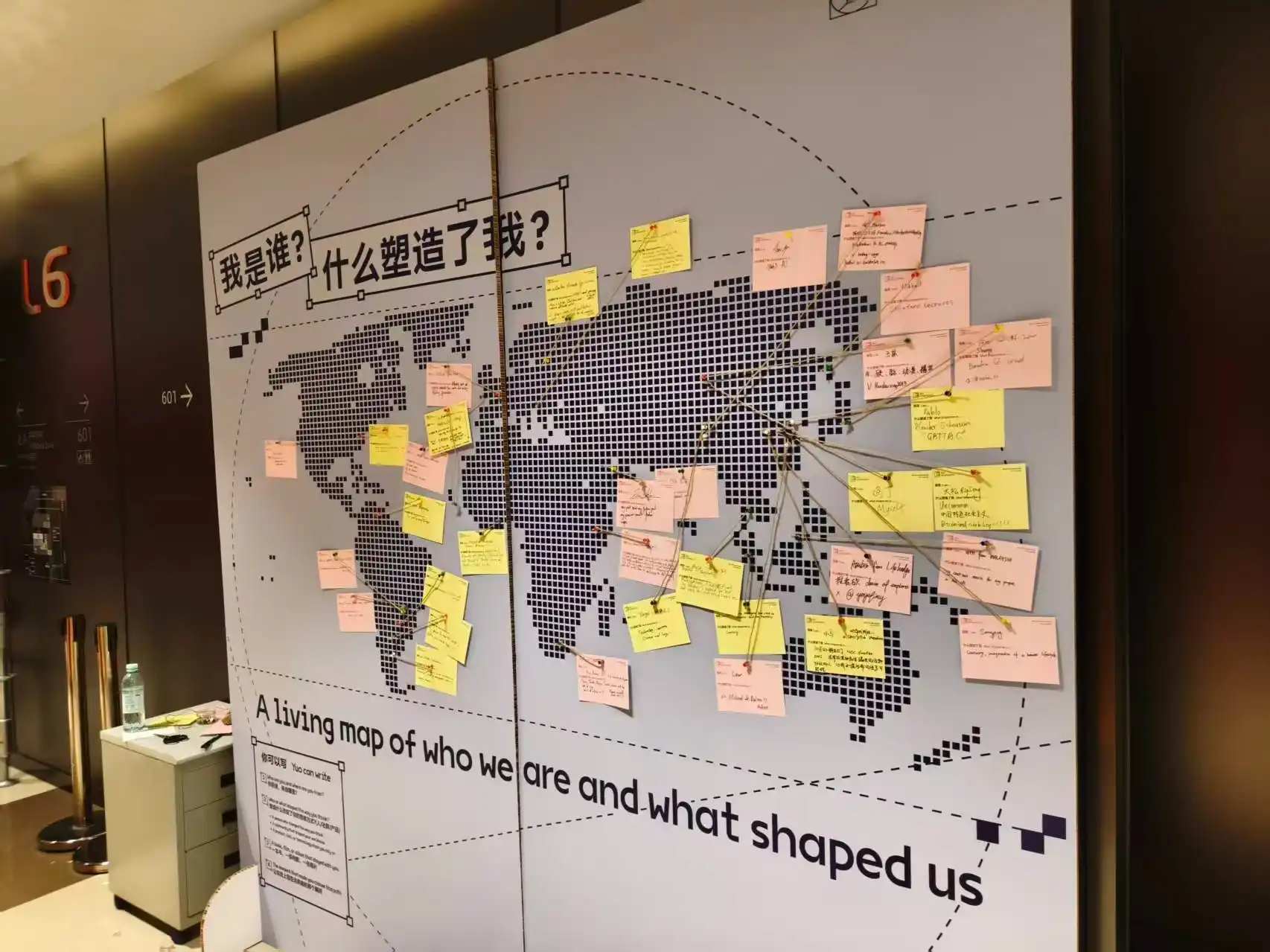
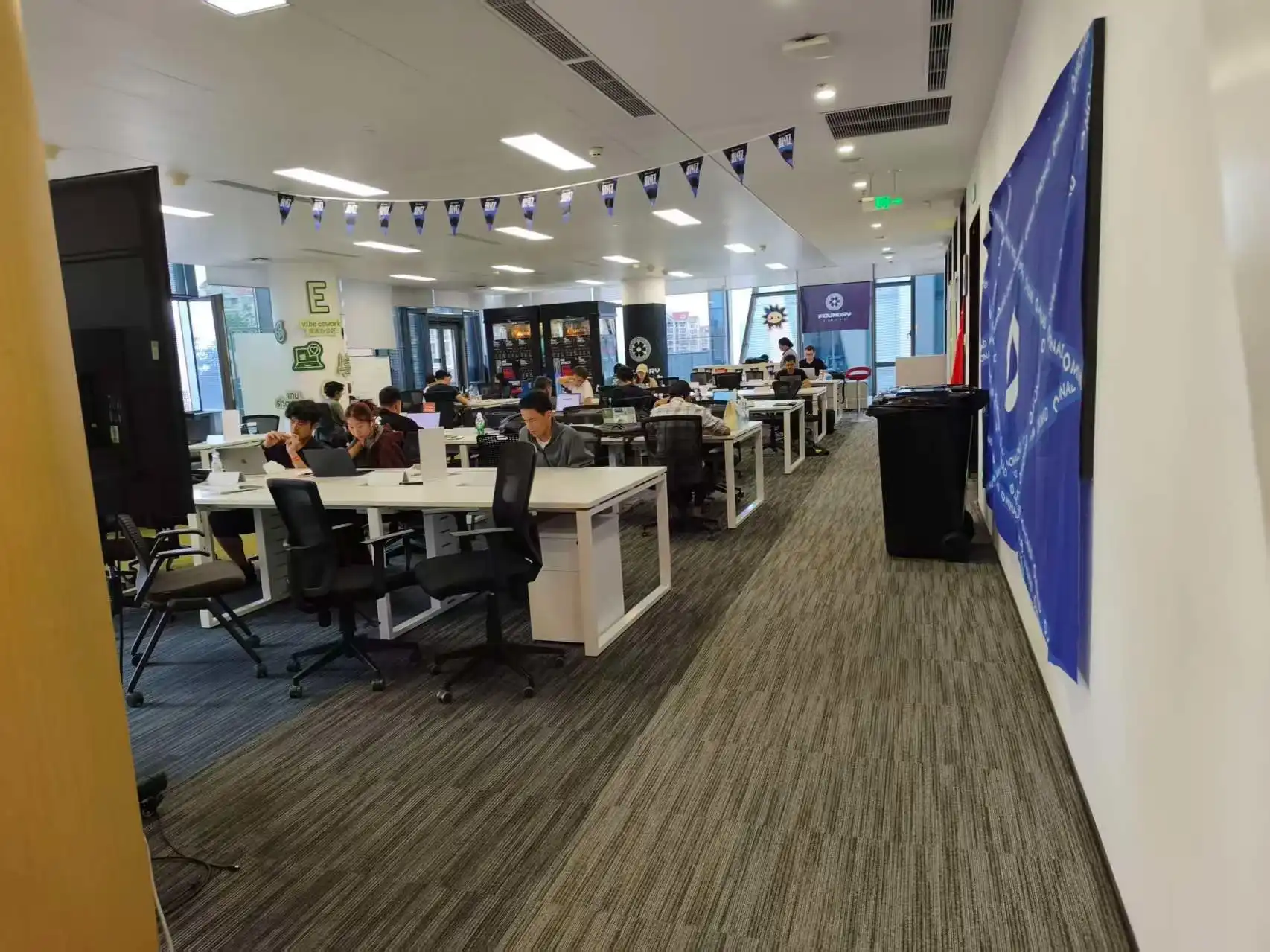
The venue wasn't set up as a traditional hotel conference hall, but as a hybrid space of open-plan work areas, stepped seating pads, bean bags, and temporary projectors. Some people sat at workstations typing code, others gathered on rugs and square cushions listening to talks, while some leaned in corners continuing to work on their products. Colorful mu Shanghai flags hung on the walls. A world map with the question "Who am I? What shaped me?" was covered with sticky notes and connecting lines, resembling an identity network being collectively filled in by participants.
Through conversations at the scene with multiple organizers, project teams, investors, and model company representatives, PANews found that AI entrepreneurship is entering a new phase. If "who can access models faster and build products" was the first phase of AI entrepreneurship; then the second phase is "who can find real-world scenarios, acquire users, build communities, and survive long enough." If models are the utilities (water, electricity, gas), then what is truly scarce now is no longer just the ability to connect the pipes, but who can find the people who most need the water.

A Deep Social Experiment with Global Developers

The most unusual aspect of mu Shanghai was first reflected in its organizational form. Founder Sun mentioned in an interview with PANews that mu didn't start in China initially, but spread in forms like pop-up cities and startup communities in places like Thailand, Argentina, Africa, and Japan. Compared to traditional two- or three-day conferences, it emphasizes a group of people entering the same city for about a month to co-create, exchange, live, and build relationships.

This format naturally gives the event a strong community attribute. According to Sun, about 2000 people registered for this mu Shanghai, with over 800 ultimately selected. The participant composition was also quite diverse: Chinese participants accounted for about 20%, other Asian regions like Japan, Korea, India about 18%, Southeast Asia about 16%, Latin America, the US, and Europe about 10%, 10%, and 11% respectively, and Africa about 6%. By industry background, AI practitioners accounted for about 40%, Web3-related practitioners about 20% to 30%, with additional groups from hardware, biotech, investment, etc.
Sun explained the appeal of this event format in the interview: "After leaving university, people rarely have that kind of deep relationship again. It's also hard to form such connections in work and big cities, so I think it's very valuable." In his view, what mu attempts to replicate is not the fleeting traffic of traditional conferences, but a relationship density closer to university, community, and shared living.

The scene indeed felt closer to this state. The main stage wasn't always the center of the space; subtitles next to projection screens, temporary display racks, and computers scattered everywhere together formed the daily backdrop of the event. During a sharing session on user experience, the audience wasn't neatly seated on chairs but dispersed among low cushions, the floor, and open workstations. The speaker shared at the front, while people below listened while taking notes, replying to messages, or continuing to work on their projects. This slightly loose state was closer to the real way developer communities operate.
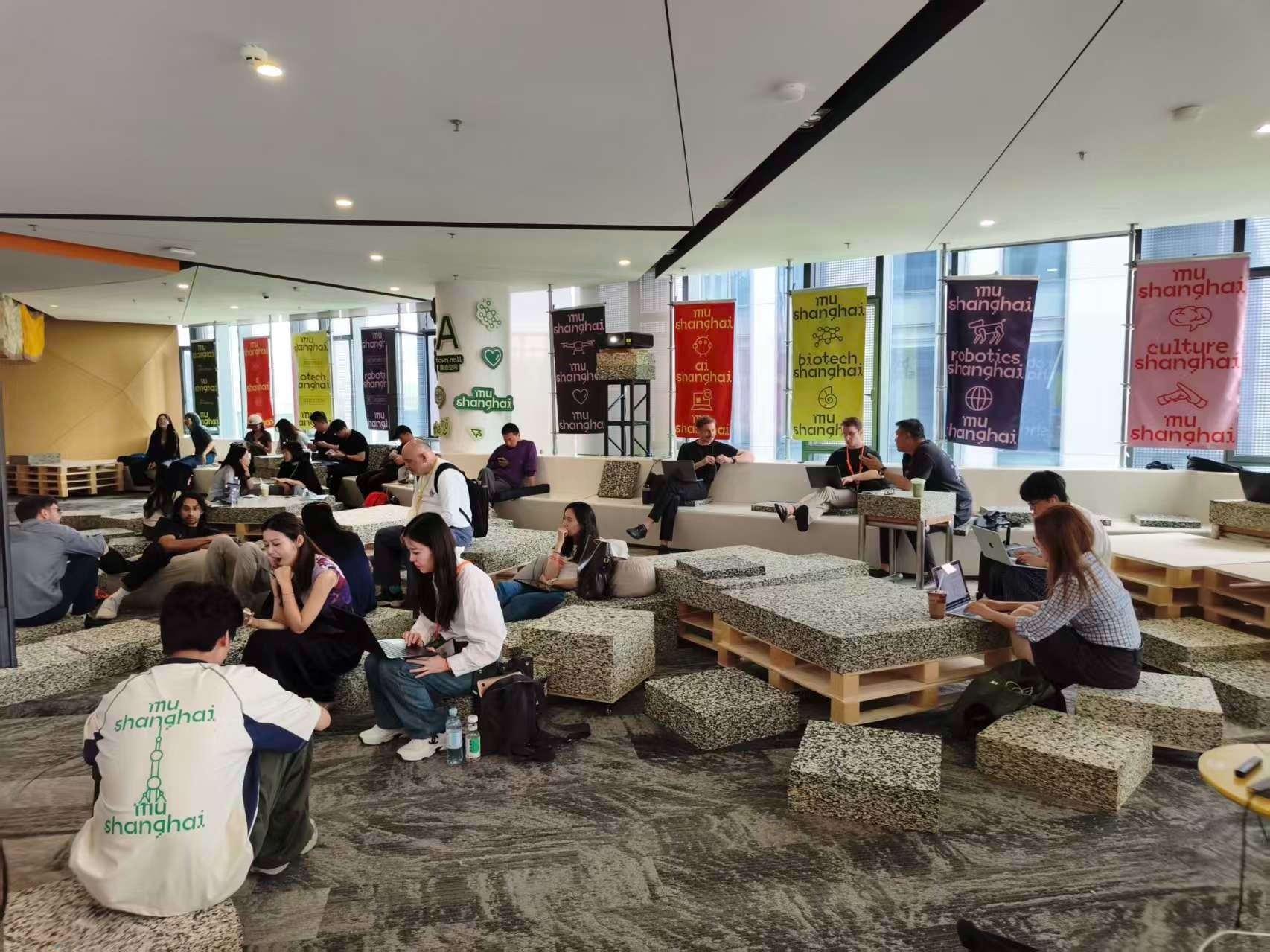
The significance of these numbers lies not in the event scale itself, but in showcasing an organizational logic different from traditional exhibitions. Traditional conferences often connect brands and users, companies and clients; mu Shanghai felt more like connecting Chinese and foreign developer cultures. There were large model roundtables, hackathons, co-creation activities, language learning, community sharing, and impromptu discussions. Feng Wen, Product Lead at MiniMax, mentioned in an on-site exchange that the atmosphere here wasn't just about "taking the stage to share about AI," but also included cultural exchange, developer co-creation, and community participation.

The presence of a large number of Web3 practitioners also made this connection more complex. What the Web3 industry has accumulated over the past few years isn't just on-chain assets and speculative narratives, but also a set of methods for community mobilization, global collaboration, social media dissemination, and developer organization. As AI entrepreneurship shifts from competing on model access to competing on user reach, this set of methods regains value.

From 'How to Build' to 'Who to Sell To': AI Entrepreneurship Enters Deep Waters

The most obvious feeling PANews had at the scene was that AI entrepreneurs are no longer excited for long about "whether they can build a product." Multimodal models, code generation tools, Agent frameworks, and automated workflows are rapidly lowering the barrier for product prototyping. A small tool that previously required designers, engineers, and operations to complete might now have an initial version built by a few people in a few nights using AI coding tools.

Newer data better illustrates this change in threshold. The AI Pulse survey conducted by JetBrains in January 2026 showed that 90% of professional developers already routinely use at least one AI tool at work, and 74% have adopted specialized AI tools for developers. For entrepreneurs, "being able to build" is becoming a more common capability, no longer a natural barrier.

However, once the product is built, the real problems begin. A founder named Nathan told PANews he is working on a product to help AI entrepreneurs find startup directions. The logic is that AI can already expand information collection range, solidify the judgment and taste of serial entrepreneurs into a set of rules, and then let AI discover signals of business opportunities. But this product itself reveals a larger reality: as building products becomes easier, "what exactly to build" becomes the scarcer question.

Nathan told PANews: "With AI coding tools, making something new is already fast. The real key is whether this direction is worth pursuing." The product he is making essentially productizes the act of "finding direction." This case is small but reflects a new change in AI entrepreneurship: when execution is amplified by AI, judgment becomes the scarce asset.

In the roundtable "Innovative Practices and Path Exploration in the AI Consumer Ecosystem" hosted by PANews, multiple guests expressed similar views: AI indeed makes rapid prototyping, demo samples, and initial launch easier, but the truly difficult parts of entrepreneurship haven't disappeared. User acquisition, commercialization, community stickiness, user education, and human-to-human connections still require teams to have more composite capabilities.

In other words, AI lowers the development threshold, not the entrepreneurship threshold. In the past, the first hurdle in product competition was "can it be built?" Now that this hurdle is significantly lowered, the real filtering starts moving later to distribution, scenarios, and commercialization. An on-site intervieee summarized it as: making tools isn't hard now; what's hard is getting the product, IP, and value seen by more people.

This is also a common dilemma faced by many AI tools. The more tools there are, the harder it is for users to choose; the stronger the models, the easier it is for single-point functions to be swallowed by the next model update. For entrepreneurs, a product that seems viable today might lose its raison d'être in 6 months because underlying model capabilities improve. Therefore, the real question isn't "whether to do AI," but whether one can find a specific scenario that the model cannot completely erase in the short term.

AI usage is rapidly spreading, but between tool usage and stable value, there still lies scenarios, processes, governance, and organizational capabilities.

Web3 People Flooding into AI, Not Just Chasing Hype

If viewed only from a narrative perspective, Web3 people flooding into AI might seem like just another hype migration. But at mu Shanghai, there were more practical reasons behind this migration.

On one hand, the wealth effects, capital dividends, and technological dividends of the crypto industry are waning, and many practitioners are looking for new tech directions; on the other hand, AI applications恰好 need the capabilities Web3 is most familiar with: community, globalized communication, developer relations, and social media distribution.

A senior Web3 practitioner said bluntly on-site that the crypto industry has been around for 10 years, and most of the capital and knowledge arbitrage opportunities are over; now it's better to move towards new tech directions. He advised entrepreneurs to gradually shift their careers, personal brands, and asset allocation towards AI, rather than continuing to heavily bet on cryptocurrencies. This assessment may not represent all Web3 practitioners, but it did reflect the real mindset of some people present.

He expressed it directly: "I think AI is worth long-term investment. By investment, I don't just mean using tools, but gradually shifting one's career, personal brand, and asset allocation towards AI." His personal choice was to transition into an AI-focused blogger, holding a sports camera to film Vlogs of teams building AI products at the event.

Such judgments may not represent all Web3 practitioners, but they were enough to illustrate the on-site atmosphere: AI is no longer just an optional track, but is becoming a direction for some Web3 practitioners to reconfigure their time, assets, and professional identities.

The AI-driven social media assistant XerpaAI had a booth at the event. Their staff said in an interview, "We are a pure AI project, technically not much related to Web3. But from the user side, we will definitely reach Web3 users. For example, the X AI Assistant will serve some Web3 users with operational needs." This statement well represents the ambiguous relationship between current AI applications and the Web3 community: the product doesn't have to be Web3, but users, dissemination, and early needs often cannot avoid Web3.

In on-site exchanges, model company representatives also mentioned that the user groups of AI and Web3 are increasingly difficult to completely separate; many heavy users of AI tools originally come from Web3 backgrounds. Especially in scenarios like Hong Kong and Shanghai, AI and Web3 often share the same group of high-frequency event attendees, early users, and community dissemination nodes. For them, they don't reject whether community members are Web3 users; as long as the theme is AI, everyone's goals are aligned.

From this perspective, Web3 entering AI isn't just a "change of scene." What Web3 brings isn't the on-chain technology itself, but a set of methods on how to gather global developers around a project, sustain discussions, and contribute attention. For current AI applications, this capability might be harder to replicate than a short-term feature.

Hardware, Supply Chain, and the Chinese Foundation

Compared to the anxiety over "whether AI software apps will be eaten by models," discussions on AI hardware, embodied intelligence, and the Chinese supply chain at the scene felt more certain. Multiple interviewees mentioned that as AI enters the real world in the future, hardware, robotics, embodied intelligence, and multi-sensory interaction will see greater opportunities. In the consumer-grade AI roundtable hosted by PANews, Feng Wen, Open Platform Product Lead at MiniMax, also predicted that smart hardware, robotics, and embodied intelligence will reach an important inflection point in the next three to five years; AI will no longer exist only in software interfaces but also enter the real physical world.

Outside the venue, the robotics track is also becoming a focus. A human vs. robot parcel sorting competition hosted by overseas robotics company Figur on May 18 sparked widespread online discussion. Even though humans won by a narrow margin within 10 hours, it's clear that over longer timeframes, robots have become the winners. The Stanford HAI "2026 AI Index" also shows that AI agents' accuracy in real-world computer task tests like OSWorld improved from about 12% to 66.3%, autonomous driving has begun to see scaled deployment, and China's Apollo Go completed 11 million fully driverless trips cumulatively.

AI entering the real world through hardware, robotics, and on-device deployment is no longer just a distant narrative.

This is precisely the special advantage of the Chinese ecosystem. Sun repeatedly mentioned in the interview that China possesses almost the entire supply chain from hardware, AI, life tech to infrastructure. For overseas entrepreneurs, if they want to do AI hardware, whether it's raw materials, factories, engineers, or rapid prototyping capabilities, it's ultimately hard to avoid China. He also revealed that for many entrepreneurs coming from overseas to China for this event, the goal was to experience and closely observe China's complete industrial chain.

Sun stated: "As long as you're doing hardware, overseas teams will eventually return to China to find supply chains, raw materials, engineers, and prototyping capabilities." He believes that in the next five to ten years, more international talent will come to China to find supply chains, raw materials, talent, and capital. For overseas entrepreneurs, China is not just a market, but a set of infrastructure for product realization.

A venture capital professional told PANews on-site that their main goal for participating was to see if there were more hard tech, embodied intelligence, and world model projects, rather than purely consumer applications. Their logic was that if the replication cost of software AI is decreasing, then hardware, supply chain, and real-world interaction might instead become barriers harder to be directly erased by model updates.

However, the attractiveness of the Chinese AI ecosystem to overseas developers doesn't come only from the supply chain. The emergence of domestic models like DeepSeek, Kimi, MiniMax, Zhipu, and Qwen has made overseas developers start to reconsider Chinese model capabilities. But Chinese models going overseas still face trust and deployment challenges. Feng Wen, Open Platform Product Lead at MiniMax, mentioned that Chinese models mainly gain attention and brand influence overseas through open source, but many overseas developers still worry about data, compliance, and trust issues. Even if models are open source, most people may not have enough computing power to deploy them themselves, leading to the emergence of an intermediary layer where US companies deploy Chinese open-source models and then provide them to overseas clients.

For overseas developers, the attractiveness of the Chinese AI ecosystem no longer comes only from cost or market size, but also from continuously expanding model supply, engineering capabilities, and industrial conversion capabilities.

This means the opportunity for the Chinese AI ecosystem isn't a single line. Model capabilities, hardware supply chain, government execution, and developer communities need to operate together to truly bring overseas entrepreneurs in. The role mu Shanghai plays in this process is more like a connector bringing overseas developers into China.

Large Model Companies Begin Competing for Developer Communities

If the competition among large model companies in the past year was mainly reflected in parameters, leaderboards, and prices, then at mu Shanghai, the importance of developer communities was pushed to the forefront. Domestic large model companies don't just need more API calls; they need developers to know about them, trust them, and be willing to build applications around their models.

Feng Wen mentioned in on-site exchanges that they do a lot of developer-related work. Developer experience, event screening, guest participation, hackathons, judging, token sponsorship, etc., all need to be incorporated into the ecosystem work of model companies.

"Developers are our users, so we value developer experience highly and also hope more developers understand what we are doing," Feng Wen stated. This sentence can almost be seen as a footnote to the ecosystem strategy of domestic large model companies: models are no longer just placed on a platform waiting to be called, but must actively enter spaces where developers gather.

This isn't a choice unique to MiniMax. On-site participants revealed that Zhipu has "Origin Academy" in Beijing, with activities almost every week, and close ties to university resources like Tsinghua and Peking University; AIGC and AGI communities also continuously gather talent through fixed spaces, hackathons, hotpot gatherings, and developer nights. These spaces are becoming offline versions of developer portals.
Behind this is a larger change: model companies are no longer satisfied with "releasing the model." They need documentation, trial platforms, case studies, video tutorials, and also communities, hackathons, and developer events to help users cross the initial threshold. As Agent capabilities improve, user education itself is being reshaped. In the past, developers needed to read documentation, check error codes, and understand parameters themselves; now, Agents can help users read documentation, search for solutions, select models, and automatically correct paths.

For model companies, the real competition isn't just model call prices, but who can enter developers' daily workflows earlier. For application entrepreneurs, the real opportunity isn't just which model to connect to, but whether they can find a group of early users willing to continuously use, provide feedback, and even actively spread the word.

Being Needed, Understood, and Kept

mu Shanghai didn't provide a unified answer for AI entrepreneurship. Some are bullish on hardware, some are making social media growth assistants, some are discovering entrepreneurial opportunities, some discussed cultural出海 and spiritual consumption, while others treated it as an entry point to meet overseas developers and local partners.

But these seemingly scattered clues precisely constitute the most real current state of AI entrepreneurship. Model capabilities continue to advance, but application forms are still searching for stable scenarios; development thresholds are lowered, but distribution and commercialization become more critical; Web3 hype cools, but the community methods it left behind are being absorbed by AI; Chinese supply chain and model capabilities become important, but overseas developers still need a trusted entry point to understand China.

Sun mentioned in the interview that mu Shanghai's long-term goal isn't just to host an event, but to form a continuous space where overseas and domestic people can meet, collaborate, and create new things in the same place. In fact, mu has very few formal employees; much of the work is driven by contributors and partners. This organizational method itself resembles Web3 and open-source communities: low centralization, emphasis on contribution and relationship networks, and thus more attractive to people familiar with this culture.

Of course, this model still has many uncertainties. Whether the event can transform into a long-term space, whether community enthusiasm can solidify into real projects, whether overseas developers will stay long-term in the Chinese ecosystem, whether large model companies can convert developer activities into stable call volumes, all remain to be seen. Communities can create encounters but cannot replace business closure; cities can provide scenarios but cannot guarantee product success.

However, mu Shanghai at least made one trend clear: AI entrepreneurship is moving from "model worship" to "scenario competition," from "making tools" to "being seen by users," from single-point products to comprehensive competition involving communities, supply chains, and cross-national collaboration. For ordinary entrepreneurs, the opportunity brought by AI isn't making everyone a winner easily, but exposing more people earlier to the same, more intense screening process.

When products become increasingly easy to produce, what is truly scarce becomes the ability to understand users, enter scenarios, build trust, and continuously connect people. AI will continue to lower the production cost of tools, but it won't automatically answer "why you?" In this sense, building the product is only the first step; being needed, understood, and kept is the harder second half of AI entrepreneurship.


Perguntas relacionadas

QWhat is the core shift in the difficulty of AI entrepreneurship discussed in the article about mu Shanghai?

AThe core shift is moving from the initial challenge of 'who can build a product prototype faster using AI models' to the current and more difficult challenge of 'who can find real user scenarios, acquire users, build a community, and survive in the long term.' The scarcity is no longer just the ability to connect to models (the 'plumbing'), but the ability to find those who most need the water.

QHow does the mu Shanghai event differ from a traditional tech conference according to the article?

AThe mu Shanghai event differs by being organized more like a temporary, month-long developer co-living and co-creation space rather than a standard short conference. It focuses on deep social connections and community building among global developers, featuring open workspaces, casual seating, impromptu discussions, and a mix of activities like hackathons and cultural exchanges, rather than a fixed agenda of corporate presentations and exhibition booths.

QWhy are many Web3 practitioners moving into the AI field, beyond just chasing trends?

AWeb3 practitioners are moving into AI because, while crypto industry opportunities are diminishing, the AI application field urgently needs the community-building, global communication, developer relations, and social media distribution skills that the Web3 industry has honed over the past decade. AI applications, even if not blockchain-based, often find their early users and community nodes within Web3 circles.

QWhat unique advantage does China's AI ecosystem offer to global entrepreneurs, especially in hardware?

AChina's AI ecosystem offers a complete hardware and supply chain advantage, including access to raw materials, factories, engineers, and rapid prototyping capabilities. For global entrepreneurs working on AI hardware, robotics, or embodied intelligence, China serves as essential infrastructure for product realization, not just a market.

QAccording to the article, how is the competition among major Chinese AI model companies (LLMs) evolving?

AThe competition is evolving from focusing solely on model parameters, benchmarks, and pricing to actively competing for developer community mindshare and loyalty. Model companies are now heavily investing in developer experience, documentation, tutorials, hackathons, sponsorships, and physical community spaces to integrate themselves into developers' workflows and build trust.

Leituras Relacionadas

When Hyperliquid Steals Solana's 'Internet Capital Market' Script

The article "When Hyperliquid Steals Solana's 'Internet Capital Markets' Playbook" discusses Solana's struggles to maintain its "internet capital markets" narrative by 2026. Despite its initial success as a high-performance "Ethereum killer," SOL's price has underperformed, dropping significantly compared to other major cryptocurrencies. Solana's vision of a global, on-chain trading network for all assets is being challenged not primarily by Ethereum, but by Hyperliquid. Hyperliquid, evolving from a perpetual contracts platform into a dedicated financial infrastructure Layer 1, has become a major beneficiary of the shift of derivatives trading from centralized exchanges to on-chain. The article argues that for high-frequency financial trading, a specialized, performance-focused chain like Hyperliquid may be more suitable than a general-purpose ecosystem like Solana. Further compounding Solana's issues was a major $200+ million exploit on its key perpetual protocol, Drift, in April, which damaged market confidence. In response, Solana founder Anatoly Yakovenko heavily promoted the protocol Phoenix as a replacement, boosting its visibility but not its trading volume, which remains far behind leading platforms. Solana supporters have launched a public critique of Hyperliquid's decentralization, pointing to its limited validators and closed-source code. Critics, however, note Solana's own declining validator count and centralization metrics. This strategy has also caused internal friction, with developers of other Solana protocols expressing discontent over the foundation's perceived favoritism towards Phoenix. The conclusion is that Hyperliquid's rise represents a challenge to the "general-purpose blockchain" narrative, proving that the core of a capital market might be a specialized trading engine rather than a broad ecosystem. If Solana cannot regain dominance in derivatives, it risks remaining a "meme coin paradise" while its grand "internet capital markets" ambition slips away.

marsbitHá 21m

When Hyperliquid Steals Solana's 'Internet Capital Market' Script

marsbitHá 21m

When Hyperliquid Steals Solana's 'Internet Capital Markets' Playbook

The article discusses how Solana's grand vision of becoming an "Internet Capital Markets" platform is facing significant challenges in 2026, primarily from the unexpected rise of Hyperliquid. Solana's performance has weakened, with its token SOL experiencing the largest price decline among major cryptocurrencies. Its core narrative of building a global, chain-based marketplace for all assets is under pressure both internally and externally. Hyperliquid, originally a perpetual futures exchange, has evolved into a dedicated Layer 1 financial infrastructure network. Its focused, trading-centric approach is attracting capital and challenging the assumption that a "general-purpose" ecosystem like Solana is necessary for a capital market. Hyperliquid's success suggests that for high-frequency trading, superior performance, liquidity, and user experience may be more critical than a broad application ecosystem. Internally, Solana's strategy suffered a blow from a major hack on the Drift Protocol in April, resulting in over $200 million in losses. In response, Solana founder Anatoly Yakovenko has heavily promoted Phoenix as a new decentralized perpetual futures platform on Solana. While this boosted Phoenix's visibility, its trading volume remains far behind leading platforms. Solana's community has launched a rhetorical attack against Hyperliquid, questioning its decentralization due to its limited validator set and closed-source code. Critics, however, point out Solana's own decreasing validator count and increasing centralization of stake. This focus on "decentralization metrics" has also caused internal friction, with other Solana ecosystem developers expressing discontent over the foundation's perceived favoritism towards Phoenix. The article concludes that the rise of Hyperliquid represents a challenge to the "general-purpose blockchain" narrative, proving that an efficient trading engine might be more central to a capital market than a vast ecosystem. If Solana cannot regain dominance in the derivatives space, it risks remaining a "meme coin paradise" rather than achieving its ambition of hosting global assets.

链捕手Há 29m

When Hyperliquid Steals Solana's 'Internet Capital Markets' Playbook

链捕手Há 29m

Samsung Bets on Mobile HBM: AI Moves from Cloud to Palm, a New Frontier in Semiconductor Investment?

Samsung is betting on bringing high-bandwidth memory (HBM) technology from servers to mobile devices, aiming to enable powerful on-device AI features in smartphones and tablets. This move is driven by the booming AI market, where HBM demand from data centers has fueled Samsung's record profits, with HBM4 already in mass production. By integrating mobile HBM, Samsung seeks to transform user AI experiences—making tasks like image generation and real-time translation faster, seamless, and more private by processing data locally. Strategically, this allows Samsung to leverage its vertical integration in memory, advanced packaging, and Exynos processors to differentiate its Galaxy devices against competitors like Apple and Qualcomm. It also opens a new consumer growth avenue, reducing reliance on volatile server HBM demand alone. The initiative is expected to benefit the broader supply chain, boosting demand for advanced packaging materials, thermal solutions, and other components. While promising, risks include potential delays in mobile HBM mass production beyond 2027, high initial costs, and the cyclical nature of the memory market. Nonetheless, Samsung's push signals a broader industry shift toward hybrid cloud-edge AI computing, positioning it as a key player in defining the future of AI-powered devices and presenting a potential long-term investment theme in semiconductors.

marsbitHá 40m

Samsung Bets on Mobile HBM: AI Moves from Cloud to Palm, a New Frontier in Semiconductor Investment?

marsbitHá 40m

Trillion-Dollar Banking Giant Adjusts Portfolio: Buys XRP Heavily, Clears Out Solana

In a significant portfolio rebalancing move, Italian banking giant Intesa Sanpaolo, with $1.1 trillion in assets, has made a notable shift in its cryptocurrency holdings. According to disclosures from Q4 2025 to Q1 2026, the bank's total crypto exposure surged from $100 million to approximately $235 million. The most striking action was its first-time establishment of an XRP position, investing around $18 million through the Grayscale XRP Trust. This marks a milestone as one of the first major European banks to adopt XRP via a regulated investment vehicle. This move is part of a broader, systematic digital asset strategy. The bank also substantially increased its Bitcoin exposure via ETFs and initiated its first Ethereum investment through a staking trust. In a contrasting strategic pivot, Intesa Sanpaolo drastically reduced its Solana holdings by over 99%, nearly exiting its position in a Bitwise Solana staking ETF. This shift is interpreted as reflecting a institutional preference for assets perceived with lower regulatory and operational risk, especially following Solana's network stability issues and improved clarity for XRP after its legal settlements. The bank's actions highlight key drivers for institutional adoption: clearer regulations, the availability of compliant ETF products, and the search for portfolio diversification. This trend signifies crypto's evolving status from a niche experiment to a recognized component of mainstream asset allocation, with institutions favoring gradual, regulated entry points over direct token ownership.

marsbitHá 1h

Trillion-Dollar Banking Giant Adjusts Portfolio: Buys XRP Heavily, Clears Out Solana

marsbitHá 1h

Base Native Leveraged Prediction Market OmenX Officially Launches on Mainnet

Base-native leveraged prediction market platform OmenX has officially launched on mainnet. It currently supports up to 5x leverage, with plans to increase to 10x based on platform liquidity and market conditions. Unlike traditional prediction markets where users fully collateralize YES/NO positions and wait for settlement, OmenX aims to create a trading platform-like experience. Users can open leveraged positions on event outcomes, and actively trade, adjust, or hedge these positions before the event concludes for greater capital efficiency. Alongside the mainnet launch, OmenX introduced a "Hedge-to-Earn" campaign targeting existing users of other prediction markets (initially Polymarket). This initiative allows users to claim incentives or hedging benefits on OmenX based on their existing positions, aiming to introduce them to leveraged trading and active risk management. OmenX positions itself as a derivatives trading platform for prediction market assets. The team believes that as platforms like Polymarket mainstream prediction markets, event outcomes are becoming a new tradable asset class. The next phase of demand will focus on leverage, liquidity, and advanced trading tools. Post-launch, OmenX plans to expand supported market types, optimize liquidity, and develop APIs and additional trading tools. The team is also in discussions with investors and partners to secure resources for further development.

链捕手Há 1h

Base Native Leveraged Prediction Market OmenX Officially Launches on Mainnet

链捕手Há 1h

Trading

Spot
Futuros

Artigos em Destaque

O que é GROK AI

Grok AI: Revolucionar a Tecnologia Conversacional na Era Web3 Introdução No panorama em rápida evolução da inteligência artificial, a Grok AI destaca-se como um projeto notável que liga os domínios da tecnologia avançada e da interação com o utilizador. Desenvolvida pela xAI, uma empresa liderada pelo renomado empreendedor Elon Musk, a Grok AI procura redefinir a forma como interagimos com a inteligência artificial. À medida que o movimento Web3 continua a florescer, a Grok AI visa aproveitar o poder da IA conversacional para responder a consultas complexas, proporcionando aos utilizadores uma experiência que é não apenas informativa, mas também divertida. O que é a Grok AI? A Grok AI é um sofisticado chatbot de IA conversacional projetado para interagir com os utilizadores de forma dinâmica. Ao contrário de muitos sistemas de IA tradicionais, a Grok AI abraça uma gama mais ampla de perguntas, incluindo aquelas tipicamente consideradas inadequadas ou fora das respostas padrão. Os principais objetivos do projeto incluem: Raciocínio Fiável: A Grok AI enfatiza o raciocínio de senso comum para fornecer respostas lógicas com base na compreensão contextual. Supervisão Escalável: A integração de assistência de ferramentas garante que as interações dos utilizadores sejam monitorizadas e otimizadas para qualidade. Verificação Formal: A segurança é primordial; a Grok AI incorpora métodos de verificação formal para aumentar a fiabilidade das suas saídas. Compreensão de Longo Contexto: O modelo de IA destaca-se na retenção e recordação de um extenso histórico de conversas, facilitando discussões significativas e contextualizadas. Robustez Adversarial: Ao focar na melhoria das suas defesas contra entradas manipuladas ou maliciosas, a Grok AI visa manter a integridade das interações dos utilizadores. Em essência, a Grok AI não é apenas um dispositivo de recuperação de informações; é um parceiro conversacional imersivo que incentiva um diálogo dinâmico. Criador da Grok AI A mente por trás da Grok AI não é outra senão Elon Musk, um indivíduo sinónimo de inovação em vários campos, incluindo automóvel, viagens espaciais e tecnologia. Sob a égide da xAI, uma empresa focada em avançar a tecnologia de IA de maneiras benéficas, a visão de Musk visa reformular a compreensão das interações com a IA. A liderança e a ética fundacional são profundamente influenciadas pelo compromisso de Musk em ultrapassar os limites tecnológicos. Investidores da Grok AI Embora os detalhes específicos sobre os investidores que apoiam a Grok AI permaneçam limitados, é reconhecido publicamente que a xAI, a incubadora do projeto, é fundada e apoiada principalmente pelo próprio Elon Musk. As anteriores empreitadas e participações de Musk fornecem um forte apoio, reforçando ainda mais a credibilidade e o potencial de crescimento da Grok AI. No entanto, até agora, informações sobre fundações ou organizações de investimento adicionais que apoiam a Grok AI não estão prontamente acessíveis, marcando uma área para exploração futura potencial. Como Funciona a Grok AI? A mecânica operacional da Grok AI é tão inovadora quanto a sua estrutura conceptual. O projeto integra várias tecnologias de ponta que facilitam as suas funcionalidades únicas: Infraestrutura Robusta: A Grok AI é construída utilizando Kubernetes para orquestração de contêineres, Rust para desempenho e segurança, e JAX para computação numérica de alto desempenho. Este trio assegura que o chatbot opere de forma eficiente, escale eficazmente e sirva os utilizadores prontamente. Acesso a Conhecimento em Tempo Real: Uma das características distintivas da Grok AI é a sua capacidade de aceder a dados em tempo real através da plataforma X—anteriormente conhecida como Twitter. Esta capacidade concede à IA acesso às informações mais recentes, permitindo-lhe fornecer respostas e recomendações oportunas que outros modelos de IA poderiam perder. Dois Modos de Interação: A Grok AI oferece aos utilizadores a escolha entre “Modo Divertido” e “Modo Regular”. O Modo Divertido permite um estilo de interação mais lúdico e humorístico, enquanto o Modo Regular foca em fornecer respostas precisas e exatas. Esta versatilidade assegura uma experiência adaptada que atende a várias preferências dos utilizadores. Em essência, a Grok AI combina desempenho com envolvimento, criando uma experiência que é tanto enriquecedora quanto divertida. Cronologia da Grok AI A jornada da Grok AI é marcada por marcos fundamentais que refletem as suas fases de desenvolvimento e implementação: Desenvolvimento Inicial: A fase fundamental da Grok AI ocorreu ao longo de aproximadamente dois meses, durante os quais o treinamento inicial e o ajuste do modelo foram realizados. Lançamento Beta do Grok-2: Numa evolução significativa, o beta do Grok-2 foi anunciado. Este lançamento introduziu duas versões do chatbot—Grok-2 e Grok-2 mini—cada uma equipada com capacidades para conversar, programar e raciocinar. Acesso Público: Após o seu desenvolvimento beta, a Grok AI tornou-se disponível para os utilizadores da plataforma X. Aqueles com contas verificadas por um número de telefone e ativas há pelo menos sete dias podem aceder a uma versão limitada, tornando a tecnologia disponível para um público mais amplo. Esta cronologia encapsula o crescimento sistemático da Grok AI desde a sua concepção até ao envolvimento público, enfatizando o seu compromisso com a melhoria contínua e a interação com o utilizador. Principais Características da Grok AI A Grok AI abrange várias características principais que contribuem para a sua identidade inovadora: Integração de Conhecimento em Tempo Real: O acesso a informações atuais e relevantes diferencia a Grok AI de muitos modelos estáticos, permitindo uma experiência de utilizador envolvente e precisa. Estilos de Interação Versáteis: Ao oferecer modos de interação distintos, a Grok AI atende a várias preferências dos utilizadores, convidando à criatividade e personalização na conversa com a IA. Base Tecnológica Avançada: A utilização de Kubernetes, Rust e JAX fornece ao projeto uma estrutura sólida para garantir fiabilidade e desempenho ótimo. Consideração de Discurso Ético: A inclusão de uma função de geração de imagens demonstra o espírito inovador do projeto. No entanto, também levanta considerações éticas em torno dos direitos autorais e da representação respeitosa de figuras reconhecíveis—uma discussão em curso dentro da comunidade de IA. Conclusão Como uma entidade pioneira no domínio da IA conversacional, a Grok AI encapsula o potencial para experiências transformadoras do utilizador na era digital. Desenvolvida pela xAI e impulsionada pela abordagem visionária de Elon Musk, a Grok AI integra conhecimento em tempo real com capacidades avançadas de interação. Esforça-se por ultrapassar os limites do que a inteligência artificial pode alcançar, mantendo um foco nas considerações éticas e na segurança do utilizador. A Grok AI não apenas incorpora o avanço tecnológico, mas também representa um novo paradigma de conversas no panorama Web3, prometendo envolver os utilizadores com conhecimento hábil e interação lúdica. À medida que o projeto continua a evoluir, ele permanece como um testemunho do que a interseção da tecnologia, criatividade e interação humana pode alcançar.

436 Visualizações TotaisPublicado em {updateTime}Atualizado em 2024.12.26

O que é GROK AI

O que é ERC AI

Euruka Tech: Uma Visão Geral do $erc ai e as suas Ambições no Web3 Introdução No panorama em rápida evolução da tecnologia blockchain e das aplicações descentralizadas, novos projetos surgem frequentemente, cada um com objetivos e metodologias únicas. Um desses projetos é a Euruka Tech, que opera no vasto domínio das criptomoedas e do Web3. O foco principal da Euruka Tech, particularmente do seu token $erc ai, é apresentar soluções inovadoras concebidas para aproveitar as capacidades crescentes da tecnologia descentralizada. Este artigo tem como objetivo fornecer uma visão abrangente da Euruka Tech, uma exploração das suas metas, funcionalidade, a identidade do seu criador, potenciais investidores e a sua importância no contexto mais amplo do Web3. O que é a Euruka Tech, $erc ai? A Euruka Tech é caracterizada como um projeto que aproveita as ferramentas e funcionalidades oferecidas pelo ambiente Web3, focando na integração da inteligência artificial nas suas operações. Embora os detalhes específicos sobre a estrutura do projeto sejam um tanto elusivos, ele é concebido para melhorar o envolvimento dos utilizadores e automatizar processos no espaço cripto. O projeto visa criar um ecossistema descentralizado que não só facilita transações, mas também incorpora funcionalidades preditivas através da inteligência artificial, daí a designação do seu token, $erc ai. O objetivo é fornecer uma plataforma intuitiva que facilite interações mais inteligentes e um processamento eficiente de transações dentro da crescente esfera do Web3. Quem é o Criador da Euruka Tech, $erc ai? Neste momento, a informação sobre o criador ou a equipa fundadora da Euruka Tech permanece não especificada e algo opaca. Esta ausência de dados levanta preocupações, uma vez que o conhecimento sobre o histórico da equipa é frequentemente essencial para estabelecer credibilidade no setor blockchain. Portanto, categorizamos esta informação como desconhecida até que detalhes concretos sejam disponibilizados no domínio público. Quem são os Investidores da Euruka Tech, $erc ai? De forma semelhante, a identificação de investidores ou organizações de apoio para o projeto Euruka Tech não é prontamente fornecida através da pesquisa disponível. Um aspeto que é crucial para potenciais partes interessadas ou utilizadores que consideram envolver-se com a Euruka Tech é a garantia que vem de parcerias financeiras estabelecidas ou apoio de empresas de investimento respeitáveis. Sem divulgações sobre afiliações de investimento, é difícil tirar conclusões abrangentes sobre a segurança financeira ou a longevidade do projeto. Em linha com a informação encontrada, esta seção também se encontra no estado de desconhecido. Como funciona a Euruka Tech, $erc ai? Apesar da falta de especificações técnicas detalhadas para a Euruka Tech, é essencial considerar as suas ambições inovadoras. O projeto procura aproveitar o poder computacional da inteligência artificial para automatizar e melhorar a experiência do utilizador no ambiente das criptomoedas. Ao integrar IA com tecnologia blockchain, a Euruka Tech visa fornecer funcionalidades como negociações automatizadas, avaliações de risco e interfaces de utilizador personalizadas. A essência inovadora da Euruka Tech reside no seu objetivo de criar uma conexão fluida entre os utilizadores e as vastas possibilidades apresentadas pelas redes descentralizadas. Através da utilização de algoritmos de aprendizagem automática e IA, visa minimizar os desafios enfrentados por utilizadores de primeira viagem e agilizar as experiências transacionais dentro do quadro do Web3. Esta simbiose entre IA e blockchain sublinha a importância do token $erc ai, que se apresenta como uma ponte entre interfaces de utilizador tradicionais e as capacidades avançadas das tecnologias descentralizadas. Cronologia da Euruka Tech, $erc ai Infelizmente, devido à informação limitada disponível sobre a Euruka Tech, não conseguimos apresentar uma cronologia detalhada dos principais desenvolvimentos ou marcos na jornada do projeto. Esta cronologia, tipicamente inestimável para traçar a evolução de um projeto e compreender a sua trajetória de crescimento, não está atualmente disponível. À medida que informações sobre eventos notáveis, parcerias ou adições funcionais se tornem evidentes, atualizações certamente aumentarão a visibilidade da Euruka Tech na esfera cripto. Esclarecimento sobre Outros Projetos “Eureka” É importante abordar que múltiplos projetos e empresas partilham uma nomenclatura semelhante com “Eureka.” A pesquisa identificou iniciativas como um agente de IA da NVIDIA Research, que se concentra em ensinar robôs a realizar tarefas complexas utilizando métodos generativos, bem como a Eureka Labs e a Eureka AI, que melhoram a experiência do utilizador na educação e na análise de serviços ao cliente, respetivamente. No entanto, estes projetos são distintos da Euruka Tech e não devem ser confundidos com os seus objetivos ou funcionalidades. Conclusão A Euruka Tech, juntamente com o seu token $erc ai, representa um jogador promissor, mas atualmente obscuro, dentro do panorama do Web3. Embora os detalhes sobre o seu criador e investidores permaneçam não divulgados, a ambição central de combinar inteligência artificial com tecnologia blockchain destaca-se como um ponto focal de interesse. As abordagens únicas do projeto em promover o envolvimento do utilizador através da automação avançada podem diferenciá-lo à medida que o ecossistema Web3 avança. À medida que o mercado cripto continua a evoluir, as partes interessadas devem manter um olhar atento sobre os avanços em torno da Euruka Tech, uma vez que o desenvolvimento de inovações documentadas, parcerias ou um roteiro definido pode apresentar oportunidades significativas no futuro próximo. Neste momento, aguardamos por insights mais substanciais que possam desvendar o potencial da Euruka Tech e a sua posição no competitivo panorama cripto.

477 Visualizações TotaisPublicado em {updateTime}Atualizado em 2025.01.02

O que é ERC AI

O que é DUOLINGO AI

DUOLINGO AI: Integrar a Aprendizagem de Línguas com Inovação Web3 e IA Numa era em que a tecnologia transforma a educação, a integração da inteligência artificial (IA) e das redes blockchain anuncia uma nova fronteira para a aprendizagem de línguas. Apresentamos DUOLINGO AI e a sua criptomoeda associada, $DUOLINGO AI. Este projeto aspira a unir o poder educativo das principais plataformas de aprendizagem de línguas com os benefícios da tecnologia descentralizada Web3. Este artigo explora os principais aspectos do DUOLINGO AI, analisando os seus objetivos, estrutura tecnológica, desenvolvimento histórico e potencial futuro, mantendo a clareza entre o recurso educativo original e esta iniciativa independente de criptomoeda. Visão Geral do DUOLINGO AI No seu cerne, DUOLINGO AI procura estabelecer um ambiente descentralizado onde os alunos podem ganhar recompensas criptográficas por alcançar marcos educativos em proficiência linguística. Ao aplicar contratos inteligentes, o projeto visa automatizar processos de verificação de habilidades e alocação de tokens, aderindo aos princípios do Web3 que enfatizam a transparência e a propriedade do utilizador. O modelo diverge das abordagens tradicionais de aquisição de línguas ao apoiar-se fortemente numa estrutura de governança orientada pela comunidade, permitindo que os detentores de tokens sugiram melhorias ao conteúdo dos cursos e à distribuição de recompensas. Alguns dos objetivos notáveis do DUOLINGO AI incluem: Aprendizagem Gamificada: O projeto integra conquistas em blockchain e tokens não fungíveis (NFTs) para representar níveis de proficiência linguística, promovendo a motivação através de recompensas digitais envolventes. Criação de Conteúdo Descentralizada: Abre caminhos para educadores e entusiastas de línguas contribuírem com os seus cursos, facilitando um modelo de partilha de receitas que beneficia todos os colaboradores. Personalização Através de IA: Ao empregar modelos avançados de aprendizagem de máquina, o DUOLINGO AI personaliza as lições para se adaptar ao progresso de aprendizagem individual, semelhante às características adaptativas encontradas em plataformas estabelecidas. Criadores do Projeto e Governança A partir de abril de 2025, a equipa por trás do $DUOLINGO AI permanece pseudónima, uma prática frequente no panorama descentralizado das criptomoedas. Esta anonimidade visa promover o crescimento coletivo e o envolvimento das partes interessadas, em vez de se concentrar em desenvolvedores individuais. O contrato inteligente implementado na blockchain Solana indica o endereço da carteira do desenvolvedor, o que significa o compromisso com a transparência em relação às transações, apesar da identidade dos criadores ser desconhecida. De acordo com o seu roteiro, o DUOLINGO AI pretende evoluir para uma Organização Autónoma Descentralizada (DAO). Esta estrutura de governança permite que os detentores de tokens votem em questões críticas, como implementações de funcionalidades e alocação de tesouraria. Este modelo alinha-se com a ética de empoderamento comunitário encontrada em várias aplicações descentralizadas, enfatizando a importância da tomada de decisão coletiva. Investidores e Parcerias Estratégicas Atualmente, não existem investidores institucionais ou capitalistas de risco publicamente identificáveis ligados ao $DUOLINGO AI. Em vez disso, a liquidez do projeto origina-se principalmente de trocas descentralizadas (DEXs), marcando um contraste acentuado com as estratégias de financiamento das empresas tradicionais de tecnologia educacional. Este modelo de base indica uma abordagem orientada pela comunidade, refletindo o compromisso do projeto com a descentralização. No seu whitepaper, o DUOLINGO AI menciona a formação de colaborações com “plataformas de educação blockchain” não especificadas, com o objetivo de enriquecer a sua oferta de cursos. Embora parcerias específicas ainda não tenham sido divulgadas, estes esforços colaborativos sugerem uma estratégia para misturar inovação em blockchain com iniciativas educativas, expandindo o acesso e o envolvimento dos utilizadores em diversas vias de aprendizagem. Arquitetura Tecnológica Integração de IA O DUOLINGO AI incorpora dois componentes principais impulsionados por IA para melhorar as suas ofertas educativas: Motor de Aprendizagem Adaptativa: Este motor sofisticado aprende a partir das interações dos utilizadores, semelhante a modelos proprietários de grandes plataformas educativas. Ele ajusta dinamicamente a dificuldade das lições para abordar desafios específicos dos alunos, reforçando áreas fracas através de exercícios direcionados. Agentes Conversacionais: Ao empregar chatbots alimentados por GPT-4, o DUOLINGO AI oferece uma plataforma para os utilizadores se envolverem em conversas simuladas, promovendo uma experiência de aprendizagem de línguas mais interativa e prática. Infraestrutura Blockchain Construído na blockchain Solana, o $DUOLINGO AI utiliza uma estrutura tecnológica abrangente que inclui: Contratos Inteligentes de Verificação de Habilidades: Esta funcionalidade atribui automaticamente tokens aos utilizadores que passam com sucesso em testes de proficiência, reforçando a estrutura de incentivos para resultados de aprendizagem genuínos. Emblemas NFT: Estes tokens digitais significam vários marcos que os alunos alcançam, como completar uma seção do seu curso ou dominar habilidades específicas, permitindo-lhes negociar ou exibir as suas conquistas digitalmente. Governança DAO: Membros da comunidade com tokens podem participar na governança votando em propostas-chave, facilitando uma cultura participativa que incentiva a inovação nas ofertas de cursos e funcionalidades da plataforma. Cronologia Histórica 2022–2023: Conceituação O trabalho preliminar para o DUOLINGO AI começa com a criação de um whitepaper, destacando a sinergia entre os avanços em IA na aprendizagem de línguas e o potencial descentralizado da tecnologia blockchain. 2024: Lançamento Beta Um lançamento beta limitado introduz ofertas em línguas populares, recompensando os primeiros utilizadores com incentivos em tokens como parte da estratégia de envolvimento comunitário do projeto. 2025: Transição para DAO Em abril, ocorre um lançamento completo da mainnet com a circulação de tokens, promovendo discussões comunitárias sobre possíveis expansões para línguas asiáticas e outros desenvolvimentos de cursos. Desafios e Direções Futuras Obstáculos Técnicos Apesar dos seus objetivos ambiciosos, o DUOLINGO AI enfrenta desafios significativos. A escalabilidade continua a ser uma preocupação constante, particularmente no equilíbrio dos custos associados ao processamento de IA e à manutenção de uma rede descentralizada responsiva. Além disso, garantir a criação e moderação de conteúdo de qualidade num ambiente descentralizado apresenta complexidades na manutenção dos padrões educativos. Oportunidades Estratégicas Olhando para o futuro, o DUOLINGO AI tem o potencial de aproveitar parcerias de micro-certificação com instituições académicas, proporcionando validações verificadas em blockchain das habilidades linguísticas. Além disso, a expansão cross-chain poderia permitir que o projeto acedesse a bases de utilizadores mais amplas e a ecossistemas de blockchain adicionais, melhorando a sua interoperabilidade e alcance. Conclusão DUOLINGO AI representa uma fusão inovadora de inteligência artificial e tecnologia blockchain, apresentando uma alternativa focada na comunidade aos sistemas tradicionais de aprendizagem de línguas. Embora o seu desenvolvimento pseudónimo e o modelo económico emergente tragam certos riscos, o compromisso do projeto com a aprendizagem gamificada, educação personalizada e governança descentralizada ilumina um caminho a seguir para a tecnologia educativa no domínio do Web3. À medida que a IA continua a avançar e o ecossistema blockchain evolui, iniciativas como o DUOLINGO AI poderão redefinir a forma como os utilizadores interagem com a educação linguística, empoderando comunidades e recompensando o envolvimento através de mecanismos de aprendizagem inovadores.

409 Visualizações TotaisPublicado em {updateTime}Atualizado em 2025.04.11

O que é DUOLINGO AI

Discussões

Bem-vindo à Comunidade HTX. Aqui, pode manter-se informado sobre os mais recentes desenvolvimentos da plataforma e obter acesso a análises profissionais de mercado. As opiniões dos utilizadores sobre o preço de AI (AI) são apresentadas abaixo.

活动图片