Cursor's New 1.5T Model Abandons Kimi Foundation, $60 Billion Stock Swap for Cursor, Musk's First Move Targets Microsoft's GitHub

marsbitPublicado em 2026-06-17Última atualização em 2026-06-17

Resumo

Cursor, a popular AI-powered coding tool, has been acquired by SpaceX in an all-stock deal valued at $60 billion. The announcement coincided with Cursor's unveiling of major new developments at the Compile conference: a new 1.5 trillion+ parameter AI model and a "GitHub for agents" platform called Origin. The upcoming model, trained from scratch on over 100,000 GPUs with 10-20x more computational power than before, marks a shift from Cursor's previous reliance on models like Kimi. Cursor's CEO, Michael Truell, emphasized the model will be a "generally intelligent" assistant, moving beyond just code generation to handle broader engineering tasks like planning, testing, and UI interaction. Simultaneously, Cursor introduced Origin, a "Git-native" code hosting platform designed for AI agents that perform thousands of operations daily, featuring automated conflict resolution for large-scale, AI-generated code changes. The acquisition by SpaceX provides Cursor with significant computational resources. Analysts suggest this combination—Cursor's expertise in reinforcement learning and SpaceX's computing power—could position them strongly in the AI race, potentially challenging established players like GitHub, Claude Code, and Codex.

Today, at the Compile conference, Cursor announced several product "futures": an upcoming 1.5T model utilizing more computing power, and Origin, a "GitHub-like" Git platform designed for AI agents.

This quickly drew widespread attention from users, as it came almost simultaneously with the news that SpaceX had officially announced it had exercised its option to acquire Cursor in an all-stock transaction. According to the agreement, Cursor will receive SpaceX stock valued at $60 billion, with the specific transaction expected to be completed in the third quarter of 2026. Previous reports indicated that Cursor had turned down acquisition interest from several major AI companies last year.

"At this rate, Cursor will become the #1 or #2 coding agent within a year. The team is incredible... and now backed by unlimited compute. This is the best acquisition since Instagram and YouTube." commented one netizen.

Secured Compute, Training Models from Scratch

Several netizens revealed that Cursor CEO Michael Truell shared details about the new model at today's Compile conference: a new model with over 1.5T parameters, no longer a shell over Kimi, pre-trained from scratch on over 100,000 GPUs.
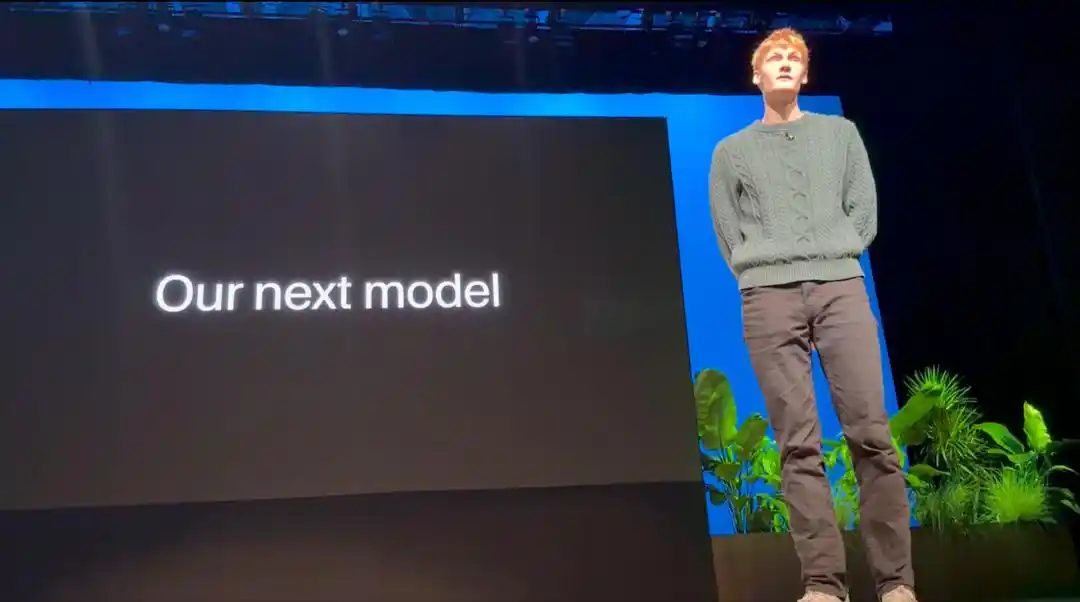
Over the past few months, SpaceXAI has been jointly training a model with Cursor, which will soon be released on Cursor and Grok Build.

Speculation is that the new model Michael mentioned is the 1.5T foundation model Musk referred to on May 25th, followed by two reinforcement learning pipelines, one for Cursor and one for Grok.
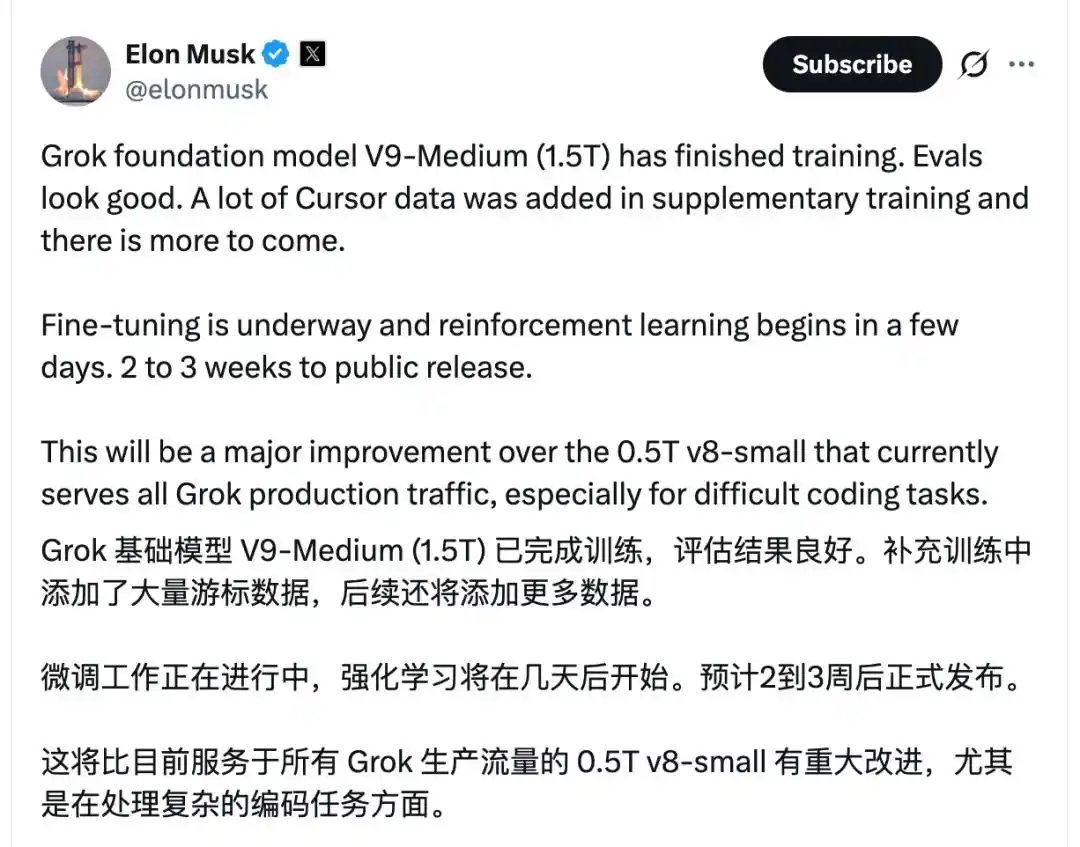
At the conference, Michael revealed three key differences in the new model being trained.

First, it is large-scale, on the same magnitude as OpenAI's AGI-level models.

Second, it is trained from scratch, not fine-tuned from an open-source model. "We love open source and want to find more ways to give back to the community. But training a base model from the ground up allows us better control over model behavior and further coverage of the workloads that I and you truly care about," Michael said. Previously, Cursor was alleged to have been a shell over Kimi.

Third, and most crucially, the computational resources Cursor now uses are 10 to 20 times what was previously available. While the previous generation model used more resources than before, this marks the first truly massive increase in compute investment.

"This is hugely important," Michael stated. "In the past, from Composer 1 to Composer 2.5, the compute scale for training our models was actually quite small compared to frontier labs, which greatly limited what we could do. Many methods for making models better essentially run into the same problem: can we run more experiments, can we train the model longer. So, this order-of-magnitude increase in compute does allow us to create differentiated capabilities and, hopefully very soon, get those into your hands and deliver truly exciting, powerful new features."

However, netizen Lisan al Gaib pointed out, "Opus 4.5 to 4.8, and GPT-5 to GPT-5.5, aren't actually that huge! (They are all below 2 trillion parameters)." He continued, "This means the current performance of GPT-5.5 and Opus 4.8 is achievable for open-source models. Because guess what else is at this scale? DeepSeek-V4-Pro."

Gaib stated that the only remaining moat is scale:

So far, Anthropic is the only lab that has successfully transitioned to the ~10T parameter scale, which is also why I no longer think OpenAI can catch up by year-end. Anthropic just needs to keep pouring RL compute into Mythos, and it will keep improving for the next 1-2 years.

Google didn't go that big, and they pulled back a bit too much on sparsity. They also clearly don't know how to actually polish a model to usability with RL.

OpenAI is still haunted by the ghost of GPT-4.5.

xAI and Meta are still in the planning phase.

Previously, Wall Street investor Gavin Baker spoke highly of Cursor: "Besides Anthropic, Cursor has more 'proprietary code training data tokens' than any other lab in the world. Cursor's internal code model, Composer 2.5, is already approaching frontier model levels even before undergoing a full Colossus-level training."

Some netizens are optimistic about the acquisition deal: "Cursor excels at reinforcement learning, and SpaceX has enough computing power to train a 10T model. Therefore, SpaceX might win the AI race."

More Than Just Code

Additionally, some netizens noticed that Cursor's announcement tweet did not describe itself as "for developers," but simply as "useful AI." Therefore, they believe Cursor is likely to become a direct competitor to Codex and Claude Desktop.

To some extent, this aligns with Michael's emphasis on the new model's positioning at the conference: "This will be an intelligent model that's not just good at writing code."

Michael believes this is crucial for what the team wants to achieve. "Our goal is to enable anyone to build what they want with a computer. And right now, the bottleneck is shifting from 'writing code' itself to the full range of capabilities you'd want from an engineering colleague."

This means it needs to know how to use the tools an engineer uses; it needs to be able to monitor, plan, genuinely test software, and click buttons in an interface; it also means the team needs to present the user experience well, letting users clearly see what changes the agent has made.

"So, we're moving beyond just 'trustworthy coding' to give this model stronger general intelligence. The training for this has already started and will be released in the coming weeks. And all of this is powered by our collaboration with SpaceX. And as you know, this is more than just an ordinary partnership now," Michael said.

In his view, there aren't actually many AI players or institutions today that can truly co-design both the product layer and the model layer simultaneously. The company DNA of other players often comes from either big tech companies or started as labs before gradually moving towards the developer and product side. The company behind Cursor, for better or worse, is fundamentally built around developers. It's a company made up of people who genuinely want to make tools useful for developers.

Therefore, Michael believes that as the company enters its next phase, it's the first time a group of people who truly understand product details and developer workflows are combined with the ability to directly modify the foundational capabilities of the model. "What we can influence isn't just pixels on the screen; we can also edit the underlying capabilities of the model itself, and model capability is a very important part of the product."

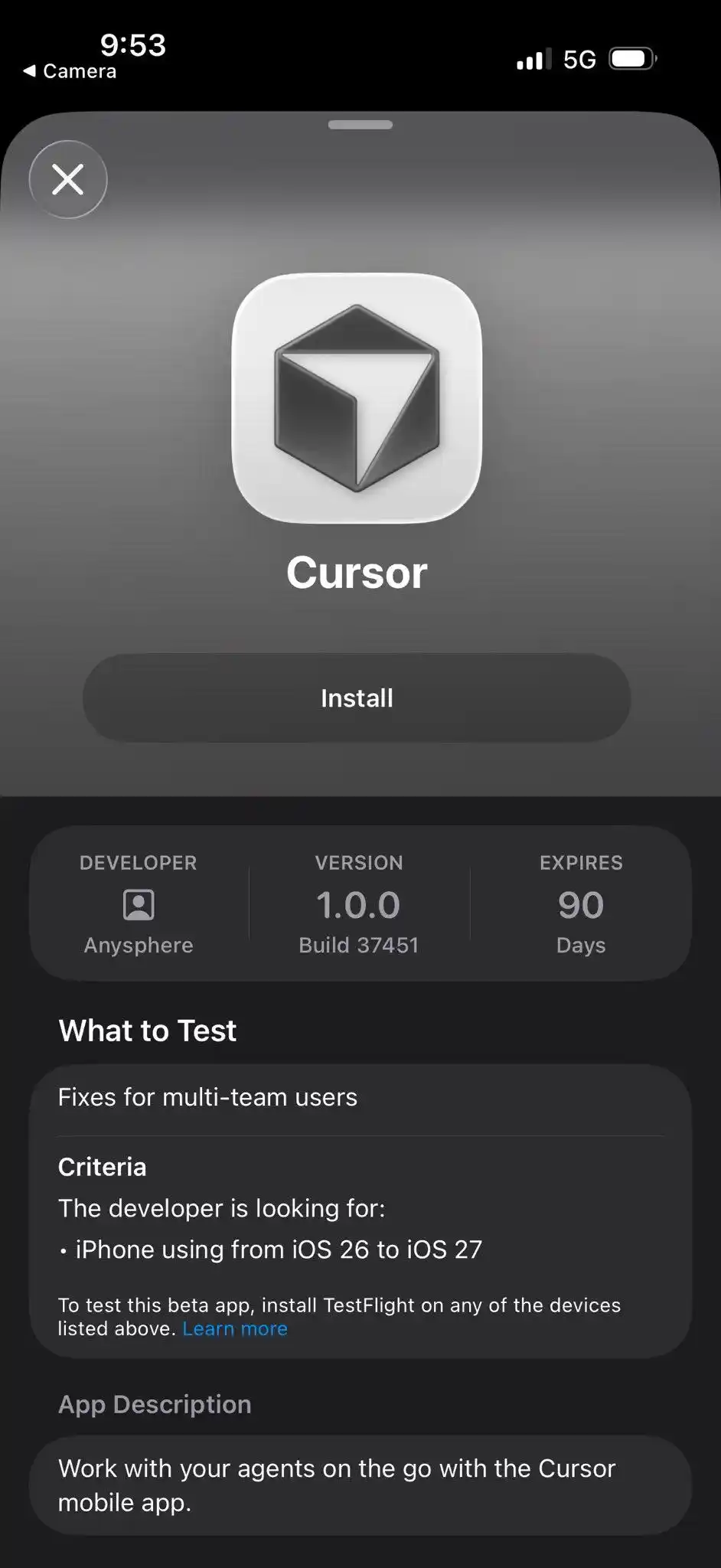
It's worth noting that Cursor Mobile is now in beta, which includes remote control functionality for Mac hosts.
Git Platform for Agents, Challenging Microsoft's GitHub

In addition to the model, Cursor also announced Origin, an agent-native Git platform.

"Modern Git hosting platforms are designed for human developers: they only clone repos occasionally, push code a few times a day, not for AI agents that will clone and push thousands of times a day," Cursor engineer Austin Nick Piel stated on X. "Excited to be building a Git hosting platform for this new world."

Origin is Cursor's attempt to build a "agent-native" competitor to GitHub: it's a Git-compatible code hosting platform, but its underlying assumption is that in the future, a massive number of AI agents will be cloning, creating branches, committing code, rebasing, reviewing code, and fixing failed tasks in parallel.

Some netizens believe this also makes the company's acquisition of Graphite last year more interesting. "Graphite brought stacked PRs, code review workflows, merge queues, and a clearer collaboration experience, while Origin adds the code hosting layer underneath."

Thus, Cursor is no longer just "VS Code with AI." They are attempting to control the entire AI software factory: write code in Cursor, run agents in parallel, review code with a Graphite-style workflow, and host and merge code via Origin.

"GitHub was built for human-scale software development. Origin is packaged as the infrastructure for the next bottleneck: in an era of mass agent-generated code, how do you coordinate, review, and safely merge that code?" they summarized.

According to videos posted by netizens, Graphite co-founder Tomas Reimers was the one introducing Origin at the Compile conference.
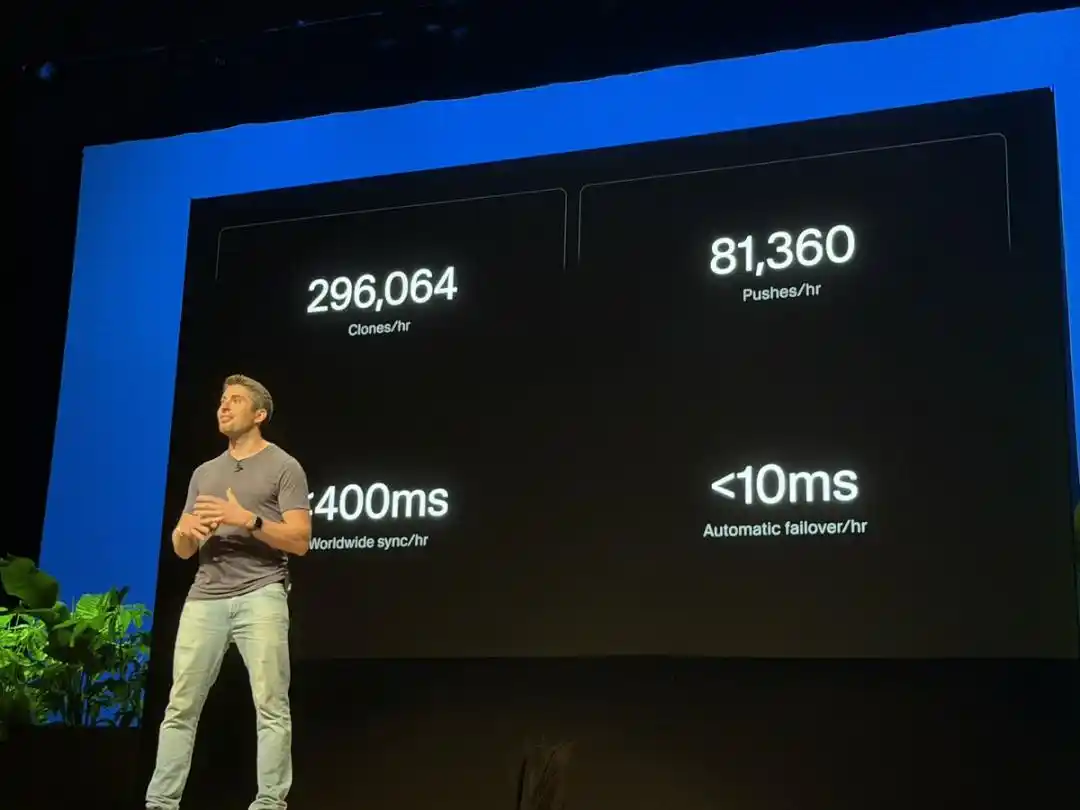
Software development is far more than just writing code. It also includes testing, reviewing, merging, and deploying correctly. We've been working hard to find the best ways to accelerate these parts of the software development process.

"Over the past few years, we've noticed a trend: as these companies start adopting AI programming, the tools they've relied on in the past are beginning to become unreliable. That's because AI tools have completely transformed the industry over the last few years. They've given every developer the chance to become a 10x to 100x more productive developer," Tomas said. "But that change also requires developer tools to fundamentally change. That's why, after being acquired by Cursor, we accelerated our most ambitious project: rebuilding this layer of infrastructure from scratch."

Reportedly, Origin is scalable to handle agent workloads, supports API and MCP extensions, and has built-in agent mechanisms for automatically resolving merge conflicts and collaboration failures.

One developer commented, "My favorite feature is probably automatic conflict resolution. When dozens of AI agents submit code simultaneously, causing huge merge conflicts, Origin will be able to automatically fix those conflicts."

"Perhaps it's time for a competitor to GitHub, to see if that can bring about change," another netizen quipped. "GitHub watches everyone slowly recreate its features, one by one." Of course, some also questioned, "Cursor can't even manage its own customer service, and now they want to do Git?"

Officially, Origin is set to launch this fall, with a waitlist now open. Some developers worry that by the time this "future" product actually launches, people might have forgotten about it.

Conclusion

Many are impressed by the achievements of Cursor, founded in 2023 by four MIT graduates: starting as a crypto communications startup, later expanding into AI programming tools. The company was one of the earliest to fully integrate major model capabilities into an IDE. It is a fork of Visual Studio Code with deep AI integration. However, incumbent platforms and larger AI companies have since introduced similar features.

Currently, Cursor's annualized revenue has reached several billion dollars. But as Anthropic's Claude Code gained dominance in this space, Cursor's market share has also declined. Foreign media reports indicate that Cursor is still striving to achieve profitability.

Cursor's tools allow developers to switch between different AI models, including those from OpenAI, Anthropic, xAI, Google, and others. The company competes with Anthropic's Claude Code and OpenAI's Codex, products capable of writing code, debugging software, and automating tasks.

As a wholly-owned subsidiary of SpaceX, Cursor now has more computing power, and some analysts suggest SpaceX can also leverage this to win lucrative enterprise customers. Previously, many enterprise customers largely avoided using SpaceX's self-developed chatbot assistant, Grok. Competing with Claude and ChatGPT, Musk positions Grok as an "anti-woke," truth-seeking chatbot, but it still lags behind other frontier models.

News of Cursor's acquisition by SpaceX emerged as early as April. At that time, SpaceX signed a compute and option agreement with Anysphere, Cursor's parent company. SpaceX would provide Cursor with GPU cluster compute at a certain scale, and the two would collaborate to improve existing models, including Grok, and potentially jointly develop new AI models and related products.

At the time, this collaboration did not equate to an acquisition. According to SpaceX's prospectus, SpaceX obtained a right, but not an obligation, to acquire Cursor in the future at a pre-agreed price. If SpaceX exercised the option after this offering, the consideration would be paid in SpaceX Class A common stock, based on an implied equity valuation of $60 billion for Cursor and the volume-weighted average closing price of SpaceX Class A common stock over the seven consecutive trading days preceding the acquisition's completion.

The agreement also included a substantial exit "breakup fee." If SpaceX terminated the option agreement, or if Cursor terminated it due to a material breach by SpaceX, Cursor would be entitled to a $1.5 billion termination fee, plus $8.5 billion in deferred service fees under the agreement, totaling $10 billion. The fee could be paid in cash; if SpaceX's IPO had not been completed by then, it could also be paid in Class A common stock.

SpaceX completed its public offering last Friday, with its stock rising 19% on the first day, 20% on Monday, and about 5% on Tuesday, with a current market capitalization of approximately $2.66 trillion. After the stock price increase, SpaceX's market cap surpassed Amazon's on Tuesday, entering the ranks of the top 5 US-listed companies by market value.

Today, SpaceX's acquisition of Cursor is finalized, but it's also a new beginning. Whether the two can disrupt the current market landscape as many developers hope remains to be seen.

References:

https://www.wsj.com/business/spacex-agrees-to-buy-ai-coding-agent-cursor-for-60-billion-7a473340?st=2addXh&reflink=article_copyURL_share

https://x.com/morganlinton/status/2066946225837109735

This article is from WeChat official account "InfoQ" (ID: infoqchina), author: Chu Xingjuan.

Criptomoedas em alta

Perguntas relacionadas

QWhat is the key reason why Cursor's new 1.5T+ model is significant, according to its CEO Michael Truell?

AThe key reasons are its scale, being on par with OpenAI's AGI-level models; its training from scratch, which allows for better control over model behavior; and most importantly, the 10 to 20 times increase in computational resources, which enables more experiments and longer training to achieve differentiated capabilities.

QWhat is Cursor's new 'Origin' platform, and who is its primary target competitor?

AOrigin is an 'agent-native' Git hosting platform designed for a future with numerous AI agents performing tasks like cloning, committing, and reviewing code in parallel. Its primary target competitor is Microsoft's GitHub.

QWhat was the reported implied equity value of Cursor in the SpaceX acquisition deal?

AThe implied equity value of Cursor in the SpaceX acquisition deal was $60 billion, to be paid in SpaceX A-class common stock.

QAccording to the article, what is the broader goal for Cursor's new model, beyond just writing code?

AThe broader goal is to build a useful AI model with stronger general intelligence. It aims to help anyone build what they want on a computer, encompassing all the capabilities one would expect from an engineering colleague, such as using tools, monitoring, planning, testing software, and interacting with interfaces.

QWhat was one of the major concerns or challenges mentioned for Cursor prior to the SpaceX deal?

APrior to the SpaceX deal, a major challenge for Cursor was that its market share was declining as Anthropic's Claude Code gained dominance in the AI programming tool space, and the company was still working towards achieving profitability.

Leituras Relacionadas

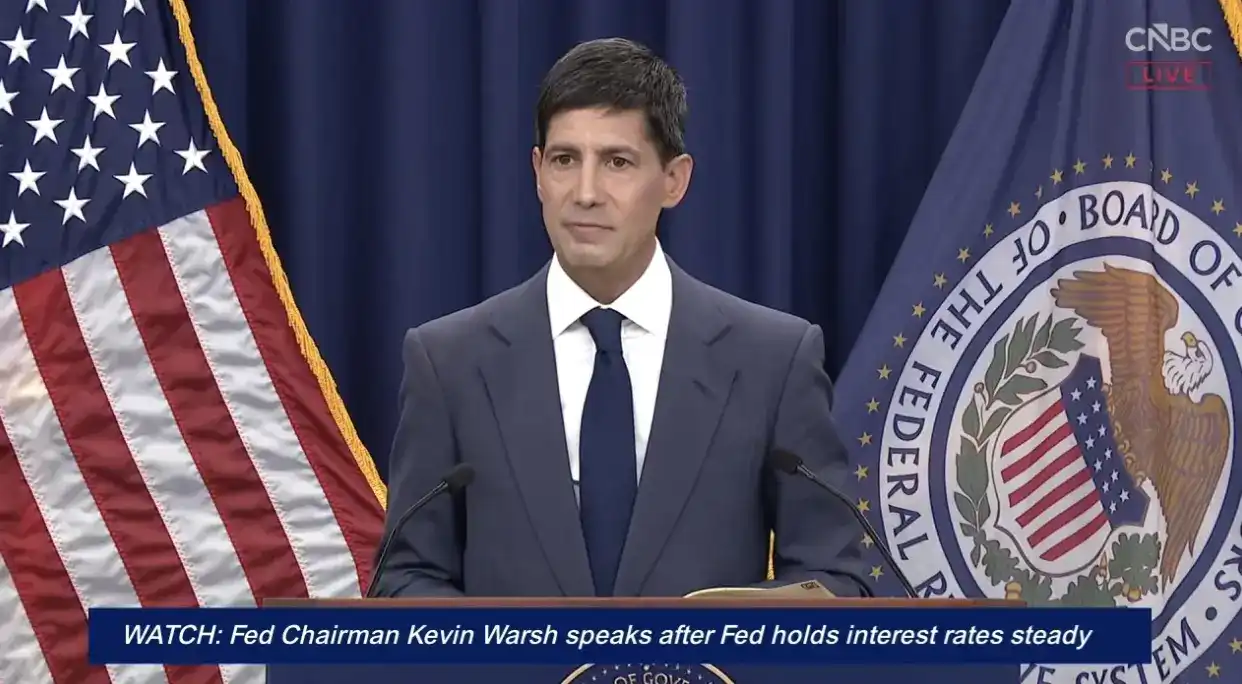
Full Debut Q&A! Fed Chair Wash: Firmly Adhering to 2% Inflation Target, Establishing Five Special Task Forces, Personally Did Not Submit Dot Plot

Federal Reserve Chair Kevin Warsh delivered his first FOMC press conference, maintaining the federal funds rate at 3.5%-3.75% and emphasizing the Committee's unanimous and explicit commitment to achieving its 2% inflation target. Key announcements included significant changes to Fed communication and operations. The policy statement was significantly shortened and, notably, forward guidance was removed. Chair Warsh broke from precedent by declining to submit his own economic forecasts and "dot plot." He announced the immediate formation of five special working groups focusing on: Fed communication, the balance sheet, data sources, productivity and employment (including AI's impact), and the inflation framework. These groups, which will include external experts, are tasked with recommending improvements by year-end. One key group will review the Fed's $6.7 trillion balance sheet to assess the roles of interest rates versus balance sheet tools in monetary policy. Warsh characterized the current restrictive stance of policy as "uneven," noting its effect on housing but questioning its impact on financial markets where conditions appear less restrictive. He expressed a desire to move away from a "Fed-speak" driven market, arguing that markets should react to economic data rather than Fed commentary to provide better informational signals. On inflation, he stated there is no need to reconsider the 2% target until the Fed re-establishes its commitment and capability to achieve it. Economic projections (SEP) from other officials showed a split on the rate outlook for 2024, with half expecting at least one hike and half forecasting unchanged or lower rates. The median projection saw the federal funds rate at 3.8% by year-end 2024. Following the announcements, risk assets sold off sharply, Treasury yields rose, and the dollar strengthened.

marsbitHá 13m

Full Debut Q&A! Fed Chair Wash: Firmly Adhering to 2% Inflation Target, Establishing Five Special Task Forces, Personally Did Not Submit Dot Plot

marsbitHá 13m

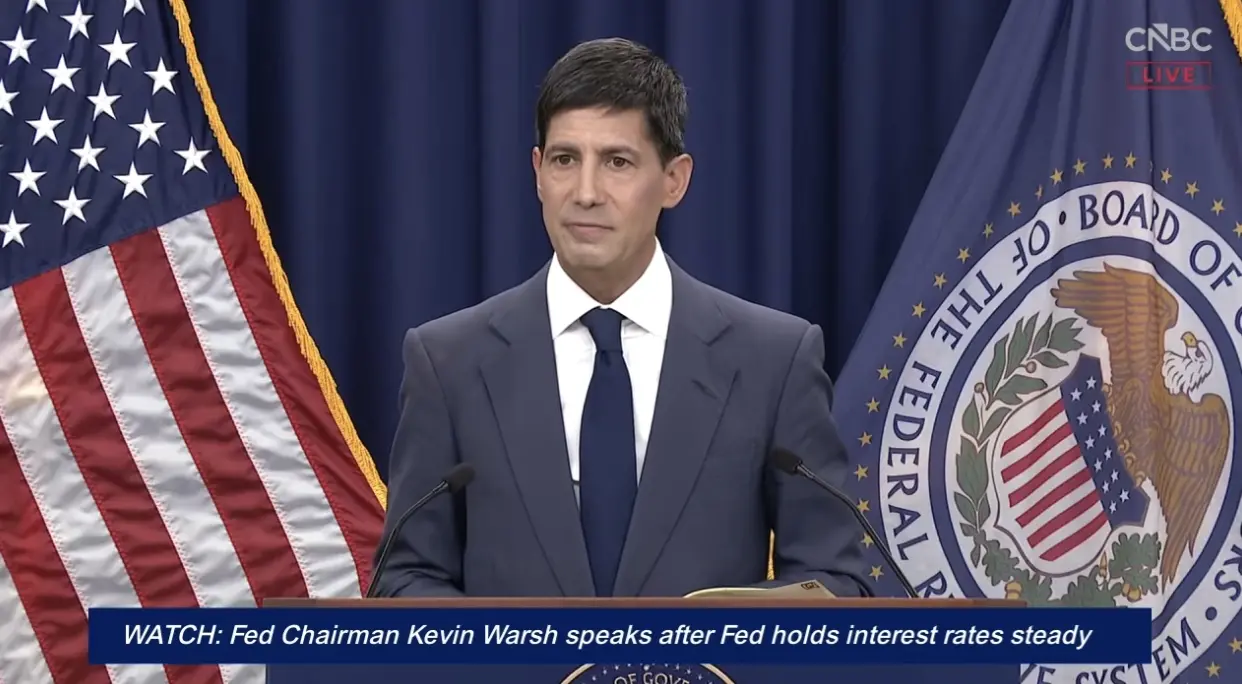
Full First Q&A! Fed Chair Warsh: Sticks to 2% Inflation Target, Establishes Five Special Working Groups, Personally Did Not Submit Dot Plot

The Federal Reserve, under new Chair Kevin Warsh, held its first FOMC meeting, maintaining the federal funds rate target range at 3.5% to 3.75%. The central bank issued a significantly shortened policy statement, explicitly removing forward guidance. Chair Warsh delivered a strong, unified commitment to achieving the 2% inflation target, stating the FOMC has the "capability and the commitment" to restore price stability and sees no need to review the target itself at this time. Warsh announced the immediate formation of five special working groups to examine and propose improvements in key areas by year-end: Fed communication, the balance sheet (including a review of the $6.7 trillion portfolio and its role in policy), data sources and methodology, productivity and employment (including AI's impact), and the inflation framework. In a break from tradition, Chair Warsh did not submit his own economic projections or "dot plot." The submitted Summary of Economic Projections (SEP) showed a split among other officials: half anticipate at least one rate hike this year, while half expect rates to remain steady or fall. The median projection sees the federal funds rate at 3.8% by year-end 2026. Warsh characterized the current policy stance as "uneven," noting restrictive effects in sectors like housing but less so in financial markets. He emphasized a desire to move away from a market dynamic overly focused on Fed signaling, advocating for markets to react more to economic data. On AI, he called it potentially the most significant economic change in his adult life, driving clear demand but with uncertain timing and scale on the supply side, creating a "race" between the two.

链捕手Há 15m

Full First Q&A! Fed Chair Warsh: Sticks to 2% Inflation Target, Establishes Five Special Working Groups, Personally Did Not Submit Dot Plot

链捕手Há 15m

The DeepSeek Financing Story

DeepSeek's financing round, totaling approximately 3 billion USD, concluded recently, revealing details about the process and key investors. The round was initiated around April with strict initial terms: a minimum commitment of 5 billion RMB, no syndication, and a pure RMB structure. These were later relaxed, with the minimum ticket size reduced to 1.5 billion RMB. A pivotal four-hour online investor meeting in mid-May served as the primary interaction for many backers with DeepSeek's founder, Liang Wenfeng. Despite not being a naturally eloquent speaker, Liang's philosophy deeply resonated. He consistently emphasized the company's singular focus on AGI (Artificial General Intelligence), the principle of "less is more," extreme caution in spending, and the paramount importance of team stability. His notable quotes included describing the team as "ordinary people doing extraordinary things" and stating that "AGI is a big enough thing; everything else is just process." The final investor list featured 10 entities, but underlying fund structures indicate participation from nearly 100 institutions and individuals. Notable lead investors include Monolith Capital (increasing its commitment from 1.5 to 3 billion RMB), Zhenxingu Capital, IDG Capital, and state-affiliated investors like Guozhitou. Conspicuously absent were major firms like Sequoia China and Hillhouse Capital, despite earlier speculation about their involvement. A core condition set by Liang Wenfeng for all investors, whether corporate or venture capital, was a strict prohibition against poaching DeepSeek employees or encouraging them to leave to start ventures. The financing process highlighted DeepSeek's unexpected openness to external capital, surprising many in the investment community. The company's low-profile nature, combined with its ambitious AGI vision and principled approach, fostered a sense of reverence among participating investors, many of whom were reluctant to discuss the deal publicly, preferring to maintain its discreet and purposeful ethos.

链捕手Há 22m

The DeepSeek Financing Story

链捕手Há 22m

The DeepSeek Fundraising Story

"The DeepSeek Funding Story: Insights from the $2.15 Billion Round" This article details behind-the-scenes narratives from DeepSeek's recent massive funding round. Key highlights include the legendary four-hour online investor meeting where CEO Liang Wenfeng, despite not being a charismatic speaker, impressed attendees with his focus on AGI and team stability. He emphasized the philosophy of "ordinary people doing extraordinary things" and a steadfast commitment to solely advancing intelligence. The fundraising process, initiated in April, saw initial demands for a minimum investment of 5 billion RMB, no syndication, and a pure RMB structure. These terms were later adjusted to a 1.5 billion RMB minimum to accommodate more investors. A notable absence was the lack of participation from major VC firms Sequoia China and Hillhouse Capital, despite early rumors, making IDG the only established VC in the final lineup. The investor list, while showing 10 entities, actually involved nearly 100 underlying institutions and individuals upon closer examination. Significant participants included Monolith Capital, which doubled its commitment to 3 billion RMB, and Zhenxingu Capital, an unexpected entrant. Liang Wenfeng's paramount condition for all investors was a strict agreement not to poach DeepSeek employees. The article reflects on DeepSeek's unexpected openness to funding and the mix of strategies—synergy, insight, brand alignment, and persistence—that secured investors a stake. The overarching sentiment among participants is one of pride and a shared belief in DeepSeek's potential to become a landmark Chinese company, driven by a profound sense of purpose in the AGI race.

marsbitHá 24m

The DeepSeek Fundraising Story

marsbitHá 24m

DAT Companies Take on Side Businesses

The article details the strategic shifts of Digital Asset Treasury (DAT) companies amid a prolonged market downturn. Initially popularized by firms like MicroStrategy, the DAT model—where companies hold cryptocurrencies on their balance sheets—has faced significant pressure as crypto ETFs eroded their investment thesis and bear markets strained finances. Key players are adapting in several ways. Some, like ETHzilla, have abandoned the model entirely. Others are pivoting towards becoming active, revenue-generating participants in the crypto ecosystem rather than passive holders. This evolution is taking two main paths: 1. **Transformation into Institutional Crypto Asset Managers:** Companies like SharpLink Gaming and GameSquare are leveraging their holdings to generate yield, moving beyond simple storage. They employ strategies like 100% ETH staking or using machine learning to optimize DeFi yields, positioning themselves as platforms offering institutional-grade crypto yield products. 2. **Becoming Blockchain Infrastructure Operators:** This is prominent in the Solana ecosystem. Firms like DeFi Development and SOL Strategies are acquiring validator businesses, issuing liquid staking tokens (e.g., dfdvSOL, fwdSOL), and integrating them into DeFi protocols. They generate fee-based revenue from these operations, building network effects. The article notes that successful转型 hinges on building operational expertise and defensible business models around crypto assets, such as technical advantages or deep ecosystem integration. However, these new paths carry risks like smart contract vulnerabilities or ecosystem dependence. Ultimately, this collective shift signals a maturation phase for the DAT movement. It highlights that in crypto, sustainable value is increasingly tied to active participation, cash flow generation, and providing real utility, rather than speculative capital allocation alone.

Foresight NewsHá 27m

DAT Companies Take on Side Businesses

Foresight NewsHá 27m

Trading

Spot
Futuros

Artigos em Destaque

O que é $S$

Compreender o SPERO: Uma Visão Abrangente Introdução ao SPERO À medida que o panorama da inovação continua a evoluir, o surgimento de tecnologias web3 e projetos de criptomoeda desempenha um papel fundamental na formação do futuro digital. Um projeto que tem atraído atenção neste campo dinâmico é o SPERO, denotado como SPERO,$$s$. Este artigo tem como objetivo reunir e apresentar informações detalhadas sobre o SPERO, para ajudar entusiastas e investidores a compreender as suas bases, objetivos e inovações nos domínios web3 e cripto. O que é o SPERO,$$s$? O SPERO,$$s$ é um projeto único dentro do espaço cripto que procura aproveitar os princípios da descentralização e da tecnologia blockchain para criar um ecossistema que promove o envolvimento, a utilidade e a inclusão financeira. O projeto é concebido para facilitar interações peer-to-peer de novas maneiras, proporcionando aos utilizadores soluções e serviços financeiros inovadores. No seu núcleo, o SPERO,$$s$ visa capacitar indivíduos ao fornecer ferramentas e plataformas que melhoram a experiência do utilizador no espaço das criptomoedas. Isso inclui a possibilidade de métodos de transação mais flexíveis, a promoção de iniciativas impulsionadas pela comunidade e a criação de caminhos para oportunidades financeiras através de aplicações descentralizadas (dApps). A visão subjacente do SPERO,$$s$ gira em torno da inclusão, visando fechar lacunas dentro das finanças tradicionais enquanto aproveita os benefícios da tecnologia blockchain. Quem é o Criador do SPERO,$$s$? A identidade do criador do SPERO,$$s$ permanece algo obscura, uma vez que existem recursos publicamente disponíveis limitados que fornecem informações detalhadas sobre o(s) seu(s) fundador(es). Esta falta de transparência pode resultar do compromisso do projeto com a descentralização—uma ética que muitos projetos web3 partilham, priorizando contribuições coletivas em vez de reconhecimento individual. Ao centrar as discussões em torno da comunidade e dos seus objetivos coletivos, o SPERO,$$s$ incorpora a essência do empoderamento sem destacar indivíduos específicos. Assim, compreender a ética e a missão do SPERO é mais importante do que identificar um criador singular. Quem são os Investidores do SPERO,$$s$? O SPERO,$$s$ é apoiado por uma diversidade de investidores que vão desde capitalistas de risco a investidores-anjo dedicados a promover a inovação no setor cripto. O foco desses investidores geralmente alinha-se com a missão do SPERO—priorizando projetos que prometem avanço tecnológico social, inclusão financeira e governança descentralizada. Essas fundações de investidores estão tipicamente interessadas em projetos que não apenas oferecem produtos inovadores, mas que também contribuem positivamente para a comunidade blockchain e os seus ecossistemas. O apoio desses investidores reforça o SPERO,$$s$ como um concorrente notável no domínio em rápida evolução dos projetos cripto. Como Funciona o SPERO,$$s$? O SPERO,$$s$ emprega uma estrutura multifacetada que o distingue de projetos de criptomoeda convencionais. Aqui estão algumas das características-chave que sublinham a sua singularidade e inovação: Governança Descentralizada: O SPERO,$$s$ integra modelos de governança descentralizada, capacitando os utilizadores a participar ativamente nos processos de tomada de decisão sobre o futuro do projeto. Esta abordagem promove um sentido de propriedade e responsabilidade entre os membros da comunidade. Utilidade do Token: O SPERO,$$s$ utiliza o seu próprio token de criptomoeda, concebido para servir várias funções dentro do ecossistema. Esses tokens permitem transações, recompensas e a facilitação de serviços oferecidos na plataforma, melhorando o envolvimento e a utilidade gerais. Arquitetura em Camadas: A arquitetura técnica do SPERO,$$s$ suporta modularidade e escalabilidade, permitindo a integração contínua de funcionalidades e aplicações adicionais à medida que o projeto evolui. Esta adaptabilidade é fundamental para manter a relevância no panorama cripto em constante mudança. Envolvimento da Comunidade: O projeto enfatiza iniciativas impulsionadas pela comunidade, empregando mecanismos que incentivam a colaboração e o feedback. Ao nutrir uma comunidade forte, o SPERO,$$s$ pode melhor atender às necessidades dos utilizadores e adaptar-se às tendências do mercado. Foco na Inclusão: Ao oferecer taxas de transação baixas e interfaces amigáveis, o SPERO,$$s$ visa atrair uma base de utilizadores diversificada, incluindo indivíduos que anteriormente podem não ter participado no espaço cripto. Este compromisso com a inclusão alinha-se com a sua missão abrangente de empoderamento através da acessibilidade. Cronologia do SPERO,$$s$ Compreender a história de um projeto fornece insights cruciais sobre a sua trajetória de desenvolvimento e marcos. Abaixo está uma cronologia sugerida que mapeia eventos significativos na evolução do SPERO,$$s$: Fase de Conceituação e Ideação: As ideias iniciais que formam a base do SPERO,$$s$ foram concebidas, alinhando-se de perto com os princípios de descentralização e foco na comunidade dentro da indústria blockchain. Lançamento do Whitepaper do Projeto: Após a fase conceitual, um whitepaper abrangente detalhando a visão, os objetivos e a infraestrutura tecnológica do SPERO,$$s$ foi lançado para atrair o interesse e o feedback da comunidade. Construção da Comunidade e Primeiros Envolvimentos: Esforços ativos de divulgação foram feitos para construir uma comunidade de primeiros adotantes e investidores potenciais, facilitando discussões em torno dos objetivos do projeto e angariando apoio. Evento de Geração de Tokens: O SPERO,$$s$ realizou um evento de geração de tokens (TGE) para distribuir os seus tokens nativos a apoiantes iniciais e estabelecer liquidez inicial dentro do ecossistema. Lançamento da dApp Inicial: A primeira aplicação descentralizada (dApp) associada ao SPERO,$$s$ foi lançada, permitindo que os utilizadores interagissem com as funcionalidades principais da plataforma. Desenvolvimento Contínuo e Parcerias: Atualizações e melhorias contínuas nas ofertas do projeto, incluindo parcerias estratégicas com outros players no espaço blockchain, moldaram o SPERO,$$s$ em um jogador competitivo e em evolução no mercado cripto. Conclusão O SPERO,$$s$ é um testemunho do potencial do web3 e das criptomoedas para revolucionar os sistemas financeiros e capacitar indivíduos. Com um compromisso com a governança descentralizada, o envolvimento da comunidade e funcionalidades inovadoras, abre caminho para um panorama financeiro mais inclusivo. Como em qualquer investimento no espaço cripto em rápida evolução, potenciais investidores e utilizadores são incentivados a pesquisar minuciosamente e a envolver-se de forma ponderada com os desenvolvimentos em curso dentro do SPERO,$$s$. O projeto demonstra o espírito inovador da indústria cripto, convidando a uma exploração mais aprofundada das suas inúmeras possibilidades. Embora a jornada do SPERO,$$s$ ainda esteja a desenrolar-se, os seus princípios fundamentais podem, de facto, influenciar o futuro de como interagimos com a tecnologia, as finanças e uns com os outros em ecossistemas digitais interconectados.

69 Visualizações TotaisPublicado em {updateTime}Atualizado em 2024.12.17

O que é $S$

O que é AGENT S

Agent S: O Futuro da Interação Autónoma no Web3 Introdução No panorama em constante evolução do Web3 e das criptomoedas, as inovações estão constantemente a redefinir a forma como os indivíduos interagem com plataformas digitais. Um projeto pioneiro, o Agent S, promete revolucionar a interação humano-computador através do seu framework aberto e agente. Ao abrir caminho para interações autónomas, o Agent S visa simplificar tarefas complexas, oferecendo aplicações transformadoras em inteligência artificial (IA). Esta exploração detalhada irá aprofundar-se nas complexidades do projeto, nas suas características únicas e nas implicações para o domínio das criptomoedas. O que é o Agent S? O Agent S é um framework aberto e agente, especificamente concebido para abordar três desafios fundamentais na automação de tarefas computacionais: Aquisição de Conhecimento Específico de Domínio: O framework aprende inteligentemente a partir de várias fontes de conhecimento externas e experiências internas. Esta abordagem dupla capacita-o a construir um rico repositório de conhecimento específico de domínio, melhorando o seu desempenho na execução de tarefas. Planeamento ao Longo de Longos Horizontes de Tarefas: O Agent S emprega planeamento hierárquico aumentado por experiência, uma abordagem estratégica que facilita a decomposição e execução eficientes de tarefas intrincadas. Esta característica melhora significativamente a sua capacidade de gerir múltiplas subtarefas de forma eficiente e eficaz. Gestão de Interfaces Dinâmicas e Não Uniformes: O projeto introduz a Interface Agente-Computador (ACI), uma solução inovadora que melhora a interação entre agentes e utilizadores. Utilizando Modelos de Linguagem Multimodais de Grande Escala (MLLMs), o Agent S pode navegar e manipular diversas interfaces gráficas de utilizador de forma fluida. Através destas características pioneiras, o Agent S fornece um framework robusto que aborda as complexidades envolvidas na automação da interação humana com máquinas, preparando o terreno para uma infinidade de aplicações em IA e além. Quem é o Criador do Agent S? Embora o conceito de Agent S seja fundamentalmente inovador, informações específicas sobre o seu criador permanecem elusivas. O criador é atualmente desconhecido, o que destaca ou o estágio nascente do projeto ou a escolha estratégica de manter os membros fundadores em anonimato. Independentemente da anonimidade, o foco permanece nas capacidades e no potencial do framework. Quem são os Investidores do Agent S? Como o Agent S é relativamente novo no ecossistema criptográfico, informações detalhadas sobre os seus investidores e financiadores não estão explicitamente documentadas. A falta de informações disponíveis publicamente sobre as fundações de investimento ou organizações que apoiam o projeto levanta questões sobre a sua estrutura de financiamento e roteiro de desenvolvimento. Compreender o apoio é crucial para avaliar a sustentabilidade do projeto e o seu impacto potencial no mercado. Como Funciona o Agent S? No núcleo do Agent S reside uma tecnologia de ponta que lhe permite funcionar eficazmente em diversos ambientes. O seu modelo operacional é construído em torno de várias características-chave: Interação Humano-Computador Semelhante: O framework oferece planeamento avançado em IA, esforçando-se para tornar as interações com computadores mais intuitivas. Ao imitar o comportamento humano na execução de tarefas, promete elevar as experiências dos utilizadores. Memória Narrativa: Utilizada para aproveitar experiências de alto nível, o Agent S utiliza memória narrativa para acompanhar os históricos de tarefas, melhorando assim os seus processos de tomada de decisão. Memória Episódica: Esta característica fornece aos utilizadores orientações passo a passo, permitindo que o framework ofereça suporte contextual à medida que as tarefas se desenrolam. Suporte para OpenACI: Com a capacidade de funcionar localmente, o Agent S permite que os utilizadores mantenham o controlo sobre as suas interações e fluxos de trabalho, alinhando-se com a ética descentralizada do Web3. Fácil Integração com APIs Externas: A sua versatilidade e compatibilidade com várias plataformas de IA garantem que o Agent S possa integrar-se perfeitamente em ecossistemas tecnológicos existentes, tornando-o uma escolha apelativa para desenvolvedores e organizações. Estas funcionalidades contribuem coletivamente para a posição única do Agent S no espaço cripto, à medida que automatiza tarefas complexas e em múltiplos passos com mínima intervenção humana. À medida que o projeto evolui, as suas potenciais aplicações no Web3 podem redefinir a forma como as interações digitais se desenrolam. Cronologia do Agent S O desenvolvimento e os marcos do Agent S podem ser encapsulados numa cronologia que destaca os seus eventos significativos: 27 de Setembro de 2024: O conceito de Agent S foi lançado num artigo de pesquisa abrangente intitulado “Um Framework Agente Aberto que Usa Computadores como um Humano”, mostrando a base para o projeto. 10 de Outubro de 2024: O artigo de pesquisa foi disponibilizado publicamente no arXiv, oferecendo uma exploração aprofundada do framework e da sua avaliação de desempenho com base no benchmark OSWorld. 12 de Outubro de 2024: Uma apresentação em vídeo foi lançada, proporcionando uma visão visual das capacidades e características do Agent S, envolvendo ainda mais potenciais utilizadores e investidores. Estes marcos na cronologia não apenas ilustram o progresso do Agent S, mas também indicam o seu compromisso com a transparência e o envolvimento da comunidade. Pontos-Chave Sobre o Agent S À medida que o framework Agent S continua a evoluir, várias características-chave destacam-se, sublinhando a sua natureza inovadora e potencial: Framework Inovador: Concebido para proporcionar um uso intuitivo de computadores semelhante à interação humana, o Agent S traz uma abordagem nova à automação de tarefas. Interação Autónoma: A capacidade de interagir autonomamente com computadores através de GUI significa um avanço em direção a soluções computacionais mais inteligentes e eficientes. Automação de Tarefas Complexas: Com a sua metodologia robusta, pode automatizar tarefas complexas e em múltiplos passos, tornando os processos mais rápidos e menos propensos a erros. Melhoria Contínua: Os mecanismos de aprendizagem permitem que o Agent S melhore a partir de experiências passadas, aprimorando continuamente o seu desempenho e eficácia. Versatilidade: A sua adaptabilidade em diferentes ambientes operacionais, como OSWorld e WindowsAgentArena, garante que pode servir uma ampla gama de aplicações. À medida que o Agent S se posiciona no panorama do Web3 e das criptomoedas, o seu potencial para melhorar as capacidades de interação e automatizar processos significa um avanço significativo nas tecnologias de IA. Através do seu framework inovador, o Agent S exemplifica o futuro das interações digitais, prometendo uma experiência mais fluida e eficiente para os utilizadores em diversas indústrias. Conclusão O Agent S representa um ousado avanço na união da IA e do Web3, com a capacidade de redefinir a forma como interagimos com a tecnologia. Embora ainda esteja nas suas fases iniciais, as possibilidades para a sua aplicação são vastas e cativantes. Através do seu framework abrangente que aborda desafios críticos, o Agent S visa trazer interações autónomas para o primeiro plano da experiência digital. À medida que avançamos mais profundamente nos domínios das criptomoedas e da descentralização, projetos como o Agent S desempenharão, sem dúvida, um papel crucial na formação do futuro da tecnologia e da colaboração humano-computador.

679 Visualizações TotaisPublicado em {updateTime}Atualizado em 2025.01.14

O que é AGENT S

Como comprar S

Bem-vindo à HTX.com!Tornámos a compra de Sonic (S) simples e conveniente.Segue o nosso guia passo a passo para iniciar a tua jornada no mundo das criptos.Passo 1: cria a tua conta HTXUtiliza o teu e-mail ou número de telefone para te inscreveres numa conta gratuita na HTX.Desfruta de um processo de inscrição sem complicações e desbloqueia todas as funcionalidades.Obter a minha contaPasso 2: vai para Comprar Cripto e escolhe o teu método de pagamentoCartão de crédito/débito: usa o teu visa ou mastercard para comprar Sonic (S) instantaneamente.Saldo: usa os fundos da tua conta HTX para transacionar sem problemas.Terceiros: adicionamos métodos de pagamento populares, como Google Pay e Apple Pay, para aumentar a conveniência.P2P: transaciona diretamente com outros utilizadores na HTX.Mercado de balcão (OTC): oferecemos serviços personalizados e taxas de câmbio competitivas para os traders.Passo 3: armazena teu Sonic (S)Depois de comprar o teu Sonic (S), armazena-o na tua conta HTX.Alternativamente, podes enviá-lo para outro lugar através de transferência blockchain ou usá-lo para transacionar outras criptomoedas.Passo 4: transaciona Sonic (S)Transaciona facilmente Sonic (S) no mercado à vista da HTX.Acede simplesmente à tua conta, seleciona o teu par de trading, executa as tuas transações e monitoriza em tempo real.Oferecemos uma experiência de fácil utilização tanto para principiantes como para traders experientes.

1.3k Visualizações TotaisPublicado em {updateTime}Atualizado em 2026.06.02

Como comprar S

Discussões

Bem-vindo à Comunidade HTX. Aqui, pode manter-se informado sobre os mais recentes desenvolvimentos da plataforma e obter acesso a análises profissionais de mercado. As opiniões dos utilizadores sobre o preço de S (S) são apresentadas abaixo.

活动图片