Author: Max.S
Once, Ethereum was the narrative engine of the Web3 world. From the grand vision of "The Merge" to the myth of "ultrasound money" brought by the EIP-1559 burn mechanism, every key moment was accompanied by consensus狂欢 (consensus狂欢 -狂欢 can mean carnival/celebration, so perhaps 'consensus euphoria' or 'consensus celebration') and soaring prices. However, as we enter 2026, the sky above Ethereum has changed.
No longer radical dreams, but冷静的工程 (冷静的工程 -冷静 means calm, 工程 means engineering, so 'calm engineering' or 'sober engineering').
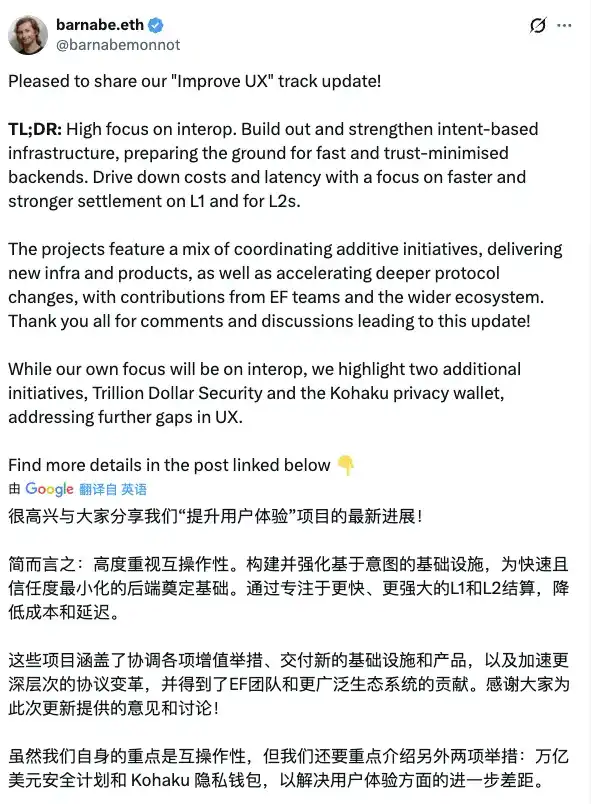
With the Ethereum Foundation recently updating its 2026 protocol priorities, a clear signal has been sent: Scale, Improve UX, and Harden the L1 have become the three main themes. This shift is less an active strategic adjustment and more a choice of "engineering survival" under competitive and real-world pressures. Industry competition is forcing this behemoth to move from "storytelling" to "doing engineering," from "narrative-driven growth" to "engineering-driven survival."
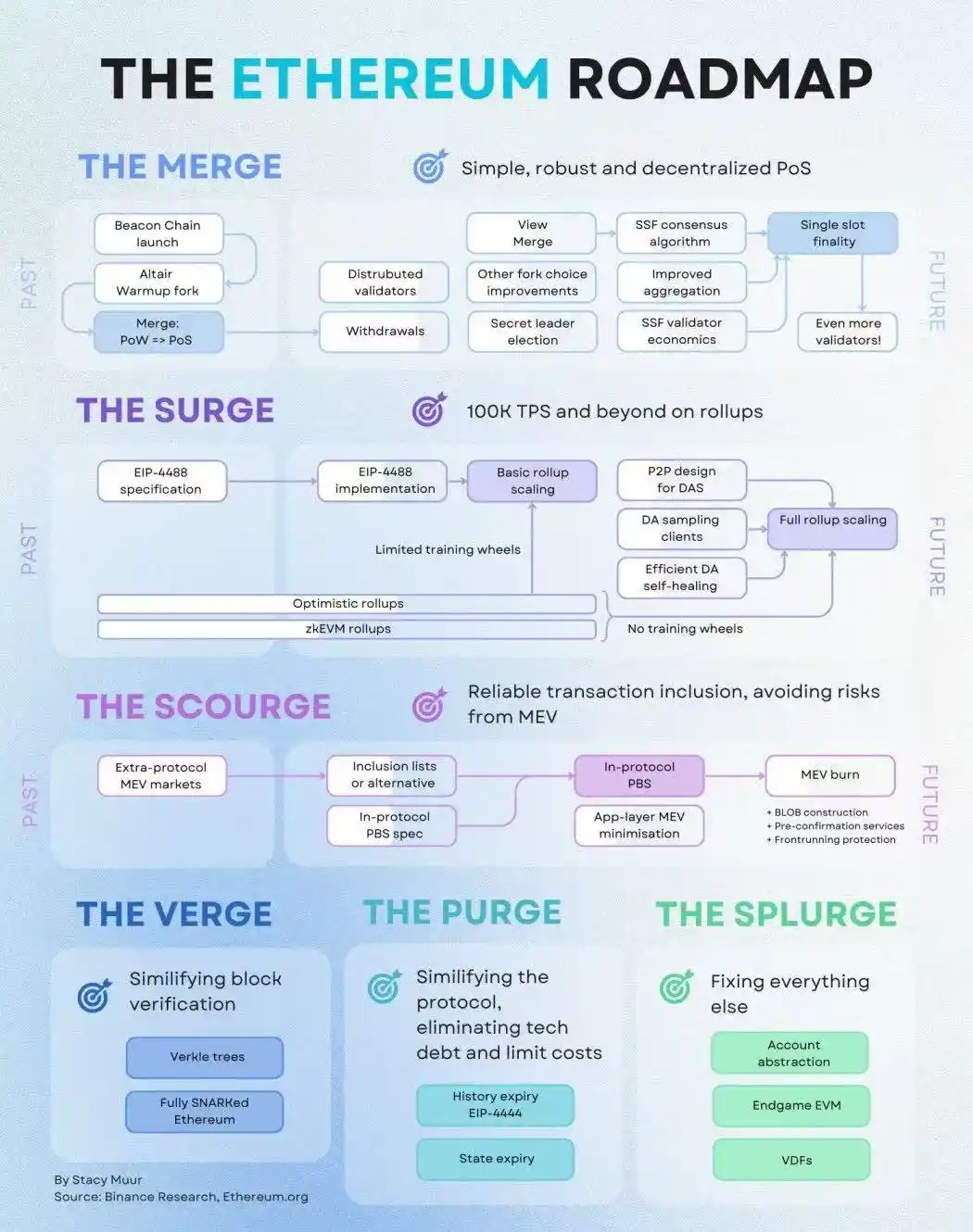
Looking back at Ethereum's history, from the smart contracts of the ICO era, to DeFi Summer, to the transition to PoS and the deflation narrative, every leap was accompanied by极强的市场叙事能力 (极强的市场叙事能力 -极强的 means extremely strong, 市场叙事能力 means market narrative ability, so 'extremely strong market narrative capability'). However, entering 2026, the marginal utility of narratives is diminishing, replaced by冰冷的数据指标与底层架构重构 (冰冷的数据指标 -冰冷 means icy/cold, 数据指标 means data metrics, so 'cold data metrics' and 底层架构重构 means 'underlying architectural restructuring').
The most iconic engineering leap in the roadmap is the upcoming Glamsterdam hard fork scheduled for mid-year. This upgrade directly addresses the long-standing pain points of Ethereum mainnet performance, with two core metrics being particularly crucial: first, significantly increasing the mainnet's Gas limit from the previous 60 million to 200 million; second, formally introducing a parallel execution architecture on the mainnet.
For a long time, Ethereum's EVM used a single-threaded serial processing model. This model has advantages in ensuring state consistency but becomes a fatal bottleneck in high-concurrency scenarios. Introducing parallel execution means Ethereum is expanding from a "single-lane road" to a "multi-lane highway."
Through block-level access lists, nodes can predict which transactions do not involve state conflicts, thereby processing multiple transactions simultaneously. Coupled with the Gas limit jump to 200 million, the amount of computation and transactions each block can accommodate will increase exponentially.
But this does not come without cost. The increase in the Gas limit directly challenges Ethereum's long-held底线 (底线 - bottom line) of "democratization of full nodes." State bloat will accelerate, and the storage and network bandwidth requirements for node hardware will increase dramatically. To hedge this risk, the Ethereum engineering team plans to push about 10% of validators within the year to switch from "re-executing all transactions" to "verifying zero-knowledge proofs." This is called "SNARKing the L1," which not only significantly lowers the hardware threshold for full nodes but is also a watershed moment in Ethereum's evolution from "repetitive labor" to "intelligent verification." This means that Ethereum's underlying computational model is undergoing a qualitative change, outsourcing or front-loading heavy computation, with L1 gradually shedding the burden of the complex execution layer. This is a pure engineering compromise and进步 (进步 - progress).
Performance Anxiety and Solana Alpenglow's Dimensionality Reduction Strike
Ethereum's moves on its underlying architecture are largely forced by the dimensionality reduction strikes from competitors. In 2026, the performance battle in the public blockchain arena has become白热化 (白热化 - white-hot, intensely competitive). Solana, with its Alpenglow upgrade, has completely abandoned its previous Proof of History (PoH) and Tower BFT consensus mechanisms, switching to a全新的 (全新的 - brand new) Votor and Rotor architecture.
The direct result of this underlying restructuring is: Solana's transaction finality has been reduced from 12.8 seconds to within 150 milliseconds. This is a极具破坏力的指标 (极具破坏力的指标 -极具破坏力 means extremely destructive, 指标 means metric, so 'an extremely disruptive metric'). A latency of 150 milliseconds has entered the response range of traditional Web2 internet infrastructure (like Google search or the Visa payment network). For applications极度敏感 (极度敏感 - extremely sensitive) to latency, such as high-frequency trading (HFT), fully on-chain derivative exchanges, and real-time payments, this constitutes a致命吸引力 (致命吸引力 - fatal attraction).
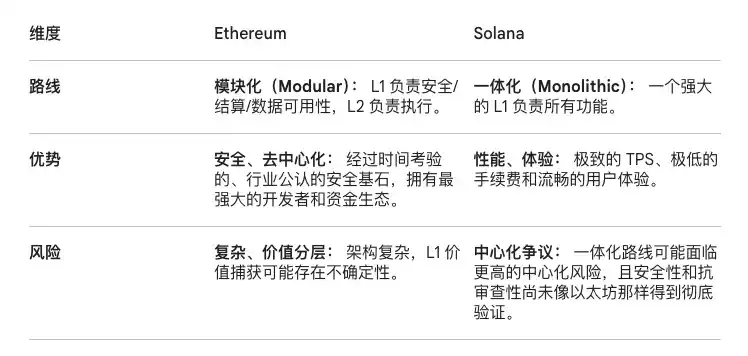
In contrast, although Ethereum's Glamsterdam upgrade and subsequent Heze-Bogota fork are committed to improving TPS and anti-censorship, its complex modular (Modular) architecture is inherently at a disadvantage in terms of cross-chain composability and latency. Ethereum's current block time is 12 seconds, but true finality requires several minutes. This architecture is固然稳如泰山 (固然稳如泰山 -固然 means admittedly, 稳如泰山 means as stable as Mount Tai, so 'admittedly rock-solid') when handling high-value, low-frequency asset settlements, but appears too笨重 (笨重 - cumbersome/clumsy) in the face of consumer-grade applications for the mass retail market. Ethereum's performance anxiety is essentially a路线之争 (路线之争 -路线 means path/route, 之争 means dispute, so 'a dispute over technical paths') between monolithic architecture and modular architecture during the period of technological explosion in 2026.
If Solana's步步紧逼 (步步紧逼 - step-by-step pressing,步步 means step by step, 紧逼 means pressing hard, so 'relentless pressure') is an external threat, then Ethereum also faces an internal paradox brought by its own strategy — the "L2 Paradox."
With the landing of the Pectra and Fusaka upgrades, and the maturation of PeerDAS technology, Ethereum's Rollup-centric scaling strategy has achieved great engineering胜利 (胜利 - victory). The data availability throughput of L2 has increased several times, and the capacity of data Blobs is also continuously growing. The direct result this brings is: L2 transaction fees have断崖式下降 (断崖式下降 - cliff-like drop) to $0.001 or even lower.
From a user experience perspective, this is a huge success, fully aligning with the "Improve UX" theme of the 2026 roadmap. Native Account Abstraction and Intent Frameworks are becoming普及 (普及 - widespread/popularized), making complex on-chain interactions彻底隐藏 (彻底隐藏 - completely hidden) behind seamless wallet operations.
However, this also raises a尖锐的问题 (尖锐的问题 - sharp/question): When users enjoy a smooth transaction experience costing $0.001 on L2, do they really still care what consensus mechanism the underlying Ethereum mainnet uses? The "decentralization legitimacy" that the Ethereum community is proud of, the anti-censorship network composed of thousands of independent validating nodes, is becoming an invisible, abstracted backend database in the eyes of the vast majority of end-users.
When application execution完全迁移 (完全迁移 - completely migrates) to Arbitrum, Base, or ZKsync, and the mainnet only serves as a data availability and state root verification layer, Ethereum not only loses direct reach to C-end users but also faces the risk of liquidity fragmentation and application layer hollowing out. This is not just a decoupling of technical architecture but also a decoupling of brand perception and user mindset.
From "selling Gas" to "selling security settlement services," the way ETH captures value has changed.
The evolution of the technical路线 (路线 - route/path) will ultimately be reflected in the asset's pricing model. The various changes currently happening in Ethereum are triggering a fundamental reshaping of ETH's value capture logic.
For most of the period from 2021 to 2024, ETH's value support mainly relied on the "world computer" narrative and the Gas fee burn mechanism brought by EIP-1559. The higher the on-chain activity, the more ETH was burned, and the stronger the deflation expectation of "Ultrasound Money" became. This model was essentially a C-end retail logic — Ethereum was "selling Gas."
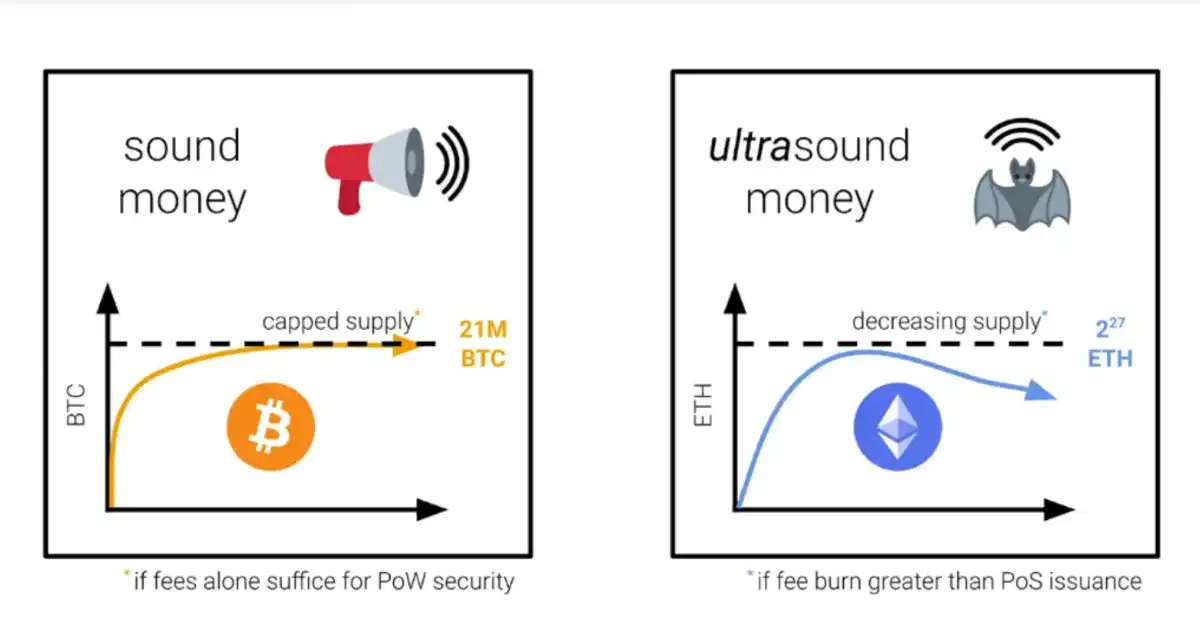
But entering 2026, the situation has changed dramatically. As execution layer activity irreversibly migrates to L2, the mainnet's Gas consumption has significantly decreased. Although L2s need to pay Data Availability (DA) fees to L1, against the backdrop of continuously expanding Blob space, this part of the fee income is far from enough to fill the gap left by the loss of L1 execution layer手续费 (手续费 - transaction fees). ETH's burn rate has dropped significantly, even returning to slight inflation during troughs, severely testing the traditional deflation expectation.
From the perspective of quantitative finance valuation models, ETH's DCF (Discounted Cash Flow) model is being rewritten. Ethereum is transforming from a high-margin computing platform面向零售端 (面向零售端 -面向 means facing/targeting, 零售端 means retail end, so 'targeting the retail end') to a low-margin, high-determinacy "security settlement layer"面向 B 端 (B端 - business end, B2B) (L2s甚至 L3甚至 L3甚至 - even L3s). Its new business model is no longer "selling Gas," but "selling economic security" and "anti-censorship finality."
Under this paradigm, the income structure of ETH as a monetary asset is changing. The落地 (落地 - implementation/landing) of ePBS (enshrined Proposer-Builder Separation) will restructure the MEV supply chain, making the distribution of MEV收益 (收益 -收益 means收益 income/收益 yield) within the validator network smoother and more predictable.
The baseline yield brought by staking and restaking will replace Gas burning as the core support for ETH's valuation. This makes ETH's asset attributes more aligned with traditional treasury bonds or institutional-grade clearing and settlement assets. It no longer needs fancy Meme coin trades to contribute transaction fees, but relies on its vast staking capital to provide immutable trust endorsement for the entire decentralized financial empire.
In 2026, Ethereum no longer tries to persuade the world with narratives, but proves itself with engineering capabilities.
This transformation is not only Ethereum's move for "engineering survival" under competitive and real-world pressures but also a redefinition of "what ETH is." When users no longer care about the underlying L1, when ETH's value capture model shifts from selling Gas to security and settlement, ETH must find new narratives to establish its position in the digital world.
Whether Ethereum can successfully transform, and whether ETH can capture the value of its ecological prosperity, will be key propositions that quantitative finance practitioners and all those interested in finance must closely watch in the coming years.