A Country That Has Been Mining Bitcoin for 8 Years Establishes Its Own Dedicated Crypto Bank

marsbitPublicado em 2026-06-18Última atualização em 2026-06-18

Resumo

Bhutan, a small Himalayan nation known for prioritizing Gross National Happiness over GDP, has established a dedicated crypto bank after eight years of Bitcoin mining. The DK Bank, located in the Gelephu Mindfulness City (GMC) Special Administrative Region, aims to fill the persistent banking gap for the crypto industry. Unlike traditional banks that often reject crypto firms or only handle their fiat transactions, DK Bank offers integrated multi-currency accounts where users can manage both fiat currencies and stablecoins like USDT and USDC, alongside services such as Bitcoin-backed loans. The bank operates under a unique "one country, two systems" governance model in GMC, which is designed to become a financial hub for South Asia. Its regulatory framework is modeled on Singapore's common law and Abu Dhabi Global Market's (ADGM) rules, offering a fast-track licensing process for firms already licensed in those jurisdictions. DK Bank and GMC authorities emphasize stringent, real-time on-chain and off-chain transaction monitoring to mitigate risks associated with anonymity in crypto. This move is part of Bhutan's longer-term strategic pivot toward institutional crypto services—including mining, custody, and asset management—rather than retail-focused speculative tokens. Officials stress diversification within the blockchain ecosystem to hedge against volatility in assets like Bitcoin. The development of supporting infrastructure, including an international airport managed by...

Author: Boaz Sobrado

Compilation: Luffy, Foresight News

"If you don't know how to do it, just avoid it."

DK Bank CEO Zheng YD used this phrase to explain the root cause of crypto enterprises frequently facing banking service disconnections. Located in Bhutan's newly built Gyalpo Mindfulness City, and also the only licensed bank in the area, it was established precisely to undertake the crypto business that other financial institutions shun.

"There has long been a huge supply gap in banking services for the crypto industry," Zheng YD said on the *On The Margin* podcast. "The root cause is that cryptocurrencies were born from decentralized protocols with inherent anonymity. The banking industry generally lacks corresponding risk control methods. To this day, the vast majority of institutions still don't know where to start."

DK Bank is jointly regulated by the Royal Monetary Authority of Bhutan and is at the core of a unique financial experiment. Bhutan is a small Himalayan nation with a population of less than a million. Compared to GDP, Gross National Happiness is this country's signature development indicator. Gyalpo Mindfulness City (GMC for short) is a special administrative zone in southern Bhutan. The project operator claims this area has independent governance rules.

"The new city is independent from mainland Bhutan in terms of administration, legislation, and judiciary," said Jigdrel Singay, Director of the Gyalpo Mindfulness City Authority and Head of Fintech Operations. He describes this governance model as "one country, two systems."

They are targeting a vast market that has long lacked supporting financial services. "South Asia has about 2 billion people, yet there is no financial services hub, equivalent to a gap in the region's financial gateway," Singay said. He hopes GMC can become South Asia's financial service center, much like Hong Kong is for China and Singapore is for Southeast Asia.

Fiat and Stablecoins in One Account

DK Bank's business positioning is very clear. Zheng YD stated that most banks claiming to support cryptocurrencies are only willing to handle the fiat business of crypto companies, with digital assets still needing to be custodied on external platforms.

"These banks will only say they won't close your account because you're a crypto business, but all your crypto asset flows cannot go through their channels," Zheng YD said. "We want to be different. We bridge the fiat and crypto asset systems, offering integrated multi-currency accounts and crypto custody services. Users can manage stablecoins like USDT and USDC in the same bank account, just like managing US dollars, British pounds, or Euros."

According to disclosed project information, the account supports 9 fiat currencies, along with Bitcoin pledge lending, and two-way fiat-to-crypto asset exchange and on/off-ramp channels. Implementation presents two major challenges. The first is the underlying architecture: traditional banks only batch-process business on weekdays from 9 to 5, whereas the crypto market operates 24/7 with real-time trading. Zheng YD admitted that bridging these two systems requires a highly difficult technical upgrade.

The second challenge is intercepting bad actors. Zheng YD did not shy away from industry issues. "We never deny there are bad actors in the crypto industry. Any industry will breed a certain proportion of non-compliant participants," he said. "Therefore, the Gyalpo New City Authority and DK Bank collaborate to complete risk screening from the user admission stage." Risk control doesn't stop at account opening: "We don't just monitor off-chain fund flows; we also track complete on-chain trajectories, scan wallet addresses, and verify every inflow, outflow, and counterparty information."

Zheng YD believes this track is worth pursuing, with the core judgment being that global financial services are gradually moving from off-chain to on-chain. "We believe global financial services will continue migrating on-chain. DK Bank aims to be the financial institution fully prepared to welcome this transformation."

Adopting Singapore Law, Opening Fast-Track Licensing Channel

Gyalpo New City did not build a regulatory system from scratch. "For corporate governance, we adopt Singapore common law; financial regulatory rules benchmark the Abu Dhabi Global Market (ADGM)," Singay explained. "The reason for choosing these two systems is that they are both globally top-tier standards with extremely high recognition among international investors." Companies that have already obtained licenses in Singapore, ADGM, or Hong Kong can operate here without going through the full approval process again, utilizing a fast-track channel.

There are widespread concerns that simplifying the process will weaken oversight. Singay clarified: the speed-up only applies to the approval process; regulatory standards will not be relaxed. Companies wanting to enjoy the new city's highest zero corporate income tax preferential policy must have a genuine operational entity. "We do not welcome companies that only register shell companies with empty offices," Singay said. "Companies need to meet physical operation requirements: hire local Bhutanese employees, establish a physical office space, and provide proof of daily operational expenses. Core position leaders of the company must also pass qualification review by regulatory bodies."

Why Are Small Countries Building This Infrastructure Now?

Bhutan is not the only small sovereign state focusing on this track. Xin Yan, CEO of Sign, a sovereign crypto infrastructure company, has been in this field for two years, shifting his clientele from crypto users to national governments, with Bhutan being one of his partner countries.

"Governments are the gatekeepers for all business, data, and assets in the real world," Xin Yan mentioned on the podcast. "Government decisions are very pragmatic. They won't blindly chase Bitcoin or crypto concepts for their own sake. The core demand is only one: to solve their own development challenges." He pointed out that countries generally face risks of external dependence. "The current mainstream global financial infrastructure is dominated by China and the US. Once these two countries restrict cooperation for geopolitical reasons, the financial systems of related countries will suffer."

Neo, founder of the Swiss-licensed on-chain neo-bank UR, bluntly stated that many Web3 projects today have superficial models. "Nowadays, both Web2 and Web3 industries are taking shortcuts: issuing USDC stablecoins, launching payment cards, and calling themselves digital banks. It looks glamorous, but the underlying architecture hasn't undergone substantive change."

Neo explained that the Swiss Financial Market Supervisory Authority (FINMA) focuses its regulatory approach on on-chain data. The regulator directly reads the blockchain, checks quarterly fund flows and holdings of various wallet addresses, and uses this to determine whether a company is compliant and to issue the next stage of operating licenses. Zheng YD stated that DK Bank adopts a similar regulatory logic, simultaneously monitoring on-chain wallet flows and fiat funds to safeguard the entire new city's financial security.

Mining Since 2018 and Hedging Bitcoin Risk

Bhutan's crypto plan was not a spur-of-the-moment idea; Bitcoin mining operations leveraging hydropower resources have been running for years. Singay said mining operations started in 2018, with Zheng YD adding, "National-scale mining began in 2019. Long before most countries understood Bitcoin, Bhutan was already deeply engaged with the crypto ecosystem." Singay attributed this to the country's long-term strategic vision. "Our industry experience is the best proof. We are early pioneers in the industry."

Both leaders were unwilling to bet the country's development on a single crypto asset. When asked if Bhutan would launch a native cryptocurrency similar to Trump's token, Singay said the focus is on institutional-grade, full-crypto industry chain: mining, custody, asset management, and prime brokerage business. "Speculative tokens targeting retail investors, at least Gyalpo New City will not proactively pursue them."

When asked how to respond if Bitcoin's price plummets and fails to recover for a long time, Zheng YD answered with a banker's risk-control mindset: "Running a bank requires anticipating all kinds of risks. Theoretically, extreme market conditions are all possible. If Bitcoin experiences a deep decline, how do we respond?" His solution is diversified deployment, not relying solely on Bitcoin: "Blockchain is the underlying technology; Bitcoin is just one application built on it. We focus on Bitcoin, but we are also developing other blockchain tracks like stablecoins and real-world asset tokenization."

Project implementation is constrained by time cycles. The crucial international airport mentioned by Singay will be managed by the operator of Singapore's Changi Airport, with overall planning by the renowned architectural firm Bjarke Ingels Group (BIG), and is expected to be completed by December 2029. The digital nomad visa for overseas remote workers, Zheng YD said, is still in the testing phase. This newly planned city emphasizing coexistence between humans and nature exempts foreign nationals from personal income tax, with monthly rents as low as $400 to $500, but currently, there are only complete planning blueprints and DK Bank in operation.

Whether this crypto bank can create value depends on an industry-wide issue. Wojciech Kaszycki, founder of the digital asset company Mobilum, explicitly stated the necessity of sovereign crypto infrastructure: "I believe every country should establish its own local digital asset reserve institution."

Zheng YD used a personal anecdote to gently explain the value of small countries deploying crypto finance. "When I first visited Bhutan, the entire capital city had only one traffic light," he said. "It wasn't due to a lack of vehicles; the local car ownership is not low. But the people are polite and orderly; they don't need traffic lights to guide traffic. During traffic jams, everyone waits quietly without honking. In today's increasingly chaotic global environment, this inclusive and restrained mindset is precisely the quality urgently needed in the global financial industry." While most countries were still ignoring blockchain technology, Bhutan had already started Bitcoin mining; now, this small Himalayan nation has gone a step further, creating its own dedicated, compliant crypto bank.

Criptomoedas em alta

Perguntas relacionadas

QAccording to the article, what is the main reason traditional banks often cut off services to crypto enterprises?

ATraditional banks generally lack the corresponding risk control mechanisms to handle the anonymity inherent in decentralized crypto protocols, and most institutions still don't know how to manage this even today.

QWhat is the key feature that differentiates DK Bank from most banks that claim to support cryptocurrency?

ADK Bank integrates fiat and crypto asset systems, offering a unified multi-currency account and crypto custody services. Users can manage stablecoins like USDT and USDC in the same bank account alongside traditional currencies like USD, GBP, and EUR.

QWhich two established regulatory frameworks does the Gakiling Mindfulness City (GMC) use as references for its own governance and financial rules?

AGMC adopts Singapore common law for corporate governance and aligns its financial regulatory framework with the Abu Dhabi Global Market (ADGM).

QHow long has Bhutan been involved in Bitcoin mining, and what resource does it leverage for this activity?

ABhutan has been involved in Bitcoin mining since 2018, leveraging its hydroelectric resources for the operation.

QWhat is the core philosophy behind the Gakiling Mindfulness City's development, as illustrated by Zheng YD's anecdote about his first visit to Bhutan?

AThe development philosophy emphasizes tolerance and restraint. This is illustrated by the anecdote where the capital city functioned with only one traffic light due to citizens' orderly conduct and mutual courtesy, a trait seen as essential for the global financial industry.

Leituras Relacionadas

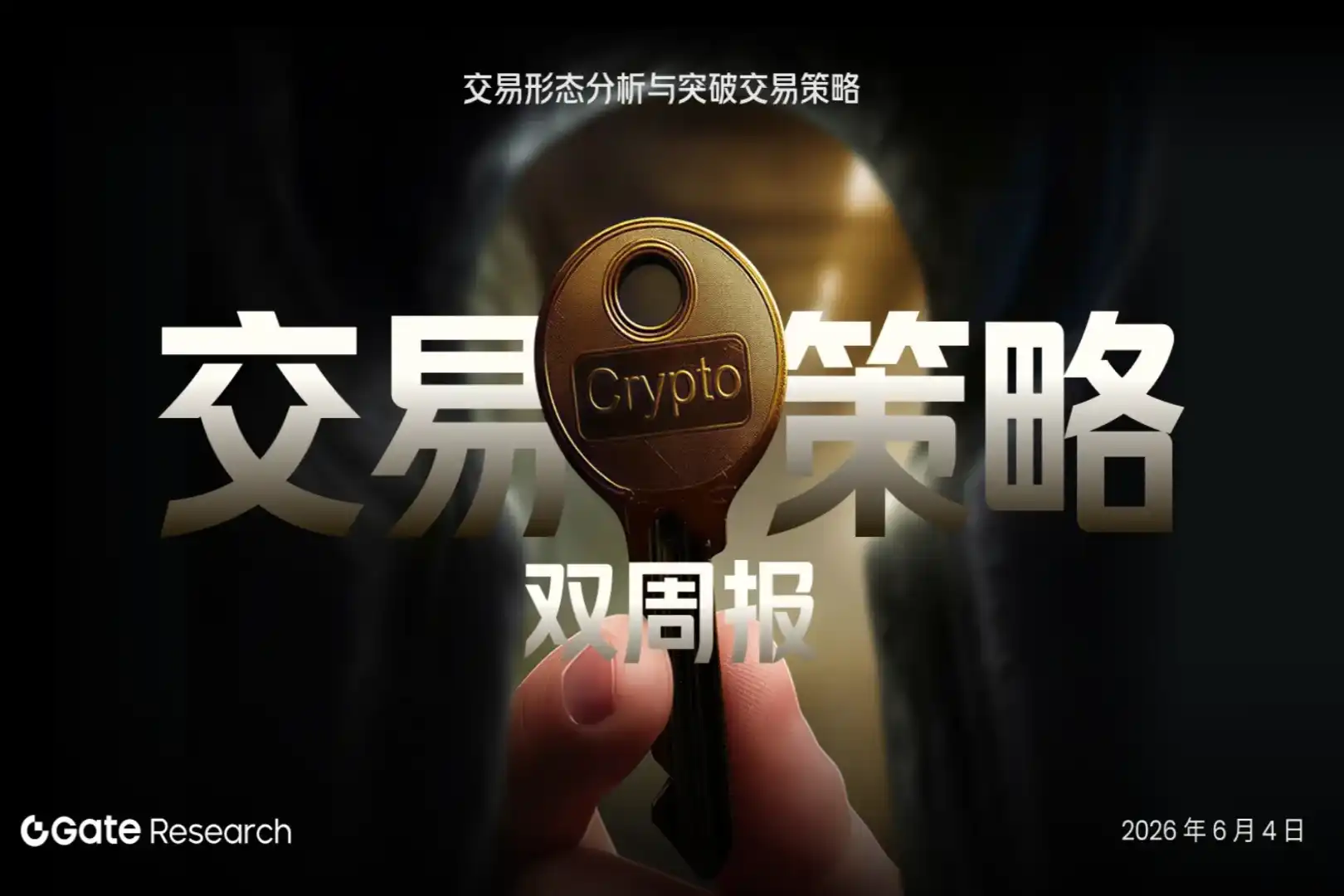
Gate Research Institute: Analysis of Chart Patterns and Breakout Trading Strategies

Gate Research Institute: Chart Pattern Analysis and Breakout Trading Strategies Chart patterns are crucial tools in technical analysis for observing market supply and demand shifts, trend continuations, and reversals. This analysis involves a comprehensive evaluation of trend, volume, support/resistance, time cycles, and breakout validity, not just rote pattern recognition. Patterns are broadly categorized into reversal patterns (e.g., Double Tops/Bottoms, Head and Shoulders) and continuation patterns (e.g., Flags, Triangles, Rectangles). An effective breakout, key for trading, requires clear support/resistance, prolonged consolidation, a prevailing trend backdrop, and volume confirmation. However, breakouts are not guaranteed, as false breakouts are common. Risk must be managed through position sizing, stop-loss orders, pullback confirmations, and profit-taking in stages. Key pattern types discussed include: * **Rectangle Patterns:** Indicate market indecision within parallel support and resistance, with breakouts projecting a move equal to the pattern's width. * **Flag & Pennant Patterns:** Short-term continuation patterns following sharp price moves ("flagpoles"). * **Triangle Patterns:** Symmetrical, Ascending (bullish bias), and Descending (bearish bias) triangles, representing consolidation before a directional move. * **Head and Shoulders Patterns:** Major reversal patterns signaling trend exhaustion. The article details breakout trading strategies, defining valid breakouts by price closing beyond a key level with increased volume and minimal immediate re-entry into the prior range. It contrasts range trading with breakout trading and outlines entry methods (immediate entry, pullback entry, scaling in), stop-loss placement (based on pattern failure), and profit-taking techniques (target-based, structure-based, trend-following). It further classifies breakout outcomes: 1. **Valid Breakouts:** Strong, sustained moves in the breakout direction. 2. **Pullback Breakouts:** Price breaks out, retests the breakout level as support/resistance, then resumes the trend—offering a lower-risk entry. 3. **False Breakouts:** Price briefly breaches a level but quickly reverses back into the prior range, a common risk managed by strict stop-losses. Key validation tools for breakouts include volume analysis, the principle of support/resistance role reversal, and momentum indicators like ATR, Moving Averages, Bollinger Bands, and RSI. In conclusion, while chart patterns and breakout analysis provide a structured framework, their effectiveness relies on multiple confirming factors—trend context, volume, and proper risk management. They should be integrated into a broader trading system rather than used as standalone signals.

marsbitHá 11m

Gate Research Institute: Analysis of Chart Patterns and Breakout Trading Strategies

marsbitHá 11m

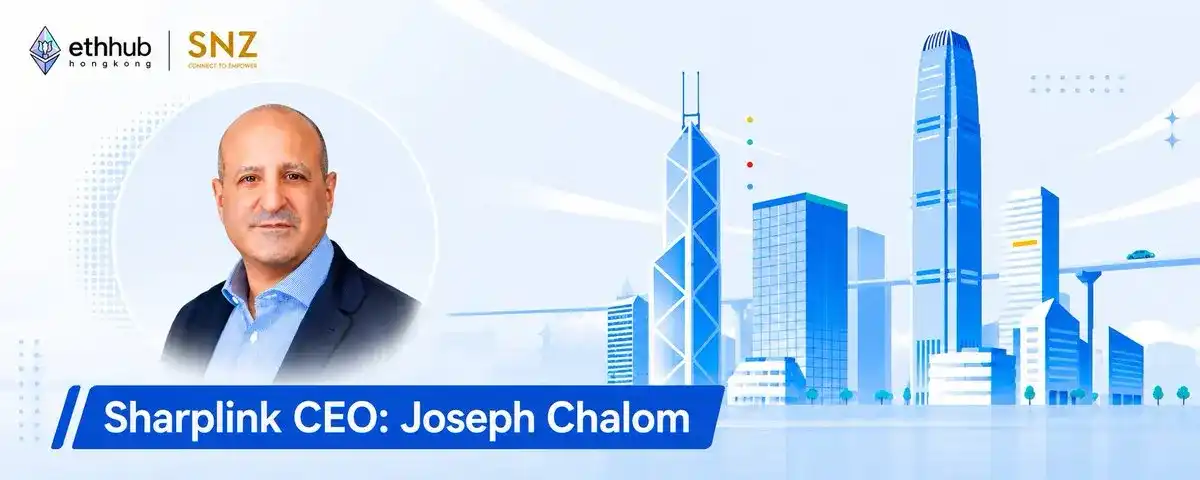
Joseph Chalom: Ethereum is Becoming the "Settlement Layer of Trust" for Global Finance

In a speech titled "The Industrialization of Trust," Sharplink CEO Joseph Chalom (former BlackRock digital assets head) discussed the future transformation of global finance. Drawing from 20 years at BlackRock, where he led the launch of Bitcoin/ETH ETFs and tokenized funds, Chalom highlighted the immense hidden costs of establishing trust in traditional finance—estimated at over $9.3 trillion annually in the US alone due to fragmented systems, multi-day settlements, and countless reconciliations. He argued that Ethereum is emerging as the global financial "settlement layer for trust," with its robust, decentralized infrastructure securing over $300 billion in on-chain assets and most stablecoins and tokenized assets. The future, he stated, will be driven by three accelerating pillars: stablecoins (evolving beyond crypto gateways to become efficient cross-border payment rails), tokenized assets (enabling 24/7 trading and reshaping capital markets), and DeFi (providing automated, accessible financial services). A potential game-changer, Chalom added, is the fourth pillar: "Agentic Finance," where AI agents autonomously execute programmable financial transactions via smart contracts and stablecoins. He envisions individuals soon having AI-powered "CFOs in their pockets" to optimize idle capital and manage tokenized portfolios. This shift, facilitated by Ethereum's trustless settlement, could multiply on-chain transaction volume 1000x within a year, moving finance toward a seamless, digitized future.

marsbitHá 11m

Joseph Chalom: Ethereum is Becoming the "Settlement Layer of Trust" for Global Finance

marsbitHá 11m

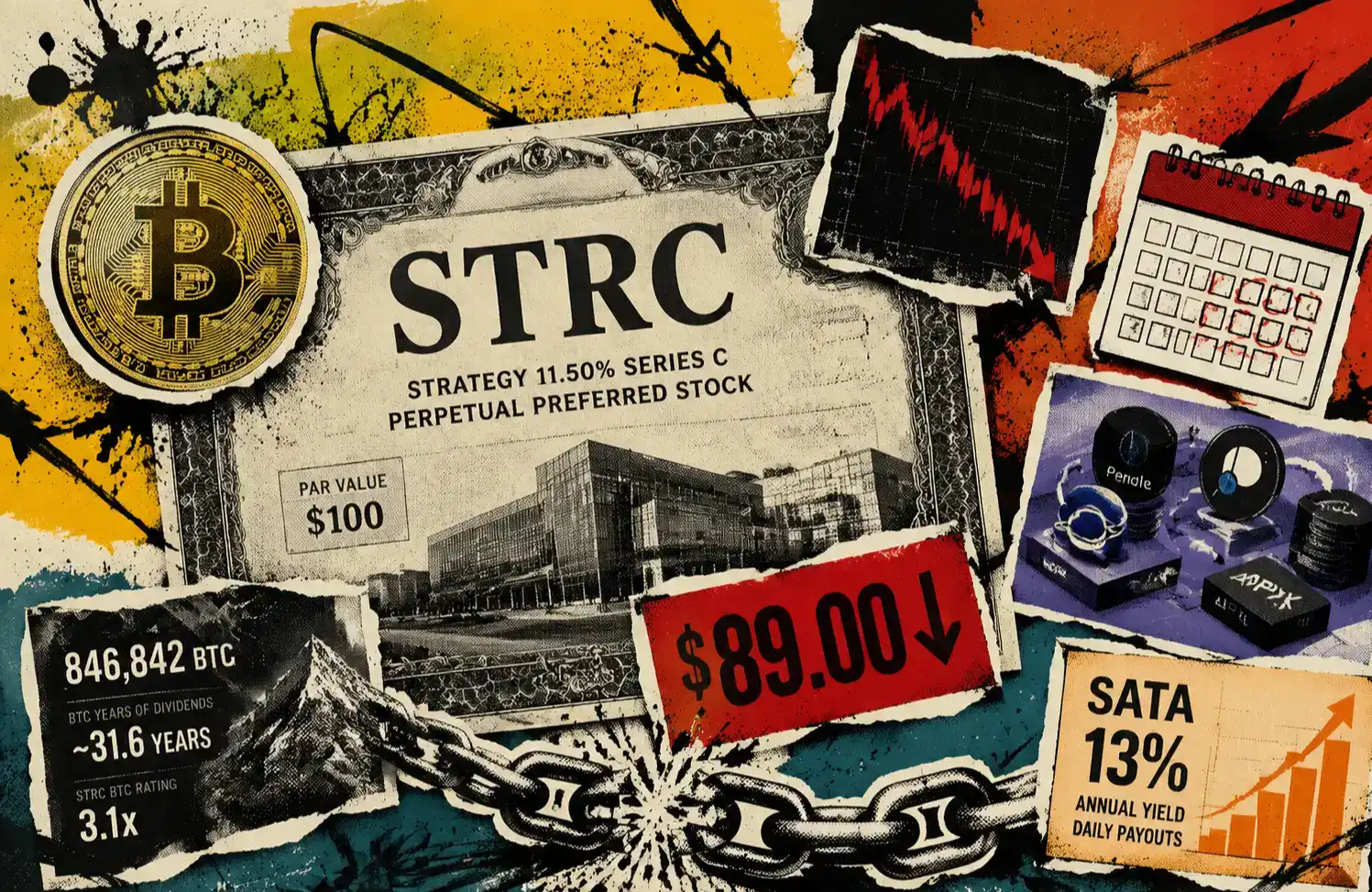
STRC Severely Unpegged, What Risks Is the Market Pricing In?

The article analyzes the recent significant de-pegging of Strategy's perpetual preferred stock, STRC, whose price fell to approximately $89, far below its $100 face value. This discount has pushed its simple yield to around 12.9%, creating a paradox. The stock was designed as a high-yield instrument trading near par, and Strategy maintains an 11.5% annual dividend, even recently switching to semi-monthly payments to support the price. The author explores several reasons why the high yield hasn't attracted enough buying pressure to restore the par value. A key factor is potential reverse deleveraging from carry trades, where leveraged investors may be forced to sell due to margin calls as the price falls, creating a self-reinforcing downward spiral. Additionally, the tokenization and integration of STRC into DeFi protocols (like Apyx, Saturn, Pendle) have introduced faster, more transparent, and potentially more volatile price adjustment mechanisms through leverage and yield-splitting products. The emergence of a competing product, Strive's SATA, offering a 13% yield with daily dividends, has also changed the yield benchmark, challenging STRC's unique high-yield narrative. Furthermore, the market is questioning the distinction between Strategy's substantial Bitcoin reserves, which provide long-term balance sheet coverage, and the certainty of stable near-term cash flow for dividends. Ultimately, the price dip represents a stress test for this type of BTC-backed, high-yield financing tool. The future path of STRC depends on whether Strategy acts to reinforce the $100 peg (e.g., by adjusting dividends), whether DeFi-related leverage unwinds further, and how investors ultimately price the risks of leverage, competition, and cash flow uncertainty against the offered yield.

marsbitHá 22m

STRC Severely Unpegged, What Risks Is the Market Pricing In?

marsbitHá 22m

LIT Token Hits Six-Month High: How Long Can the Buyback Flywheel Keep Burning Fuel?

The LIT token of decentralized perpetual exchange Lighter surged to a six-month high above $1.90 on June 18th, with a market cap of $425 million. After a price correction earlier this year, the recent rebound is attributed to its core "buyback flywheel" mechanism. All protocol fee revenue is used for programmatic, hourly market buybacks of LIT. Since its TGE in December 2025, approximately 15 million LIT (6% of circulating supply) has been repurchased for around $21 million. Additional price support comes from the LLP (Lighter Liquidity Pool), where providers must stake LIT worth 10% of their deposited USDC, locking significant token supply. However, challenges persist. Trading volume has declined amidst a sluggish market, with total volume at $1.68 trillion, significantly lower than leading competitor Hyperliquid's $4.37 trillion. While Lighter focuses on perpetual contracts, RWA, and Pre-IPO markets, Hyperliquid has expanded into prediction markets and boasts a U.S. spot ETF, attracting institutional investment and influencer endorsements like from Arthur Hayes. In contrast, LIT currently lacks similar high-profile backing. With 75% of LIT's total 1 billion supply still locked (team and investor tokens begin a 3-year linear unlock in December 2026), there is no immediate unlock selling pressure. The token's future performance hinges on sustaining trading volume growth, successful product iteration, and executing its transparent buyback strategy against a dominant competitor.

Foresight NewsHá 42m

LIT Token Hits Six-Month High: How Long Can the Buyback Flywheel Keep Burning Fuel?

Foresight NewsHá 42m

Trading

Spot
Futuros

Artigos em Destaque

O que é BITCOIN

Compreender o HarryPotterObamaSonic10Inu (ERC-20) e a Sua Posição no Espaço Cripto Nos últimos anos, o mercado de criptomoedas assistiu a um aumento na popularidade das moedas meme, cativando não apenas os traders, mas também aqueles que procuram envolvimento comunitário e valor de entretenimento. Entre estes tokens únicos está o HarryPotterObamaSonic10Inu (ERC-20), um projeto intrigante que mistura referências culturais no tecido das criptomoedas. Este artigo explora os principais aspetos do HarryPotterObamaSonic10Inu, examinando os seus mecanismos, a sua ética orientada pela comunidade e o seu envolvimento com o vasto panorama cripto. O que é o HarryPotterObamaSonic10Inu (ERC-20)? Como o nome sugere, o HarryPotterObamaSonic10Inu é uma moeda meme construída na blockchain Ethereum, classificada sob o padrão ERC-20. Ao contrário das criptomoedas tradicionais, que podem enfatizar a utilidade prática ou o potencial de investimento, este token prospera no valor de entretenimento e na força da sua comunidade. O projeto visa promover um ambiente onde utilizadores envolvidos possam reunir-se, partilhar ideias e participar em atividades inspiradas por diversos fenómenos culturais. Uma característica notável do HarryPotterObamaSonic10Inu é a zero taxa sobre transações. Este elemento atraente visa encorajar a negociação e o envolvimento da comunidade, isento de encargos adicionais que podem desencorajar os traders de pequena escala. A oferta total da moeda está fixada em mil milhões de tokens, uma cifra que marca a sua intenção de manter uma circulação substancial dentro da comunidade. Criador do HarryPotterObamaSonic10Inu (ERC-20) As origens do HarryPotterObamaSonic10Inu estão um pouco envoltas em mistério; os detalhes sobre o criador permanecem desconhecidos. O desenvolvimento deste token carece de uma equipa identificável ou de um plano explícito, o que não é raro no setor das moedas meme. Em vez disso, o projeto surgiu de forma orgânica, com o seu progresso a depender fortemente do entusiasmo e da participação da sua comunidade. Investidores do HarryPotterObamaSonic10Inu (ERC-20) No que diz respeito a investimentos externos e apoios, o HarryPotterObamaSonic10Inu também permanece ambíguo. O token não lista quaisquer fundações de investimento conhecidas ou apoio organizacional significativo. Em vez disso, o “sangue vital” do projeto é a sua comunidade de base, que informa o seu crescimento e sustentabilidade através da ação coletiva e do envolvimento no espaço cripto. Como Funciona o HarryPotterObamaSonic10Inu (ERC-20)? Como uma moeda meme, o HarryPotterObamaSonic10Inu opera principalmente fora dos quadros tradicionais que muitas vezes governam o valor dos ativos. Existem vários aspetos distintivos que definem como o projeto funciona: Transações Sem Taxas: Sem taxas sobre transações, os utilizadores podem comprar e vender o token livremente, sem a preocupação de custos ocultos. Envolvimento da Comunidade: O projeto prospera na interação da comunidade, aproveitando plataformas de redes sociais para criar entusiasmo e facilitar a participação. Discussões, partilha de conteúdo e envolvimento são elementos cruciais que ajudam a expandir o seu alcance e a fomentar a lealdade entre os apoiantes. Sem Utilidade Prática: Deve ser notado que o HarryPotterObamaSonic10Inu não oferece utilidade concreta dentro do ecossistema financeiro. Em vez disso, é classificado como um token principalmente para entretenimento e atividades comunitárias. Referência Cultural: O token incorpora de forma inteligente elementos da cultura popular para atrair interesse, conectando-se tanto com entusiastas de memes como com seguidores de criptomoedas. HarryPotterObamaSonic10Inu exemplifica como as moedas meme operam de forma diferente de projetos de criptomoedas mais tradicionais, entrando no mercado como construções sociais inovadoras em vez de ativos utilitários. Linha do Tempo do HarryPotterObamaSonic10Inu (ERC-20) A história do HarryPotterObamaSonic10Inu é marcada por vários marcos notáveis: Criação: O token surgiu de um meme viral, capturando a imaginação de muitos entusiastas de criptomoedas. Datas específicas de criação não estão disponíveis, sublinhando a sua ascensão orgânica. Listagem em Exchanges: O HarryPotterObamaSonic10Inu conseguiu entrar em várias exchanges, permitindo um acesso e negociação mais fáceis pela comunidade. Iniciativas de Envolvimento da Comunidade: Atividades contínuas direcionadas a melhorar a interação comunitária, incluindo concursos, campanhas em redes sociais e geração de conteúdo por fãs e defensores. Planos de Expansão Futura: O roteiro do projeto inclui o lançamento de uma coleção de NFTs, mercadorias e um site de eCommerce relacionado aos seus temas culturais, envolvendo ainda mais a comunidade e tentando adicionar mais dimensões ao seu ecossistema. Pontos-Chave sobre o HarryPotterObamaSonic10Inu (ERC-20) Natureza Orientada pela Comunidade: O projeto prioriza a contribuição coletiva e a criatividade, assegurando que o envolvimento dos utilizadores está na vanguarda do seu desenvolvimento. Classificação como Moeda Meme: Representa o epítome da criptomoeda baseada em entretenimento, destacando-se dos veículos de investimento tradicionais. Sem Afiliação Direta com o Bitcoin: Apesar da semelhança no nome do ticker, o HarryPotterObamaSonic10Inu é distinto e não tem qualquer relação com o Bitcoin ou outras criptomoedas estabelecidas. Foco na Colaboração: O HarryPotterObamaSonic10Inu é projetado para criar um espaço de colaboração e partilha de histórias entre os seus detentores, proporcionando uma via para a criatividade e o fortalecimento da comunidade. Perspectivas Futuras: A ambição de expandir além da sua premissa inicial para NFTs e mercadorias delineia um caminho para o projeto potencialmente entrar em avenidas mais mainstream dentro da cultura digital. À medida que as moedas meme continuam a capturar a imaginação da comunidade cripto, HarryPotterObamaSonic10Inu (ERC-20) destaca-se devido aos seus laços culturais e abordagem centrada na comunidade. Embora possa não se encaixar no molde típico de um token orientado para utilidade, a sua essência reside na alegria e camaradagem fomentadas entre os seus apoiantes, destacando a natureza em evolução das criptomoedas em uma era cada vez mais digital. À medida que o projeto continua a desenvolver-se, será importante observar como as dinâmicas comunitárias influenciam a sua trajetória no panorama em constante mudança da tecnologia blockchain.

1.7k Visualizações TotaisPublicado em {updateTime}Atualizado em 2024.12.03

O que é BITCOIN

Como comprar BTC

Bem-vindo à HTX.com!Tornámos a compra de Bitcoin (BTC) simples e conveniente.Segue o nosso guia passo a passo para iniciar a tua jornada no mundo das criptos.Passo 1: cria a tua conta HTXUtiliza o teu e-mail ou número de telefone para te inscreveres numa conta gratuita na HTX.Desfruta de um processo de inscrição sem complicações e desbloqueia todas as funcionalidades.Obter a minha contaPasso 2: vai para Comprar Cripto e escolhe o teu método de pagamentoCartão de crédito/débito: usa o teu visa ou mastercard para comprar Bitcoin (BTC) instantaneamente.Saldo: usa os fundos da tua conta HTX para transacionar sem problemas.Terceiros: adicionamos métodos de pagamento populares, como Google Pay e Apple Pay, para aumentar a conveniência.P2P: transaciona diretamente com outros utilizadores na HTX.Mercado de balcão (OTC): oferecemos serviços personalizados e taxas de câmbio competitivas para os traders.Passo 3: armazena teu Bitcoin (BTC)Depois de comprar o teu Bitcoin (BTC), armazena-o na tua conta HTX.Alternativamente, podes enviá-lo para outro lugar através de transferência blockchain ou usá-lo para transacionar outras criptomoedas.Passo 4: transaciona Bitcoin (BTC)Transaciona facilmente Bitcoin (BTC) no mercado à vista da HTX.Acede simplesmente à tua conta, seleciona o teu par de trading, executa as tuas transações e monitoriza em tempo real.Oferecemos uma experiência de fácil utilização tanto para principiantes como para traders experientes.

4.2k Visualizações TotaisPublicado em {updateTime}Atualizado em 2026.06.02

Como comprar BTC

O que é $BITCOIN

OURO DIGITAL ($BITCOIN): Uma Análise Abrangente Introdução ao OURO DIGITAL ($BITCOIN) OURO DIGITAL ($BITCOIN) é um projeto baseado em blockchain que opera na rede Solana, com o objetivo de combinar as características dos metais preciosos tradicionais com a inovação das tecnologias descentralizadas. Embora partilhe um nome com o Bitcoin, frequentemente referido como “ouro digital” devido à sua percepção como uma reserva de valor, o OURO DIGITAL é um token separado projetado para criar um ecossistema único dentro da paisagem Web3. O seu objetivo é posicionar-se como um ativo digital alternativo viável, embora os detalhes sobre as suas aplicações e funcionalidades ainda estejam em desenvolvimento. O que é o OURO DIGITAL ($BITCOIN)? OURO DIGITAL ($BITCOIN) é um token de criptomoeda explicitamente projetado para uso na blockchain Solana. Em contraste com o Bitcoin, que fornece um papel amplamente reconhecido como armazenamento de valor, este token parece focar em aplicações e características mais amplas. Aspectos notáveis incluem: Infraestrutura Blockchain: O token é construído na blockchain Solana, conhecida pela sua capacidade de lidar com transações de alta velocidade e baixo custo. Dinâmicas de Oferta: O OURO DIGITAL tem um fornecimento máximo limitado a 100 quatrilhões de tokens (100P $BITCOIN), embora os detalhes sobre o seu fornecimento circulante ainda não tenham sido divulgados. Utilidade: Embora as funcionalidades precisas não estejam explicitamente delineadas, existem indicações de que o token poderia ser utilizado para várias aplicações, potencialmente envolvendo aplicações descentralizadas (dApps) ou estratégias de tokenização de ativos. Quem é o Criador do OURO DIGITAL ($BITCOIN)? Neste momento, a identidade dos criadores e da equipa de desenvolvimento por trás do OURO DIGITAL ($BITCOIN) permanece desconhecida. Esta situação é típica entre muitos projetos inovadores no espaço da blockchain, particularmente aqueles alinhados com finanças descentralizadas e fenómenos de moedas meme. Embora tal anonimato possa fomentar uma cultura orientada pela comunidade, intensifica as preocupações sobre governança e responsabilidade. Quem são os Investidores do OURO DIGITAL ($BITCOIN)? As informações disponíveis indicam que o OURO DIGITAL ($BITCOIN) não tem apoiantes institucionais conhecidos ou investimentos proeminentes de capital de risco. O projeto parece operar num modelo peer-to-peer focado no apoio e adoção da comunidade, em vez de rotas de financiamento tradicionais. A sua atividade e liquidez estão principalmente situadas em exchanges descentralizadas (DEXs), como a PumpSwap, em vez de plataformas de negociação centralizadas estabelecidas, destacando ainda mais a sua abordagem de base. Como Funciona o OURO DIGITAL ($BITCOIN) A mecânica operacional do OURO DIGITAL ($BITCOIN) pode ser elaborada com base no seu design de blockchain e nas características da rede: Mecanismo de Consenso: Ao aproveitar o exclusivo proof-of-history (PoH) da Solana combinado com um modelo de proof-of-stake (PoS), o projeto assegura uma validação eficiente das transações, contribuindo para o alto desempenho da rede. Tokenomics: Embora mecanismos deflacionários específicos não tenham sido extensivamente detalhados, o vasto fornecimento máximo de tokens implica que pode atender a microtransações ou casos de uso de nicho que ainda estão por definir. Interoperabilidade: Existe o potencial para integração com o ecossistema mais amplo da Solana, incluindo várias plataformas de finanças descentralizadas (DeFi). No entanto, os detalhes sobre integrações específicas permanecem não especificados. Cronologia de Eventos Chave Aqui está uma cronologia que destaca marcos significativos relacionados ao OURO DIGITAL ($BITCOIN): 2023: O lançamento inicial do token ocorre na blockchain Solana, marcado pelo seu endereço de contrato. 2024: O OURO DIGITAL ganha visibilidade ao tornar-se disponível para negociação em exchanges descentralizadas como a PumpSwap, permitindo que os utilizadores o negociem contra SOL. 2025: O projeto testemunha atividade de negociação esporádica e potencial interesse em envolvimentos liderados pela comunidade, embora não tenham sido documentadas parcerias ou avanços técnicos notáveis até ao momento. Análise Crítica Forças Escalabilidade: A infraestrutura subjacente da Solana suporta altos volumes de transações, o que pode aumentar a utilidade do $BITCOIN em vários cenários de transação. Acessibilidade: O potencial preço de negociação baixo por token pode atrair investidores de retalho, facilitando uma participação mais ampla devido a oportunidades de propriedade fracionada. Riscos Falta de Transparência: A ausência de apoiantes, desenvolvedores ou um processo de auditoria publicamente conhecidos pode gerar ceticismo em relação à sustentabilidade e confiabilidade do projeto. Volatilidade do Mercado: A atividade de negociação depende fortemente do comportamento especulativo, o que pode resultar em volatilidade significativa dos preços e incerteza para os investidores. Conclusão O OURO DIGITAL ($BITCOIN) surge como um projeto intrigante, mas ambíguo, dentro do ecossistema em rápida evolução da Solana. Embora tente aproveitar a narrativa do “ouro digital”, a sua divergência do papel estabelecido do Bitcoin como reserva de valor sublinha a necessidade de uma diferenciação mais clara da sua utilidade pretendida e estrutura de governança. A aceitação e adoção futuras dependerão provavelmente da abordagem da atual opacidade e da definição mais explícita das suas estratégias operacionais e económicas. Nota: Este relatório abrange informações sintetizadas disponíveis até outubro de 2023, e desenvolvimentos podem ter ocorrido além do período de pesquisa.

94 Visualizações TotaisPublicado em {updateTime}Atualizado em 2025.05.13

O que é $BITCOIN

Discussões

Bem-vindo à Comunidade HTX. Aqui, pode manter-se informado sobre os mais recentes desenvolvimentos da plataforma e obter acesso a análises profissionais de mercado. As opiniões dos utilizadores sobre o preço de BTC (BTC) são apresentadas abaixo.

活动图片