2026-04-18 Sábado

Centro de Notícias - Página 967

Obtém notícias cripto em tempo real e tendências de mercado com o Centro de Notícias da HTX.

BTC Medium-Term Trend Weakens, Short-Term Volatility Fails to Mask Directional Risks | Invited Analysis

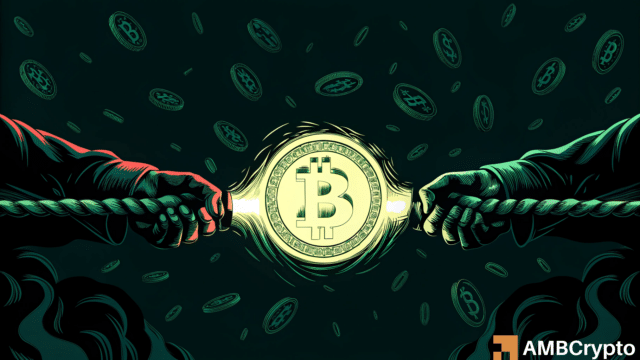
BTC Mid-Term Trend Weakens, Short-Term Volatility Masks Directional Risks | Guest Analysis Analyst Conaldo reviews Bitcoin market performance from Dec 15-21, noting that BTC entered a predicted consolidation phase, oscillating within the $87.5K–$89K range. The mid-term outlook remains bearish, with the long-term bullish trend line (since late 2022) and the recent descending trend line (from the Oct 2025 high) converging. A breakout above this dual resistance is needed to shift the bearish structure. Last week, four short trades were executed based on quantitative models, yielding a 2.14% return. Key supports were held around $84.5K, closely aligning with predictions. Technical analysis (weekly and daily charts) indicates BTC remains in a bear market. Momentum indicators linger below zero, and sentiment metrics are neutral, suggesting continued weakness and potential downside risk. For the week of Dec 22-28, BTC is expected to trade in a wide range. Critical resistance lies at $89.5K–$91K. A breakdown could deepen corrections, while holding may lead to limited rebounds. Key supports are at $86.5K–$87.5K and $83.5K–$84.5K. Trading strategies maintain 65% mid-term short positions and 30% short-term tactical shorts based on range breaks, with strict stop-losses and profit-taking rules. Macro factors include reduced holiday liquidity, potential Fed chair nomination announcements, U.S. Q3 GDP revisions, and BoJ policy cues, which may influence market volatility. Investors are advised to exercise caution amid low-liquidity swings.

Odaily星球日报12/22 06:40

BTC Medium-Term Trend Weakens, Short-Term Volatility Fails to Mask Directional Risks | Invited Analysis

Odaily星球日报12/22 06:40

Finance Goes 'Invisible': How Stablecoins Are Becoming the New Arteries of the Digital Economy

This article explores the transformative role of stablecoins as the "new arteries" of the digital economy, moving finance into an "invisible" infrastructure layer. Key developments include Coinbase's major product upgrades, positioning it as an "Everything Exchange" that integrates trading, derivatives, stablecoins, and AI-driven services. Stablecoin adoption is accelerating, with Visa now allowing USDC settlements within the U.S. banking system, marking a structural shift in settlement layers. Regulatory progress is evident as U.S. authorities conditionally approve federal trust bank charters for firms like Ripple and Circle, while the FDIC advances stablecoin rules. New stablecoin products and payments integrations are emerging, such as PayPal's PYUSD for YouTube creator payouts and ADNOC's adoption of a national stablecoin at gas stations. Major financial institutions, including JPMorgan, are actively exploring tokenized deposits and assets on public blockchains. The growth of gold-backed stablecoins and national strategies like the UAE's push for asset tokenization further highlight the expansion of stablecoins beyond pure currency use cases into broader economic infrastructure. However, JPMorgan analysis suggests stablecoin growth may be limited by competition from bank-issued tokenized deposits and CBDCs, projecting a market cap of $500-600 billion by 2028.

比推12/22 06:12

Finance Goes 'Invisible': How Stablecoins Are Becoming the New Arteries of the Digital Economy

比推12/22 06:12

活动图片