2026-06-18 Quinta

Notícias de cripto - Página 597

Mantenha-se a par do mercado de cripto. Notícias em tempo real, análises, preços, histórias em alta e análise de especialistas — tudo num só lugar.

Bitwise: A Weekend Attack Accelerates the On-Chain Migration of the Entire Financial World

Matt Hougan, CIO of Bitwise, argues that the migration of traditional finance to on-chain systems is inevitable and has been dramatically accelerated by a recent geopolitical event. While he previously believed this transition would take 5-10 years, starting at the edges of finance, a weekend attack on Iran proved him wrong. On Sunday, February 28th, when most global markets (stocks, futures, forex) were closed, a major geopolitical shock occurred. With traditional venues unavailable, investors turned to the always-open, global crypto infrastructure. The decentralized exchange Hyperliquid became a central hub, with its trading volume surging and its oil futures contract prices being cited by Bloomberg as a key market reference. Its native token, HYPE, rose ~30%. Other on-chain assets like Tether's gold token (XAUT) and prediction markets also saw record volumes. Hougan concludes that this event was a watershed moment, proving that crypto markets can function as the primary market during global crises. For any competitive investor, bank, or fund, engaging with on-chain tools like stablecoin wallets, Hyperliquid, and tokenized assets is now a necessity. The biggest barrier to entry—learning these new systems—is being overcome, and this initial contact will lead to further exploration and adoption. He dismisses the idea that traditional markets can simply extend their hours to compete, comparing it to legacy companies dismissing disruptive technologies like Netflix or the iPhone. The shift to on-chain finance is now arriving much sooner than anyone anticipated.

marsbit03/04 03:27

Bitwise: A Weekend Attack Accelerates the On-Chain Migration of the Entire Financial World

marsbit03/04 03:27

When AI Starts Paying for Itself

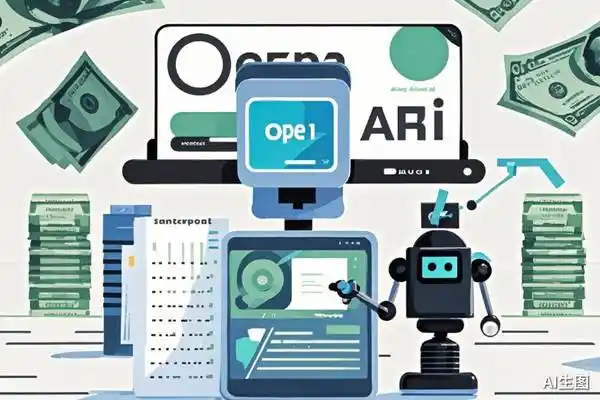
The article "When AI Starts Paying for Itself" discusses the emergence of the x402 protocol, which enables AI agents to autonomously make micro-payments for services like data and computation. In 2025, Coinbase and Cloudflare revived the long-dormant HTTP 402 status code ("Payment Required") to create a seamless payment layer for the internet. The protocol allows an AI agent to receive a payment request, authorize it with a cryptographic signature, and complete the transaction in under a second—with no human involvement, accounts, or traditional banking infrastructure. Supported by low-cost Layer 2 blockchains and stablecoins, x402 processed over 100 million transactions within months. Its V2 update added multi-chain support and session-based authentication. Google later integrated a similar model into its Agentic Payments Protocol (AP2). However, trust between autonomous agents remains a challenge. ERC-8004, an Ethereum standard, addresses this by providing on-chain identity (via NFT-based IDs), reputation tracking, and task verification systems. The ecosystem faces risks: speculative "x402-themed" meme tokens have surged without real utility, technical vulnerabilities exist, and competing standards from Google and a16z threaten fragmentation. Furthermore, regulatory frameworks for AI-driven transactions are undeveloped. In summary, x402 and ERC-8004 aim to create a trustless, open economic network for AI agents—but must overcome technical, economic, and competitive hurdles to achieve widespread adoption.

marsbit03/04 02:54

When AI Starts Paying for Itself

marsbit03/04 02:54

OpenClaw Endorses Venice.ai, VVV Token Surges Over 500% in One Month

OpenClaw, an open-source self-hosted AI agent platform, has listed Venice.ai—a privacy-focused, uncensored generative AI platform—as a recommended model provider. This endorsement comes shortly after OpenClaw’s founder publicly discouraged young people from engaging with cryptocurrency, creating a notable contrast. Venice.ai, founded by crypto OG Erik Voorhees, positions itself as a decentralized alternative to ChatGPT. It emphasizes user privacy by not storing any data on its servers; all content remains encrypted on the user’s local device. The platform offers two privacy modes: Private (using open-source models on decentralized GPUs) and Anonymized (removing user metadata from prompts). The project features a dual-token economy: - VVV: A capital asset used for staking (currently ~19% APY) and minting DIEM. - DIEM: Represents perpetual AI compute credit. 1 DIEM = $1 daily API credit, usable across Venice’s models. This structure allows high-frequency users to access AI services at a lower marginal cost over time. VVV’s price surged over 500% in a month, rising from ~$1.5 to ~$8.4. This growth is attributed to both supply constraints—including a permanent burn of unclaimed airdropped tokens and reduced annual emissions—and rising demand, especially after OpenClaw’s integration. With over 25,000 API users and a staking rate of 38.8% for VVV, Venice is positioning itself as a privacy-backend solution for the expanding AI agent ecosystem, blending crypto-economic incentives with scalable AI infrastructure.

Odaily星球日报03/04 02:31

OpenClaw Endorses Venice.ai, VVV Token Surges Over 500% in One Month

Odaily星球日报03/04 02:31

Flames of War Reignited: How the Middle East Conflict Reshapes the Risk Premium of Gold and Crude Oil

Renewed conflict in the Middle East is reshaping risk premiums for gold and crude oil, driven by heightened geopolitical tensions and supply disruption risks. The article analyzes how the escalation, particularly near the Strait of Hormuz—a critical chokepoint for global oil transit—has amplified volatility in energy and safe-haven assets. Oil prices surged due to concerns over supply security, rising shipping and insurance costs, and potential disruptions, even without actual supply cuts. Gold strengthened as investors sought refuge amid elevated uncertainty and rising inflation expectations, supported by central bank buying and ETF inflows. The transmission mechanisms include: (1) direct supply shocks impacting energy and related commodities; (2) rising inflation expectations influencing monetary policy and real interest rates; and (3) risk aversion favoring safe assets like gold and the dollar while pressuring equities. Historically, conflicts like the Gulf War, Iraq War, and Russia-Ukraine war triggered similar short-term spikes in oil and gold, with prices often overshooting initially before stabilizing as situations clarify. Bitcoin showed mixed behavior—sometimes correlating with risk assets during sell-offs but also acting as a capital flight tool in certain regions. It remains a high-volatility asset rather than a stable safe haven. Key variables ahead include: potential conflict spillover, actual shipping disruptions, and central bank responses to persistent energy-led inflation. Market pricing will hinge on whether supply shocks materialize, inflation resurges, and risk appetite contracts. In summary, war溢价 is repricing commodities, with gold benefiting from避险 demand and oil from physical risks, while Bitcoin faces liquidity and sentiment pressures. The outlook depends on geopolitical developments and their macroeconomic ripple effects.

marsbit03/04 02:28

Flames of War Reignited: How the Middle East Conflict Reshapes the Risk Premium of Gold and Crude Oil

marsbit03/04 02:28

活动图片