2026-07-30 Quinta

Notícias de cripto - Página 56

Mantenha-se a par do mercado de cripto. Notícias em tempo real, análises, preços, histórias em alta e análise de especialistas — tudo num só lugar.

Five Historic Indicators Simultaneously Flash, Bitcoin Bear Market Bottoming

Summary: Bitcoin is exhibiting a confluence of five historical indicators suggesting it may be at or near a long-term cycle bottom. The analysis notes diminishing marginal returns for a passive "always long" strategy, increasing the need for conditional investment approaches. Key indicators: 1. **Nasdaq/BTC RSI:** The 14-week RSI moving average of the Nasdaq 100/BTC ratio has reached a record high of 72.6, indicating Bitcoin is at its most oversold level relative to the Nasdaq in history. Historically, similar extremes have preceded strong 1-3 year outperformance for Bitcoin. 2. **Gold/BTC RSI:** Similarly, the Gold/BTC RSI reached a record high in February 2026, signaling extreme oversold conditions. Past instances led to Bitcoin outperforming gold and USD over multi-year horizons. 3. **Realized Price (On-Chain Cost Basis):** Bitcoin's current price (~$43,400) is 18% below its realized price ($53,000). Historically, price trading below this level has occurred only 12% of the time and has marked the final stages of bear markets, followed by significant positive long-term returns. 4. **Long-Term Forward Returns:** Analysis of periods when the Nasdaq/BTC RSI was above 66 shows asymmetric upside for Bitcoin/USD and BTC/Nasdaq returns over 1-3 years, though the magnitude of returns has diminished each cycle. 5. **Cycle Clock:** Historically, Bitcoin bear market lows have occurred approximately 60 weeks after the prior all-time high. The current cycle is ~40 weeks in, suggesting a potential low around late November 2026 if the pattern holds. New highs have historically occurred within ~120 weeks of the prior peak. Risks include the small historical sample size, the interconnected nature of the indicators, and potential structural changes in the current cycle (e.g., ETFs, corporate holdings, complex derivatives). Conclusion: The simultaneous alignment of these rare, extreme signals suggests Bitcoin may be forming a cycle low, potentially by late 2026. This period is presented as a potentially attractive long-term accumulation window, with historical precedent pointing to asymmetric positive returns over a multi-year timeframe beginning from such signal convergences.

链捕手07/27 09:02

Five Historic Indicators Simultaneously Flash, Bitcoin Bear Market Bottoming

链捕手07/27 09:02

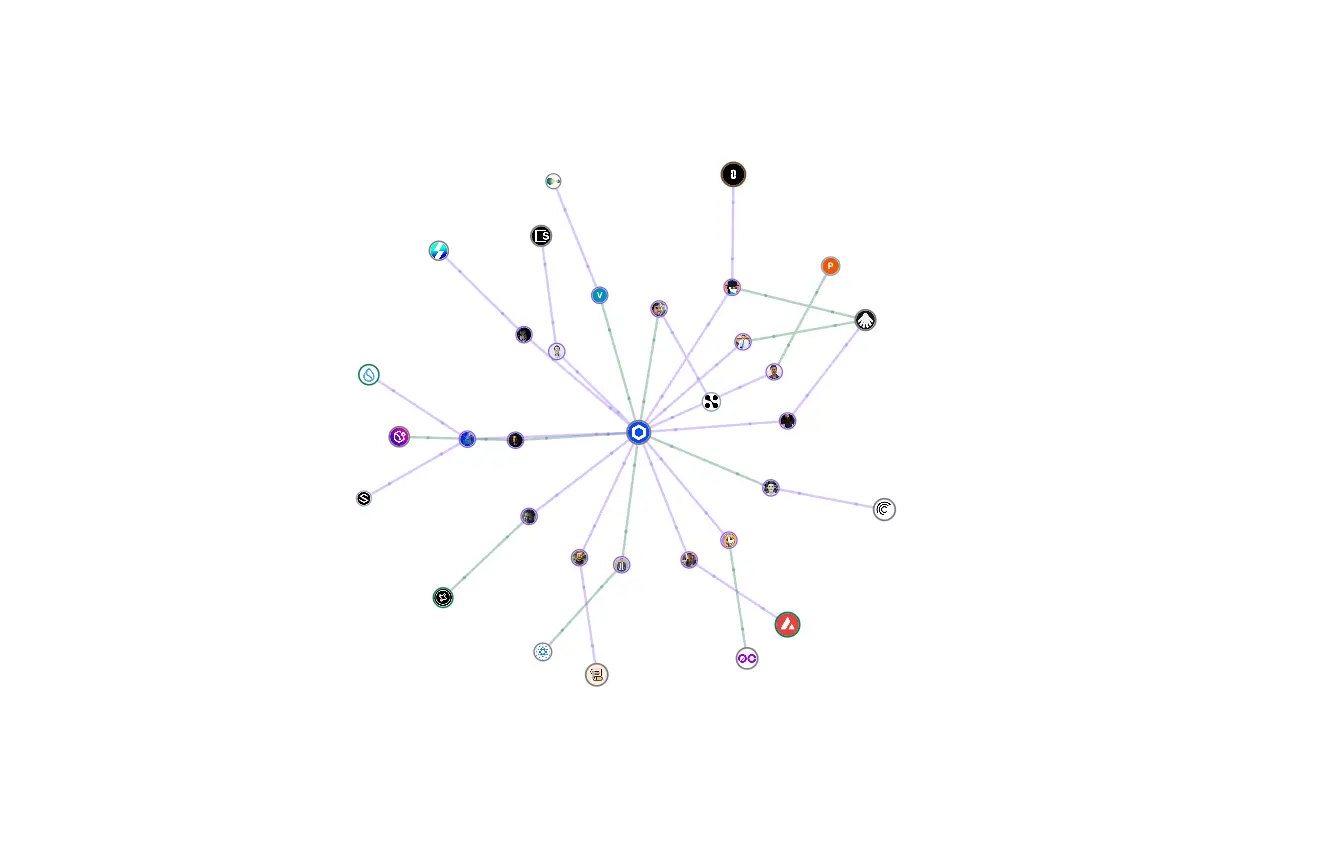
Top Korean Crypto Media TokenPost Integrates RootData and Launches Relationship Map Feature

Korean leading crypto media TokenPost has integrated RootData's data and introduced a 'Relationship Map' feature on its crypto asset data platform, Token Watch. This new functionality visualizes the connections between projects, investors, and key personnel, specifically focusing on crypto assets listed on the Korean Won market. The map displays the top 30 investors by portfolio and key individuals active across multiple projects. Users can search or filter by type to view specific connections. Relationship lines are categorized into General Investment, Lead Investment, Current Affiliation, and Past Affiliation. This allows users to identify not only who invested but also who led investment rounds, as well as the current or past organizational ties of key figures. Key utilities of the tool include identifying co-investors, frequently co-investing VC combinations, overlapping investors among competing projects, and recurring key personnel. It serves as a reference for investors, a research tool for journalists, and a means for professionals to explore connection pathways. The underlying investor and personnel data is sourced from RootData, with TokenPost editorial verification for some details. The feature is available directly on the web with Korean and English language support. TokenPost emphasized that understanding a project requires insight into its backing network and stated plans to continue optimizing the map. All information is for reference only and not investment advice.

链捕手07/27 09:01

Top Korean Crypto Media TokenPost Integrates RootData and Launches Relationship Map Feature

链捕手07/27 09:01

The Verdict in Choi Tae-won's Divorce Case: Revealing the Inheritance Undercurrent Behind SK Hynix's Trillion-Won Empire

SK Group Chairman Chey Tae-won's high-profile divorce case, involving a record 1.38 trillion won settlement, has drawn attention to the succession plans for Korea's second-largest conglomerate, especially its crown jewel, SK hynix. Unlike traditional chaebol scripts centered on the eldest son, Chey's three children from his marriage to former President Roh Tae-woo's daughter, Roh Soh-yeong, are carving distinct, non-traditional paths. Eldest daughter Chey Yun-jung (b. 1989) is seen as the most evident successor. With a scientific and consulting background, she holds executive roles at SK bioscience and SK Inc.'s growth support department, focusing on future strategy and biopharma. Her marriage is to an AI infrastructure entrepreneur, not a traditional business alliance. Second daughter Chey Min-jung (b. 1991) took a unique route, voluntarily serving as a South Korean naval officer, including an anti-piracy deployment. She later worked on policy and strategy for SK hynix in Washington D.C. before co-founding an AI-driven healthcare startup. She married a former U.S. Marine Corps officer, connecting her to U.S. defense and policy circles—networks crucial for a global semiconductor giant. The only son, Chey In-geun (b. 1995), who studied physics like his father, worked briefly at SK E&S before joining McKinsey. Despite fitting the traditional "heir" profile as the eldest son, he remains silent and holds no public position or shares in SK, suggesting the old succession playbook is obsolete. As SK hynix's valuation soars, becoming a geopolitical asset in the AI era, the heirs' legitimacy is no longer automatic. They must prove themselves in fields like AI biotech, global policy, and strategic consulting. Their marriages also reflect new elite networks in tech and defense, not old political alliances. Their inheritance is the complex challenge of navigating a globalized, tech-driven world, not just a corporate throne.

marsbit07/24 09:06

The Verdict in Choi Tae-won's Divorce Case: Revealing the Inheritance Undercurrent Behind SK Hynix's Trillion-Won Empire

marsbit07/24 09:06

From OpenSea to OpenRouter: Is Alex Atallah Repeating His 'Exit at the Peak' Playbook?

From OpenSea to OpenRouter: Is Alex Atallah Repeating His "Exit at the Peak" Playbook? According to the Wall Street Journal, payments giant Stripe is in talks to acquire the AI model aggregation platform OpenRouter in a potential deal valuing the company near $100 billion. This would mark founder Alex Atallah's second creation of a company reaching a $100 billion valuation, following his co-founding of NFT marketplace OpenSea. OpenRouter, founded just over three years ago, has grown rapidly by acting as a unified gateway for developers to access over 400 AI models. It currently has about 10 million users and processes over 200 trillion tokens monthly. While the platform's annualized revenue is around $50 million, its valuation has skyrocketed from $1.3 billion in March 2026. The potential acquisition by Stripe, a company OpenRouter's founder once likened it to, represents a major expansion into AI infrastructure for the payments leader. This move echoes Atallah's previous timing with OpenSea, where he departed before the NFT market's significant downturn. For OpenRouter, selling now may be strategic. Despite its scale, its business model—charging a 5-5.5% fee on AI inference calls—faces pressure from competition, open-source models, and potential price wars among model providers, limiting its profitability narrative for an IPO. A key asset for potential acquirers like Stripe is OpenRouter's vast repository of real-world AI usage data, which offers unique insights into model performance and developer preferences that are difficult to replicate. Whether this potential deal signifies a new valuation benchmark for AI infrastructure or another market peak signal remains to be seen.

链捕手07/24 08:42

From OpenSea to OpenRouter: Is Alex Atallah Repeating His 'Exit at the Peak' Playbook?

链捕手07/24 08:42

Yen Hits 40-Year Low, What Will Japan Use to Price in Shorts?

The Japanese yen is hovering near a 40-year low against the U.S. dollar, with the USD/JPY pair approaching 164 in July. Japanese Finance Minister Shunichi Suzuki has issued stern warnings of potential "bold" action to counter disorderly market movements, placing the 163-165 range in focus as a key policy test zone for authorities. The yen's weakness extends beyond dollar strength, as evidenced by its low trade-weighted index, which pressures import costs and inflation—particularly with elevated oil prices. This dynamic increases the likelihood of further Bank of Japan (BoJ) rate hikes. The Ministry of Finance is first aiming to raise the cost for yen short-sellers through verbal intervention and the threat of action, rather than immediately altering fundamentals. While direct FX intervention remains a high-barrier option, slower-moving factors like potential BoJ rate hikes and asset rebalancing by Japan's Government Pension Investment Fund (GPIF) could provide more sustained support for the yen. The core risk for carry trades—which involve borrowing low-yielding yen to invest in higher-yielding assets—is not an imminent unwind but a sudden spike in yen volatility. As policymakers deploy a mix of warnings, rate hike expectations, and potential fund flows, the cost and risk of shorting the yen are increasing. The 163-165 zone is becoming an area where policy responses could trigger a broader repricing, making the yen a more critical variable for global risk asset leverage.

marsbit07/24 08:17

Yen Hits 40-Year Low, What Will Japan Use to Price in Shorts?

marsbit07/24 08:17

活动图片