2026-08-11 Terça

Notícias de cripto - Página 491

Mantenha-se a par do mercado de cripto. Notícias em tempo real, análises, preços, histórias em alta e análise de especialistas — tudo num só lugar.

From ZEC's Surge to Vitalik's Support: Will the Privacy Narrative Resurface?

From ZEC's surge to Vitalik's endorsement, is privacy making a comeback? The recent rally in ZEC has refocused attention on the crypto privacy sector. This resurgence stems from a growing market realization: while blockchain transparency builds trust, full exposure of user balances, trading strategies, and risk positions can become a vulnerability, especially for large traders and institutions on platforms like Hyperliquid. The privacy landscape has evolved beyond classic anonymity coins like ZEC, XMR, and DASH. It now encompasses privacy infrastructure projects such as Railgun (bringing privacy to DeFi) and Aztec (a privacy-focused L2), as well as newer entrants like Genius Terminal, SilentSwap, and 0xBow that emphasize transaction privacy while attempting to balance compliance. Industry trends confirm privacy is becoming integrated, not a niche feature. Perp DEX Aster has introduced a "Shield Mode," and Vitalik has discussed the need for native privacy at the Ethereum protocol level, including proposals like EIP-8182 for standardized private transfers. In conclusion, this revival is more than a simple sector rotation. It reflects a critical reassessment of transparency's limits. As on-chain finance matures, the challenge is finding a sustainable balance between necessary transparency for trust and essential privacy for protecting assets and strategies, making privacy a potential cornerstone of next-generation infrastructure.

marsbit05/27 09:53

From ZEC's Surge to Vitalik's Support: Will the Privacy Narrative Resurface?

marsbit05/27 09:53

Trump, the "Stock Market Manipulator" in U.S. Stocks, Lifts Up the Entire Quantum Computing Sector

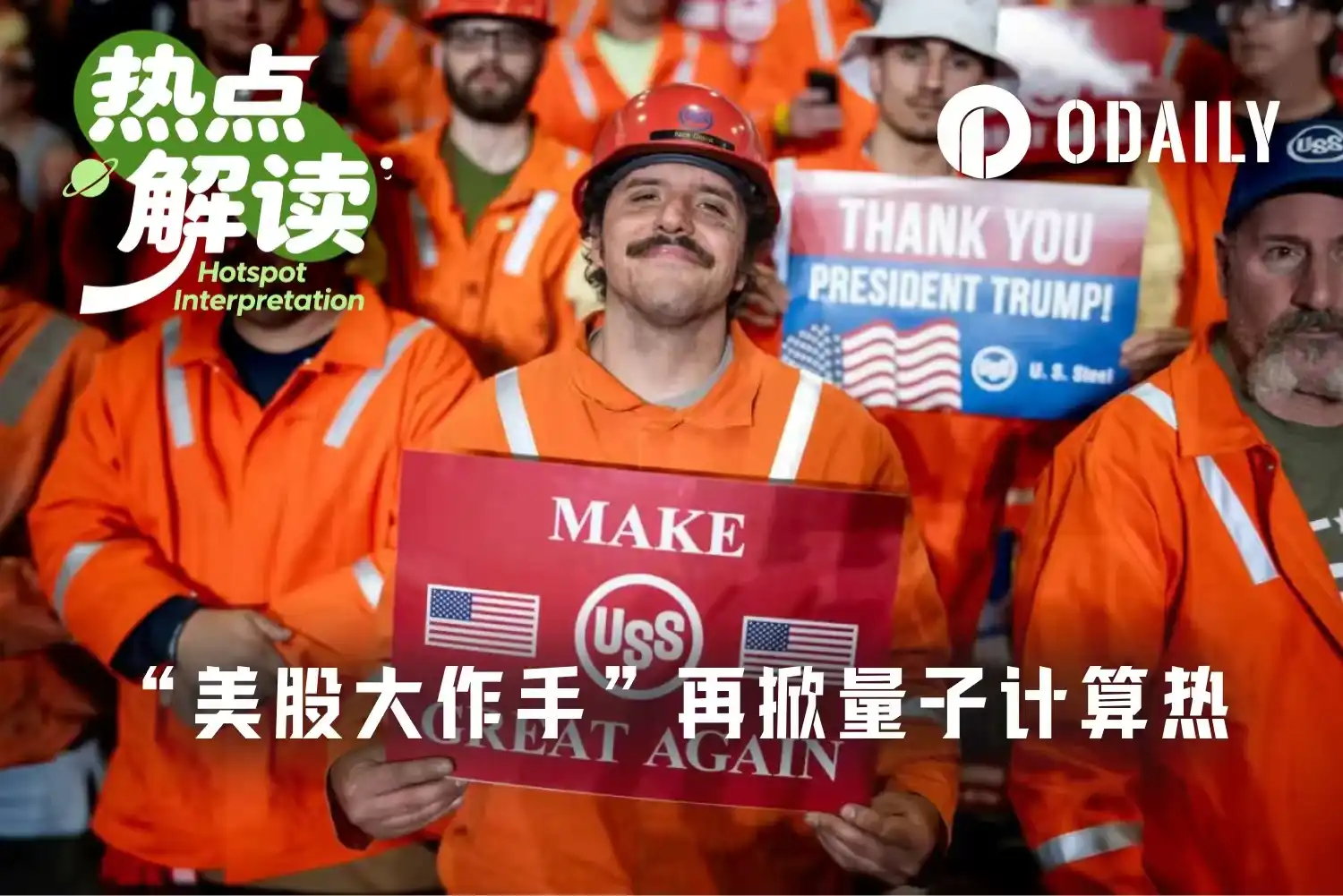
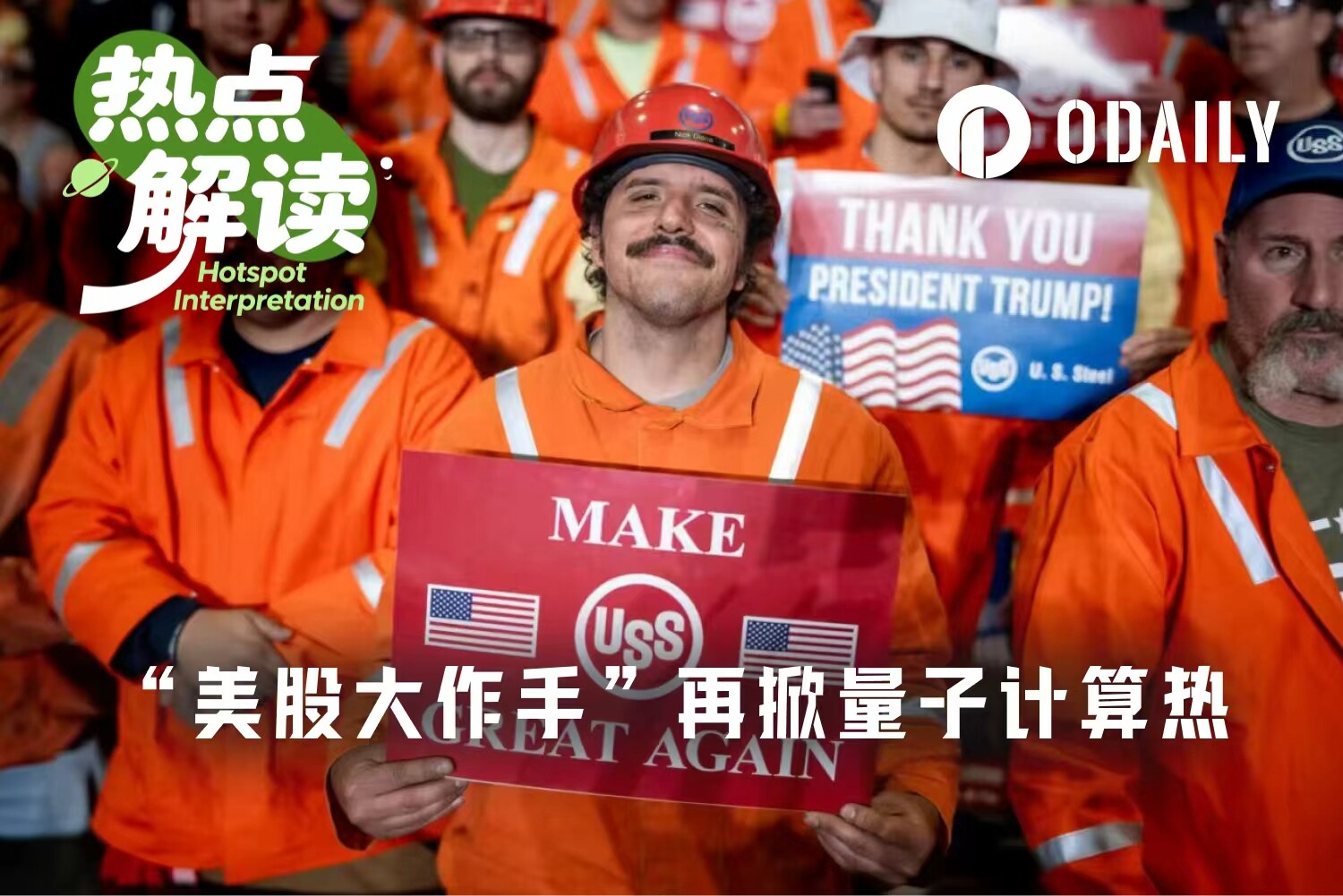
"Trump, the 'U.S. Stock Market Mastermind,' Boosts the Entire Quantum Computing Sector" This article details how former U.S. President Donald Trump's policies and public statements have significantly influenced the stock market, particularly in the quantum computing sector. A key example is the U.S. government's direct investment in Intel stock in August 2025, which yielded over $45 billion in gains within seven months. Trump publicly credited himself for this profit. Recently, the Trump administration announced a new $2 billion initiative. Through the Department of Commerce, funding from the CHIPS and Science Act will be provided to nine quantum computing companies in exchange for minority, non-controlling equity stakes. The recipients include IBM ($1B for its subsidiary Anderon), GlobalFoundries ($375M), and listed companies like D-Wave, Infleqtion, and Rigetti ($100M each). Private firms such as Atom Computing and PsiQuantum also received $100M. This "investment-for-equity" strategy marks a shift from pure subsidies to an "active investor" model under the CHIPS Act. The announcement immediately boosted quantum computing stocks. The article frames this as part of Trump's "America First" industrial policy, aimed at securing U.S. technological leadership, similar to past investments in semiconductors, rare earths, and lithium. The author suggests this pattern of government-backed market intervention, alongside Trump's personal stock endorsements, is a hallmark of his approach to driving market gains and may continue in sectors like defense and advanced energy.

marsbit05/27 09:13

Trump, the "Stock Market Manipulator" in U.S. Stocks, Lifts Up the Entire Quantum Computing Sector

marsbit05/27 09:13

2-Year Return of 225x? Uncovering Mysterious Researcher Serenity's AI 'Choke Point' Investment Strategy

"2 Years, 225x Returns? Decoding Serenity's AI 'Chokepoint' Investment Strategy" This article profiles Serenity (formerly AleaBito on Reddit's WallStreetBets), a pseudonymous researcher known for exceptional returns by applying a "Chokepoint Theory" to AI investments. His methodology involves a bottom-up, reverse-engineering approach of the AI hardware supply chain. He identifies critical, irreplaceable physical bottlenecks (chokepoints) that could cripple entire AI systems if disrupted, bypassing Wall Street's top-down focus on major tech firms. Key examples include pinpointing essential suppliers in the emerging Silicon Photonics and Co-Packaged Optics (CPO) sector—components vital for next-generation AI data center interconnects—such as niche companies providing external laser sources, molecular beam epitaxy equipment, or ultra-pure raw materials. Similarly, he highlights geopolitical "chokepoints" in the humanoid robotics supply chain, where key hardware components and rare earth elements are concentrated in Asia. Serenity validates his investment theses through rigorous adversarial AI debates before publication. He leverages institutional blind spots, directing a sophisticated network of retail followers toward undervalued, under-covered micro-cap stocks across global exchanges, driving significant price movements in names like Sivers ($SIVE), Soitec, and Raspberry Pi ($RPI). While presenting a powerful framework for finding critical system dependencies, the strategy carries inherent risks: extreme concentration on specific technological paths, liquidity issues in small-cap stocks, and accusations of market manipulation. Ultimately, the core takeaway is not to copy his trades, but to adopt his analytical lens: to ask which silent, physical switches hold irreplaceable power within a complex system and invest ahead of the market's recognition of their value.

链捕手05/27 09:12

2-Year Return of 225x? Uncovering Mysterious Researcher Serenity's AI 'Choke Point' Investment Strategy

链捕手05/27 09:12

Bitroot Public Chain Invited to Attend Tencent Cloud Singapore AI Conference, Discussing the Future Alongside Solana

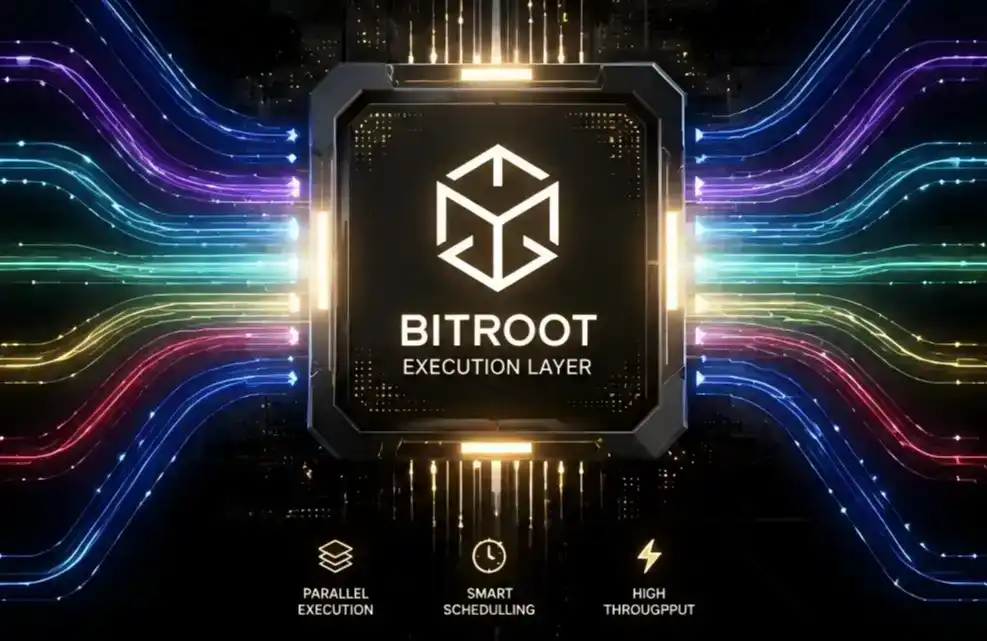
On May 19, Bitroot, an emerging Layer 1 blockchain, participated in the Tencent Cloud AI Summit in Singapore alongside key industry players like Solana Foundation. The event explored the intersection of AI infrastructure, enterprise applications, AI Agents, and Web3. Bitroot's invitation, despite being pre-mainnet, highlights industry interest in its focus on high-performance, AI-native architecture tailored for future AI Agent execution and verifiable on-chain automation. Bitroot CEO Juan Jose emphasized that AI competition is shifting from model performance to data, real-world application scenarios, and trust infrastructure. He argued that for AI Agents to evolve from assistants to autonomous executors managing transactions and assets, they require low-latency, low-cost, and high-throughput blockchain environments. Bitroot aims to address this through its EVM-compatible design, optimistic parallel execution, and a consensus mechanism targeting high scalability. Currently in its Testnet 5.0 phase, Bitroot reports metrics like over 50,000 peak TPS and sub-0.3 second average block time. Its narrative positions it within a growing landscape where next-generation Layer 1s like Monad and Aptos also compete on performance, while Bitroot differentiates by integrating AI computational capabilities natively across its stack. The summit underscored that the fusion of AI and Web3 is moving from concept to infrastructure competition, where networks balancing performance, security, and verifiability will be crucial for enabling scalable AI-driven applications.

marsbit05/27 08:13

Bitroot Public Chain Invited to Attend Tencent Cloud Singapore AI Conference, Discussing the Future Alongside Solana

marsbit05/27 08:13

Hedge Fund Q1 Interpretation: Everyone Is Selling Software, Buying Chips

Hedge Funds and Mutual Funds Aligned in Q1: Dumping Software, Buying Chips A clear consensus emerged among major U.S. hedge funds and mutual funds in Q1: they were simultaneously selling software stocks and pouring capital into the semiconductor sector. This aggressive rotation pushed semiconductor exposure in hedge fund long portfolios to a record high. Hedge funds delivered a 7% return year-to-date, while only 30% of large-cap active mutual funds outperformed their benchmarks. The average short interest for S&P 500 constituents rose to 3% of market cap, the highest since 2011. Within technology, the structural shift was stark. Hedge funds' semiconductor weighting hit an all-time high, while software fell to its lowest since 2019. Excluding Microsoft, mutual funds' relative overexposure to semis vs. software was the largest since 2012. Microsoft was among the most net-sold stocks by both groups. Hedge funds net purchased semiconductor names like LRCX and AMAT. Strategies diverged on leverage and cash. Hedge funds increased their net exposure to near a one-year high after an initial cut. Mutual funds raised their cash allocation, though it remains historically low at 1.4%. Sector alignment was high in Industrials (both overweight) but divergent in Tech: hedge funds increased their Tech net tilt by a record 853 basis points, while mutual funds reduced theirs. Clear splits also appeared in Financials and Consumer Discretionary. Four stocks appeared on both Goldman's hedge fund VIP and mutual fund overweight lists: BA, MA, MRVL, and V. This "shared favorites" basket has returned 10% YTD, outperforming the equal-weight S&P 500. Notably, all "Magnificent Seven" stocks are on the hedge fund VIP list but are uniformly underweighted by mutual funds.

marsbit05/27 08:04

Hedge Fund Q1 Interpretation: Everyone Is Selling Software, Buying Chips

marsbit05/27 08:04

The Evolution Path of Physical Bitcoin

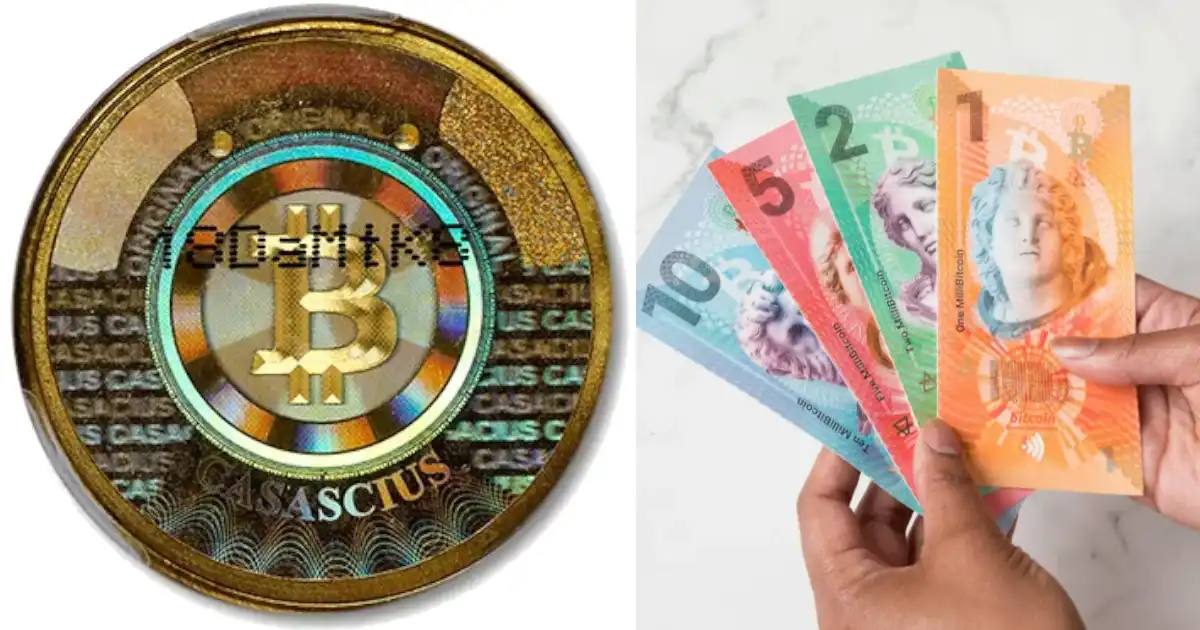
The Evolution of Physical Bitcoin Bitcoin's digital nature is its core strength, enabling self-custody and rapid global transfers. However, its intangibility also hinders mainstream adoption. For over a decade, creators have attempted to materialize Bitcoin while preserving its cash-like properties, yielding notable results. Casascius Coins, launched in 2011, were the first and most iconic physical Bitcoin. Creator Mike Caldwell generated private keys offline, printed them on coins, and sealed them with tamper-evident holograms. This model relied on user trust in the centralized issuer. Production ceased in 2013 due to regulatory pressure from FinCEN. RavenBit Coins emerged in 2014 aiming to decentralize minting by letting users generate and apply their own keys. However, this led to trust issues with numerous untrusted minters and insecure key generation methods. In 2016, Coinkite introduced Opendimes—a breakthrough in bearer asset technology. These USB-shaped devices generate and store keys internally. Funds can be received by checking the public key, but spending requires physically breaking the device to extract the private key. While innovative and open-source, its cost (~$20) and form factor limit its use for small, everyday transactions. Satochip's Satodime, a card-shaped device using similar secure chip technology, followed. It supports NFC interaction and comes in various forms. While potentially cheaper in bulk (~13€), it remains a high-security hardware wallet, not a low-cost cash substitute. A fundamental cost barrier exists. For physical Bitcoin to achieve widespread commercial use, hardware costs must drop below $1 to match the production cost of fiat banknotes. Current secure chips capable of running Bitcoin's cryptographic algorithms (like secp256k1) are too expensive. Chips like NXP's NTAG X DNA (~$3) show cost-reduction potential but lack native Bitcoin curve support. Projects like OfflineCash embed chips in banknote-like paper, but face challenges with durability, the need for custom Bitcoin-enabled chips, and the inherent requirement for users to verify balances online—which conflicts with Bitcoin's trustless ideal. Coinkite's Tapsigner, a ~$20 card with a proprietary Bitcoin NFC chip, is seen as a more practical step forward. It functions as a reloadable hardware wallet for contactless payments, solving the "change" problem and focusing on real-world retail integration, a direction also pursued by companies like Cash App and Square. In summary, the journey to physical Bitcoin has progressed from trusted centralized mints (Casascius) to user-generated keys (RavenBit) and finally to self-contained secure hardware (Opendimes, Satodime, Tapsigner). The core challenge remains developing a sufficiently low-cost, durable, and truly trustless physical bearer asset that can function like cash in daily transactions. Current solutions are either too expensive or introduce new trust assumptions, keeping the ideal of ubiquitous physical Bitcoin just out of reach for now.

marsbit05/27 07:12
The Evolution Path of Physical Bitcoin

marsbit05/27 07:12

活动图片