2026-08-09 Domingo

Notícias de cripto - Página 386

Mantenha-se a par do mercado de cripto. Notícias em tempo real, análises, preços, histórias em alta e análise de especialistas — tudo num só lugar.

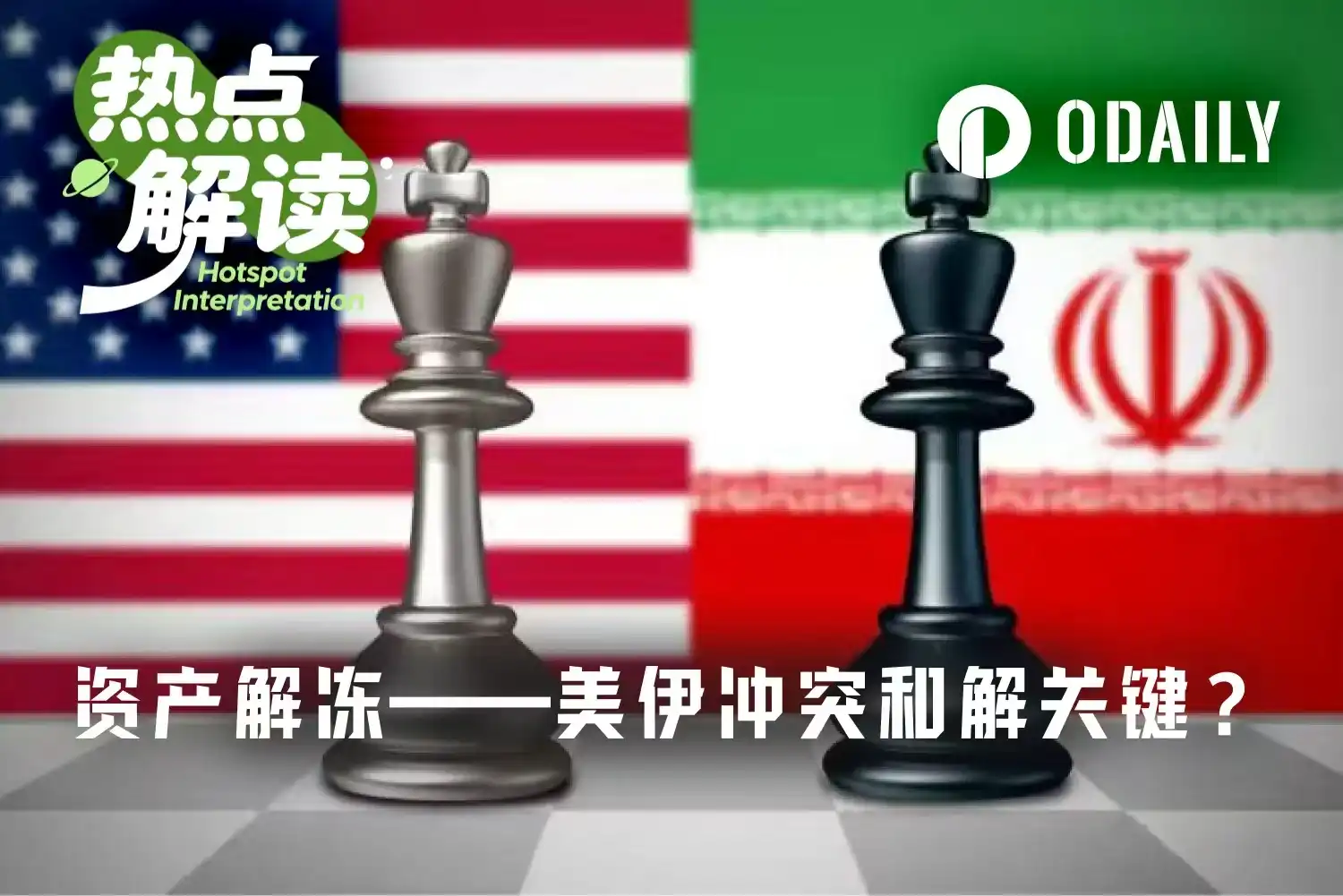
U.S.-Israel-Iran Conflict Surpasses 100 Days: Is Asset Unfreezing a Key to Reconciliation?

**Title: U.S.-Israel-Iran Conflict Surpasses 100 Days; Key to Reconciliation Lies in Unfreezing Assets?** **Summary:** As the conflict between the U.S./Israel and Iran enters its 103rd day, peace talks remain stalled. A central sticking point in the negotiations is the fate of approximately $240 billion in Iranian assets frozen by the United States. This includes around $1 billion in cryptocurrency assets, such as USDT, BTC, and ETH, which were seized as part of U.S. sanctions. Iran has outlined a four-phase plan for a potential deal, with the second phase demanding the immediate unfreezing of at least 50% of its assets upon signing an initial agreement, and the remainder within one to two months. However, the U.S., particularly President Trump, has firmly rejected any preemptive release of funds, viewing them as crucial leverage for future negotiations on Iran's nuclear program. The Trump administration's approach is described as unpredictable, mixing tough rhetoric with offers of talks. Meanwhile, the U.S. is reportedly considering using the frozen Iranian assets to fund reconstruction in affected Gulf countries. While both sides express a desire to end the conflict, the deep-seated issue of the frozen assets, alongside broader geopolitical tensions, suggests a prolonged period of "fighting while talking" is likely to continue. The article concludes that the conflict's primary impact on cryptocurrency markets is macro-level, with minimal direct selling pressure on specific assets like BTC or ETH.

marsbit06/10 10:34

U.S.-Israel-Iran Conflict Surpasses 100 Days: Is Asset Unfreezing a Key to Reconciliation?

marsbit06/10 10:34

WeChat Looks to Overturn Qianwen's Table

WeChat is entering the AI agent arena, directly challenging Alibaba's Qianwen. On June 8, WeChat opened its AI ecosystem to developers, allowing integration of its AI assistant into mini-programs. Users will soon be able to access this assistant by swiping right in the main WeChat interface, using natural language to perform tasks like hailing rides, ordering food, shopping, and making payments—essentially enabling actions like "one-sentence ride-hailing or food delivery" within WeChat. This capability targets the core strength of Alibaba's Qianwen, which has leveraged the broader Alibaba ecosystem (including Taobao, Amap, and Fliggy) to transform from a chatbot into a life-service assistant capable of handling real-world transactions. Qianwen has seen significant success, with hundreds of millions of orders processed during promotional events. WeChat's move is significant due to its massive ecosystem of millions of mini-programs covering various daily service scenarios and its over 1 billion monthly active users. This gives WeChat a potentially unparalleled advantage in user reach and habitual use compared to Qianwen's 166 million MAU. Major platforms like Meituan, JD.com, and Ctrip have already announced alliances with WeChat AI. In response, Qianwen announced on June 3 the opening of its platform to third-party agents and brands, aiming to expand its service network and solidify its competitive moat. The article frames this as the beginning of a new phase of intense competition between the two tech giants in the AI agent space, reminiscent of past battles in the mobile internet era.

marsbit06/10 10:29

WeChat Looks to Overturn Qianwen's Table

marsbit06/10 10:29

Banks Battle Stablecoins: Where Will Deposits Ultimately Flow?

Banks are facing a challenge from stablecoins, which offer near-instant, low-cost global transfers and the potential for higher yields via DeFi protocols, threatening traditional deposit bases. The article draws a historical parallel to the 1970s when Merrill Lynch's Cash Management Account (CMA) circumvented Regulation Q's interest rate caps by funneling client funds into money market funds, forcing banks to adapt with new products. Today, the competition centers on two forms of digital dollars. The first is stablecoins (e.g., USDC), which remove funds from bank balance sheets, reducing lending capital. While regulations like the GENIUS Act prohibit issuers from paying interest, users can seek yield elsewhere in crypto. The second is tokenized deposits, where banks represent deposits as on-chain tokens for efficient settlement while keeping funds insured and on their books for lending. Bank consortia like the Clearing House network and Cari Network are developing such platforms. The core battleground is control over the movement and utility of money. SoFi Bank exemplifies a potential fusion path by launching its own stablecoin (SoFiUSD) and allowing seamless conversion to/from insured, interest-bearing tokenized deposits within one app, giving users flexibility between crypto's efficiency and banking's safety/yield. The article concludes that blockchain technology is not replacing bank deposits but forcing the industry to disaggregate and improve its value propositions—security, yield, and liquidity. The ultimate winners will be institutions that enable frictionless switching between these attributes, much as banks historically absorbed innovations (like the CMA) to maintain their role.

marsbit06/10 10:27

Banks Battle Stablecoins: Where Will Deposits Ultimately Flow?

marsbit06/10 10:27

US CPI Preview: Overall Inflation May Break Through 4% to Hit a Three-Year High, While Core Inflation Could Be Significantly Below Expectations

US CPI Preview: Headline Inflation May Top 4%, Hitting Three-Year High, Core Could Fall Short of Expectations. Wall Street's major institutions (Goldman Sachs, UBS, Deutsche Bank, Morgan Stanley) anticipate May's headline CPI year-over-year to rise sharply to the 4.17%-4.3% range from April's 3.81%, largely driven by a significant jump in energy prices due to recent geopolitical tensions. This could mark the highest level since April 2023. In contrast, core CPI (excluding food and energy) is forecast to increase only 0.17%-0.22% month-over-month, notably below the market consensus of 0.27%-0.30%. Key moderating factors include cooling shelter inflation (OER and rent) and weaker auto insurance prices, while used car prices are expected to be flat. However, upward pressures persist within core components. Airfare, IT goods, and some non-shelter services are expected to show strength, partially offsetting the cooling trends. This divergence makes the report complex for markets: high headline inflation from transient energy shocks versus a potentially softer underlying core trend. Market pricing via inflation swaps suggests a slightly higher-than-expected headline print, historically associated with a modest dollar rally post-release. Looking ahead, the trajectory for inflation remains highly dependent on future oil price movements.

marsbit06/10 10:15

US CPI Preview: Overall Inflation May Break Through 4% to Hit a Three-Year High, While Core Inflation Could Be Significantly Below Expectations

marsbit06/10 10:15

Someone Predicts South Korean Stock Market with Hyperliquid, Achieving 74% Accuracy?

A study analyzed whether weekend price movements of four Korean stock perpetual futures contracts (Samsung Electronics, SK Hynix, Hyundai Motor, and EWY) on Hyperliquid could predict their Monday opening directions on their respective primary exchanges (KRX, NYSE). Over 62 weekend observations across the four assets, Hyperliquid correctly predicted the Monday opening direction 45 times (73.8% accuracy). However, performance varied significantly. Samsung Electronics showed the strongest and statistically significant signal, with Hyperliquid's weekend close correctly predicting its KRX Monday open in 15 out of 16 cases (94% accuracy, p-value < 0.001). This signal remained strong (75% accuracy) even when using Saturday's close instead of Sunday's, suggesting genuine price discovery beyond last-minute convergence. Hyundai Motor also showed high accuracy (81%, 13/16 correct), but this was not statistically significant after accounting for a baseline downward bias in its Monday opens. SK Hynix performed marginally better than a coin flip (63%, 10/16). EWY performed the worst (54%, 7/13), underperforming a simple strategy of always predicting a Monday rise. The stark difference between Samsung and EWY is largely attributed to market timing. KRX opens shortly after Hyperliquid's Sunday close, while NYSE opens ~14 hours later, allowing new information to flow in. The results suggest that for assets like Samsung Electronics, where weekend trading on Hyperliquid precedes the primary market open by only minutes, the platform can provide a valuable predictive signal worth monitoring before the Monday auction, despite the currently small weekend trading volumes.

Foresight News06/10 10:08

Someone Predicts South Korean Stock Market with Hyperliquid, Achieving 74% Accuracy?

Foresight News06/10 10:08

Beosin: 36 Major Security Incidents in May Resulting in Over $76 Million in Losses

In May 2026, the Web3 ecosystem suffered over $76.15 million in losses across 36 major security incidents, according to Beosin Alert. The primary causes were contract vulnerabilities and private key leaks. The top loss involved the Verus-Ethereum Bridge, which lost $11.58 million due to a cross-chain message validation flaw—a vulnerability type historically responsible for massive losses at Wormhole and Nomad. The Echo Protocol attack, resulting from a private key leak, saw the minting of 1,000 eBTC (nominal value ~$76.7M), with the attacker netting ~$5.13 million due to liquidity constraints. Cross-chain bridges were the hardest-hit category, accounting for $27.995 million in losses. DeFi protocols were the most frequently targeted, with 14 attacks. Ethereum saw the highest chain-specific losses at over $48.76 million, followed by BNB Chain, Monad, and TON, indicating a multi-chain attack landscape. A detailed analysis highlighted three key incidents: 1. **Verus-Ethereum Bridge**: A flaw where the bridge contract verified proof from the Verus chain but failed to validate the underlying asset value, allowing fake outputs. 2. **Trusted Volumes**: A signature parameter defect in its RFQ system allowed an attacker to manipulate authorization checks and drain assets from the Resolver contract. 3. **Private Key Leaks (e.g., StablR)**: Operational failures, including inadequate multi-signature wallet thresholds and lack of timelocks, led to losses exceeding $25 million across multiple projects. The report concludes that the Web3 security threat landscape is expanding systemically. Risks now span code, infrastructure, interoperability, and human processes, moving beyond code audits alone. Projects are urged to enhance operational security, review old contracts, and users should regularly revoke unnecessary approvals.

marsbit06/10 09:26

Beosin: 36 Major Security Incidents in May Resulting in Over $76 Million in Losses

marsbit06/10 09:26

Digital Nomad Remote Job Hunting Fraud Prevention Guide: Your Wallet Could Be Emptied Even Before the Interview Starts

Digital Nomad Remote Job Scam Prevention Guide: How to Avoid Getting Scammed Before the Interview Even Starts Remote job searching offers opportunities across cities and countries, but the lack of face-to-face interaction, use of stablecoins for salary, and reliance on private messages/emails for hiring make it harder to verify job legitimacy. Scammers are more prevalent online. This guide, based on real cases from the TT3Labs community, categorizes scams by what they target—your device/wallet, your money, or your identity—and offers practical avoidance strategies. Key Scam Types: 1. Targeting Device Control & Wallets: The most common. Red flags include requests to download unfamiliar meeting software, install "audio plugins," run commands, share screens, or connect your crypto wallet under the pretext of an interview or coding test. These actions can install malware to steal assets in seconds. 2. Targeting Your Money: Includes "pre-employment tests" that are actually刷单 schemes (requiring you to垫钱 with promises of returns), paid job placement guarantees, and training/onboarding loans. Legitimate companies do not charge candidates for hiring. 3. Targeting Your Identity: Requests for ID, passport, bank details, or手持自拍照 during the interview stage. Legitimate background checks typically occur after a formal offer. 4. Post-Hire Risks: Some real companies may exploit remote/cross-border arrangements to delay or withhold pay, especially the final month's salary. Common Red Flags: - Offers that seem "too good to be true" (high pay for low门槛, overly easy interviews). - Communication solely via private chat (e.g., Telegram) with refusal to use mainstream tools. - Rushing the process (sending meeting links at the last minute). - Offering upfront money before you start. - Inconsistent communication (e.g., awkward translation, mismatched accents). Self-Protection Strategies: - Verify through trusted channels: Use official job platforms, company websites, and official app downloads. - Research the HR contact's online presence. - Draw a clear line: Never install unknown software, run commands, pay fees, share wallet keys/私钥, or provide sensitive documents before formal入职. - Practice device isolation: Use a separate device,虚拟机, or sandbox for testing code or downloading suspicious files. If You've Been Compromised: 1. Immediately disconnect from the internet and shut down the infected device. 2. Use a clean device to move remaining assets to a new wallet address. 3. Change all important account passwords and enable two-factor authentication. 4. Document all evidence (chat logs, transaction records) for reporting and community awareness. 5. File a police report, understanding that recovery for跨境 scams can be difficult. Staying vigilant and following these guidelines can help digital nomads navigate remote job searches more safely.

marsbit06/10 09:21
Digital Nomad Remote Job Hunting Fraud Prevention Guide: Your Wallet Could Be Emptied Even Before the Interview Starts

marsbit06/10 09:21

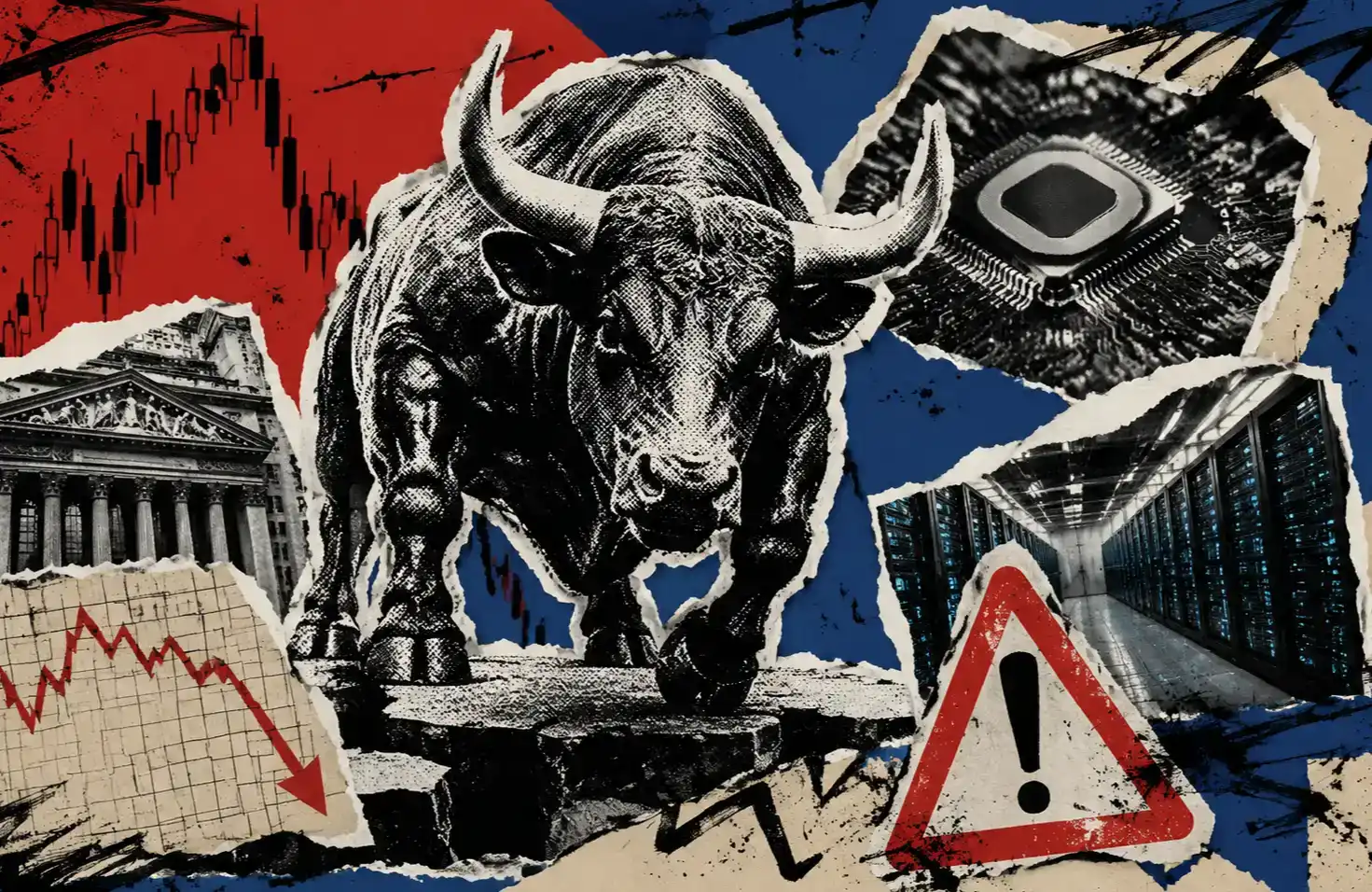
70% Bear Market Signal Flashes in the U.S. Stock Market. Time to Run?

TL;DR: The US stock market faces a complex dilemma: a major bearish warning from Bank of America (BofA) versus strong fundamental growth driven by AI. BofA's equity strategy team warns that about 70% of its bear market indicators have been triggered, a level historically associated with market tops. The S&P 500 shows extreme valuation on multiple metrics, with narrow market breadth and extreme leadership concentration (e.g., top vs. bottom tech stock performance gap at its widest since 2000). This signals deteriorating reward-to-risk odds for investors, as the index advance relies on fewer stocks, reducing portfolio margin for error. However, the current AI boom differs fundamentally from the 2000 dot-com bubble. Today's leading companies (Microsoft, Google, Amazon, Meta, Nvidia) have substantial cash flows, profits, and concrete orders, underpinned by real data center and cloud capital expenditure. Nvidia's massive data center revenue growth offers tangible evidence of demand. The optimism is based on a real infrastructure build-out cycle. The core issue has thus shifted. It's no longer a simple debate about an AI bubble. The market is transitioning from a "buy the growth story" phase to a "prove the growth speed" phase. While AI fundamentals may remain robust, high valuations have priced in significant future success. The key test ahead is whether upcoming earnings can demonstrate that AI-related revenues and cash flows are growing fast enough to justify current prices and offset the elevated risks flagged by historical models like BofA's. Investors must now scrutinize capital expenditure payoffs, profit margins, and whether market breadth improves.

marsbit06/10 09:02

70% Bear Market Signal Flashes in the U.S. Stock Market. Time to Run?

marsbit06/10 09:02

The Arrival of 'Tokenpocalypse': When Costs Outweigh Productivity Gains, Who Pays the Bill?

The article discusses the emergence of the term "Tokenpocalypse" (Token Doomsday), triggered by Microsoft's shift to a token-based pricing model for GitHub Copilot on June 1st. This change introduces significant cost multipliers between different AI models, with some premium models becoming up to 60 times more expensive per token. As leading AI companies like Anthropic and OpenAI prepare for IPOs, increasing profit pressures may lead more vendors to raise prices. This creates a dilemma for enterprises. Companies that once encouraged or mandated high AI token usage to boost productivity now face budget overruns under the new pricing. The lack of granular per-employee token limits means a single developer could exhaust a company's monthly budget. This forces a paradoxical situation where employees are criticized for both using too little and too much AI. The piece cites Uber as a case study, where AI budget depletion led to rapid implementation of usage caps. It highlights the growing disconnect between AI utility and cost, noting that even initial pricing for services like ChatGPT Plus was somewhat arbitrary. The industry now grapples with balancing AI's productivity gains against its escalating expenses. Ultimately, the article suggests the focus is shifting from fears of "AI replacing jobs" to the reality of "AI consuming budgets." The mental overhead and operational hours spent managing token costs are beginning to undermine the very productivity benefits AI promises. The "Tokenpocalypse" symbolizes the start of a broader financial reckoning for AI adoption.

marsbit06/10 08:45

The Arrival of 'Tokenpocalypse': When Costs Outweigh Productivity Gains, Who Pays the Bill?

marsbit06/10 08:45

活动图片