2026-08-07 Sexta

Notícias de cripto - Página 341

Mantenha-se a par do mercado de cripto. Notícias em tempo real, análises, preços, histórias em alta e análise de especialistas — tudo num só lugar.

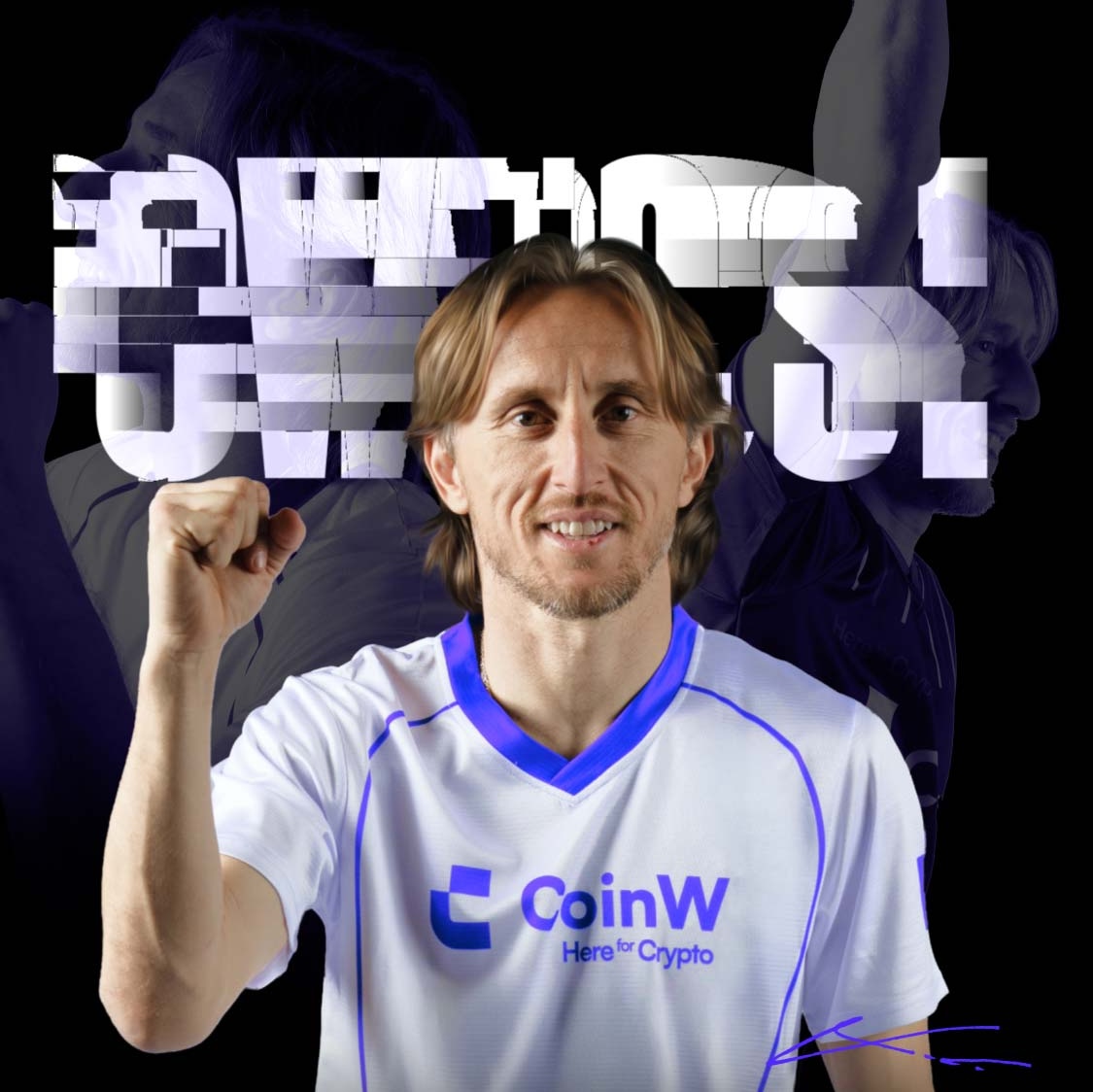
When Crypto Meets the World Cup: CoinW and Modrić's Art of "Navigating Cycles"

When Encryption Meets the World Cup: CoinW and Modrić's "Transcending Cycles" Philosophy In the context of the 2026 FIFA World Cup and its massive global audience, the crypto exchange CoinW announced football legend Luka Modrić as its global brand ambassador. This move is framed not merely as a marketing tactic, but as a strategic experiment in user profile migration. It targets mature, financially stable football fans—particularly in Europe, Southeast Asia, and Latin America—who traditionally have low crypto awareness but value trusted, time-tested authority figures like Modrić. The article draws parallels between Modrić's enduring, disciplined career—marked by consistency and success at the highest level over two decades—and CoinW's own development path. Founded in 2017 during a volatile industry period, CoinW focused on building robust infrastructure and risk management. It weathered the 2022 industry crisis without major security incidents, subsequently earning recognition like "Europe's Most Trusted Exchange" and growing to over 20 million registered users. This "long-termism" is translated into user-centric products. CoinW Academy lowers the initial knowledge barrier. Its integrated ecosystem (CoinW, GemW, DeriW, PropW) and the recent launch of a TradFi section—offering perpetual contracts on traditional assets like stocks, gold, and oil—aim to create a unified platform for diverse assets. For the World Cup, CoinW launched the "We Are The Game" campaign, collaborating with Alchemy Pay to offer zero-fee deposits and local payment options, aiming to transform spectators into participants and lower entry barriers. Ultimately, CoinW's sports partnerships and product strategy are presented as a concerted effort to build trust and accessibility for the "silent majority" still outside crypto—shifting the industry narrative toward inclusivity and long-term value.

Foresight News06/17 04:39

When Crypto Meets the World Cup: CoinW and Modrić's Art of "Navigating Cycles"

Foresight News06/17 04:39

A Panoramic View of the Solana Privacy Ecosystem: The Complete Privacy Stack from Computation to AI

**Solana Privacy Ecosystem: A Comprehensive Overview from Computation to AI** Solana's privacy ecosystem, while nascent, is rapidly evolving to address key challenges across multiple layers. Key figures like Helius CEO Mert acknowledge that Solana has lagged in privacy but highlight its unique potential for scalable, composable privacy protocols, potentially leveraging technologies like ZK compression without persistent rollups. The foundational layer is **Private Compute**, addressed by providers like Arcium and Magic Block. Arcium utilizes Multi-Party Computation (MPC) networks to process encrypted data off-chain with final settlement on Solana, supporting use cases like confidential payments (via its C-SPL token standard) and encrypted data analysis. Magic Block employs Trusted Execution Environments (TEEs) to create private, ephemeral rollups, offering confidentiality, scalability, and composability. Both enable private order books, dark pools, and DeFi rails. Building on this infrastructure are applications for **Private Transfers and Balances**. Umbra, built on Arcium, offers encrypted token accounts with amount, balance, and sender-receiver linkage privacy, plus compliance features. Privacy Cash uses Tornado-style shielded pools for SOL, while Hush provides private staking and trading with integrated swaps via Jupiter. To eliminate **On-Chain Trails** from everyday activities like trading, protocols like encifherio and VanishTrade are emerging. encifherio privately routes swaps through Jupiter by encrypting transaction details within TEEs. VanishTrade routes trades through shielded liquidity pools. Darklake offers a ZK-native "blind slippage" AMM and private perpetuals to hide trading intent and prevent front-running. More advanced applications include **Private Prediction Markets**. Platforms like Melee Markets use Arcium's MPC to encrypt order books, allowing participants to place hidden bets without revealing their market position until settlement. Finally, the ecosystem is expanding into **Private AI**. Loyal leverages both Magic Block and Arcium to create a decentralized protocol where user-AI interactions, queries, and preferences are encrypted on-chain, giving users ownership and control over their data while enabling private transactions and yield generation. In summary, Solana's privacy stack is developing from core compute and transfer privacy towards sophisticated applications in DeFi, prediction markets, and AI, aiming for a future where Fully Homomorphic Encryption (FHE) and Zero-Knowledge (ZK) proofs combine for a complete privacy solution.

marsbit06/17 04:37

A Panoramic View of the Solana Privacy Ecosystem: The Complete Privacy Stack from Computation to AI

marsbit06/17 04:37

Spain's Stunning Upset: A Sharp Review of World Cup Betting Methods from 'Solid' to 'Meh'

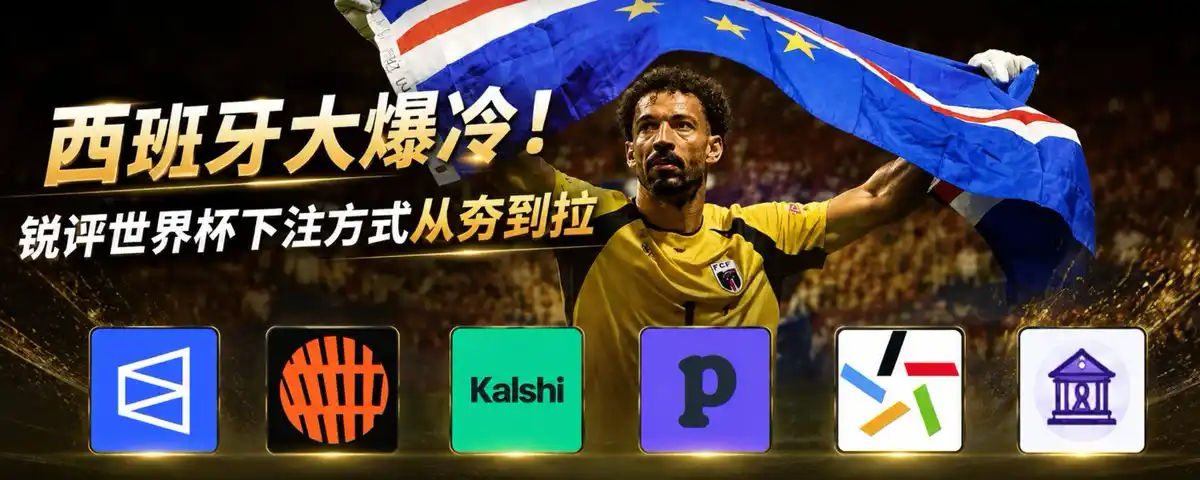
"Spain Stunned: A Critical Review of World Cup Betting Methods from 'Awesome' to 'Trash'" The 2026 World Cup has already delivered its first major upset, as tournament favorite Spain was held to a goalless draw by Cape Verde. This shock result highlights the unpredictable nature of sports and the risks involved in betting on favorites. The article critically compares four major channels for World Cup predictions across five key dimensions: market clarity, transaction transparency, variety of bets, user access/compliance, and promotional incentives. Traditional online sportsbooks and China's official sports lottery offer familiar but opaque systems using complex odds. While they provide a vast array of betting options, their market mechanics and liquidity are not transparent to users. In contrast, new crypto prediction markets like Polymarket, Kalshi, Opinion, and Predict.fun present a clearer model. They translate probability directly into a tradable price (e.g., a 16¢ price equals a perceived 16% chance to win), making market sentiment easily visible. These platforms offer full transparency into order books and trading activity. User access varies significantly. China's sports lottery is fully compliant but primarily offline. Crypto markets require digital wallets and carry regulatory uncertainties. Kalshi is US-regulated but geographically restricted. Traditional offshore books pose the highest compliance and fund security risks. For engagement, Predict.fun leads with a $2 million incentive campaign and gamified features on BNB Chain. Traditional books also ramp up promotions during the World Cup, while other platforms focus more on core market functionality. In summary, the landscape is diversifying. Traditional platforms offer betting as entertainment, while emerging prediction markets frame the World Cup as a transparent, real-time information market. The core appeal remains the same: the human desire to price the future and validate one's predictions.

marsbit06/17 04:32

Spain's Stunning Upset: A Sharp Review of World Cup Betting Methods from 'Solid' to 'Meh'

marsbit06/17 04:32

AI Reshapes the Semiconductor "Smile Curve": The Rising Logic Behind the Global Distributed Bull Market

The Philadelphia Semiconductor Index (SOX) has hit a historic high above 14,000 points, driven by a concentrated AI-fueled semiconductor rally. Key drivers are extreme scarcity and pricing power in critical bottlenecks of the AI data center supply chain. Unlike traditional models where manufacturing held lower profits, AI has reshaped the "Smile Curve." Highly complex manufacturing and advanced packaging nodes—like TSMC's CoWoS, SK Hynix's HBM, and ASML's EUV lithography—have become exceptionally scarce and high-margin, rivaling design-side profitability. The market rewards those controlling irreplaceable segments: U.S. firms lead in AI chip design and cloud services; Taiwan and Korea dominate advanced foundry/logic and memory/HBM respectively; Japan and the Netherlands supply vital materials and equipment. Storage, particularly HBM, is the tightest bottleneck, with severe shortages predicted through 2027. While bullish analysts project sustained AI infrastructure spending growth, notable bears like Michael Burry warn of bubble-like exuberance reminiscent of the dot-com era, citing overleveraged private financing for data centers. Key near-term catalysts include earnings guidance from Micron and Nvidia, while longer-term risks hinge on the 2027-2028 capacity expansion wave and persistent geopolitical tensions in concentrated supply chains.

marsbit06/17 04:30

AI Reshapes the Semiconductor "Smile Curve": The Rising Logic Behind the Global Distributed Bull Market

marsbit06/17 04:30

Morgan Stanley Digital Asset Head: Bitcoin Reaching $1M Would Not Be Surprising, But a Real Catalyst Might Require a Crisis That Shatters the Old System

Summary: In a podcast interview, Morgan Stanley's Head of Digital Asset Strategy, Amy Oldenburg, discusses Bitcoin's potential and institutional adoption. She argues Bitcoin's next major surge might require a catalyst—a crisis that shatters the traditional financial system, after which Bitcoin could emerge as the only intact asset. While she sees a $1 million price as possible within five years, she expects slower, more stable growth. Oldenburg traces Bitcoin's logic to her experience in emerging markets, where decentralized mobile money (like M-Pesa) provided critical financial security where traditional banks failed. She notes that early Bitcoin adopters often came from international finance, seeking alternatives to centralized systems. Regarding institutions, she explains that Morgan Stanley, as a bank holding company, faces stricter regulatory hurdles than pure asset managers like BlackRock. While client demand drove their Bitcoin ETP launch (MSBT), which set a firm record, most financial advisors remain hesitant due to Bitcoin's recent price stagnation and volatility. She identifies an education gap as a major barrier, with many advisors and clients not understanding the differences between various crypto assets or between holding spot Bitcoin versus an ETP. Oldenburg also discusses the tension between Bitcoin's cypherpunk, self-custody ethos and the convenience of centralized financial products, acknowledging the value of both approaches. She concludes that the digital asset space is still in its early stages, with a long journey ahead involving more complex products and technologies.

marsbit06/17 04:15

Morgan Stanley Digital Asset Head: Bitcoin Reaching $1M Would Not Be Surprising, But a Real Catalyst Might Require a Crisis That Shatters the Old System

marsbit06/17 04:15

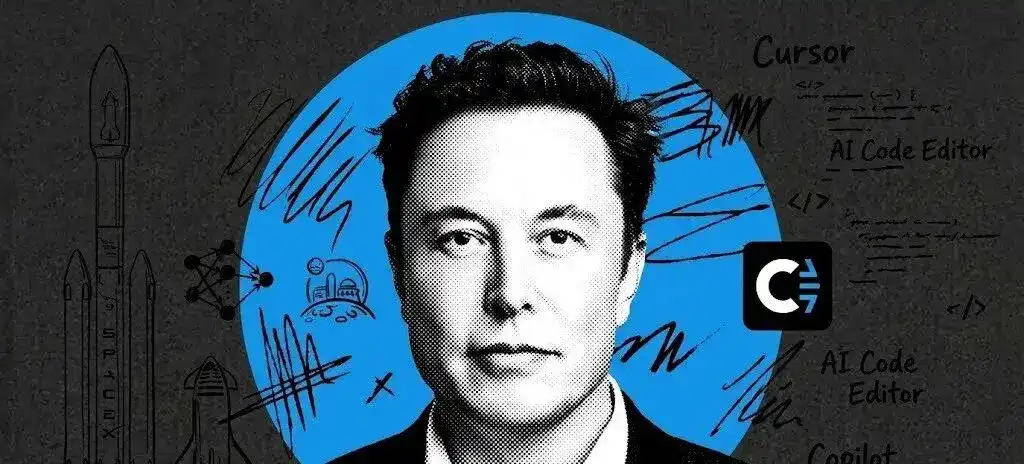
Cursor: Why Did It Board Elon Musk's Rocket?

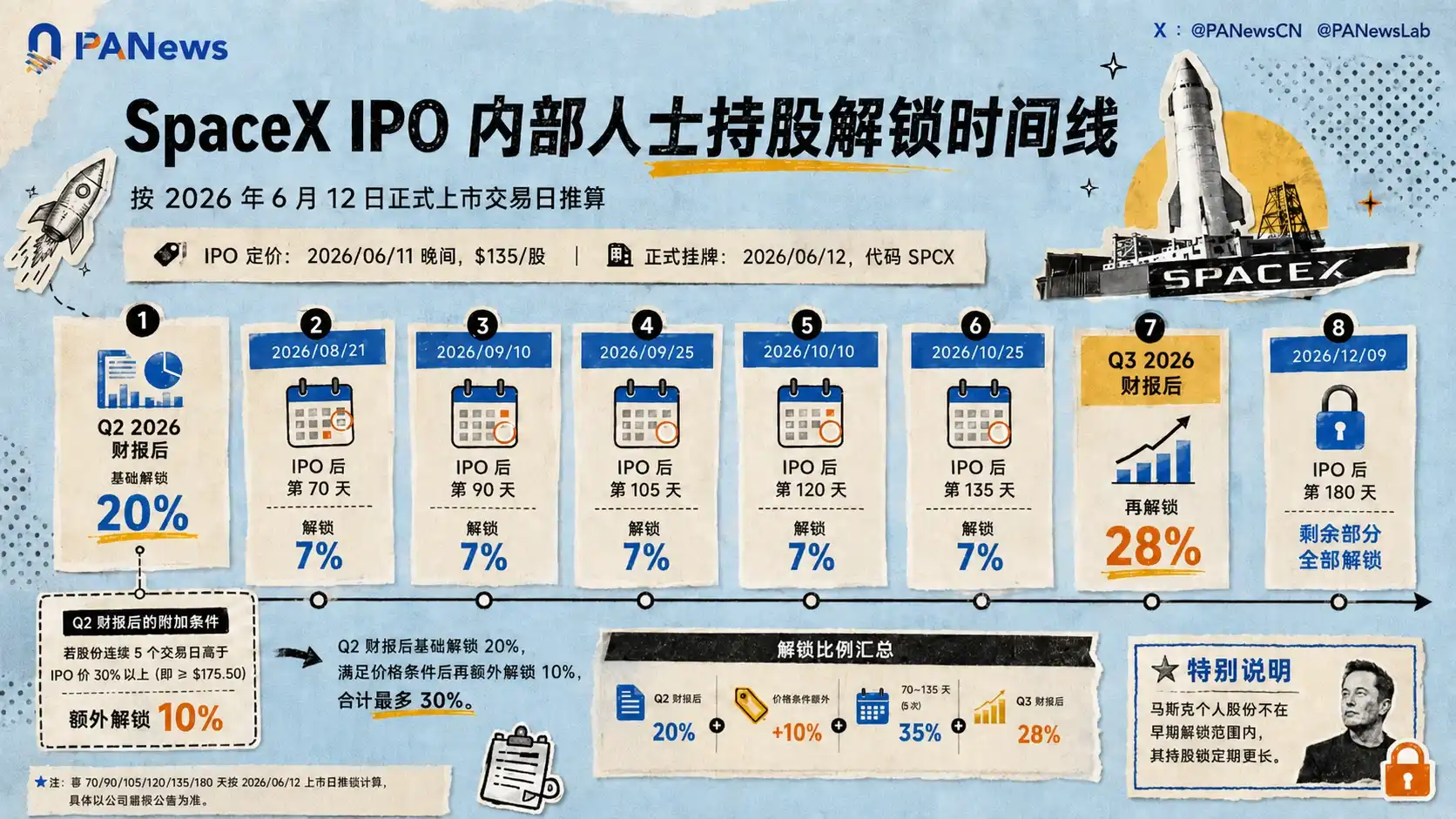
SpaceX announced its first major acquisition after its historic IPO: a $60 billion all-stock deal to acquire AI programming startup Cursor (parent company Anysphere). Cursor is a popular AI coding assistant that allows developers to switch between models from OpenAI, Anthropic, Google, and others. Founded in 2022 by MIT graduates including CEO Michael Truell, Cursor saw explosive revenue growth, reaching a $4 billion annualized run rate by early 2026. However, its market share had declined as key supplier Anthropic launched its own competing product, Claude Code. Facing dependency risks, Cursor decided to build its own AI model, Composer, but lacked the necessary computing power. In April 2026, Cursor and SpaceX revealed a partnership and an option agreement: SpaceX could acquire Cursor for $60 billion post-IPO, or pay a breakup fee and provide substantial computing resources. After SpaceX's successful IPO, it exercised the option. The deal gives Cursor access to SpaceX's massive "Colossus" supercomputer, while SpaceX gains Cursor's strong foothold among elite software engineers to boost its AI capabilities, as Musk's xAI model Grok lags in programming. The acquisition aligns with SpaceX's broader AI and orbital data center ambitions, as Musk targets $1 trillion in revenue by 2030. For Truell, who once aimed to build an enduring independent company, joining SpaceX represents a monumental bet on an unprecedented scale.

marsbit06/17 04:14

Cursor: Why Did It Board Elon Musk's Rocket?

marsbit06/17 04:14

活动图片