2026-08-07 Sexta

Notícias de cripto - Página 309

Mantenha-se a par do mercado de cripto. Notícias em tempo real, análises, preços, histórias em alta e análise de especialistas — tudo num só lugar.

Two Giants' Credit Expansion: Loan Balances of $9.9 Billion vs. $14.6 Billion, Brazil Emerges as the Main Battlefield

Title: Two Giants "Credit" Surge: Loan Balances of 99 Billion vs. 146 Billion USD, Brazil Emerges as Main Battlefield Summary: The article compares the rapid expansion of credit businesses by two major e-commerce and fintech players, Sea (via Monee) and Mercado Libre (via Mercado Pago), in overseas markets like Southeast Asia and Latin America, contrasting with a slowing domestic Chinese credit market. Using Q1 2026 financial data, it highlights their significant growth. Sea's Monee reached a loan balance of $99 billion, up 71% year-over-year (YoY), contributing 17.5% to Sea's total revenue. Mercado Pago's loan balance hit $146 billion, up 87% YoY, contributing 45% to its parent company's revenue. Both maintained stable risk metrics (e.g., Monee's 90+ day NPL at 1.1%) despite rapid scaling. Brazil is identified as a key and accelerating growth market for both. Sea's Brazilian operations saw loan volumes exceed $10 billion, growing 250% YoY, with SPayLater GMV penetration still low (~10%) indicating high potential. Sea also secured a key Brazilian financial credit license (SCFI). Mercado Libre's Brazil segment contributed over half (54%) of total group revenue, with its credit business there generating $11.24 billion in revenue, up 89% YoY and accounting for 12.7% of global revenue. Mercado Pago's credit portfolio, especially credit cards (46% of loans, +105% YoY), is a strategic focus, described as crucial as building logistics was a decade ago. Its net interest margin after loss (NIMAL) remains high at 17.8%. The article concludes that while Brazil presents immense opportunities, the success is largely driven by these integrated "e-commerce + fintech" giants with proprietary transaction data and ecosystems, making it challenging for standalone fintech players to compete effectively.

链捕手06/22 13:16

Two Giants' Credit Expansion: Loan Balances of $9.9 Billion vs. $14.6 Billion, Brazil Emerges as the Main Battlefield

链捕手06/22 13:16

Research Report Analysis: Is Intel Making a Comeback with Apple? Bernstein's Calculations Show the Right Direction, but the Price Is Already Overvalued

Bernstein analyst Stacy A. Rasgon published a report on June 18 regarding Intel, assessing the potential impact of recent political support for a US-based PC chip design and manufacturing collaboration between Apple and Intel. The report views this as a significant signal for the foundry landscape shift but concludes the initial financial contribution would be minimal. Key conclusions: 1) An Apple deal is seen as a small-scale "proof of concept." Even if Intel wins 40% of Apple's premium notebook chip orders (~5 million units/year), Bernstein estimates it would generate only about $500M in annual revenue and ~$0.03 EPS, negligible against Intel's ~$55B revenue. 2) Political encouragement is not equivalent to enforceable mandates. Winning orders ultimately depends on Intel demonstrating competitive technology (like its 18A node), cost, and reliable supply. 3) The path from validation to large-scale production involves significant challenges, capital investment, and time. Due to these uncertainties, Bernstein maintains a Market-Perform (Hold) rating with a $100 price target, implying potential downside from the ~$121.10 price at the report date. The analysis highlights the tension between near-term validation value—serving as a crucial trust signal for Intel's foundry ambitions and US supply chain resilience—and the long-term opportunity to attract larger cloud and AI chip customers. The investment thesis hinges on successful 18A execution and sustained policy support, not on immediate financial gains from Apple.

marsbit06/22 12:52

Research Report Analysis: Is Intel Making a Comeback with Apple? Bernstein's Calculations Show the Right Direction, but the Price Is Already Overvalued

marsbit06/22 12:52

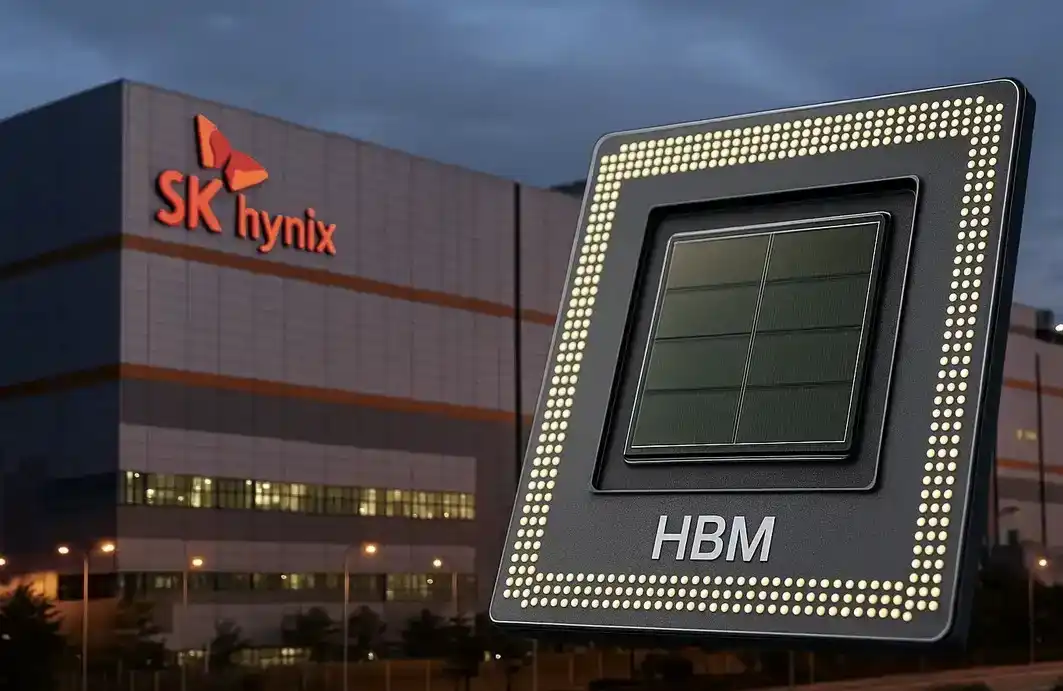
27-Year Reign Ends: SK Hynix Market Cap Surpasses Samsung for First Time, an AI-Driven Reshuffle of Korean Chip Power

On June 22, 2026, SK Hynix made history by surpassing Samsung Electronics in market capitalization, ending Samsung's 27-year reign as South Korea's most valuable company. This dramatic reversal is powered by the AI boom and SK Hynix's dominant position in High Bandwidth Memory (HBM), a critical component for AI model training. Once a heavily indebted firm on the brink of bankruptcy, SK Hynix bet early on HBM, which has evolved from a niche product to essential AI infrastructure. It now commands a 59% share of the global HBM market. Its financial performance is staggering, with Q1 2026 net profit soaring nearly fourfold year-over-year to KRW 40.35 trillion, translating to over 2 billion RMB in daily net profit. HBM now drives roughly 40% of its revenue with exceptionally high margins. In contrast, Samsung, with its broad portfolio spanning memory chips, smartphones, and foundry services, has lagged in the HBM race while facing headwinds in other divisions. This shift signifies a deeper restructuring of South Korea's economy, moving from consumer electronics to AI-driven growth. However, the future remains competitive. With major capacity expansions planned industry-wide by 2028 and Samsung aiming to catch up in HBM technology, the new market leader cannot afford complacency. This event marks a pivotal moment in the global semiconductor industry's ongoing power realignment.

marsbit06/22 12:40

27-Year Reign Ends: SK Hynix Market Cap Surpasses Samsung for First Time, an AI-Driven Reshuffle of Korean Chip Power

marsbit06/22 12:40

Why Does 'AGI Godfather' Ben Goertzel Believe the Future of AI Relies on Blockchain?

Ben Goertzel, known as the "AGI Godfather," argues that the future of Artificial General Intelligence (AGI) must be built on blockchain to prevent its control by a few corporations or venture capital firms. He believes the core AGI code should be free and open-source, but that this alone is insufficient without a decentralized infrastructure to run it affordably. His blockchain project, SingularityNET, and the broader Artificial Superintelligence Alliance aim to create a user-owned, decentralized network for hosting and deploying AGI, contrasting with the closed models of companies like OpenAI and Anthropic. Goertzel criticizes the shift of other labs from open to closed development. He argues that while a closed path is simpler, an open, decentralized model—akin to Linux and the internet—is both possible and ultimately better for humanity. He envisions an "Agent economy" where individuals orchestrate teams of AI agents to perform tasks, including transactions, on an open network rather than corporate clouds. While his current model relies on cryptocurrency, plans include offering paid AI services to businesses with the decentralized blockchain as the backend. Goertzel predicts human-level AGI could arrive by 2029 and warns that a gap in understanding and access to AGI could drastically worsen inequality. The first test of his decentralized approach will be the upcoming release of the Agent Omega Claw.

Foresight News06/22 12:10

Why Does 'AGI Godfather' Ben Goertzel Believe the Future of AI Relies on Blockchain?

Foresight News06/22 12:10

A Company Once on the Brink of Bankruptcy Just Surpassed Bitcoin in Market Cap

On June 22nd, driven by rising stock prices, SK Hynix’s market capitalization reached $1.35 trillion, surpassing Bitcoin's total market cap of approximately $1.29 trillion. This temporarily made it South Korea's highest-valued company. The core driver of this surge is HBM (High Bandwidth Memory), for which SK Hynix is the primary supplier to NVIDIA, holding over 60% market share. AI's demand for high memory bandwidth has translated into immense profitability, with SK Hynix reporting a 72% operating profit margin in Q1. The company's success follows a 13-year bet on HBM technology, beginning in 2009. It nearly failed after the 2001 dot-com bubble, was acquired by SK Group in 2012, and was subsequently recapitalized to continue its long-term HBM development. The article contrasts this with the Crypto AI narrative. Capital currently favors AI infrastructure players like SK Hynix due to "real orders, physical barriers, and quantifiable profit margins." In comparison, Crypto AI projects, promising decentralized compute and data markets, remain largely conceptual with limited tangible progress. Examples include Bittensor, whose core mechanisms are still under development, and Bitcoin miners transitioning to AI, who face significant funding gaps and execution challenges. The piece cites analysis suggesting the AI sector has absorbed nearly all new market liquidity since 2022, leaving little for crypto. It concludes that the current AI infrastructure红利 is captured by entities with proven technical barriers and supply capabilities, while crypto networks still need to define their concrete role in the value chain.

链捕手06/22 11:30

A Company Once on the Brink of Bankruptcy Just Surpassed Bitcoin in Market Cap

链捕手06/22 11:30

Bittensor Moves Towards Ultimate Decentralization: The Critical 18 Months for the TAO Ecosystem is Here?

Bittensor, a decentralized AI protocol, is accelerating its transition to full decentralization over the next 18 months, as outlined in a recent post by co-founder Const. The project currently operates in a "semi-decentralized" state: ownership and network participation are open and permissionless, with TAO distribution based on competitive contribution. However, protocol upgrades and governance have remained under core team control to enable rapid iteration in the fast-evolving AI sector. This strategic shift comes as the ecosystem matures, boasting 128 subnets and a large community. Const argues that continued centralization now poses risks, including single points of failure and regulatory scrutiny. The upcoming decentralization roadmap includes optimizing validator competition, opening liquidity pools, introducing governance rights for Alpha holders, and refining economic models. The move could fundamentally reshape TAO's value proposition, adding governance premiums to its existing valuation based on AI narrative and scarcity. It also signals a potential maturation of the AI crypto sector, where competition may shift from hype to sustainable protocol design and real economic activity. Bittensor positions itself not just as another AI token, but as foundational infrastructure aiming to decentralize intelligence production—analogous to Bitcoin's role in decentralizing money—with the goal of creating a resilient "Millennium Intelligence Federation."

marsbit06/22 11:17

Bittensor Moves Towards Ultimate Decentralization: The Critical 18 Months for the TAO Ecosystem is Here?

marsbit06/22 11:17

活动图片