2026-08-06 Quinta

Notícias de cripto - Página 280

Mantenha-se a par do mercado de cripto. Notícias em tempo real, análises, preços, histórias em alta e análise de especialistas — tudo num só lugar.

Spicy Review|Is the "Most Emotionally Valuable" Post Here? Could STRC Be the Next LUNA?

Here is an English summary of the article (under 1500 characters): This article from the spicy commentary series "LaPing" covers three key stories in the crypto world for the week. First, during a sharp market downturn in June where BTC fell over 20%, a Reddit post on r/Cryptocurrency rallying against "Fear, Uncertainty, and Doubt (FUD)" went viral. The comment section became a hub for retail traders to share memes and encouragement, with many advocating holding (HODLing) through the volatility, embodying the "be fearful when others are greedy" mantra. Second, it examines the situation with STRG (Strategy's perpetual preferred stock), which has "de-pegged," trading around $76 vs. its $100 face value, a ~25% discount. The concern is whether Michael Saylor's company, MicroStrategy, can sustain the $1.2 billion annual dividend payment, given its ~$1.4 billion cash reserve. While analysts note STRG is fundamentally different from the catastrophic LUNA collapse—as Saylor isn't obligated to pay the dividend—risks remain. If MicroStrategy's (MSTR) common stock investors feel their capital is being prioritized for STRG dividends, it could hurt MSTR demand. Third, the article analyzes the online persona of "Chuan Mu," a trader famous for turning $500 into $1 million during the 2023 ORDI inscription boom and again with short positions in 2025. An analysis of his 1,828 tweets reveals his success stems from a top-down analytical framework, asking systemic questions like "Where will the bottleneck be in the AI supply chain?" rather than chasing individual pumps. His investments migrated from crypto-linked stocks to AI infrastructure plays like SK Hynix and Samsung. However, the piece also notes criticism that he has occasionally "pumped" assets and sold positions without notifying followers, creating a contradictory public image. The weekly recap highlights themes of community sentiment during bear markets, financial instrument risks, and the complex realities of following influential online traders.

Foresight News06/26 10:38

Spicy Review|Is the "Most Emotionally Valuable" Post Here? Could STRC Be the Next LUNA?

Foresight News06/26 10:38

Glue Finance Founder: ETH Has Entered a Phase of Non-Consensus, an Inflection Point Is Coming

"Glue Finance founder argues Ethereum's current price underperformance stems from its 'unfinished machine' status. Despite record usage and settlement value in 2026, ETH remains below its 2021 peak because the protocol's continued development creates a dependency on the Ethereum Foundation for guidance and fixes. Key issues include centralized L2 sequencers, governance-based freezes (as seen with Arbitrum), state bloat, a vulnerable public mempool, and looming quantum computing threats. This 'dependency discount' prevents ETH from accruing the 'ossification premium' that markets award to immutable, trustless systems like Bitcoin. The author, a self-described Ethereum maximalist, rejects two flawed escape paths: a 'war mode' shift towards centralization for speed (which would sacrifice Ethereum's core value), or simply replacing the EF with another governing body. The only solution is the 'Manhattan Plan' or 'Lean Ethereum': a concerted, accelerated effort to complete and then *freeze* the protocol's neutral core. This involves finalizing critical upgrades in consensus (Lean Consensus), scaling (targeting 1 trillion gas/sec), quantum resistance (leanXMSS signatures), and full ZK-provable execution. The goal is to pass the 'walk-away test'—where Ethereum could run forever, neutrally, without the EF. Success would transform Ethereum into the first programmable, quantum-resistant, immutable global settlement layer, flipping its current discount into a unique 'eternity premium' that surpasses Bitcoin's. Failure—stagnation or trading neutrality for speed—would relegate it to being a slower, less trustworthy competitor."

marsbit06/26 10:12

Glue Finance Founder: ETH Has Entered a Phase of Non-Consensus, an Inflection Point Is Coming

marsbit06/26 10:12

Glue Finance Founder: ETH Has Entered a Phase of Non-Consensus, an Inflection Point Is Approaching

Glue Finance founder argues that Ethereum's current price underperformance, despite high on-chain activity, stems from its incomplete state and lingering dependency on central stewards like the Ethereum Foundation. The core thesis is that the market is discounting ETH not for lack of use, but because the protocol remains a "machine under construction." Key unresolved issues include centralized L2 sequencers with limited escape hatches, state bloat, vulnerable public mempools, and the looming quantum computing threat. This perpetual "work-in-progress" status forces reliance on a small group of maintainers, undermining the network's promise of credible neutrality and immutability. The author, a self-described Ethereum maximalist, rejects two flawed paths: a "wartime mode" of centralizing for speed (surrendering Ethereum's unique value) or merely replacing the Foundation with another governing entity. The only solution is to complete and then "freeze" the protocol's neutral core through a focused "Manhattan Project" dubbed "Lean Ethereum." This project aims to bundle critical upgrades—consensus layer overhaul, massive scaling via ZK-proofs, quantum resistance, and statelessness—into a decisive push to finalize the base layer. Once the core rules are cryptographically solidified and beyond anyone's control (passing the "walk-away test"), Ethereum would shed its dependency discount and earn a "rigidity premium" for its credible neutrality and programmability, potentially surpassing Bitcoin's valuation. The race is between completing this hardening and the risks of protocol capture or stagnation.

链捕手06/26 10:11

Glue Finance Founder: ETH Has Entered a Phase of Non-Consensus, an Inflection Point Is Approaching

链捕手06/26 10:11

Hackers Steal Nearly $17 Million in 40 Days as 'Zombie Contracts' Become Their ATMs

According to an analysis published by ZeroDrift on June 22, 2026, attackers have stolen approximately $16.9 million over 40 days from five deprecated but still operational smart contracts across various blockchains. The primary issue is not a specific vulnerability but the incomplete decommissioning of legacy contracts. These "zombie contracts" often retain economic value, operational permissions, and callable functions, making them prime targets long after teams cease active development. The most significant loss occurred at DxSale, where an old locker contract lost about $7.3 million due to a forgotten control path becoming accessible again. Other affected projects include TrustedVolumes (~$5.87M), Raydium's legacy AMM pool (~$1.34M), Aztec Connect (~$2.28M), and Huma Finance V1 pool (~$101k). These incidents involved diverse systems—RFQ settlement, credit pools, liquidity lockers, AMMs—demonstrating the widespread nature of the risk. The analysis highlights that automated tools are lowering the cost for attackers to systematically scan for these long-tail targets, which have public code and weaker monitoring. In contrast, defensive practices for contract retirement remain underdeveloped. While the DeFi industry has mature audit processes for new deployments, it lacks strict protocols for securely sunsetting old contracts, which only become truly "retired" after all funds, permissions, authorizations, and trust assumptions are removed.

marsbit06/26 09:13

Hackers Steal Nearly $17 Million in 40 Days as 'Zombie Contracts' Become Their ATMs

marsbit06/26 09:13

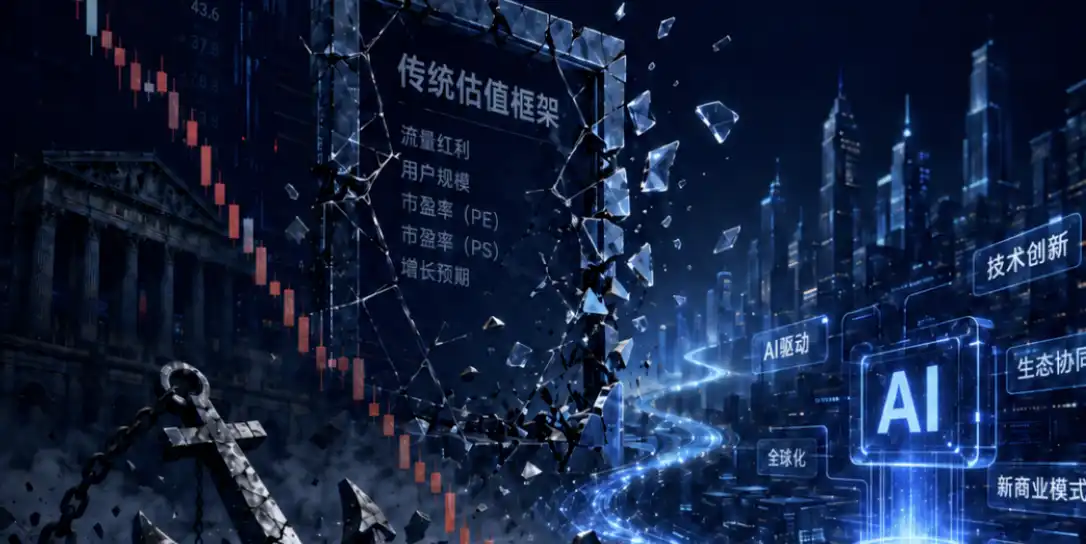
Valuation Rout of Old Titans: The Demise of a Generation's Asset Valuation Framework

"The Old Titans' Valuation Collapse: The Death of an Era's Valuation Framework" Between Alibaba's 2014 NYSE debut at $93.89 and its 2026 price of ~$95, twelve years have passed with zero price appreciation. This stagnation symbolizes a wholesale valuation reset for an entire generation of Chinese internet assets. Companies like Tencent, Pinduoduo, Meituan, Bilibili, and Kuaishou have seen catastrophic declines of 80-98% from their peaks. The core question arises: what framework now prices these companies, or has the framework itself expired? The valuation logic for Chinese internet stocks followed a clear "anchor-setting and anchor-removing" process. From 2014-2017, the dominant narrative was "US comparable discounting" – applying a growth premium and governance discount to US peers' multiples. This anchor loosened with the 2018 US-China trade war and the VIE structure risk, then was violently uprooted by the 2020-2021 regulatory crackdowns (Ant Group, Didi, anti-monopoly fines). The 2022 delisting panic and subsequent 2025-2026 geopolitical shocks (US military lists, AI espionage accusations) completed the demolition. The old "US对标打折" model is dead. However, this is not solely a China story. A structural mirror exists in US "old titan" stocks ("老登股"). In 2026, even Microsoft – with robust fundamentals – saw its PE compress from a 34x median to 22x, its worst performer status among the "Magnificent Seven" driven by a $190 billion annual AI capex crushing free cash flow. The core dilemma is universal: legacy platform giants, whether Alibaba or Microsoft, are spending colossal sums to chase an AI paradigm that may颠覆 their own high-margin, user/subscription-based business models. They have shifted from "companies defining the future" to "companies needing to prove they won't be淘汰ed by the future." This phenomenon of a dying valuation坐标系 has a historical precedent: post-1989 Japan. After its bubble burst, the "Japan premium" narrative ("most efficient manufacturing + perpetual growth") collapsed. A 25-year valuation vacuum ensued until Warren Buffett provided a new language in the 2010s: "low valuation + high dividend + governance reform." China's internet sector is now in a similar vacuum six years into its reset. While different from Japan's deflationary context, the parallel is clear: the old macro assumption of "deep integration with global capital" is falsified, but a new pricing framework is absent. Potential "new languages" for Chinese internet valuations are contradictory. AI transformation requires gutting profitable core businesses (e.g., Alibaba's ad-driven e-commerce) for an unproven consumption-based model, risking a Microsoft-like cash flow crunch. Alternatively, shareholder returns (buybacks/dividends) could build a floor, following Buffett's Japanese playbook, but current scales are insufficient to form a standalone anchor. The current state mirrors mid-1990s Japan: the old framework is dead, the new one unborn. The market waits in a vacuum for a重新定义ing force – a person, event, or proven business model shift – to answer "why buy." This may only be the middle phase of a prolonged re-rating.

marsbit06/26 09:06

Valuation Rout of Old Titans: The Demise of a Generation's Asset Valuation Framework

marsbit06/26 09:06

STRC Trading at Significant Discount, mNAV Falls Below Break-Even, Strategy's Valuation Logic Has Been Rewritten

Title: STRC Deeply Discounted, mNAV Falls Below Break-even, Strategy's Valuation Logic Redefined The recent volatility in MSTR and STRC highlights the need to reassess the core business model of Bitcoin reserve companies. These entities function more like leveraged, single-asset banks rather than software/tech firms. Consequently, they should be valued using banking metrics, not based on their total Bitcoin holdings. The key valuation metric is mNAV (market net asset value), akin to a price-to-book ratio. It compares the company's market capitalization to the equity value of its Bitcoin holdings after deducting all senior debt and preferred equity (like STRC). As of June 24, Strategy's mNAV was 1.10x. The focus should be on "net Bitcoin per share" (the Bitcoin claim per share after senior claims) and its growth rate, equivalent to a bank's book value and return on assets. Given STRC's 19% discount to its $100 par value (yielding 14.2%), issuing new MSTR equity at the current price to buy more Bitcoin is inefficient. It slightly dilutes the widely watched "total Bitcoin per share" metric while providing minimal improvement to the more critical "net Bitcoin per share." The article analyzes four potential uses for $1 billion in new equity: 1. **Buy Bitcoin:** Least effective. Improves net Bitcoin per share only marginally while diluting total Bitcoin per share. 2. **Repurchase STRC:** Most effective for balance sheet repair. The discount creates immediate value, increasing net Bitcoin per share by 1.0%, reducing debt burden, and lowering future dividend obligations. 3. **Boost Cash Reserves:** Dramatically improves the "cash coverage ratio" for STRC dividends from 9.8 months to 16.8 months, a crucial liquidity metric in a tightening funding environment. 4. **50/50 Split (STRC buyback & cash):** A balanced approach improving all key metrics. Strategy's own Q1 report indicates its internal break-even mNAV for profitable equity issuance to buy Bitcoin is 1.22x. With the current mNAV at 1.10x, such a move would be value-destructive. The core assumptions of its previous expansion model—issuing STRC at par and maintaining ample dividend coverage—have broken down. The recommended path is to use new capital to optimize core financial health: repurchasing discounted STRC and/or bolstering cash reserves. This would repair the balance sheet, signal liquidity strength, support STRC's price, lower its yield, and potentially reopen the par-value issuance channel. The current STRC discount represents a low-cost capital opportunity to restart this positive cycle. Bitcoin reserve companies must be evaluated as banks, focusing on book value, leverage, and liquidity resilience.

Foresight News06/26 09:05

STRC Trading at Significant Discount, mNAV Falls Below Break-Even, Strategy's Valuation Logic Has Been Rewritten

Foresight News06/26 09:05

活动图片