2026-08-03 Segunda

Notícias de cripto - Página 120

Mantenha-se a par do mercado de cripto. Notícias em tempo real, análises, preços, histórias em alta e análise de especialistas — tudo num só lugar.

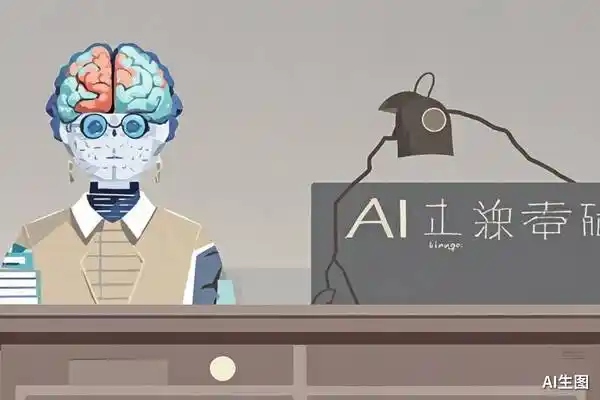
Altman Returns to Stanford and Admits Mistake: Outsourcing Thinking to AI, a Generation's Brains Are Atrophying

Sam Altman returned to Stanford University and admitted he was wrong about AI's impact on education. He predicted that after an initial phase of student cheating with ChatGPT, the education system would rapidly reform itself to teach more critical thinking. However, three and a half years later, while AI has advanced dramatically, teaching and assessment methods remain largely unchanged—still focused on memorization, standardized answers, and closed-book exams. Altman expressed deep concern that this disconnect is causing a "cognitive atrophy," where outsourcing thinking to AI erodes students' critical reasoning skills. Research supports this: grades have dropped in high-stakes exams after ChatGPT's introduction, and while assignment scores in writing and coding have inflated due to AI use, exam performance hasn't improved, indicating "outsourcing" rather than learning. He argues the problem lies in institutional inertia. The education system, built on the premise that tasks are time-consuming, hasn't adapted to a world where AI makes shortcuts effortless. Students are being evaluated by outdated standards, risking a generational gap in essential cognitive skills. Altman proposes a shift: education should move from testing memorization to fostering judgment, creativity, and the ability to ask better questions. Core practices like writing and programming remain vital not for their outputs, which AI can generate, but for the thinking process they train. The urgent need is to teach students not just to use AI, but to critically verify its outputs. Without reform, we risk a generation losing its capacity for independent thought.

marsbit07/16 08:19

Altman Returns to Stanford and Admits Mistake: Outsourcing Thinking to AI, a Generation's Brains Are Atrophying

marsbit07/16 08:19

Clearing Giant with $114 Trillion in Assets Tokenizes Securities, Has Crypto Won?

On July 15, the US securities settlement giant DTCC conducted its largest production-level test for tokenization, marking a significant shift from previous workarounds. The test involved approximately 40 institutions, including major players like JPMorgan, Citadel Securities, and State Street, as well as crypto-native firms such as Circle, Chainlink, and Ondo Finance. For the first time, DTCC, which custodies over $114 trillion in securities, directly created on-chain "digital twin" tokens for stocks, ETFs, and U.S. Treasuries held in its depository (DTC). These tokens share the same CUSIP identifiers and legal rights as the underlying assets. Key transactions included JPMorgan tokenizing an Invesco QQQ ETF to post as collateral at CME Group and DriveWealth settling a tokenized equity trade with Vanguard. The test paves the way for the official launch of the DTCC Tokenization Service in October. This move centralizes the issuance authority for tokenized traditional securities with the core market infrastructure itself. While projects like Ondo Finance (which participated in the test) will continue providing distribution and DeFi integration, their underlying collateral can now be DTCC-issued tokens, enhancing transparency and credit backing. The initiative aims to unlock liquidity in collateral by enabling 24/7 settlement and transfer across venues, a direct efficiency gain for DTCC. The test culminates years of DTCC's blockchain exploration, utilizing two key infrastructures: a private Hyperledger Besu chain for internal control and the Canton network (co-chaired by DTCC and Euroclear) for interoperable, privacy-focused transactions with external institutions. The event signals institutional tokenization moving into a new, mainstream phase led by traditional finance incumbents.

Foresight News07/16 08:15

Clearing Giant with $114 Trillion in Assets Tokenizes Securities, Has Crypto Won?

Foresight News07/16 08:15

Base Abandons Social Direction, Founder Admits Strategic Failure

Base, the Ethereum Layer-2 network often called the "L2 King," has formally ended its three-year "exploration era," with co-founder Jesse Pollak admitting its strategic focus on social applications was a mistake. In a recent statement, Pollak acknowledged that bets on social platforms like Farcaster and Zora, creator coins, and mini-apps failed to drive mainstream crypto adoption, leaving Base behind competitors in areas like perpetual contracts and payment solutions. He confirmed that Base's flagship app will now be managed by Cobie, a community leader, under Coinbase's oversight. Pollak's review highlighted Base's past struggles: leadership overemphasized a "creator economy" with limited real earnings for creators, development often followed trends set by Solana or BNB Chain, and a significant portion of on-chain activity was reportedly inflated. The vision of using social media to onboard billions to crypto clashed with the dominance of established Web2 platforms. Moving forward, Base will pivot to three core areas, as outlined by both Pollak and Coinbase CEO Brian Armstrong: **trading** (including tokenized stocks and memecoins), **payments** (leveraging global stablecoins), and **AI Agent services** (preparing for a machine-driven economy using crypto as native currency). This shift is seen as a return to crypto's fundamental strengths—finance and transactions. The strategic change coincides with personnel shifts at Coinbase, including the departure of executives like the Chief Legal Officer. Notably, Pollak himself has returned to hands-on coding. Furthermore, Coinbase reports that over 95% of its code is now AI-generated or assisted, with AI agents already performing work equivalent to about 1,200 employees—a trend expected to grow significantly, signaling how AI is reshaping the company's own operations as Base prepares to serve a future AI Agent economy.

Odaily星球日报07/16 07:59

Base Abandons Social Direction, Founder Admits Strategic Failure

Odaily星球日报07/16 07:59

How Will Stablecoins Reshape the Corporate Payments Landscape in 2026?

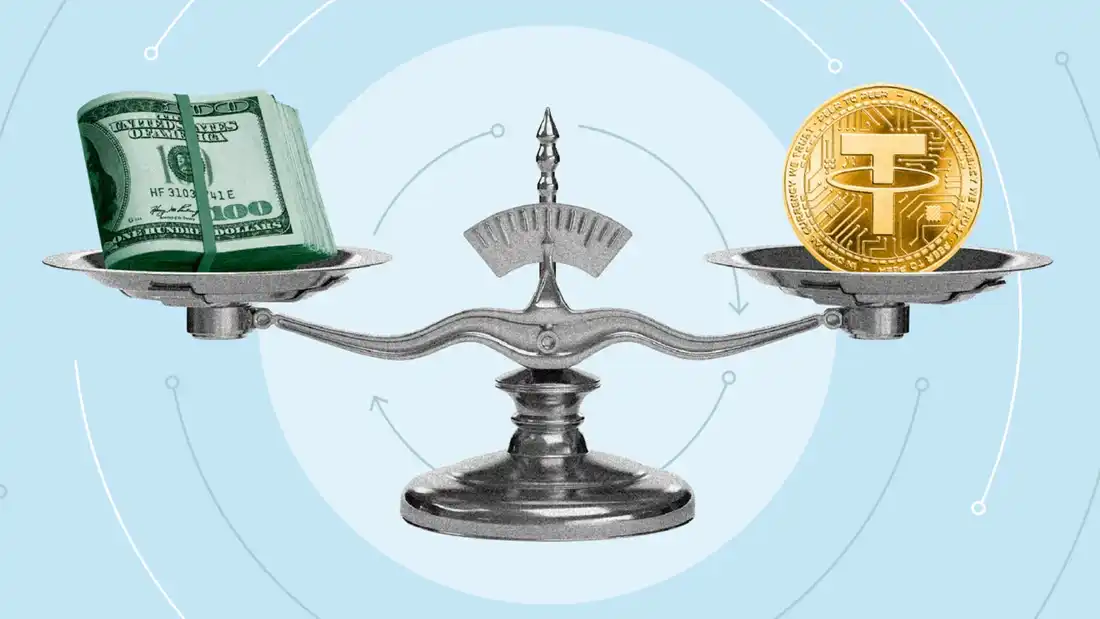
In 2026, stablecoins are no longer a niche cryptocurrency topic but are being actively explored by enterprises to modernize cross-border payments. Traditional systems, burdened by slow settlement, high costs, and limited transparency, struggle to meet the needs of global digital commerce. Stablecoins, which combine the price stability of fiat currencies with the speed and programmability of blockchain, offer compelling business advantages. These include faster settlement (minutes vs. days), lower transaction costs by reducing intermediaries, greater transparency through immutable records, 24/7 availability, and global accessibility. Key enterprise use cases are emerging: cross-border supplier payments, treasury management, payroll for distributed teams, digital commerce, and B2B transactions. A transformative aspect is programmable payments via smart contracts, enabling automation of processes like subscription billing, escrow, and supply chain payments. Adoption hinges on robust security, compliance (AML/KYC), and regulatory clarity. Future trends like asset tokenization, embedded finance, and AI-driven financial systems are expected to accelerate integration. In conclusion, stablecoins are evolving from an alternative technology into foundational infrastructure for next-generation enterprise payments, offering efficiency, cost savings, and new capabilities for a connected global economy.

marsbit07/16 06:31

How Will Stablecoins Reshape the Corporate Payments Landscape in 2026?

marsbit07/16 06:31

In-depth Analysis of Trade[XYZ]: How Were 92 Markets and 98% of HIP-3 Trading Volume Established?

**Deep Dive into Trade[XYZ]: How It Built 92 Markets and 98% of HIP-3 Volume** This analysis explores Trade[XYZ], a deployment on Hyperliquid's HIP-3 framework, which now accounts for 98% of its transaction volume. It argues that Trade[XYZ] is not a threat to Hyperliquid but a validation of its strategy: providing open infrastructure for specialized teams to build deep liquidity markets. The report details the significant difficulty of building institutional-grade perpetual markets for real-world assets (stocks, indices, commodities). Trade[XYZ] succeeded by rapidly launching markets (median 3.3 days), attracting deep-making market makers, and implementing sophisticated risk mechanisms (like "Discovery Bounds") to maintain liquidity even when traditional hedges are unavailable (e.g., overnight, pre-IPO). Key findings include: * **User Acquisition:** ~97% of Trade[XYZ] volume trades through Hyperliquid's own front-end, bringing over 300,000 new wallets to the protocol. * **Fee Sharing:** Protocol fees are split 50/50 between Hyperliquid (for HYPE buybacks) and the deployer. The "Growth Mode" (low fees for RWA) is a strategy to build market share before potential monetization at standard rates, as evidenced by the GOLD market. * **Market Quality:** Trade[XYZ] has achieved tight spreads and significant open interest, led by commodities and indices. Its ongoing operational management of 92 markets is a full-time business. * **Strategic Fit:** Building these markets internally would expose Hyperliquid to regulatory risk and divert focus from its core infrastructure mission. HIP-3 allows expert deployers like Trade[XYZ] to handle complex operations while Hyperliquid benefits from network effects, fees, and users. The conclusion is that Trade[XYZ]'s dominance demonstrates the success of Hyperliquid's horizontal model: attracting the best operators to build winning verticals on its neutral, high-performance base layer.

marsbit07/16 06:22

In-depth Analysis of Trade[XYZ]: How Were 92 Markets and 98% of HIP-3 Trading Volume Established?

marsbit07/16 06:22

活动图片