85% of concentrated liquidity is underutilized — Meaning for DeFi?

ambcryptoPublicado em 2026-07-18Última atualização em 2026-07-18

Resumo

A recent Dune report reveals that concentrated liquidity, designed to enhance capital efficiency in decentralized exchanges, is largely underutilized. In the first half of 2026, an average of 29.4% of liquidity across major protocols like Uniswap v3/v4, PancakeSwap v3, and Aerodrome Slipstream was idle—outside active trading ranges—resulting in no fee generation. This represents about $542 million in idle capital weekly and an estimated $150 million in lost annual fees for LPs. When considering technically available but unused liquidity, the underutilization rate rises to approximately 85%. The study indicates that much of this idle capital, particularly over $200 million untouched for more than 90 days, stems from liquidity providers not actively managing their positions. Individual investors, not automated managers, hold the vast majority of this idle liquidity (e.g., 94% on Ethereum). Automated managers maintain far more active and in-range positions. Notably, Uniswap v4 has not resolved the issue; about 30.5% of its liquidity remains out of range, and while it introduced hooks for external yield strategies, only 10% of its TVL uses them, with none currently generating yield from idle capital.

A significant amount of the liquidity that users contribute to decentralized exchanges isn’t really being used to speed up trades, according to a recent report by Dune.

To put things in perspective, concentrated liquidity was created to increase the capital efficiency of decentralized exchanges. This was done by enabling liquidity providers (LPs) to distribute funds within particular price ranges where trading is most likely to take place.

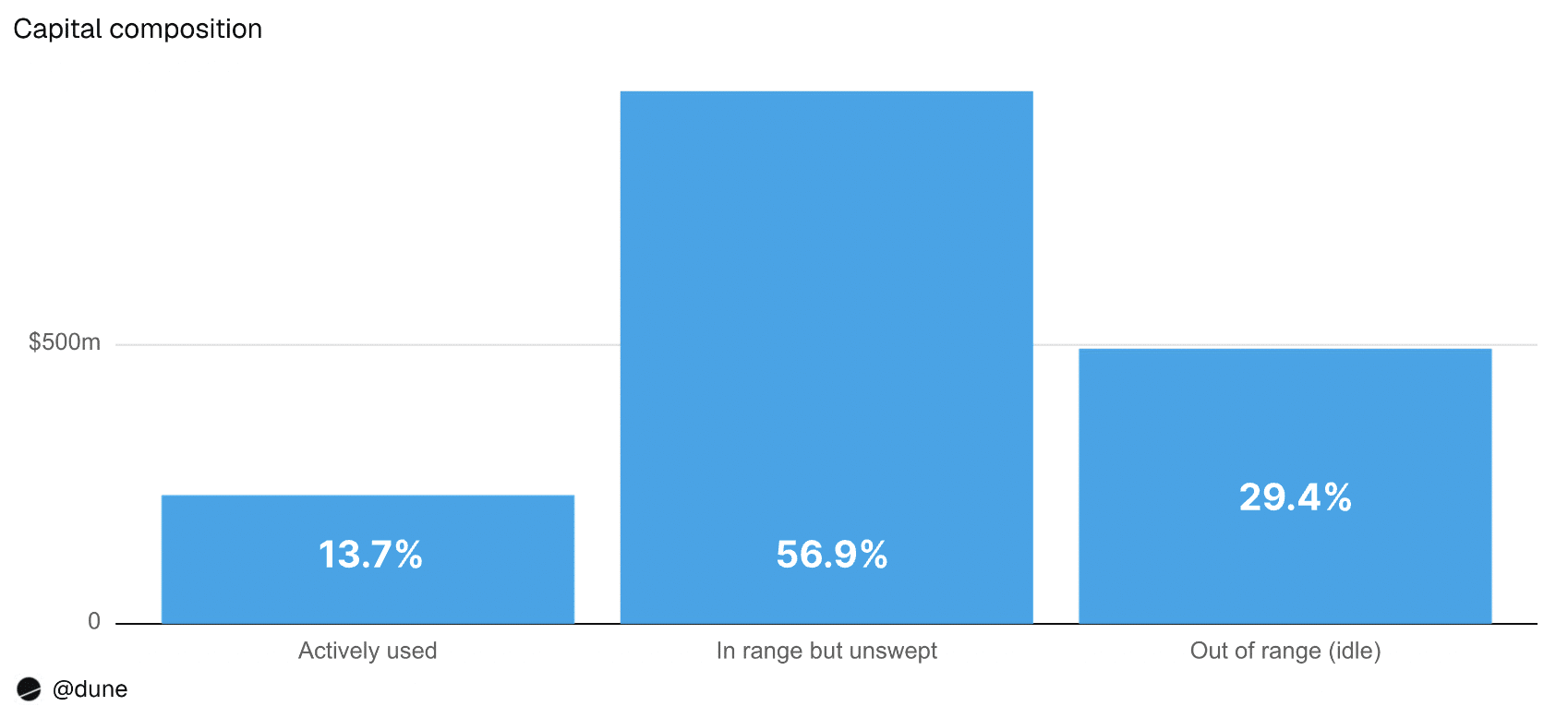
However, the study discovered that during the first half of 2026, an average of 29.4% of liquidity was outside the range of active trading. Thanks to the same, no trading fees were generated.
Source: Dune

This amounted to approximately $542 million in idle capital per week and an estimated $150 million in lost annual fee income for liquidity providers across the four protocols.

For context, the 4 protocols included were Uniswap v3, Uniswap v4, PancakeSwap v3, and Aerodrome Slipstream.

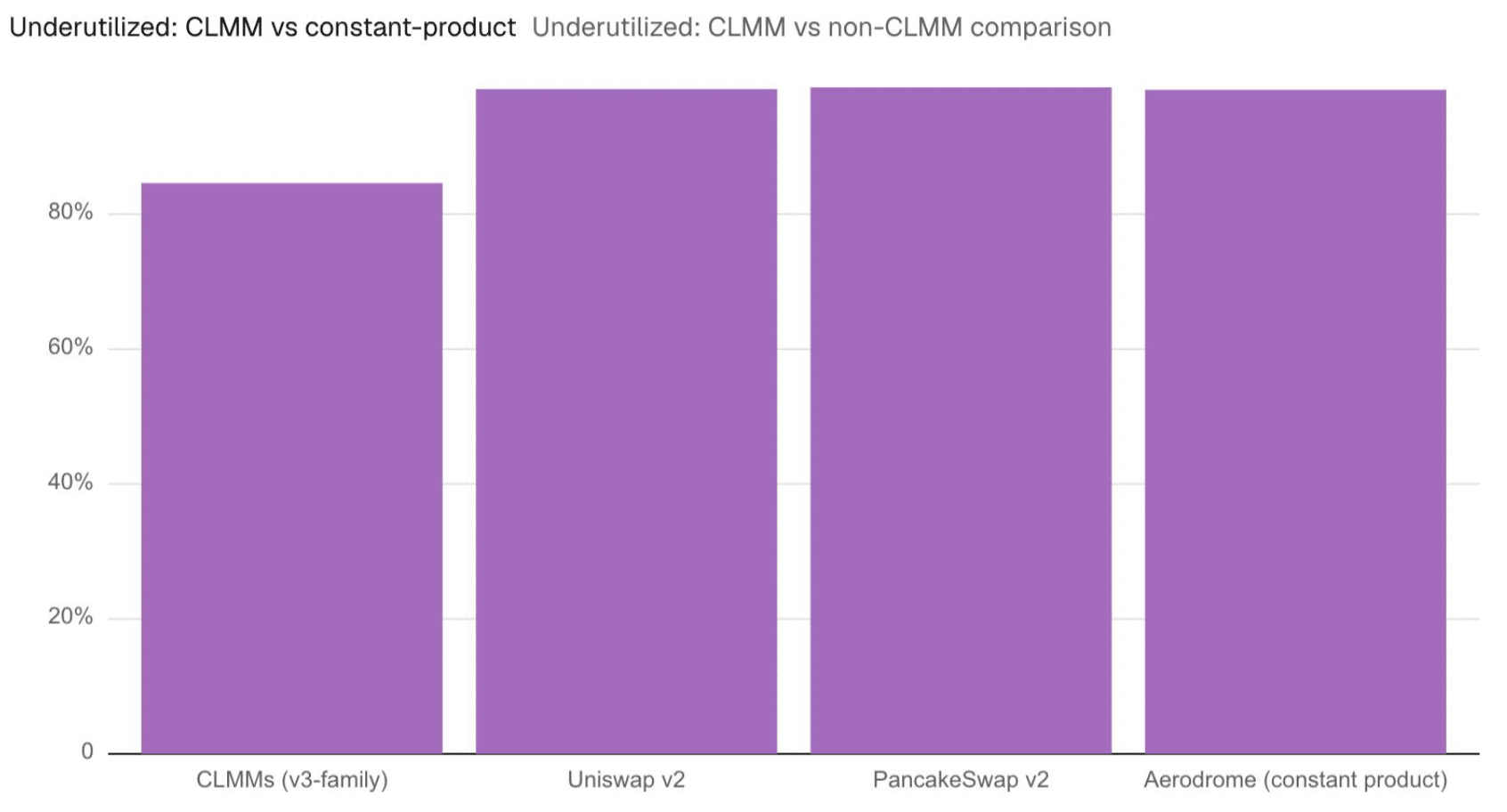
Underutilized concentrated liquidity

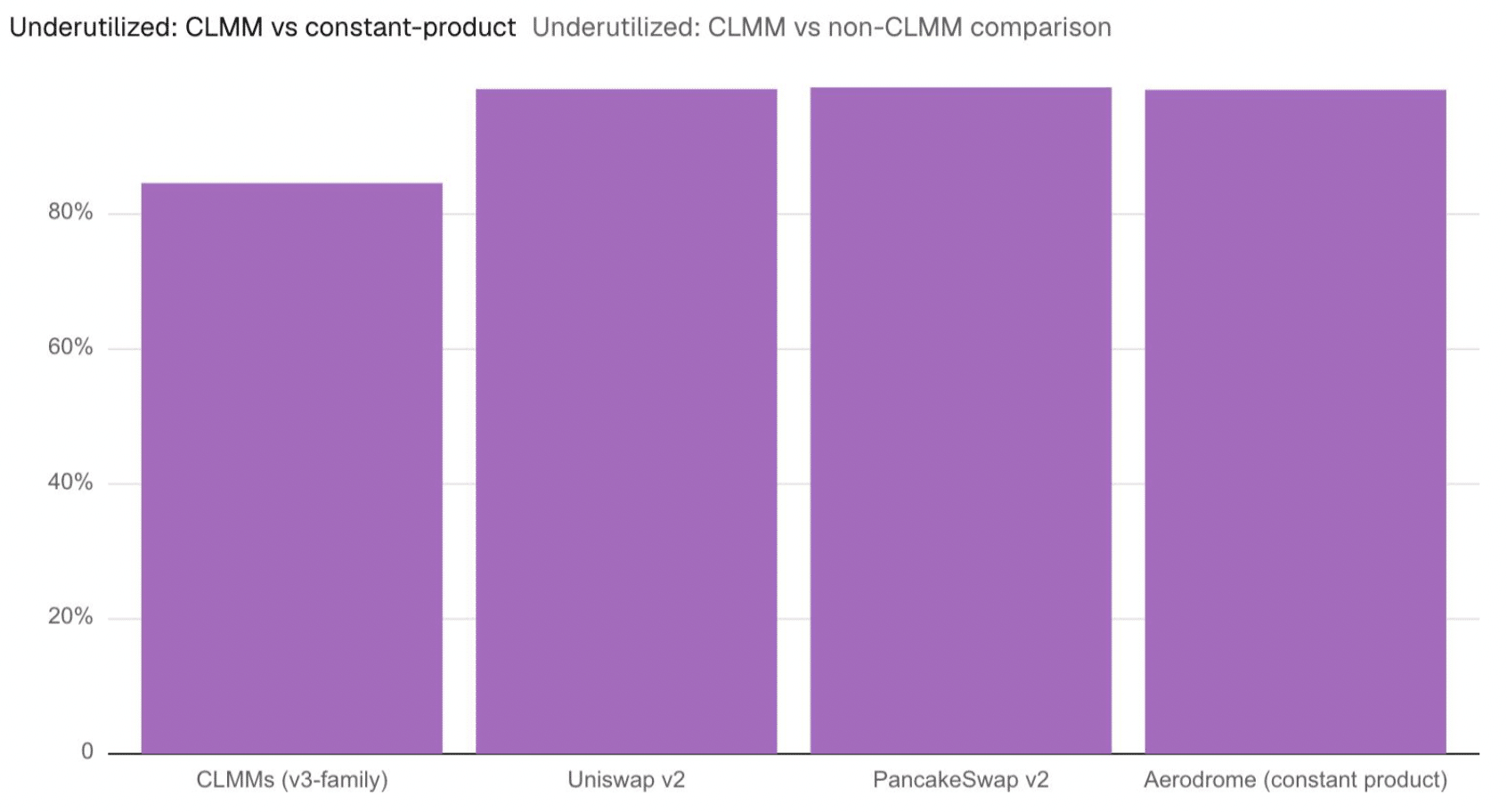
Considering technically available but never used liquidity, about 85% of capital was underutilized.
Source: Dune

The fact that more than $200 million in idle liquidity had not been repositioned in more than 90 days may be evidence that many LPs do not actively manage their holdings.

This also suggested that even though concentrated liquidity should increase efficiency, many LPs still find it difficult to maintain their positions in line with market prices.

Individual investors suffered the most

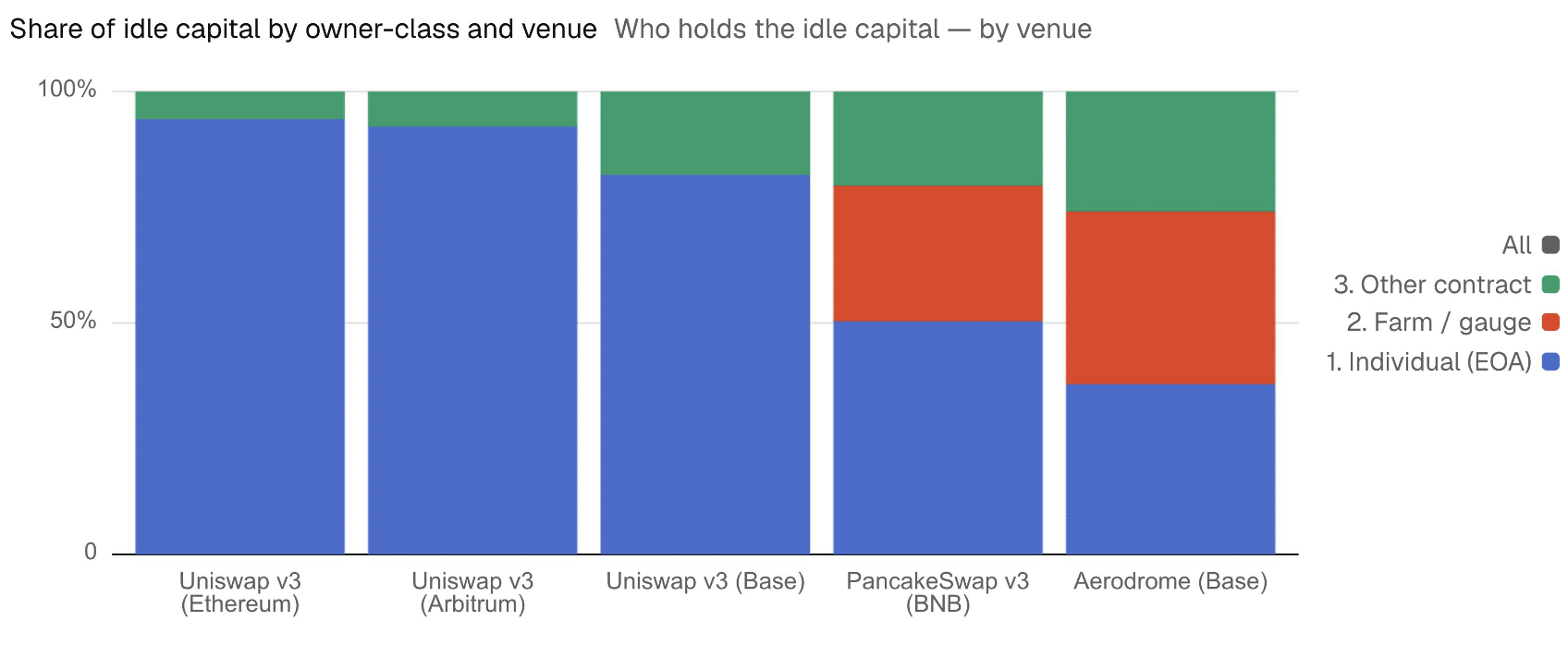
Additionally, the study discovered that automated managers maintained capital activity, while individual investors owned the majority of idle liquidity.

Wallets on Ethereum, for instance, had 94% of idle capital and 91% of Uniswap v3 liquidity. 92% of idle liquidity and 78% of liquidity were under control on Arbitrum. On Base, individual users oversaw 82% of the idle capital, even though smart contracts held roughly 50% of the liquidity.
Source: Dune

This, because only 6.5% of their positions were out of range, compared to about 30% for wallets. This also indicated that automated managers have been far more successful than individual LPs at maintaining liquidity.

Additional loopholes

Finally, the study found that the idle liquidity issue has not been resolved by Uniswap v4.

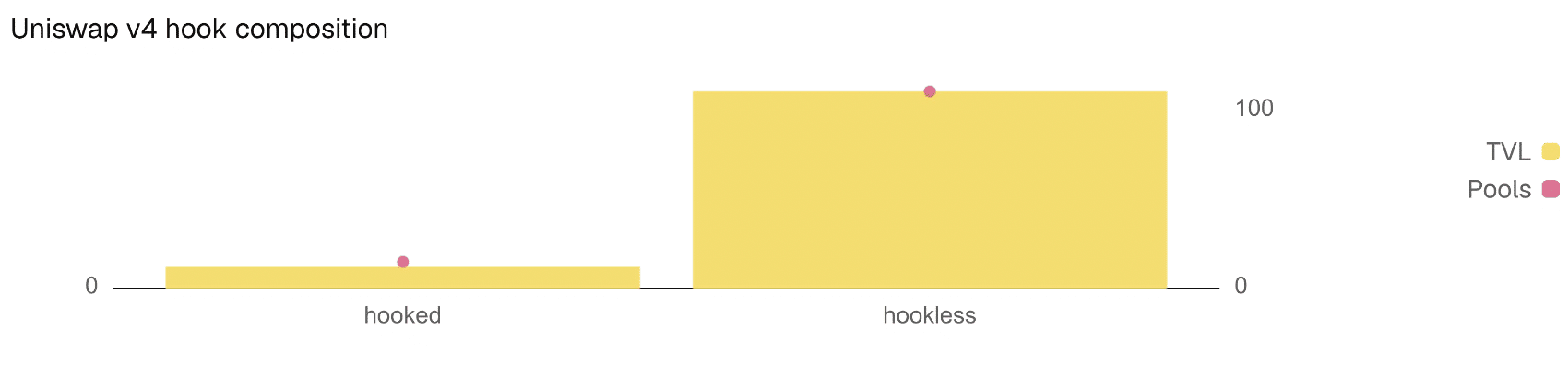
Like Uniswap v3, about 30.5% of its liquidity is still out of range even after hooks were added that might allow idle capital to be used in external yield strategies.

Also, just 10% of v4’s TVL actually uses hooks while none of them produce yield from idle liquidity at the moment.
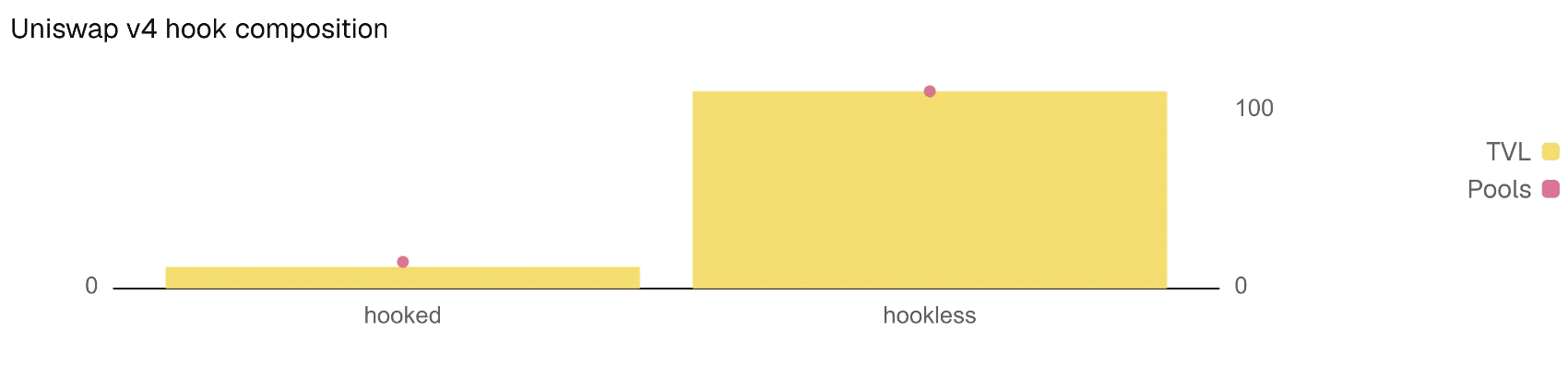
Source: Dune

Final Summary

  • In H1 2026, approx. 29.5% of liquidity was outside the range of active trading.
  • Instead of AMMs, individual investors owned the majority of idle liquidity.

Perguntas relacionadas

QAccording to the report, what percentage of concentrated liquidity was found to be underutilized when considering technically available but never used capital?

AApproximately 85% of capital was underutilized.

QWhat was the estimated annual lost fee income for liquidity providers across the four protocols studied (Uniswap v3, Uniswap v4, PancakeSwap v3, Aerodrome Slipstream)?

AAn estimated $150 million in annual fee income was lost.

QWhich group of users was found to own and control the majority of the idle liquidity, according to the study?

AIndividual investors (wallets) owned and controlled the majority of the idle liquidity, as opposed to automated managers.

QHas the introduction of hooks in Uniswap v4 successfully resolved the idle liquidity issue?

ANo, it has not. Like Uniswap v3, about 30.5% of Uniswap v4's liquidity remains out of range, and currently, none of the hooks in use produce yield from idle liquidity.

QWhat does the high amount of liquidity not repositioned for over 90 days suggest about many liquidity providers (LPs)?

AIt suggests that many LPs do not actively manage their holdings, finding it difficult to maintain their positions in line with market prices despite the design of concentrated liquidity to increase efficiency.

Leituras Relacionadas

Chainlink Tests Support As CCIP Moves From Hype To Usage

Chainlink's LINK token is testing key support levels as market focus shifts from the hype around its Cross-Chain Interoperability Protocol (CCIP) to assessing its real-world usage and adoption. While Chainlink maintains a strong position as core crypto infrastructure—providing oracles, data feeds, and automation—the market is increasingly demanding measurable evidence that its services, particularly CCIP, are gaining sustained traction. CCIP is central to Chainlink's long-term value proposition, aiming to solve critical cross-chain messaging and asset transfer challenges for institutions, DeFi, and multi-chain applications. The protocol's narrative is strong, but traders are now looking beyond announcements and integrations to metrics like transaction volume, value transferred, and developer adoption in production environments. Despite its utility, LINK's price action remains influenced by broader altcoin market cycles. The current support test blends technical factors with fundamental questions about CCIP's growth. If LINK holds support alongside clear evidence of increasing CCIP usage, it could reinforce its status as a leading infrastructure play. However, if support fails without corresponding usage growth, trader caution may persist. The key for Chainlink is transitioning CCIP from a promising concept into a widely used standard, turning its established market role into consistent token demand.

bitcoinistHá 3h

Chainlink Tests Support As CCIP Moves From Hype To Usage

bitcoinistHá 3h

Trading

Spot
活动图片