详解Cosmos生态的三个里程碑:链间安全性(ICS)、Atom2.0以及Nomic

PanewsPublicado em 2022-09-06Última atualização em 2022-09-06

Resumo

在摆脱 Terra 暴雷事件带来的阴霾之后,Cosmos 生态将在接下来的几个月内迎来几个重要的里程碑。

在摆脱 Terra 暴雷事件带来的阴霾之后,Cosmos 生态将在接下来的几个月内迎来几个重要的里程碑。

在摆脱 Terra 暴雷事件带来的阴霾之后,Cosmos 生态将在接下来的几个月内迎来几个重要的里程碑,例如链间安全性(ICS)& Atom 2.0,以及 trustless 的比特币侧链项目 Nomic 的上线。

本文将简单地介绍一下这些里程碑,以及它们的意义。

链间安全性(ICS)& Atom 2.0

根据最初的设计,Cosmos Hub 是一条极简主义区块链,这意味着任何项目方都可以使用其开发的 Cosmos SDK 和 Tendermint 组件搭建自己的区块链(例如 Thorchain、Oasis、Okchain、Terra、Osmosis、Cronos chain 等等),然后,这些独立的公链可通过 IBC 跨链通信协议实现互通,这导致 Cosmos Hub 本身并没有什么应用,也缺乏价值捕获的手段(主要依靠新公链对 ATOM 质押者的空投)。

这在促进整个 Cosmos 生态无序扩张的同时,也会带来安全隐患问题,因为每条独立的链需要自己负责安全性,而 IBC 跨链通信的安全性,又取决于较弱一方的公链。

为了解决这个问题,Cosmos 生态的开发者提出了一种链间安全性(ICS)‌解决方案,其将 Cosmos Hub 作为安全的来源,并面向其他较弱的 Cosmos 生态链,这种模式有点类似于 Polkadot ,我们也可以将其称为 Layer 0 模型。

从本质上讲,Layer 0 是一种区块链软件,它负责协调计算机网络,托管区块链可以在其中部署的数据和逻辑,这允许托管的区块链在 Layer 0 安全保护的环境中执行其功能和应用套件,而作为报酬,托管链需要支付一些费用。

在 Cosmos Hub 使用的链间安全性(ICS)解决方案当中,Cosmos Hub 将通过出租其高价值、ATOM 代币支持的验证者组来保护市值较小的 Cosmos 生态链,而这将为 ATOM 代币质押者带来一定的收入。

另一方面,ATOM 原有的经济模型保持了一个较高的代币通胀率(目前约为 13%),这可能并不是一个健康的设计,因此,Atom 在接下来的 2.0 版本当中或许将对代币经济模型进行修改,以解决高通胀带来的担忧。

截至目前,已宣布接入链间安全性(ICS)解决方案的 Cosmos 生态链有包括 QuickSilver、Neutron 在内的 4 条链,总体来看规模都相对较小。

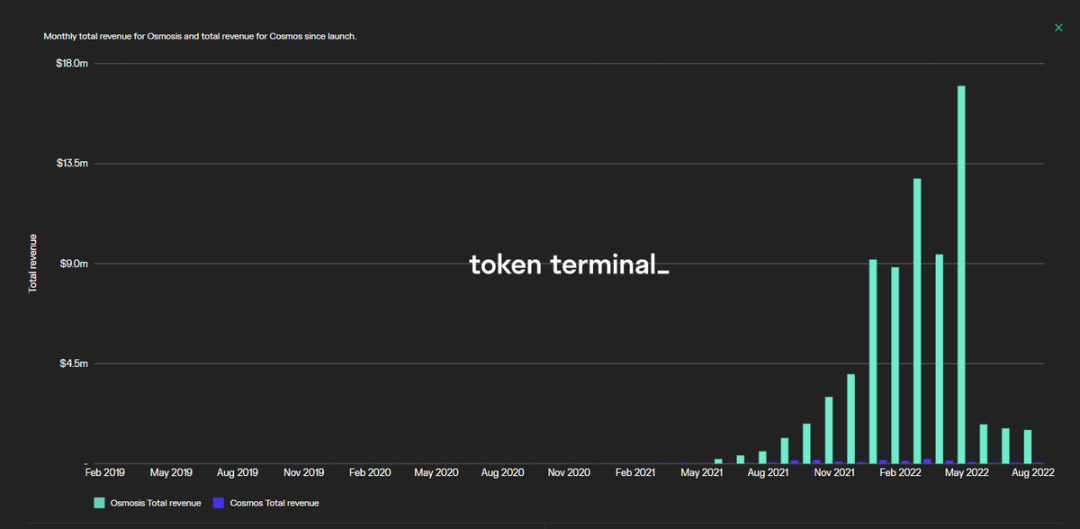
而像 Evmos、Cronos、Osmosis 等规模较大的 Cosmos 生态链,目前都不太可能会依托于 Cosmos Hub,因此在提升 Atom 代币的价值捕获方面,ICS 的影响力究竟有多大,还有待于我们进一步的观察。
注:关于 ATOM 2.0 经济模型的具体修改,需要等待 9 月 26-28 日的 Cosmoverse 2022 大会公布,根据路线图的规划,ICS 将在 10 月份进行审计和漏洞修复工作,11 月份进行公开测试网测试,12 月份进行治理投票,2023 年 1 月正式上线 ICS。

无需信任的比特币侧链项目 Nomic

Nomic 与其他 Cosmos 生态链一样,它也建立在 Tendermint 的共识引擎之上,并借助 IBC 协议与其他公链进行通信。不同的地方在于,Nomic 并没有使用 Cosmos SDK 来构建 IBC 兼容链,而是开发了一种新的高性能区块链应用框架,称为Orga‌,这是一个用 Rust 语言编写的新的确定性状态机框架,在提升性能的同时,由于 Rust 编程语言,其所需的代码量减少了 10 倍,因此理论上安全性会更高。
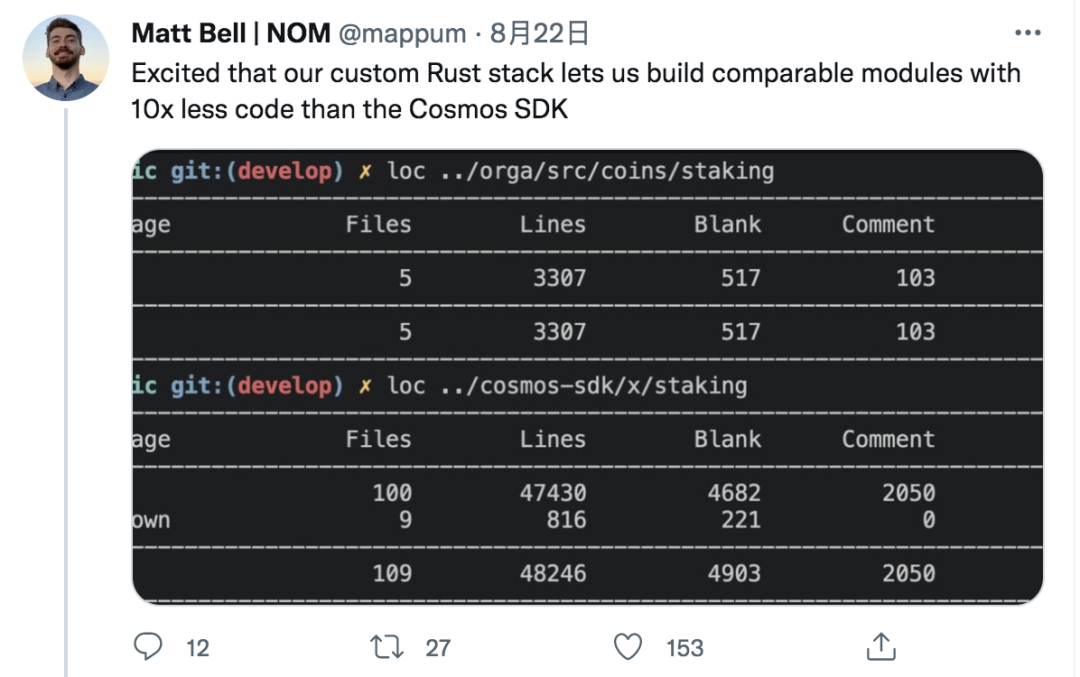
而 Nomic 瞄准的,正是整个区块链行业都需要解决的一个问题:无需信任的比特币锚定币。

对此,Nomic 所使用的,并非传统的多重签名跨链解决方案,而是用到了 Schnorr 签名、Taproot 以及比特币 Checkpoints(检查点)方案,在详细展开之前,我们先简单了解一下这三个概念。

1、Schnorr 签名

Schnorr 签名是由 Claus Schnorr 于 1989 年提出的一种数字签名方案,其申请的专利到 2008 年才到期。这种签名方案的特点是其简单性和安全性,它是经典且普遍被采用的椭圆曲线签名算法 (ECDSA) 更有效的替代方案。

借助 Schnorr 签名,我们就可以轻松利用多重签名方案和批量验证。

2、Taproot

Taproot 是比特币网络最重要的升级之一,其旨在改善用户的隐私,并允许创建更复杂的交易,其包含了 3 个比特币改进提案(BIP):

1. BIP340‌,引入 Schnorr 数字签名方案,以提高多重签名性能。

2. BIP341‌,基于 SegWit 更新,旨在增加可包含在交易中的信息量。这是通过称为 MAST 的脚本实现的,由于这个脚本,可以只在公共账本上注册执行条件,这提高了多重签名采用和复杂脚本的效率。

3. BIP342‌,它是比特币编程语言 Script 的升级版,从而引入了上面两个 BIP。

3、比特币 Checkpoints(检查点)

网络将定期在比特币区块链上进行交易,这些交易从储备钱包中支出。这些交易称为检查点(Checkpoints)‌,用于 (1) 收取存款,(2) 更新储备脚本以反映最新的签名集,(3) 支付待处理的提款,(4)为轻客户端提供一种方式,以验证由比特币网络的工作量证明(PoW)保护的侧链网络的状态,以及(5)使先前的“紧急支出”交易无效。

每个检查点由 3 笔连接的比特币交易组成:存款收集交易、检查点交易以及支付交易。

————————————————————————

通过使用 Taproot 以及 Schnorr 签名解决方案,多重签名的签名人最多可以提升到 1000 个,而这些签名人,正是 Nomic 区块链的验证者,通过这种特殊的多重签名合约,网络中的任何个人都无法获得储备的比特币,而是需要超过三分之二的验证者签名才可以从储备金中提取资金。

而基于 Tendermint 共识机制的网络,通常大约有 100 个验证者,这意味着 Nomic 的多重签名人也将是这个数字。

另外,对于采用权益证明(PoS)共识机制的网络,已知最大的一个安全问题被称为长程攻击(long-range attack),此类问题可以通过带外解决方案解决,例如通过从受信任的第三方那里接收有关网络的新知识,而使用比特币检查点(Checkpoints)机制,允许客户端利用比特币区块链工作量证明(PoW)的安全性来防止长程攻击。

总的来说,Nomic 通过三种方式增加了跨链 BTC 等价物的安全性:

1. 降低代码的复杂性,以减少攻击面;

2. 增加多重签名人,以增加攻击的实施难度;

3. 采用比特币 Checkpoints 机制,以利用 PoW 的安全性来防止 PoS 长程攻击;

因此,从理论上来看,相比 wBTC、renBTC 等比特币锚定币,Nomic 的解决方案要更去中心化,也更无需信任。

但仍然要注意的是,如果网络的验证节点变得过于集中,那么提高多重签名人的数量似乎也并没有太多意义,而这正是 Nomic 乃至整个 Cosmos 生态都急需解决的问题。

那 Nomic 究竟能给整个 Cosmos 生态带来什么呢?

- 通过允许 BTC 在 Cosmos 生态系统中以去中心化的方式进行交易,Nomic 将促进 Cosmos 的 DeFi 生态;

- 基于超额抵押、低波动性的 BTC 储备发行的稳定币,我们将能够基于 DAI 模型构建一个 Cosmos 原生稳定币,并且它可以完全去中心化和抗审查,而这正是 Nomic 规划的下一步;

- 一种新型的 L1 Cosmos 区块链,它可以利用比特币 PoW 网络的安全性,并享受 PoS 带来的可扩展性。

截至目前,Nomic 已经在测试网上启用了 IBC,并将在确认安全后正式在主网上启用 IBC。

小结

通过无需许可的方式,Cosmos 促进了其生态的创新,然而,过于松散的网络架构,也在一定程度上阻碍了 Cosmos 生态的发展(人们会担心独立链的安全性)。而链间安全性(ICS)解决方案以及 Nomic 采用的新型 L1 架构(利用了比特币网络的安全性)的引入,将对整个 Cosmos 生态产生非常积极的影响。

但我们仍然需要注意的是,对于 Atom 以及 其他 Cosmos 生态 token 来说,仅仅这些进展,并不一定意味着它们将会取得成功。

相关资料:

1、https://www.youtube.com/watch?v=lFLVvpHYIEo

2、https://gist.github.com/mappum/da11e37f4e90891642a52621594d03f6

3、https://www.defidaonews.com/article/6702629

4、https://madeinblock.substack.com/p/nomic

Criptomoedas em alta

Leituras Relacionadas

The War Without a Unified Name: The Domestic Tech Giants' World Model Landscape

The article outlines the diverse and fragmented landscape of "World Models" in China's tech industry, where major players are pursuing similar goals under different names like world foundational models, physical AI, or integrated within autonomous driving and embodied intelligence systems. The core aim is to enable AI to create an internal, dynamic environment for simulation, reasoning, and learning, reducing reliance on infinite real-world data. This "data engine" allows for unlimited generation, experimentation, and iteration. The report categorizes the approaches of different companies: * **Internet Giants:** Alibaba is developing models for linguistic, virtual, and physical worlds (Qwen-AgentWorld, HappyOyster, Qwen-RobotWorld). Tencent's HY-World focuses on 3D, game, and social scenarios. ByteDance leverages its vast video data for a potential "digital twin" model. Huawei integrates its model into industrial applications like smart cars and robotics without separately branding it. Baidu embeds world model capabilities within its Apollo autonomous driving and Ernie systems. * **Automakers:** Companies like NIO, Li Auto, XPeng, and Geely are using world models as virtual "driving schools" and "testing grounds." They generate complex scenarios (e.g., rain, snow) to train and validate autonomous driving systems in simulation, aiming for more capable and safer AI drivers. * **Autonomous Driving Suppliers:** Firms such as Momenta, Horizon Robotics, Haomo.ai, and DeepRoute.ai are building the underlying "world engines." They focus on large-scale video generation for simulation, reinforcement learning, and enhancing end-to-end autonomous driving models, often integrating these capabilities into commercial products. While startups bring focus and innovation, they face challenges like limited data, compute resources, and deployment channels. Large companies possess these advantages and are rapidly transitioning world models from research projects into core business infrastructure powering products in vehicles, games, and industry. The conclusion is that world models represent an evolution and convergence of existing AI fields into crucial industrial infrastructure, moving the competition from simply building a model to effectively deploying it to understand and interact with the physical world.

marsbitHá 12m

The War Without a Unified Name: The Domestic Tech Giants' World Model Landscape

marsbitHá 12m

The Crypto Industry Enters the 'Show Me' Era: Vision Alone Is No Longer Enough

The crypto industry has entered a "Show Me" era, where grand visions and white papers are no longer sufficient to gain traction. This shift is driven by increased skepticism, high-profile bad actors, and notably, the serious entry of traditional finance (TradFi) institutions like BlackRock, Fidelity, and JPMorgan Chase, which are launching real, scaled products such as tokenized funds and blockchain-based settlement. This raises the bar for what constitutes a credible project. The communication dynamic has fundamentally changed. The focus is no longer on "what you are building" but on "what you have built and who is using it." Startups must now provide a "proof stack": verifiable data like mainnet transaction volume and active wallets, genuine partnerships with signed contracts, and evidence of organic product-market fit from real users, not just investors. Announcements must be backed by concrete, chain-verifiable evidence. For communication strategies, this means leading with proven facts and hard data—even if modest—rather than speculative narratives. A compelling story must be grounded in demonstrated results. While vision remains important, the balance has inverted from 80% vision/20% substance to the opposite. This higher threshold ultimately benefits builders with genuine traction, filtering out noise and allowing their real signals to stand out clearly. The "Show Me" era is a permanent maturation, demanding that communication strategies prove value, not just promise it.

链捕手Há 43m

The Crypto Industry Enters the 'Show Me' Era: Vision Alone Is No Longer Enough

链捕手Há 43m

Meta Follows the Trend into Prediction Markets: Can It Avoid Repeating the Failure of the Metaverse?

Meta, the tech giant behind Facebook, has reportedly formed a team to develop "Arena," a new application focused on prediction markets. Users would use platform points to place bets on outcomes in politics, sports, and global events. This move follows Meta's massive, nearly $900 billion, losses from its heavily-invested metaverse division, Reality Labs. The prediction market industry is already showing strong demand, with leading platforms like Kalshi and Polymarket facilitating hundreds of billions in annual volume. Meta, with its 3.56 billion daily active users across its apps, possesses the unprecedented scale to bring this niche activity to a mainstream audience, similar to its past success in cloning features like Stories and Reels. However, Arena faces significant hurdles. Meta plans to start with a points-based system to avoid strict financial regulations, but this may dilute the core incentive of accurate prediction that real-money markets provide. More critically, Meta enters the space with a major trust deficit stemming from its past regulatory battles, notably the failed Libra/Diem stablecoin project, and its controversial history with political content and misinformation. The prediction market sector itself is under increasing regulatory scrutiny, with recent CFTC actions including fines and the first-ever insider trading case. While Meta's vast user base offers a unique opportunity to expand the market, its success hinges on navigating complex regulations and rebuilding the credibility necessary for a platform dealing with sensitive topics like elections. The outcome could range from Meta dramatically growing the industry to Arena becoming a high-profile regulatory target before it can scale.

Foresight NewsHá 1h

Meta Follows the Trend into Prediction Markets: Can It Avoid Repeating the Failure of the Metaverse?

Foresight NewsHá 1h

Trading

Spot
Futuros

Artigos em Destaque

Como comprar ATOM

Bem-vindo à HTX.com!Tornámos a compra de Cosmos (ATOM) simples e conveniente.Segue o nosso guia passo a passo para iniciar a tua jornada no mundo das criptos.Passo 1: cria a tua conta HTXUtiliza o teu e-mail ou número de telefone para te inscreveres numa conta gratuita na HTX.Desfruta de um processo de inscrição sem complicações e desbloqueia todas as funcionalidades.Obter a minha contaPasso 2: vai para Comprar Cripto e escolhe o teu método de pagamentoCartão de crédito/débito: usa o teu visa ou mastercard para comprar Cosmos (ATOM) instantaneamente.Saldo: usa os fundos da tua conta HTX para transacionar sem problemas.Terceiros: adicionamos métodos de pagamento populares, como Google Pay e Apple Pay, para aumentar a conveniência.P2P: transaciona diretamente com outros utilizadores na HTX.Mercado de balcão (OTC): oferecemos serviços personalizados e taxas de câmbio competitivas para os traders.Passo 3: armazena teu Cosmos (ATOM)Depois de comprar o teu Cosmos (ATOM), armazena-o na tua conta HTX.Alternativamente, podes enviá-lo para outro lugar através de transferência blockchain ou usá-lo para transacionar outras criptomoedas.Passo 4: transaciona Cosmos (ATOM)Transaciona facilmente Cosmos (ATOM) no mercado à vista da HTX.Acede simplesmente à tua conta, seleciona o teu par de trading, executa as tuas transações e monitoriza em tempo real.Oferecemos uma experiência de fácil utilização tanto para principiantes como para traders experientes.

369 Visualizações TotaisPublicado em {updateTime}Atualizado em 2026.06.02

Como comprar ATOM

Discussões

Bem-vindo à Comunidade HTX. Aqui, pode manter-se informado sobre os mais recentes desenvolvimentos da plataforma e obter acesso a análises profissionais de mercado. As opiniões dos utilizadores sobre o preço de ATOM (ATOM) são apresentadas abaixo.

活动图片