Frequent Trading Halts in the Korean Stock Market: Is a Global Financial Crisis Really Coming?

marsbitPublicado em 2026-07-29Última atualização em 2026-07-29

Resumo

**Title: Frequent Circuit Breakers in South Korean Stock Market: Is a Global Financial Crisis Imminent?** This article examines the recent spate of trading halts in South Korea's stock market as a potential early warning sign for broader global financial instability. The author argues that due to its highly open and liquid capital markets with significant foreign ownership, South Korea often acts as the world's "spare cash pool." International institutions tend to sell their highly liquid Korean holdings first during global liquidity crunches to raise capital for domestic needs, irrespective of Korea's own economic fundamentals. Historically, Korean market stress preceded major crises like the 1997 Asian Financial Crisis, the 2000 Dot-com crash, the 2008 Global Financial Crisis, and the 2020 pandemic crash. The current trigger involves a semiconductor bubble and high domestic leverage, but the core issue is global capital withdrawal signaling tightening liquidity. Whether this evolves into a full-blown crisis hinges on the US Federal Reserve. If the Fed can and will intervene with supportive policies (like rate cuts), a crisis might be averted as in 2020. If not, contagion could spread. For individual investors, the key takeaway is not predicting the crisis but preparing for volatility. Recommendations include: avoiding high leverage, maintaining a significant cash reserve (e.g., 40%) for buying opportunities during market declines, and holding core long-term positions (e...

Author: SOL, The Perplexed

Is a Global Financial Crisis on the Horizon? It Sure Looks Like It!

1/ The storage market continues to crash, and the Korean stock market keeps hitting circuit breakers. Many see it as a joke, attributing it to excessive local leverage. But if you review the history of global financial crises over the past thirty years, you'll notice a pattern: in every major crisis, South Korea is always the first to fall.

2/ During the 2020 pandemic-induced market crash, the South Korean KOSPI had already dropped 35% three weeks before the four circuit breakers in the US stock market.

Two months before the Lehman Brothers collapse in 2008, South Korea was already experiencing a dollar shortage.

Before the Nasdaq crash in 2000, Samsung and SK Hynix revised their forecasts downward, signaling the peak of the Korean semiconductor industry. In the 1997 Asian financial crisis, South Korea was the first core economy to be breached.

3/ This is no coincidence. South Korea's capital market is almost completely open, with foreign ownership consistently exceeding 30%. Companies like Samsung and SK Hynix are among the world's most liquid assets. Funds flow freely, with ample buying support, allowing for quick execution of large sell orders.

4/ Therefore, South Korea has become a "backup cash pool" for global capital. European and American institutions usually seek returns in Korea. Once domestic liquidity tightens, margin calls loom, or debts come due, their first instinct is to sell overseas holdings and repatriate funds to fight fires at home.

5/ The priority is clear: protect the home market first, then abandon the periphery; sell liquid assets first, then tackle hard-to-sell ones. This has little to do with whether the Korean economy is strong or if its stock market is in a bubble; it's purely a capital preservation instinct.

6/ This time, the trigger in Korea is the semiconductor bubble combined with leverage. On average, every Korean has two stock trading accounts, and one out of every three trades is on margin. When foreign capital withdraws, domestic leveraged positions trigger a chain reaction of forced liquidations, leading to relentless circuit breakers. There have been 35 programmatic halts and 5 market-wide halts since the beginning of the year, already breaking the 2008 record.

7/ But Korea's problem is not Korea's alone. It's an early warning signal of global liquidity tightening. When global capital starts withdrawing from overseas markets, Korea is the first point of bleeding, and the shockwave then spreads outward along the chain of capital and industry.

8/ In the four historical crises, the triggers were different, but the underlying logic was the same: a liquidity gap first appears in Europe and the US, capital is pulled from Korea, Korea collapses first, then the contagion spreads to the Asia-Pacific, commodities, emerging markets, and finally back to Europe and the US.

9/ Will this escalate into a global financial crisis? The key variable is not Korea, but the United States. In 2020, the Federal Reserve forcefully suppressed the crisis with unlimited easing and zero interest rates. What about this time? If the Fed can still cut rates and provide liquidity, the market might be propped up as it was in 2020. If the Fed continues raising rates or is slow to act, then the real crisis might just be beginning.

10/ So my judgment: Korea's circuit breakers are a warning, not a conclusion. Whether a financial crisis arrives depends on whether the Fed still has ammunition and is willing to use it. Both are uncertain right now.

11/ For ordinary people, the most important thing in times like these is not to predict the crisis, but to control your position. Never be fully invested, and certainly don't use leverage. Always keep a portion of your portfolio in cash, because true wealth-building opportunities often emerge during the most panicked moments.

12/ My approach: A core position of 60% is in the S&P 500 and Nasdaq 100, held long-term without trading. The remaining 40% is cash or short-term bonds, specifically for adding to positions when the indices drop 15%, 30%, or 40%. It's not about timing the bottom; it's about executing a plan.

13/ Historical data is clear: After every major crisis, the Nasdaq 100 and S&P 500 have reached new all-time highs. 1987, 2000, 2008, 2020, 2022—no exceptions. Crises are not the enemy of long-term investors; they are opportunities.

14/ So I'm not afraid of crises. What I fear is having no cash to add to positions when a crisis hits. I fear even more panicking during a crisis and selling at a loss, handing over bloodied chips to others.

15/ Korea's circuit breakers are an alarm bell, not a signal to sell everything. They remind you to check your positions, control leverage, and preserve cash. The real winners are not those who predict crises, but those who can hold their chips during a crisis and have ammunition to buy more.

So the question arises: Can you invest in the S&P 500 and Nasdaq now?

1/ Conclusion first: Yes, but not all-in. You can buy now, but not with the blind confidence of three years ago. High valuations are a fact, but high valuations don't mean the end is nigh; they only mean future returns will be compressed.

2/ The Buffett Indicator for the S&P 500 is at 236%, the Shiller CAPE is at 41x, Buffett has been a net seller for 13 consecutive quarters, and cash reserves are at an all-time high.

All these data points say the same thing: it's not cheap right now.

3/ But cheap and good investment are two different things. In 2000, the CAPE was at 44x, and the S&P 500's annualized return for the next decade was indeed negative. But in 1996, when the CAPE was 25x, people also called it expensive, and the S&P 500 proceeded to rise 80% over the next three years. Those waiting for a crash often end up missing the rally, not finding an opportunity.

4/ What do high valuations mean? They mean the likely 10-year annualized return will probably drop from 10% to 2%-5%, or even lower. But it doesn't necessarily mean a crash is imminent. The market can churn at high levels for many years, digesting valuations over time rather than through a collapse.

5/ So the question "Can I buy?" depends on your time horizon. If you plan to hold for three years, the risk-reward ratio is indeed poor now. If you plan to hold for twenty years, today's valuation is just noise at the start of your journey.

6/ Historical data is clear: Buying the S&P 500 at any point and holding for 20 years yields a median annualized return of over 7%. Even buying at the absolute peak in 2000 would have doubled your money by 2020. What you should fear is not buying at a high point, but not having any position at all.

7/ But we can't ignore risk. CPI exceeding expectations again, the Fed resuming rate hikes, disappointing AI commercialization, a consumer recession, escalating geopolitics—any of these could cause the S&P 500 to drop 20%, 30%, or 40%.

The question is, which of these can you predict? If you can't predict them, then your strategy cannot be built on "waiting for a big crash."

8/ The biggest problem with waiting for a crash is not missing it, but being too scared to buy when it finally arrives. How many people shouted about waiting for the crash in March 2020, only to sell in panic when it actually happened? Human nature is like that; don't overestimate yourself.

9/ So what to do? If you have a position, keep holding it, but don't aggressively add more. Especially if your Nasdaq exposure is too heavy, consider shifting some to the S&P 500, dividend ETFs, or short-term bonds to reduce portfolio volatility. This isn't bearishness; it's rebalancing.

10/ If you have no position, don't go all-in, but don't stay completely in cash either. Dollar-cost averaging is the least exciting but most correct strategy. Spread your purchases over 10 to 15 months, investing a fixed amount into the S&P 500 and Nasdaq 100 each month. Buy more if it falls, buy less if it rises. After all, you're investing for twenty years, not twenty days.

11/ As for the Nasdaq, be a bit more cautious. The tech industry is winner-takes-all, but the winners keep changing. A decade ago, the top ten in the Nasdaq included Intel, Cisco, and Qualcomm; they're not there now. Today you're betting on Nvidia, Microsoft, Tesla; in twenty years, it might be a different batch. The advantage of the Nasdaq 100 is its automatic reconstitution; the downside is much higher volatility than the S&P 500.

12/ So my personal allocation strategy: Core position of 60% S&P 500, 20% Nasdaq 100, and 20% cash or short-term bonds. The cash isn't for waiting for a crash; it's for waiting for opportunities. When real opportunities appear, you need money to pick up the chips.

13/ One final point: Price determines the rate of return, but time determines whether you can achieve that return. Buying great companies when they're expensive leads to mediocre short-term returns; buying great companies when they're cheap—you might never get the chance. Ordinary investors shouldn't obsess over buying at the absolute bottom; first, ensure you're always in the game.

14/ Holding cash isn't painful, but being completely out of the market is even more painful. Because you never know when to get back in. The best strategy isn't market timing; it's this: Always be in the game, always have ammunition, and never panic.

Stay strong, brothers!

Criptomoedas em alta

Perguntas relacionadas

QWhy does the author consider the South Korean market a warning signal for global financial crises?

AThe author identifies South Korea as a global "spare cash pool" due to its fully open capital markets and high foreign ownership (over 30%). Its highly liquid stocks like Samsung are often the first to be sold by global institutions when they face domestic liquidity pressure, making Korea a leading indicator of capital flight and global stress.

QAccording to the article, what determines whether the current situation could evolve into a full-blown global financial crisis?

AThe key determinant is the actions of the US Federal Reserve. The author states that if the Fed still has the ability and willingness to cut interest rates and provide liquidity, the crisis could be contained like in 2020. If the Fed continues tightening or hesitates to act, the real crisis could begin.

QWhat investment strategy does the author personally recommend in light of the current market warning signs?

AThe author recommends a core portfolio of 60% in broad US indices like the S&P 500 and Nasdaq 100, held long-term without panic selling. The remaining 40% should be kept as cash or short-term bonds, ready to buy during planned market dips (e.g., drops of 15%, 30%, 40%) rather than attempting to predict the bottom.

QWhat is the author's main advice for someone who currently has no investment in US indices like the S&P 500?

AThe advice is to neither go all-in nor stay completely out of the market. Instead, implement a dollar-cost averaging strategy: invest a fixed amount over 10-15 months into indices like the S&P 500 and Nasdaq 100, buying more when prices fall and less when they rise, with a long-term horizon of 20 years.

QWhat is the fundamental problem with a strategy of waiting for a major market crash before investing, according to the article?

AThe biggest problem is not necessarily missing the crash, but the human tendency to panic and sell or be too fearful to buy when the crash actually happens. The author points to March 2020 as an example where many who claimed to be waiting for a crash ended up selling instead, making a strategy based on perfect market timing ineffective.

Leituras Relacionadas

After R&D Investment Catches Up with the U.S., Is the Sino-U.S. Chip Competition Still Just About Money?

The article examines the significance of recent data showing China's total R&D expenditure, measured by purchasing power parity (PPP), catching up to or slightly surpassing that of the United States in 2024. It argues that while this milestone reflects China's immense capacity to mobilize research resources, the competition in semiconductors now extends far beyond sheer financial input. The analysis highlights key differences: China's R&D is heavily skewed towards experimental development (over 80%), focusing on product engineering and industrialization, whereas the U.S. allocates a proportionally larger share (about 15%) to basic research. Furthermore, leading U.S. semiconductor firms reinvest a significant portion of their substantial global sales revenue into R&D, creating a sustainable commercial innovation cycle that is difficult to replicate. The article emphasizes that semiconductor progress depends on converting R&D into commercially viable products that pass rigorous customer validation and achieve repeat orders, not just on spending levels. It concludes that as China enters the top tier of R&D spenders, the critical challenges shift to improving resource allocation efficiency, fostering long-term basic research, and building effective mechanisms to bridge the gap between laboratory discoveries and reliable, market-ready industrial capabilities.

marsbitHá 39m

After R&D Investment Catches Up with the U.S., Is the Sino-U.S. Chip Competition Still Just About Money?

marsbitHá 39m

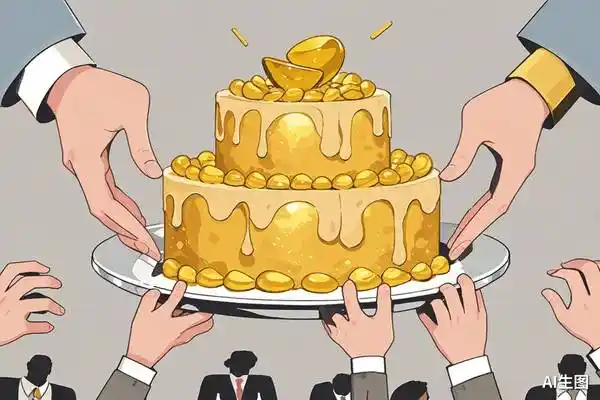
Top 10% of American Households Capture 88% of Wealth, How Is the AI Era Cake Divided?

AI Worsens Wealth Inequality as Top 10% of US Families Garner 88% of Stock Gains (2019-2026) A report from the China Finance 40 Forum highlights that the AI boom is significantly widening wealth inequality in the United States. From 2019 to Q1 2026, wealth from directly held stocks by US households nearly doubled from $29 trillion to approximately $55 trillion, with rapid growth concentrated post-2023, coinciding with the AI-driven stock market surge. The distribution of these gains has been starkly uneven. Between 2022 and Q1 2026, the wealth increase of about $21 trillion was captured almost entirely by the wealthiest families: the top 10% secured roughly 88% ($18.5 trillion), while the bottom 50% received only about 1% ($0.2 trillion). This has contributed to a growing disparity in disposable income shares. The report, referencing economic historian Robert Allen, draws parallels to historical technological shifts like the "Engels' Pause" during the First Industrial Revolution, where worker wages stagnated despite productivity gains. It suggests AI could induce a similar period where capital收益 outpace labor income, exacerbating inequality. Huang Yiping of Peking University identifies four mechanisms through which AI impacts income distribution: capital-bias (reducing labor's income share), task polarization (hollowing out middle-skill jobs), skill-based digital divides, and wealth amplification through assets. He warns that if this trend continues, strong supply growth driven by AI could be undermined by persistently weak consumer demand, threatening sustainable economic growth. To address these challenges, the report proposes a three-pronged strategy: 1) Defensive measures like strengthening social safety nets and antitrust enforcement; 2) Empowering workers through education reform and lifelong learning to collaborate with AI; and 3) Rebalancing via policies such as potential taxes on AI超额收益 and mechanisms for broader sharing of technology's benefits, ensuring AI's红利 are more equitably distributed.

marsbitHá 45m

Top 10% of American Households Capture 88% of Wealth, How Is the AI Era Cake Divided?

marsbitHá 45m

Trading

Spot

Artigos em Destaque

O que é SOLANA

HarryPotterWifHatMyroWynn10Inu,$solana: Uma Mergulho no Projeto de Meme Coin Trendy Introdução No panorama em constante evolução das criptomoedas, projetos inovadores surgem continuamente, capturando a imaginação de investidores e entusiastas. Um desses projetos é o HarryPotterWifHatMyroWynn10Inu,$solana, uma moeda meme que começou a esculpir seu nicho dentro da comunidade cripto. Este artigo tem como objetivo fornecer uma visão abrangente do projeto, elucidando seu propósito, arquitetura, criador, investidores e marcos notáveis ao longo da jornada. O que é HarryPotterWifHatMyroWynn10Inu,$solana? Visão Geral HarryPotterWifHatMyroWynn10Inu,$solana é um projeto de moeda meme estruturado na blockchain Solana – uma plataforma conhecida pela sua escalabilidade e rapidez. Com o objetivo de trazer alegria e criatividade para o espaço cripto, este projeto não serve apenas como um token de negociação, mas também como um catalisador para a geração e partilha de conteúdo meme. Esta comunidade, no seu núcleo, é incentivada a participar ativamente, proporcionando um ecossistema dinâmico onde a criatividade e a colaboração prosperam. Objetivos e Metas Na sua essência, o projeto visa fomentar um ambiente onde os entusiastas de meme possam congregar, partilhar e criar conteúdo meme novo. Esta abordagem orientada pela narrativa infunde entusiasmo dentro da comunidade, impulsionando o envolvimento e ao mesmo tempo lançando luz sobre as robustas funcionalidades inerentes à blockchain Solana. Ao construir um projeto focado na comunidade, HarryPotterWifHatMyroWynn10Inu,$solana também deseja explorar o impacto social das moedas digitais como meio de expressão. Quem é o Criador de HarryPotterWifHatMyroWynn10Inu,$solana? A identidade do criador por trás de HarryPotterWifHatMyroWynn10Inu,$solana permanece envolta em mistério. O projeto foi estruturado de tal forma que a propriedade foi renunciada; portanto, ele prospera como uma iniciativa liderada pela comunidade. Esta descentralização promove transparência e participação democrática entre todos os intervenientes envolvidos. Tal abordagem está a tornar-se cada vez mais popular no mundo das moedas meme, onde o envolvimento da comunidade reina supremo. Quem são os Investidores de HarryPotterWifHatMyroWynn10Inu,$solana? Até agora, não há informações disponíveis publicamente sobre os investidores ou fundações específicas que apoiam HarryPotterWifHatMyroWynn10Inu,$solana. A ausência de investidores conhecidos enfatiza ainda mais a ética orientada para a comunidade do projeto, uma vez que este se mantém independente de estruturas financeiras tradicionais. Esta independência permite que o projeto desenvolva a sua identidade livre de pressões externas, confiando em vez disso no interesse coletivo da sua base de utilizadores. Como Funciona HarryPotterWifHatMyroWynn10Inu,$solana? Modelo Econômico O projeto emprega um modelo econômico único que sustenta sua funcionalidade e envolvimento dos utilizadores. As transações dentro de HarryPotterWifHatMyroWynn10Inu,$solana são projetadas para serem benéficas para todas as partes envolvidas. Cada negociação acarreta uma taxa, que é posteriormente redistribuída entre os detentores atuais, enquanto simultaneamente aumenta o fundo de liquidez. Os principais componentes deste modelo incluem: Mecanismo de Reflexão: Uma parte das taxas de transação é devolvida aos detentores, promovendo o investimento a longo prazo no token. Aquisição de Pool de Liquidez: Fundos são alocados para aumentar a liquidez, garantindo que as operações de compra e venda possam ser executadas sem problemas. Mecanismos de Queima: Uma parte dos tokens pode ser queimada para criar escassez, potencialmente aumentando o valor à medida que a demanda aumenta. Este design incentiva um ecossistema auto-sustentável que prospera com as interações e investimentos da comunidade. Envolvimento da Comunidade No coração de HarryPotterWifHatMyroWynn10Inu,$solana está o valor atribuído ao envolvimento da comunidade. Ao permitir que os utilizadores participem no desenvolvimento do projeto através de várias atividades, como criação e promoção de memes, o projeto promove um ecossistema vibrante onde a criatividade pode florescer. Linha do Tempo de HarryPotterWifHatMyroWynn10Inu,$solana A trajetória de HarryPotterWifHatMyroWynn10Inu,$solana apresenta vários eventos notáveis que moldaram sua posição atual na comunidade cripto: Criação: A data específica de criação permanece não divulgada, mas a origem do projeto está enraizada na cultura meme que permeia a era digital. Assunção da Comunidade: Após a renúncia da propriedade por seu criador, o projeto transitou para um modelo liderado pela comunidade, permitindo que todos os participantes tenham uma participação em seu sucesso. Audit e Coleção de NFT: Em uma tentativa de fortalecer a credibilidade, o projeto completou uma auditoria minuciosa, lançando simultaneamente uma coleção de NFT que serve para incorporação de sua ética centrada em memes. Parcerias e Desenvolvimento: O projeto está atualmente em processo de busca de parcerias potenciais com outros tokens e organizando o desenvolvimento de um website único e opções de merchandising baseadas em seus memes lendários. Pontos Chave Em resumo, HarryPotterWifHatMyroWynn10Inu,$solana assume um papel notável dentro do setor de moedas meme da criptomoeda. Aqui estão algumas das principais conclusões: Iniciativa Liderada pela Comunidade: O projeto prospera como um esforço colaborativo, incentivando contribuições ativas dos membros da sua comunidade enquanto se desliga das reivindicações de propriedade. Modelo Econômico Inovador: Utilizando mecanismos de reflexão, aquisição de liquidez e queima, cria um ambiente financeiro robusto e envolvente para os utilizadores. Envolvimento com NFT e Mercadorias: Com o lançamento de uma coleção de NFT, o projeto busca aprofundar o envolvimento em sua comunidade, reforçando o vínculo entre a cultura meme e moeda digital. Exploração de Parcerias: A iniciativa não está estagnada – o desenvolvimento contínuo e potenciais parcerias indicam uma abordagem visionária voltada para um crescimento sustentável. Conclusão À medida que HarryPotterWifHatMyroWynn10Inu,$solana continua a ganhar tração no panorama das criptomoedas, sua mistura única de envolvimento comunitário, estruturas econômicas inovadoras e integração da cultura meme delineiam seu potencial caminho à frente. Mesmo com o mistério que envolve suas origens e afiliações de investidores, o projeto captura uma história intrigante que fala à essência da inovação descentralizada. Em um mundo onde as criptomoedas são frequentemente vistas através de uma lente puramente financeira, HarryPotterWifHatMyroWynn10Inu,$solana demonstra que o movimento cripto incorpora criatividade, comunidade e colaboração. Seja você um investidor experiente ou um novato, a jornada em desenvolvimento deste projeto de moeda meme certamente serve como um estudo de caso envolvente digno de atenção.

533 Visualizações TotaisPublicado em {updateTime}Atualizado em 2024.12.03

O que é SOLANA

O que é SOLANA 2.0

BarbieCrashBandicootRFK777Inu, $SOLANA 2.0: Um Novo Jogador no Cenário Cripto Introdução ao BarbieCrashBandicootRFK777Inu, $SOLANA 2.0 No sempre evolutivo cenário das criptomoedas, novos participantes estão continuamente a capturar a atenção de investidores e entusiastas. Entre estes projetos emergentes está BarbieCrashBandicootRFK777Inu, representado pelo símbolo de criptomoeda $SOLANA 2.0. Esta iniciativa única combina elementos de glamour, aventura e cultura meme, propondo-se a desafiar as expectativas numa arena altamente competitiva. Com aspirações de crescimento e inovação, este projeto captura o espírito de um azarão a lutar contra gigantes estabelecidos. O que é BarbieCrashBandicootRFK777Inu, $SOLANA 2.0? No seu núcleo, BarbieCrashBandicootRFK777Inu é um projeto de criptomoeda que se inspira em várias referências culturais icónicas. Incluindo a elegância e charme associados à Barbie, a energia dinâmica de Crash Bandicoot e a determinação incansável representada por RFK, o projeto pretende oferecer uma experiência multifacetada no mundo das criptomoedas. O objetivo principal do projeto BarbieCrashBandicootRFK777Inu é fundir estes elementos díspares num ecossistema coeso que atraia um amplo público. Ao abraçar a whimsicalidade da cultura meme enquanto se mantém enraizado nos princípios da descentralização e do empoderamento financeiro, o projeto posicionou-se como uma opção atraente tanto para investidores experientes quanto para novatos no mundo cripto. Quem é o Criador do BarbieCrashBandicootRFK777Inu, $SOLANA 2.0? Apesar do crescente interesse em BarbieCrashBandicootRFK777Inu, as informações sobre o seu criador continuam a ser amplamente desconhecidas. O anonimato do seu fundador ou equipa de desenvolvimento levanta questões sobre a estrutura e governança do projeto. No mundo das criptomoedas, não é incomum que os projetos operem sem criadores públicos. Esta falta de informação pode desmotivar alguns potenciais investidores, enquanto outros podem vê-la como uma oportunidade de abraçar o espírito de descentralização que fundamenta muitas iniciativas de criptomoeda. Quem são os Investidores do BarbieCrashBandicootRFK777Inu, $SOLANA 2.0? Atualmente, há escassas informações disponíveis sobre as fundações ou organizações de investimento que apoiam BarbieCrashBandicootRFK777Inu. A falta de suporte de investimento detalhado do projeto destaca a natureza independente de várias criptomoedas. Neste caso, ainda permanece a incógnita se o financiamento do projeto virá do apoio da comunidade ou do suporte de entidades financeiras maiores. Como Funciona o BarbieCrashBandicootRFK777Inu, $SOLANA 2.0? BarbieCrashBandicootRFK777Inu é concebido com várias características que contribuem para a sua singularidade no espaço cripto saturado. Embora detalhes técnicos específicos permaneçam em segredo, espera-se que o projeto incorpore funcionalidades destinadas a melhorar o envolvimento dos utilizadores e fomentar o crescimento da comunidade. A combinação de influências variadas — desde a moda e aventura até o gaming — incentiva uma atmosfera inclusiva que atende a interesses diversos. Adicionalmente, os laços do projeto com o ecossistema $SOLANA 2.0 sugerem potenciais vantagens tecnológicas. Isto pode incluir velocidades de transação inovadoras, escalabilidade e custo-efetividade, alinhando-se com as capacidades técnicas da blockchain Solana. Os fundadores do projeto parecem estar a aproveitar esta base tecnológica para criar uma experiência comunitária duradoura e uma oferta de produtos substancial. Linha do Tempo do BarbieCrashBandicootRFK777Inu, $SOLANA 2.0 A jornada do BarbieCrashBandicootRFK777Inu contém vários marcos-chave, fornecendo uma visão sobre o desenvolvimento do projeto até agora: Conceitualização do Projeto: Ideias iniciais surgiram em torno da fusão de glamour, aventura e cultura meme, fornecendo a estrutura para o conceito único do projeto. Criação do Token: O token simbólico $SOLANA 2.0 foi estabelecido, concebido para incorporar as aspirações do projeto e atrair o interesse de investidores potenciais. Desenvolvimento do Projeto: Atualmente, o projeto está a passar por novos desenvolvimentos, com ênfase em desafiar os jogadores estabelecidos no espaço cripto e entregar ofertas inovadoras. Estes marcos refletem a trajetória de crescimento do projeto, enquanto destacam o seu compromisso em desenvolver uma experiência pioneira em criptomoedas. Pontos-Chave Sobre BarbieCrashBandicootRFK777Inu, $SOLANA 2.0 Conceito Único: BarbieCrashBandicootRFK777Inu destaca-se ao fundir elementos de glamour, aventura e cultura meme num único projeto de criptomoeda. Espírito de Azarão: O projeto abraça uma persona de azarão, visando desafiar projetos de criptomoeda estabelecidos e criar um nicho na indústria. Fase de Desenvolvimento: Esforços de desenvolvimento ativos estão em andamento, com a intenção de fornecer ofertas novas e inovadoras em alinhamento com as expectativas da comunidade e investidores. Conclusão BarbieCrashBandicootRFK777Inu, representado pelo símbolo $SOLANA 2.0, é uma nova entrada intrigante no mercado de criptomoedas. A sua mistura única de referências culturais e visão ambiciosa pode ressoar com aqueles que buscam valores alternativos em projetos no panorama cripto. Embora o estado desconhecido do seu criador e investidores possa levantar sobrancelhas, a ênfase do projeto em charme e aventura apresenta uma narrativa cativante que expande os limites do que as criptomoedas podem representar. À medida que o projeto continua a desenvolver-se, será interessante observar a sua evolução dentro do amplo cenário cripto e como se posiciona entre os seus concorrentes. Para aqueles envolvidos, BarbieCrashBandicootRFK777Inu pode muito bem desbloquear experiências surpreendentes que redefinem o envolvimento com ativos digitais. Por agora, à medida que o projeto avança, a sua jornada serve como um lembrete de que a inovação no espaço cripto não conhece limites, oferecendo tudo, desde excitação e entretenimento até a potencialidade de empoderamento financeiro.

148 Visualizações TotaisPublicado em {updateTime}Atualizado em 2024.12.03

O que é SOLANA 2.0

Como comprar SOL

Bem-vindo à HTX.com!Tornámos a compra de Solana (SOL) simples e conveniente.Segue o nosso guia passo a passo para iniciar a tua jornada no mundo das criptos.Passo 1: cria a tua conta HTXUtiliza o teu e-mail ou número de telefone para te inscreveres numa conta gratuita na HTX.Desfruta de um processo de inscrição sem complicações e desbloqueia todas as funcionalidades.Obter a minha contaPasso 2: vai para Comprar Cripto e escolhe o teu método de pagamentoCartão de crédito/débito: usa o teu visa ou mastercard para comprar Solana (SOL) instantaneamente.Saldo: usa os fundos da tua conta HTX para transacionar sem problemas.Terceiros: adicionamos métodos de pagamento populares, como Google Pay e Apple Pay, para aumentar a conveniência.P2P: transaciona diretamente com outros utilizadores na HTX.Mercado de balcão (OTC): oferecemos serviços personalizados e taxas de câmbio competitivas para os traders.Passo 3: armazena teu Solana (SOL)Depois de comprar o teu Solana (SOL), armazena-o na tua conta HTX.Alternativamente, podes enviá-lo para outro lugar através de transferência blockchain ou usá-lo para transacionar outras criptomoedas.Passo 4: transaciona Solana (SOL)Transaciona facilmente Solana (SOL) no mercado à vista da HTX.Acede simplesmente à tua conta, seleciona o teu par de trading, executa as tuas transações e monitoriza em tempo real.Oferecemos uma experiência de fácil utilização tanto para principiantes como para traders experientes.

1.7k Visualizações TotaisPublicado em {updateTime}Atualizado em 2026.06.02

Como comprar SOL

Discussões

Bem-vindo à Comunidade HTX. Aqui, pode manter-se informado sobre os mais recentes desenvolvimentos da plataforma e obter acesso a análises profissionais de mercado. As opiniões dos utilizadores sobre o preço de SOL (SOL) são apresentadas abaixo.

活动图片