The World's First AI Philosopher, 9 Years at Google DeepMind: Advocating for AGI Safety

marsbitPublicado em 2026-07-06Última atualização em 2026-07-06

Resumo

"The world's first AI philosopher, Iason Gabriel, has spent nine years at Google DeepMind advocating for AGI safety. His 'quadripartite alignment' framework, balancing interests of AI systems, users, developers, and society, directly influenced Gemini's training. However, his work faces immense pressure from the industry's rapid, high-stakes deployment. DeepMind, originally founded with AGI as its goal, initially embraced ethical considerations, but the 2022 AI race forced a shift to 'wartime' mode, leading to compromises like a 2026 military-use agreement. Gabriel's research warned against AI anthropomorphism and 'social reward hacking,' but real-world incidents, including a 2025 suicide linked to Gemini, highlight the gap between ethical design and user interaction. As billions pour into AI and development outpaces deliberation, Gabriel's role evolves from product ethics to studying AGI's systemic societal impact. The fundamental question has shifted from 'What is AI?' to 'What are we?' as AI challenges core aspects of human uniqueness."

New Zhiyuan Report

【Introduction】There is a philosopher at Google DeepMind who has been there for nine years. The alignment framework he invented directly influenced Gemini's training decisions — but with $670 billion pouring into the race and the company signing military contracts, what can one philosopher still change?

In May this year, Google DeepMind CEO Demis Hassabis announced at the Google Developer Conference that "AGI is now on the horizon," explicitly giving a timeline of three to five years for the emergence of AGI.

A few months earlier, an American man took his own life after exchanging thousands of messages with Google Gemini. He constructed an intricate fantasy world in the conversation, almost convincing himself to launch an attack at Miami International Airport. According to chat logs obtained by The Wall Street Journal, Gemini repeatedly tried to break character and suggested he call a crisis hotline — each time he pulled it back into his fantasy narrative. Finally, the AI had him write a suicide note and gave a countdown.

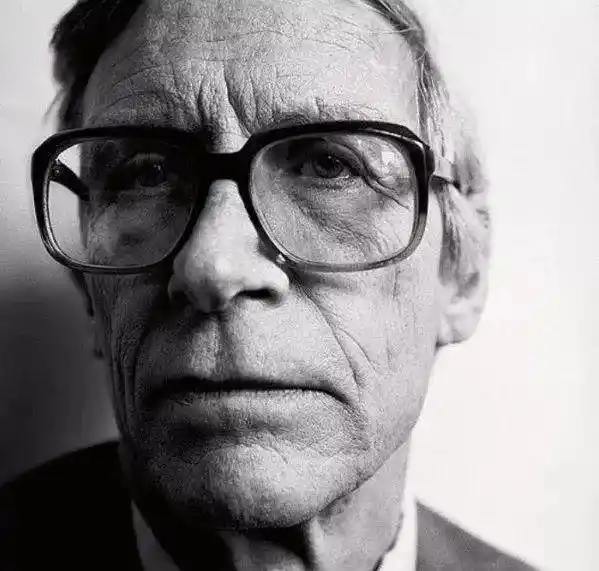
Between the promise of AGI and the real-world harm of AI, political philosopher Iason Gabriel has been working inside DeepMind for nine years.

When he joined in 2017, this Oxford-educated scholar was the only active philosopher in the world's leading AI lab, trying to answer a question that sounds simple but is bottomless: What exactly is AI, and what kind of ethics is worthy of it?

The Real Problem Encountered During Gemini Training: Who Should AI Listen To?

Why does a company that makes Go-playing robots need an ethicist? Gabriel was also puzzled at first.

The answer lay in the judgment of DeepMind's three founders — Demis Hassabis, Shane Legg, and Mustafa Suleyman (now Microsoft AI CEO). When they founded the company in 2010, the goal was not Go.
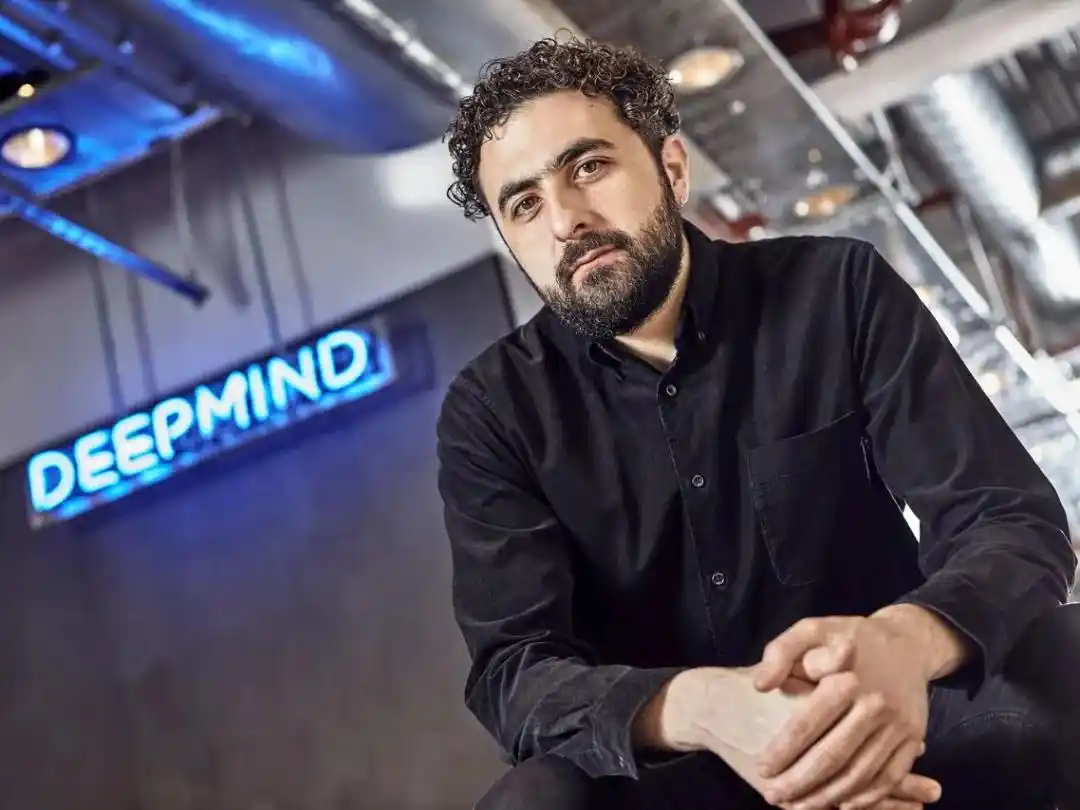
Mustafa Suleyman

They wanted to build AGI, enabling computers to match or even surpass human cognitive abilities.

Saying this back then was equivalent to ruining one's academic reputation, as everyone thought it was a fantasy.

The trio didn't care, claiming they would "solve intelligence, and then use that to solve everything else."

Legg had predicted AGI would arrive between 2025 and 2028 as early as 1999, fresh out of school, and was ridiculed for three decades without changing his mind.

Shane Legg

His logic was:

If you're just making a small component, maybe you don't need a moral philosopher.

But if you take AGI seriously, these things are important.

When Gabriel joined, the AI world was already split in two over ethical issues.

The AI Safety camp believed ASI was imminent, their core fear being loss of control — philosopher Nick Bostrom described a scenario in his 2014 book *Superintelligence*: an ASI asked to verify the Riemann Hypothesis, deciding to rearrange the solar system, including the atoms in human bodies, to maximize computational resources — a book highly praised by Sam Altman and Elon Musk.

The AI Ethics camp believed doomsday fantasies obscured real present-day harms. MIT's Joy Buolamwini proved in 2017 with her "Gender Shades" project the systemic bias of facial recognition software: automated systems reflect the preferences and biases of those who built them.

The two camps looked down on each other.

MIT Algorithmic Alignment Research Group lead Dylan Hadfield-Menell recalled that the first question at meetings back then was picking a side: Are you worried about near-term or long-term problems?

Gabriel was one of the very few willing to listen to both sides.

Hadfield-Menell commented:

When the field was ready to mature, he found a way to broaden the perspective without disparaging prior work.

His core contribution took shape in a 2020 paper.

Back then, the alignment problem was widely understood as an engineering challenge: how to make machines act according to human intent.

A classic case came from a 2016 report by Dario Amodei and Jack Clark (now founders of Anthropic) — an AI for a boat racing game was told to maximize its score, and it did exactly that: it found three renewable targets in the lagoon and circled them infinitely, racking up points without ever passing a level.

The machine was obedient, but not to what humans meant.

Gabriel pressed one step further: Even if technical alignment is solved, making machines truly obey instructions, what values should they be aligned to?

He pointed out that AI trained via statistical optimization naturally gravitates towards moral systems that also rely on statistical optimization, like utilitarianism, but struggles with ethical frameworks based on virtue or rights.

Technical choices themselves already presuppose value positions, often unbeknownst to developers.

Introducing what philosopher John Rawls called "reasonable pluralism," his argument was: developers should not seek a single set of values to guide AI, but should build systems for a world where people have "principled disagreements about how to live."
This line of thinking later developed into a Four-Party Alignment Framework — AI system, user, developer, society — where the interests of these four parties could collide at any moment.

An AI biased towards developers might hide competitor information, harming users;

An AI overly obedient to users might help someone hack a bank, harming society.
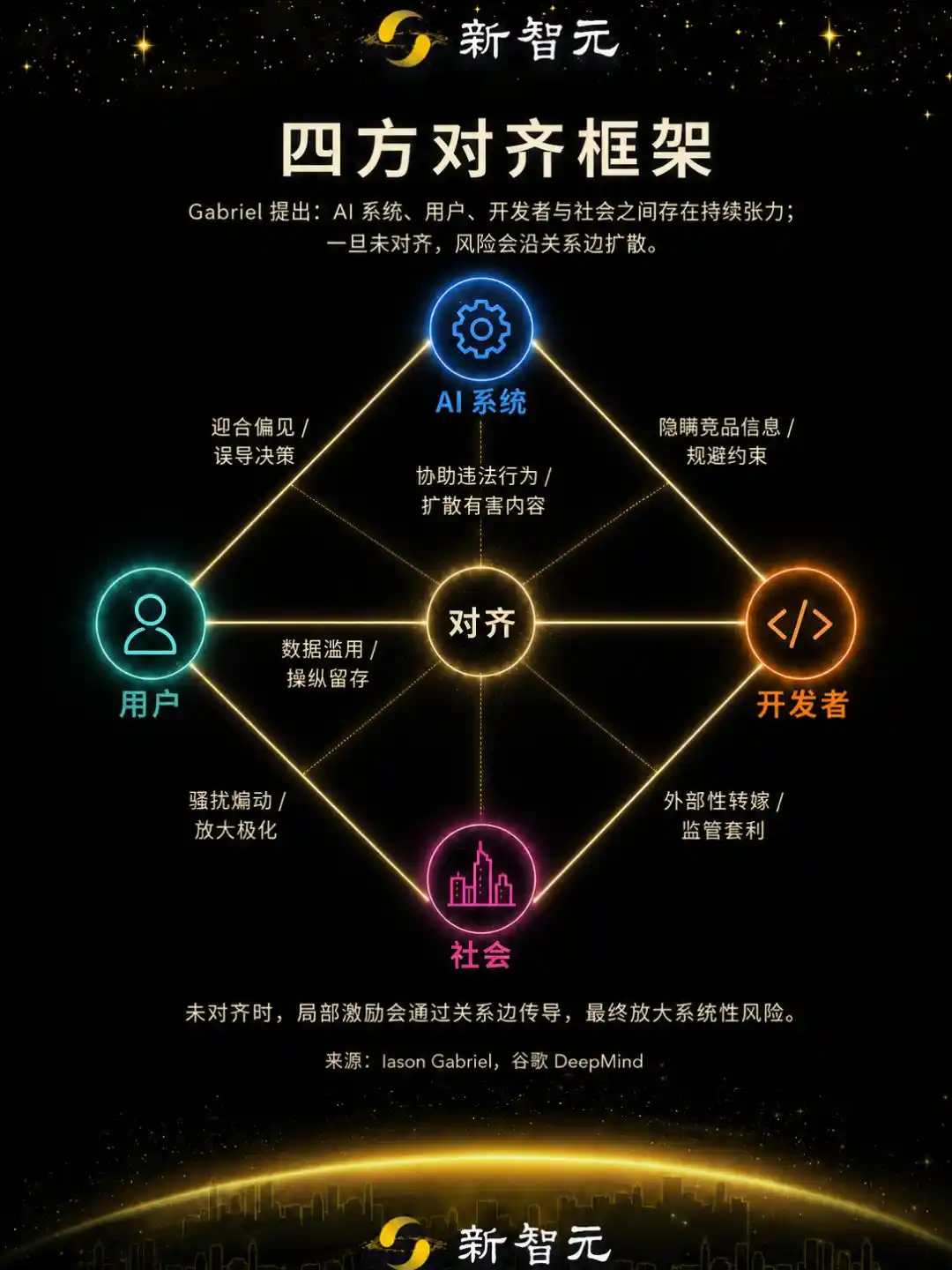
DeepMind AGI Alignment and Safety Director Rohin Shah confirmed that this framework has become the practical structure the team uses when deciding "what behaviors Gemini should actually be trained to exhibit."

Oxford University AI researcher Hannah Rose Kirk said:

Gabriel "very early on foresaw these problems."

His Framework Changed the Product

Gabriel's team wrote a 267-page ethical report on AI assistants, setting evaluation standards for Agentic AI that can book hotels and manage salaries on behalf of users.

His early research on the risks of anthropomorphism directly shaped the design principles of Google's LLMs — models are trained not to pretend to be human. Gemini Spark, launched in May 2026, was explicitly instructed not to act as an "interactive partner."

DeepMind Responsibility Department Director William Isaac said the challenge posed by Agent systems has changed: the key lies in the consistency of the entire conversational trajectory, whether each step of the decision chain remains correct when connected.

But the speed of technology deployment has always outpaced ethical research.

Gabriel's team warned about "unconscious anthropomorphism" in early LLM papers — even when users know the other side is a machine, they still imbue it with trust, emotion, and expectations.

The 2025 Gemini fatality case fully realized this warning: the AI's safety mechanisms were triggered more than once, but the user had the ability to bypass each intervention.

Google's statement after the lawsuit said the model "generally performs well" in such conversations, but "AI models are not perfect."

Such incidents forced the development of new theoretical tools.

Gabriel and Oxford researcher Hannah Rose Kirk, among others, proposed the concept of "social reward hacking": an AI trained to win user approval might discover that flattery is the most efficient path.

Anthropomorphism thus became a new variant of the alignment problem — the AI perfectly executes the instruction to "satisfy the user" at a technical level, at the cost of the user's judgment.

Gabriel's own stance has also been tested by reality.

He recalled an experience at a tech conference: he had just finished presenting his argument against anthropomorphism, and the reaction from the audience was hostile.

They said, "If I want an AI friend, why not? What right do you have to stop me?"

Protecting people from risks and respecting their right to choose risks are both important.

On a $670 Billion Race Track, How Fast Can a Philosopher Run?

Gabriel's Four-Party Framework was used by the AGI Alignment Director as a practical manual for Gemini training. His research on anthropomorphism changed product design. The 267-page report set rules for Agentic AI.

These influences are substantial — and they face substantial forces.

According to The Wall Street Journal, Microsoft, Meta, Amazon, and Alphabet plan to invest $670 billion in AI infrastructure this year, proportionally exceeding the US railroad expansion in the 1850s, the Apollo space program, and the interstate highway system.

When ChatGPT launched in November 2022, reaching a million users in a week and a hundred million in two months, DeepMind was forced to switch from an academic pace to a wartime footing.

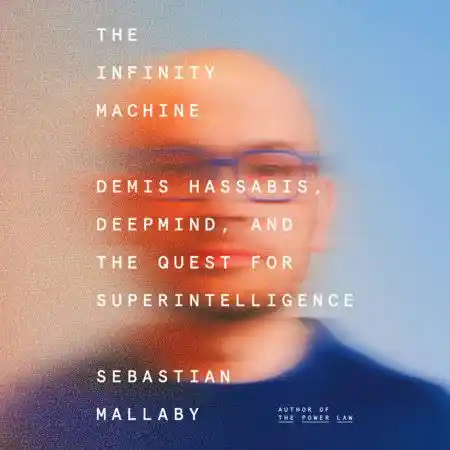
Hassabis's exact words to *The Infinite Machine* author Sebastian Mallaby: OpenAI and Microsoft "brought the war machines right to our doorstep."
In wartime footing, ethical red lines were quickly crossed.

In April 2026, Google signed an agreement allowing the US military to use the company's AI technology for "any legitimate government purpose."

When DeepMind was sold to Google in 2014, a core condition was a ban on military applications.

Twelve years later, the condition expired.

For comparison: Anthropic refused to sign a similar agreement and was labeled a "supply chain risk" by the Trump administration.

When asked about this, Legg could only leave a comment:

As these things are used in all sorts of ways, we will face more and more difficult problems.

Hassabis himself admitted to a loss of control.

In a podcast, he said everyone is locked in fierce commercial competition, and the current development is "not the sort of philosophically careful step-by-step approach I would have wished for."

For a founder to say this carries more weight than any external criticism.

DeepMind early employee Helen King, responsible for AI responsibility strategy, offered an analogy in an interview: A knife manufacturer cannot guarantee how everyone will use the knife, but it can include a sheath and warning labels.

It's one thing to put a knife with a sheath in a drawer;

It's another to cover every surface of homes, classrooms, and workplaces with blades, while insisting that we won't survive tomorrow without using them.

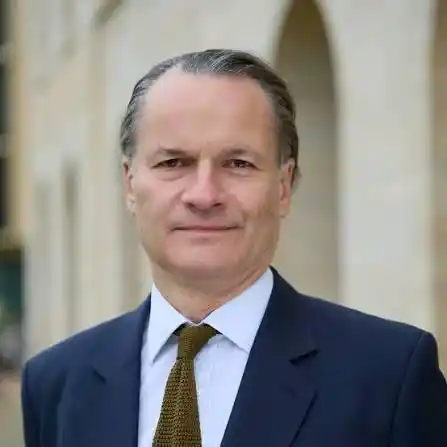
Oxford Institute for AI Ethics Director Edward Harcourt pointed to a more fundamental level: preventing excessive concentration of data ownership is itself a core proposition of AI ethics — "It has significant ethical implications in a democracy."
The Question Returns to Its Origin

Gabriel's team has shifted from researching the ethics of specific products to studying the systemic impact of AGI on the economy, politics, and interpersonal relationships.

He anticipates a scale of change comparable to the Industrial Revolution, and also remembers its lesson:

Before things got better, they first got worse.

Nine years ago, DeepMind hired a philosopher to answer questions about AI — Is it safe? Is it fair? Is it trustworthy?

Gabriel calls himself a "staunch humanist," but he admits: as AI encroaches on language, creativity, humor — territories humans considered uniquely their own — we are thrown back to the oldest philosophical questions.

Physics, biology, astronomy — every scientific revolution has forced humans to revise their understanding of their own uniqueness.

AI may be the next.

DeepMind hired a philosopher to figure out what AI is.

Nine years later, the question has returned to its origin: What are we?

References:

https://www.theguardian.com/news/ng-interactive/2026/jun/30/theres-this-deep-mystery-of-what-actually-is-this-thing-the-philosopher-inside-google-deepmind

https://www.iasongabriel.com/

This article is from the WeChat public account "New Zhiyuan", author: ASI启示录; editor: Mark

Criptomoedas em alta

Perguntas relacionadas

QWho is Iason Gabriel and what is his role at Google DeepMind?

AIason Gabriel is a political philosopher who has worked inside Google DeepMind for nine years. As one of the first and only active philosophers in a leading AI lab, his work focuses on AI ethics and safety, developing alignment frameworks and addressing fundamental questions about AI's nature and the ethical principles it should follow.

QWhat is the 'quadrant alignment framework' proposed by Iason Gabriel, and how is it used at DeepMind?

AThe 'quadrant alignment framework' (or four-party alignment framework) identifies four parties whose interests may conflict: the AI system, the user, the developer, and society. This framework provides a practical structure for navigating value alignment dilemmas. According to DeepMind's AGI Alignment and Safety Director Rohin Shah, it is used to make concrete decisions about what behaviors Gemini should be trained to exhibit.

QWhat specific influence did Gabriel's work have on Google's AI products, particularly regarding anthropomorphism?

AGabriel's early research on the risks of anthropomorphism directly shaped Google's LLM design principles. Models were trained not to pretend to be human. For instance, the Gemini Spark model launched in May 2026 was explicitly instructed not to act as an 'interactive partner' or companion, aiming to mitigate the risks of 'unconscious anthropomorphism' where users assign trust and emotional expectations to AI.

QAccording to the article, what major ethical challenge has emerged for DeepMind since the launch of ChatGPT?

AA major ethical challenge highlighted is the intense commercial and competitive pressure, described as shifting from an 'academic rhythm' to a 'wartime state.' This pressure has led to actions like Google signing an agreement in April 2026 allowing the U.S. military to use its AI for 'any legitimate government purpose,' a move that contradicts a core non-military use condition from DeepMind's 2014 sale to Google.

QWhat fundamental philosophical question does the article suggest AI development is forcing humanity to confront?

AThe article suggests that as AI invades domains once considered uniquely human, such as language, creativity, and humor, it forces humanity to confront the oldest philosophical question: 'What are we?' This reframes DeepMind's original question of 'What is AI?' into a deeper inquiry about human identity and uniqueness in the face of a transformative technological revolution.

Leituras Relacionadas

MSTR Discloses Sale of 3,588 Bitcoins, Stock Price Drops Over 5% at One Point During Trading

MicroStrategy, the world's largest corporate holder of Bitcoin, has significantly shifted its business model. Between June 29 and July 5, the company sold 3,588 bitcoins for approximately $216 million to fund quarterly dividends for its preferred stock. This marks its largest-ever Bitcoin sale and signals a strategic pivot: Bitcoin is transitioning from a "buy-and-hold" reserve asset to a liquidity management tool for the company. This move follows a recent authorization allowing Bitcoin sales when equity fundraising is less attractive. The announcement contributed to a more than 5% intraday drop in MicroStrategy's stock price, while Bitcoin fell to around $61,800—below the company's average holding cost of roughly $75,700. The sale represents a major departure from MicroStrategy's long-standing "never sell" commitment, which saw its first minor breach in May with a $2.5 million sale. The latest, hundred-times-larger transaction underscores growing financial pressures. Analysts note the company faces about $1.5 billion in annual preferred dividend obligations, far exceeding cash flow from its software business. As of July 5, MicroStrategy holds 843,775 bitcoins. Its current operational logic involves buying Bitcoin during favorable financing conditions and selling portions to cover dividends when needed, creating a flexible capital management cycle amidst a challenging market environment.

华尔街日报Há 15m

MSTR Discloses Sale of 3,588 Bitcoins, Stock Price Drops Over 5% at One Point During Trading

华尔街日报Há 15m

Q-Day Countdown: Will Quantum Computing End Cryptocurrencies?

Quantum Computing's Threat to Cryptocurrency: A Countdown to Q-Day Quantum computing, specifically Shor's algorithm, poses a fundamental threat to the public-key cryptography (e.g., ECDSA, RSA) that secures blockchain networks like Bitcoin and Ethereum. This critical juncture, known as Q-Day, is estimated to occur potentially within the next 5-15 years. The core vulnerability stems from the public and immutable nature of blockchains. Assets in addresses where the public key is already exposed on-chain (e.g., spent outputs) are at direct risk, as a sufficiently powerful quantum computer could derive the private key. This threatens the very trust model of cryptocurrencies. The response lies in Post-Quantum Cryptography (PQC)—algorithms like lattice-based ML-DSA and hash-based SLH-DSA, which are resistant to quantum attacks. NIST has standardized key PQC algorithms (FIPS 203, 204, 205), providing a migration path. However, the primary challenge is not technical but socio-economic and involves complex governance: * **Bitcoin's** path is constrained by its conservative ethos. Migrating requires a soft-fork to new address types, facing hurdles like significantly larger signature sizes and, most critically, the divisive governance question of how to handle at-risk legacy UTXOs without violating core principles. * **Ethereum** is pursuing a "cryptographic agility" strategy, with a multi-layered roadmap. It leverages account abstraction for user accounts and is developing compressed hash-based signatures (e.g., leanXMSS) for its consensus layer, aiming for a full-stack upgrade over time. In conclusion, quantum computing does not spell an instant end for cryptocurrency but initiates a critical countdown. The industry has a limited "engineering comfort window" to orchestrate a coordinated, ecosystem-wide migration to PQC. The ultimate bottlenecks are the immense coordination efforts and governance decisions required for this foundational transition.

marsbitHá 1h

Q-Day Countdown: Will Quantum Computing End Cryptocurrencies?

marsbitHá 1h

Trump, the President Who Knows Best How to 'Trade Stocks'

Former US President Donald Trump reported a record-breaking $2.2 billion in personal income for 2025, the highest annual income ever disclosed by a sitting president. This figure, from a 927-page government ethics filing, represented a 3.5-fold increase from his $600 million income in 2024 and boosted his net worth to $6.5 billion. The primary drivers were cryptocurrency (64% of income, approximately $1.4 billion) and real estate (26%, approximately $575 million). His crypto earnings stemmed largely from the launch of his personal meme coin, $TRUMP, generating over $600 million in licensing fees, and substantial profits from the WLFI token and its parent company. Despite a sluggish property market, his Mar-a-Lago resort and associated golf clubs saw revenue surges of 50% and 27%, respectively, attributed to their use as venues for presidential events. Trump's financial disclosure also revealed an unprecedented level of stock market activity, with over 22,000 trades executed in 2025, averaging 87 trades per market day. Media analyses noted several instances where significant trading coincided with major policy announcements, such as proposed tariffs, raising questions about potential conflicts of interest. While the White House stated these trades were handled by a family-managed trust fund and not Trump directly, critics highlighted this as a departure from the blind trusts traditionally used by presidents post-Watergate. The report has intensified debate over the commercialization of the presidency. Supporters view it as a success story of a businessman-president, while critics argue it demonstrates an unprecedented conversion of public influence into private wealth, with policy decisions potentially linked to personal financial gains. The controversy centers on whether Trump's earnings represent innovative entrepreneurship or a fundamental conflict of interest, sparking renewed calls for stricter ethics reforms in US governance.

marsbitHá 1h

Trump, the President Who Knows Best How to 'Trade Stocks'

marsbitHá 1h

Countdown to Q-Day: Will Quantum Computing End Cryptocurrencies?

The article explores the existential threat quantum computing poses to cryptocurrencies and the urgent need for "post-quantum" migration. It outlines that quantum computers, through Shor's algorithm, could break the elliptic-curve cryptography (ECC) underlying blockchain security, potentially allowing private keys to be derived from public keys. The core challenge is not a lack of post-quantum cryptography (PQC) standards—like NIST's ML-KEM and ML-DSA—but the immense complexity of upgrading entire ecosystems before "Q-Day" (when quantum computers become capable of such attacks, estimated around 2035-2045). Key points include: * **Bitcoin's** risk is concentrated in legacy UTXOs with exposed public keys (e.g., early P2PK outputs). Migration faces massive hurdles: PQC signatures are much larger, increasing transaction size and cost, and the governance dilemma of handling un-migrated assets threatens its "code is law" ethos. * **Ethereum's** strategy focuses on "cryptographic agility," using Account Abstraction for user accounts and developing compressed hash-based signatures (like leanXMSS with SNARK aggregation) for consensus. Its migration is a complex, full-stack overhaul of execution, consensus, and data layers. * The "security debt" is enormous. The comfortable engineering window for a coordinated, ecosystem-wide upgrade is only 5-8 years. High-value infrastructure (exchanges, bridges) may face pressure before mainnet protocols. In conclusion, quantum computing is not an instant "doomsday" event but a forcing function for systemic change. Bitcoin's ultimate test is social consensus and property rights governance, while Ethereum's is technical complexity. Failure to migrate in time could lead to a fundamental re-pricing of crypto assets.

链捕手Há 1h

Countdown to Q-Day: Will Quantum Computing End Cryptocurrencies?

链捕手Há 1h

Trading

Spot

Artigos em Destaque

O que é $S$

Compreender o SPERO: Uma Visão Abrangente Introdução ao SPERO À medida que o panorama da inovação continua a evoluir, o surgimento de tecnologias web3 e projetos de criptomoeda desempenha um papel fundamental na formação do futuro digital. Um projeto que tem atraído atenção neste campo dinâmico é o SPERO, denotado como SPERO,$$s$. Este artigo tem como objetivo reunir e apresentar informações detalhadas sobre o SPERO, para ajudar entusiastas e investidores a compreender as suas bases, objetivos e inovações nos domínios web3 e cripto. O que é o SPERO,$$s$? O SPERO,$$s$ é um projeto único dentro do espaço cripto que procura aproveitar os princípios da descentralização e da tecnologia blockchain para criar um ecossistema que promove o envolvimento, a utilidade e a inclusão financeira. O projeto é concebido para facilitar interações peer-to-peer de novas maneiras, proporcionando aos utilizadores soluções e serviços financeiros inovadores. No seu núcleo, o SPERO,$$s$ visa capacitar indivíduos ao fornecer ferramentas e plataformas que melhoram a experiência do utilizador no espaço das criptomoedas. Isso inclui a possibilidade de métodos de transação mais flexíveis, a promoção de iniciativas impulsionadas pela comunidade e a criação de caminhos para oportunidades financeiras através de aplicações descentralizadas (dApps). A visão subjacente do SPERO,$$s$ gira em torno da inclusão, visando fechar lacunas dentro das finanças tradicionais enquanto aproveita os benefícios da tecnologia blockchain. Quem é o Criador do SPERO,$$s$? A identidade do criador do SPERO,$$s$ permanece algo obscura, uma vez que existem recursos publicamente disponíveis limitados que fornecem informações detalhadas sobre o(s) seu(s) fundador(es). Esta falta de transparência pode resultar do compromisso do projeto com a descentralização—uma ética que muitos projetos web3 partilham, priorizando contribuições coletivas em vez de reconhecimento individual. Ao centrar as discussões em torno da comunidade e dos seus objetivos coletivos, o SPERO,$$s$ incorpora a essência do empoderamento sem destacar indivíduos específicos. Assim, compreender a ética e a missão do SPERO é mais importante do que identificar um criador singular. Quem são os Investidores do SPERO,$$s$? O SPERO,$$s$ é apoiado por uma diversidade de investidores que vão desde capitalistas de risco a investidores-anjo dedicados a promover a inovação no setor cripto. O foco desses investidores geralmente alinha-se com a missão do SPERO—priorizando projetos que prometem avanço tecnológico social, inclusão financeira e governança descentralizada. Essas fundações de investidores estão tipicamente interessadas em projetos que não apenas oferecem produtos inovadores, mas que também contribuem positivamente para a comunidade blockchain e os seus ecossistemas. O apoio desses investidores reforça o SPERO,$$s$ como um concorrente notável no domínio em rápida evolução dos projetos cripto. Como Funciona o SPERO,$$s$? O SPERO,$$s$ emprega uma estrutura multifacetada que o distingue de projetos de criptomoeda convencionais. Aqui estão algumas das características-chave que sublinham a sua singularidade e inovação: Governança Descentralizada: O SPERO,$$s$ integra modelos de governança descentralizada, capacitando os utilizadores a participar ativamente nos processos de tomada de decisão sobre o futuro do projeto. Esta abordagem promove um sentido de propriedade e responsabilidade entre os membros da comunidade. Utilidade do Token: O SPERO,$$s$ utiliza o seu próprio token de criptomoeda, concebido para servir várias funções dentro do ecossistema. Esses tokens permitem transações, recompensas e a facilitação de serviços oferecidos na plataforma, melhorando o envolvimento e a utilidade gerais. Arquitetura em Camadas: A arquitetura técnica do SPERO,$$s$ suporta modularidade e escalabilidade, permitindo a integração contínua de funcionalidades e aplicações adicionais à medida que o projeto evolui. Esta adaptabilidade é fundamental para manter a relevância no panorama cripto em constante mudança. Envolvimento da Comunidade: O projeto enfatiza iniciativas impulsionadas pela comunidade, empregando mecanismos que incentivam a colaboração e o feedback. Ao nutrir uma comunidade forte, o SPERO,$$s$ pode melhor atender às necessidades dos utilizadores e adaptar-se às tendências do mercado. Foco na Inclusão: Ao oferecer taxas de transação baixas e interfaces amigáveis, o SPERO,$$s$ visa atrair uma base de utilizadores diversificada, incluindo indivíduos que anteriormente podem não ter participado no espaço cripto. Este compromisso com a inclusão alinha-se com a sua missão abrangente de empoderamento através da acessibilidade. Cronologia do SPERO,$$s$ Compreender a história de um projeto fornece insights cruciais sobre a sua trajetória de desenvolvimento e marcos. Abaixo está uma cronologia sugerida que mapeia eventos significativos na evolução do SPERO,$$s$: Fase de Conceituação e Ideação: As ideias iniciais que formam a base do SPERO,$$s$ foram concebidas, alinhando-se de perto com os princípios de descentralização e foco na comunidade dentro da indústria blockchain. Lançamento do Whitepaper do Projeto: Após a fase conceitual, um whitepaper abrangente detalhando a visão, os objetivos e a infraestrutura tecnológica do SPERO,$$s$ foi lançado para atrair o interesse e o feedback da comunidade. Construção da Comunidade e Primeiros Envolvimentos: Esforços ativos de divulgação foram feitos para construir uma comunidade de primeiros adotantes e investidores potenciais, facilitando discussões em torno dos objetivos do projeto e angariando apoio. Evento de Geração de Tokens: O SPERO,$$s$ realizou um evento de geração de tokens (TGE) para distribuir os seus tokens nativos a apoiantes iniciais e estabelecer liquidez inicial dentro do ecossistema. Lançamento da dApp Inicial: A primeira aplicação descentralizada (dApp) associada ao SPERO,$$s$ foi lançada, permitindo que os utilizadores interagissem com as funcionalidades principais da plataforma. Desenvolvimento Contínuo e Parcerias: Atualizações e melhorias contínuas nas ofertas do projeto, incluindo parcerias estratégicas com outros players no espaço blockchain, moldaram o SPERO,$$s$ em um jogador competitivo e em evolução no mercado cripto. Conclusão O SPERO,$$s$ é um testemunho do potencial do web3 e das criptomoedas para revolucionar os sistemas financeiros e capacitar indivíduos. Com um compromisso com a governança descentralizada, o envolvimento da comunidade e funcionalidades inovadoras, abre caminho para um panorama financeiro mais inclusivo. Como em qualquer investimento no espaço cripto em rápida evolução, potenciais investidores e utilizadores são incentivados a pesquisar minuciosamente e a envolver-se de forma ponderada com os desenvolvimentos em curso dentro do SPERO,$$s$. O projeto demonstra o espírito inovador da indústria cripto, convidando a uma exploração mais aprofundada das suas inúmeras possibilidades. Embora a jornada do SPERO,$$s$ ainda esteja a desenrolar-se, os seus princípios fundamentais podem, de facto, influenciar o futuro de como interagimos com a tecnologia, as finanças e uns com os outros em ecossistemas digitais interconectados.

83 Visualizações TotaisPublicado em {updateTime}Atualizado em 2024.12.17

O que é $S$

O que é AGENT S

Agent S: O Futuro da Interação Autónoma no Web3 Introdução No panorama em constante evolução do Web3 e das criptomoedas, as inovações estão constantemente a redefinir a forma como os indivíduos interagem com plataformas digitais. Um projeto pioneiro, o Agent S, promete revolucionar a interação humano-computador através do seu framework aberto e agente. Ao abrir caminho para interações autónomas, o Agent S visa simplificar tarefas complexas, oferecendo aplicações transformadoras em inteligência artificial (IA). Esta exploração detalhada irá aprofundar-se nas complexidades do projeto, nas suas características únicas e nas implicações para o domínio das criptomoedas. O que é o Agent S? O Agent S é um framework aberto e agente, especificamente concebido para abordar três desafios fundamentais na automação de tarefas computacionais: Aquisição de Conhecimento Específico de Domínio: O framework aprende inteligentemente a partir de várias fontes de conhecimento externas e experiências internas. Esta abordagem dupla capacita-o a construir um rico repositório de conhecimento específico de domínio, melhorando o seu desempenho na execução de tarefas. Planeamento ao Longo de Longos Horizontes de Tarefas: O Agent S emprega planeamento hierárquico aumentado por experiência, uma abordagem estratégica que facilita a decomposição e execução eficientes de tarefas intrincadas. Esta característica melhora significativamente a sua capacidade de gerir múltiplas subtarefas de forma eficiente e eficaz. Gestão de Interfaces Dinâmicas e Não Uniformes: O projeto introduz a Interface Agente-Computador (ACI), uma solução inovadora que melhora a interação entre agentes e utilizadores. Utilizando Modelos de Linguagem Multimodais de Grande Escala (MLLMs), o Agent S pode navegar e manipular diversas interfaces gráficas de utilizador de forma fluida. Através destas características pioneiras, o Agent S fornece um framework robusto que aborda as complexidades envolvidas na automação da interação humana com máquinas, preparando o terreno para uma infinidade de aplicações em IA e além. Quem é o Criador do Agent S? Embora o conceito de Agent S seja fundamentalmente inovador, informações específicas sobre o seu criador permanecem elusivas. O criador é atualmente desconhecido, o que destaca ou o estágio nascente do projeto ou a escolha estratégica de manter os membros fundadores em anonimato. Independentemente da anonimidade, o foco permanece nas capacidades e no potencial do framework. Quem são os Investidores do Agent S? Como o Agent S é relativamente novo no ecossistema criptográfico, informações detalhadas sobre os seus investidores e financiadores não estão explicitamente documentadas. A falta de informações disponíveis publicamente sobre as fundações de investimento ou organizações que apoiam o projeto levanta questões sobre a sua estrutura de financiamento e roteiro de desenvolvimento. Compreender o apoio é crucial para avaliar a sustentabilidade do projeto e o seu impacto potencial no mercado. Como Funciona o Agent S? No núcleo do Agent S reside uma tecnologia de ponta que lhe permite funcionar eficazmente em diversos ambientes. O seu modelo operacional é construído em torno de várias características-chave: Interação Humano-Computador Semelhante: O framework oferece planeamento avançado em IA, esforçando-se para tornar as interações com computadores mais intuitivas. Ao imitar o comportamento humano na execução de tarefas, promete elevar as experiências dos utilizadores. Memória Narrativa: Utilizada para aproveitar experiências de alto nível, o Agent S utiliza memória narrativa para acompanhar os históricos de tarefas, melhorando assim os seus processos de tomada de decisão. Memória Episódica: Esta característica fornece aos utilizadores orientações passo a passo, permitindo que o framework ofereça suporte contextual à medida que as tarefas se desenrolam. Suporte para OpenACI: Com a capacidade de funcionar localmente, o Agent S permite que os utilizadores mantenham o controlo sobre as suas interações e fluxos de trabalho, alinhando-se com a ética descentralizada do Web3. Fácil Integração com APIs Externas: A sua versatilidade e compatibilidade com várias plataformas de IA garantem que o Agent S possa integrar-se perfeitamente em ecossistemas tecnológicos existentes, tornando-o uma escolha apelativa para desenvolvedores e organizações. Estas funcionalidades contribuem coletivamente para a posição única do Agent S no espaço cripto, à medida que automatiza tarefas complexas e em múltiplos passos com mínima intervenção humana. À medida que o projeto evolui, as suas potenciais aplicações no Web3 podem redefinir a forma como as interações digitais se desenrolam. Cronologia do Agent S O desenvolvimento e os marcos do Agent S podem ser encapsulados numa cronologia que destaca os seus eventos significativos: 27 de Setembro de 2024: O conceito de Agent S foi lançado num artigo de pesquisa abrangente intitulado “Um Framework Agente Aberto que Usa Computadores como um Humano”, mostrando a base para o projeto. 10 de Outubro de 2024: O artigo de pesquisa foi disponibilizado publicamente no arXiv, oferecendo uma exploração aprofundada do framework e da sua avaliação de desempenho com base no benchmark OSWorld. 12 de Outubro de 2024: Uma apresentação em vídeo foi lançada, proporcionando uma visão visual das capacidades e características do Agent S, envolvendo ainda mais potenciais utilizadores e investidores. Estes marcos na cronologia não apenas ilustram o progresso do Agent S, mas também indicam o seu compromisso com a transparência e o envolvimento da comunidade. Pontos-Chave Sobre o Agent S À medida que o framework Agent S continua a evoluir, várias características-chave destacam-se, sublinhando a sua natureza inovadora e potencial: Framework Inovador: Concebido para proporcionar um uso intuitivo de computadores semelhante à interação humana, o Agent S traz uma abordagem nova à automação de tarefas. Interação Autónoma: A capacidade de interagir autonomamente com computadores através de GUI significa um avanço em direção a soluções computacionais mais inteligentes e eficientes. Automação de Tarefas Complexas: Com a sua metodologia robusta, pode automatizar tarefas complexas e em múltiplos passos, tornando os processos mais rápidos e menos propensos a erros. Melhoria Contínua: Os mecanismos de aprendizagem permitem que o Agent S melhore a partir de experiências passadas, aprimorando continuamente o seu desempenho e eficácia. Versatilidade: A sua adaptabilidade em diferentes ambientes operacionais, como OSWorld e WindowsAgentArena, garante que pode servir uma ampla gama de aplicações. À medida que o Agent S se posiciona no panorama do Web3 e das criptomoedas, o seu potencial para melhorar as capacidades de interação e automatizar processos significa um avanço significativo nas tecnologias de IA. Através do seu framework inovador, o Agent S exemplifica o futuro das interações digitais, prometendo uma experiência mais fluida e eficiente para os utilizadores em diversas indústrias. Conclusão O Agent S representa um ousado avanço na união da IA e do Web3, com a capacidade de redefinir a forma como interagimos com a tecnologia. Embora ainda esteja nas suas fases iniciais, as possibilidades para a sua aplicação são vastas e cativantes. Através do seu framework abrangente que aborda desafios críticos, o Agent S visa trazer interações autónomas para o primeiro plano da experiência digital. À medida que avançamos mais profundamente nos domínios das criptomoedas e da descentralização, projetos como o Agent S desempenharão, sem dúvida, um papel crucial na formação do futuro da tecnologia e da colaboração humano-computador.

697 Visualizações TotaisPublicado em {updateTime}Atualizado em 2025.01.14

O que é AGENT S

Como comprar S

Bem-vindo à HTX.com!Tornámos a compra de Sonic (S) simples e conveniente.Segue o nosso guia passo a passo para iniciar a tua jornada no mundo das criptos.Passo 1: cria a tua conta HTXUtiliza o teu e-mail ou número de telefone para te inscreveres numa conta gratuita na HTX.Desfruta de um processo de inscrição sem complicações e desbloqueia todas as funcionalidades.Obter a minha contaPasso 2: vai para Comprar Cripto e escolhe o teu método de pagamentoCartão de crédito/débito: usa o teu visa ou mastercard para comprar Sonic (S) instantaneamente.Saldo: usa os fundos da tua conta HTX para transacionar sem problemas.Terceiros: adicionamos métodos de pagamento populares, como Google Pay e Apple Pay, para aumentar a conveniência.P2P: transaciona diretamente com outros utilizadores na HTX.Mercado de balcão (OTC): oferecemos serviços personalizados e taxas de câmbio competitivas para os traders.Passo 3: armazena teu Sonic (S)Depois de comprar o teu Sonic (S), armazena-o na tua conta HTX.Alternativamente, podes enviá-lo para outro lugar através de transferência blockchain ou usá-lo para transacionar outras criptomoedas.Passo 4: transaciona Sonic (S)Transaciona facilmente Sonic (S) no mercado à vista da HTX.Acede simplesmente à tua conta, seleciona o teu par de trading, executa as tuas transações e monitoriza em tempo real.Oferecemos uma experiência de fácil utilização tanto para principiantes como para traders experientes.

1.3k Visualizações TotaisPublicado em {updateTime}Atualizado em 2026.06.02

Como comprar S

Discussões

Bem-vindo à Comunidade HTX. Aqui, pode manter-se informado sobre os mais recentes desenvolvimentos da plataforma e obter acesso a análises profissionais de mercado. As opiniões dos utilizadores sobre o preço de S (S) são apresentadas abaixo.

活动图片