Standard Chartered lại 'vẽ' biểu đồ tăng 50 lần, đặt mục tiêu 3.500 USD cho AAVE

链捕手Publicado em 2026-06-25Última atualização em 2026-06-25

Resumo

Tập đoàn Standard Chartered tiếp tục đưa ra dự báo táo bạo về tiền mã hóa, lần này là về AAVE. Ngân hàng này dự đoán AAVE có khả năng tăng 50 lần, đạt 3.500 USD vào cuối năm 2030. Lập luận dựa trên kỳ vọng TVL của DeFi tăng 37 lần lên khoảng 2,7 nghìn tỷ USD và tỷ lệ thâm nhập của RWA (tài sản thế giới thực) vào DeFi tăng từ 3,5% lên 30%. Báo cáo nhấn mạnh mô hình kinh doanh hiệu quả của Aave và khả năng nắm bắt cơ hội từ làn sóng mã hóa tài sản thông qua thị trường cho vay có giấy phép Horizon và stablecoin GHO. Dù có sự kiện rút tiền liên quan đến lỗ hổng bảo mật KelpDAO vào tháng 4, nó được coi là biến động ngắn hạn. Về cơ bản, Aave thể hiện sự vững chãi. Grayscale cũng đánh giá AAVE là tài sản được thúc đẩy bởi dòng tiền và hiện đang bị định giá thấp. Aave chiếm 80,7% lợi nhuận của toàn bộ thị trường cho vay DeFi tính đến nay, trong khi chỉ nắm giữ khoảng một nửa TVL của ngành. Tuy nhiên, mô hình cho vay peer-to-pool của Aave tồn tại điểm yếu cố hữu về hiệu quả sử dụng vốn, dẫn đến tổn thất "vô hình" đáng kể do vốn nhàn rỗi. Sự kiện KelpDAO đã phơi bày rủi ro này. Các giao thức mới nổi như Morpho, với thiết kế hiệu quả hơn, đang trở thành đối thủ cạnh tranh tiềm năng. Tóm lại, Aave đang đứng ở ngã ba đường giữa tầm nhìn lạc quan và thách thức thực tế. Tương lai của nó sẽ phụ thuộc vào khả năng tìm ra con đường mở rộng quy mô, củng cố nền tảng để hỗ trợ tầm nhìn tăng trưởng hàng nghìn tỷ USD.

Tác giả: Jae, PANews

Sau UNI, Standard Chartered lại đưa ra tuyên bố mạnh mẽ với ngành công nghiệp tiền mã hóa: AAVE có khả năng tăng vọt 50 lần trước cuối năm 2030, đạt mức 3.500 USD.

Bài đọc liên quan:Standard Chartered 'đánh cược' 40 lần, kêu gọi UNI tăng lên 100 USD

Luận điệu cực đoan, hệ số nhân phóng đại, cùng với kịch bản quen thuộc: Giá AAVE vượt qua mốc 80 USD, mức tăng 24 giờ từng chạm gần 20%. Thị trường cho vay trên chuỗi xôn xao, có người reo mừng vì các ông lớn truyền thống lạc quan về AAVE, cũng có người chế giễu Standard Chartered là một bên bán hàng khác bị choáng ngợp.

Trận chiến tiếp theo của Aave sẽ diễn ra trong sự đan xen giữa tưởng tượng và thực tế.

Standard Chartered dùng Excel 'vẽ' 'đường nến' tăng 50 lần cho AAVE

Nếu cô đọng báo cáo nghiên cứu AAVE của Standard Chartered thành một câu, đó sẽ là: Quy mô tiền gửi quyết định dung lượng cho vay, dung lượng cho vay thúc đẩy thu nhập phí, và cuối cùng thu nhập phí chuyển hóa thành vốn hóa thị trường token. Trong 12 tháng qua, khoảng 90% thu nhập phí của Aave đến từ chênh lệch lãi suất ròng giữa gửi và vay.

Khung định giá truyền thống dựa trên logic ánh xạ tuyến tính cũng được Standard Chartered áp dụng trực tiếp vào giao thức cho vay. Dựa trên mô hình định giá của họ, AAVE sẽ đi theo một đường cong tăng trưởng theo từng bậc.
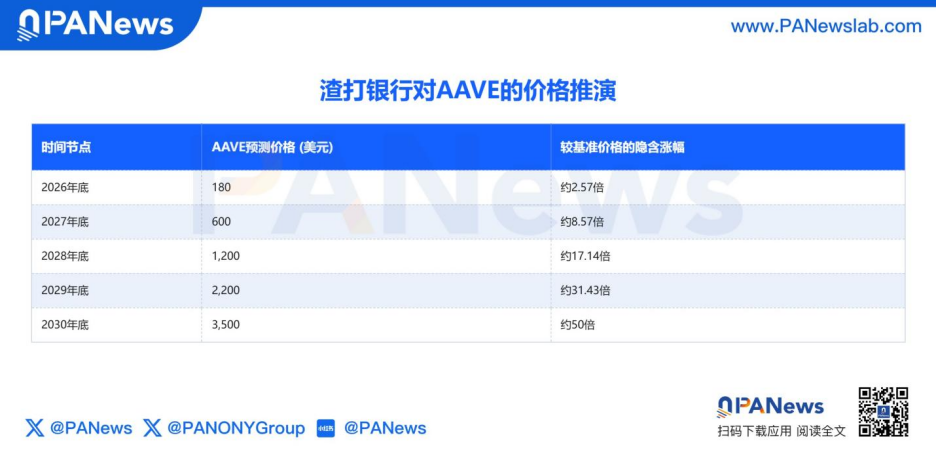
Giả định của Standard Chartered bắt nguồn từ dự đoán về hai xu hướng chính trong phân khúc DeFi:

  • TVL (Tổng giá trị bị khóa) của DeFi sẽ tăng 37 lần. Standard Chartered dự đoán, đến năm 2030, tổng tài sản hoạt động trong DeFi sẽ tăng 37 lần so với mức hiện tại, đạt khoảng 2,7 nghìn tỷ USD. Động lực đến từ mức tăng trưởng 2 nghìn tỷ USD do mở rộng quy mô stablecoin và làn sóng token hóa RWA (Tài sản thế giới thực).

  • Tỷ lệ thâm nhập của RWA trong DeFi tăng từ 3.5% lên 30%. Điều này có nghĩa là, hàng nghìn tỷ USD tài sản truyền thống sẽ đổ vào các giao thức cho vay trên chuỗi.

Nhìn lại thời kỳ đỉnh cao vào tháng 10 năm ngoái, Aave từng quản lý khoản tiền gửi lên tới 75 tỷ USD. Nếu xem nó như một ngân hàng truyền thống, quy mô này đủ để lọt vào top 35 ngân hàng lớn nhất Hoa Kỳ.

Standard Chartered cho rằng, hiệu quả hoạt động của Aave vượt xa các ngân hàng truyền thống phụ thuộc vào mạng lưới chi nhánh vật lý và nhân sự cồng kềnh. Một khi làn sóng token hóa đến, Aave sẽ dựa vào thị trường cho vay có giấy phép Horizon và việc thu phí từ stablecoin GHO của mình, để chuyển hóa lợi nhuận từ việc đưa RWA lên chuỗi thành thu nhập thực tế cho giao thức.

Đối với việc rút tiền hàng loạt do sự cố bảo mật cầu nối rsETH của KelpDAO hồi tháng 4, Standard Chartered định tính đó là biến động ngắn hạn trong giai đoạn tạo đáy, chứ không phải sự sụp đổ của các yếu tố cơ bản lâu dài của giao thức.

Ngay cả khi bỏ qua câu chuyện dài hạn và quay lại góc nhìn trung và ngắn hạn, các yếu tố cơ bản của Aave cũng đủ vững chắc.

Vào ngày 18 tháng 6, Grayscale đã công bố một báo cáo chuyên sâu về Aave, lần đầu tiên áp dụng mô hình DCF (Chiết khấu dòng tiền) và phương pháp P/E (Tỷ số giá trên thu nhập) của tài chính truyền thống vào định giá giao thức DeFi.

Kết luận của Grayscale là: AAVE là tài sản điển hình được thúc đẩy bởi dòng tiền, hiện đang ở trong vùng giá bị đánh giá thấp.
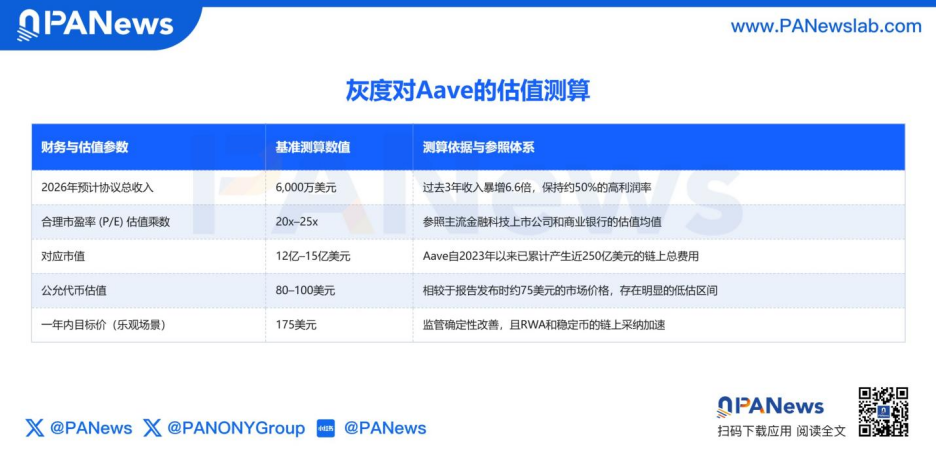
Grayscale nhấn mạnh, doanh thu giao thức cả năm 2025 của Aave lên tới 142 triệu USD, sở hữu dòng tiền lành mạnh. Quan trọng hơn, kế hoạch mua lại và đốt token được Aave DAO khởi động vào tháng 4 năm ngoái, cùng với đề xuất "Aave Will Win" về việc chuyển lợi nhuận sản phẩm cho người nắm giữ token, đã tạo ra cơ chế thông suốt con đường dẫn truyền “Giao thức tạo máu → Token tăng giá”.

Chiếm 8/10 lợi nhuận với một nửa TVL của cả phân khúc, một phần vốn nhàn rỗi trở thành gót chân Achilles

Ngoài bức tranh vĩ mô do vốn thể chế vẽ nên, Aave cũng đã xây dựng được hào sâu phòng thủ ở cấp độ vi mô.

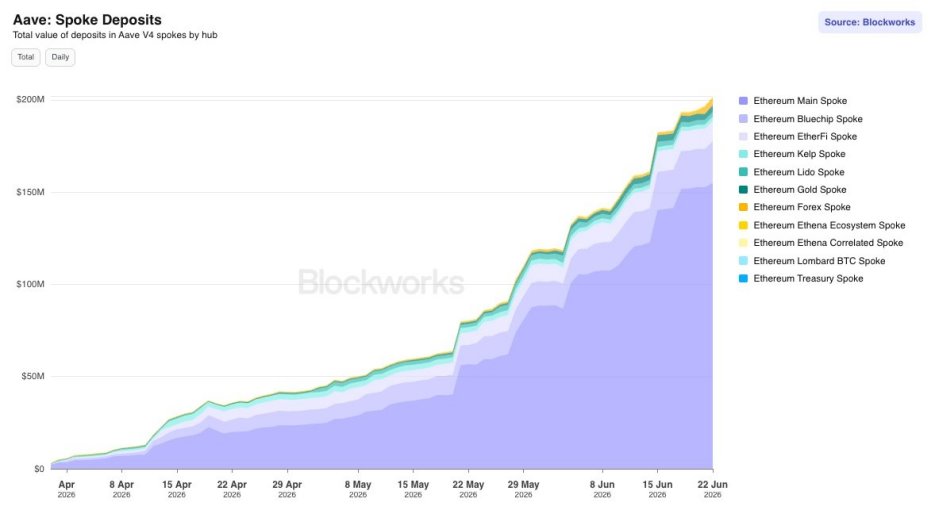
Đầu tiên, là sự đột phá vượt kỳ vọng của kiến trúc công nghệ thế hệ mới Aave V4. Là đợt viết lại kiến trúc cơ bản quy mô lớn nhất của giao thức kể từ năm 2020, V4 sử dụng thiết kế "Trung tâm thanh khoản + Nhánh (Hub-and-Spoke)", phá vỡ hiệu ứng ốc đảo thanh khoản đơn chuỗi trước đây. Tính đến thời điểm hiện tại, tổng tiền gửi V4 đã vượt qua 200 triệu USD, quy mô cho vay gần 60 triệu USD.
Đáng chú ý hơn là khả năng sinh lời của nó. Tổ chức phân tích dữ liệu trên chuỗi MSB Intel chỉ ra rằng, từ đầu năm đến nay, Aave trong phân khúc cho vay đã tạo ra khoảng 43,3 triệu USD "Lợi nhuận giữ lại giao thức" (Earnings), chiếm 80,7% tổng lợi nhuận của cả phân khúc. Các giao thức xếp sau như Maple Finance, Fluid, Venus, lợi nhuận đơn lẻ của mỗi giao thức đều không vượt quá 5 triệu USD, không cùng quy mô với Aave.

Trong thế giới kinh doanh truyền thống, chất lượng của một doanh nghiệp thường được quyết định bởi lợi nhuận ròng, chứ không phải tổng tài sản. Lợi nhuận giữ lại là một chỉ số phản ánh thực tế khả năng tạo ra giá trị ròng trên chuỗi của giao thức, sau khi đã trừ đi các chi phí vận hành liên quan và khuyến khích lạm phát token.

Nói cách khác, Aave đã sử dụng khoảng một nửa TVL của cả phân khúc để chiếm lấy hơn 80% lợi nhuận ròng của hệ thống. Cơ cấu lợi nhuận gần như độc quyền này chính là viên đá tảng vững chắc nhất trong dự đoán tăng 50 lần của Standard Chartered.
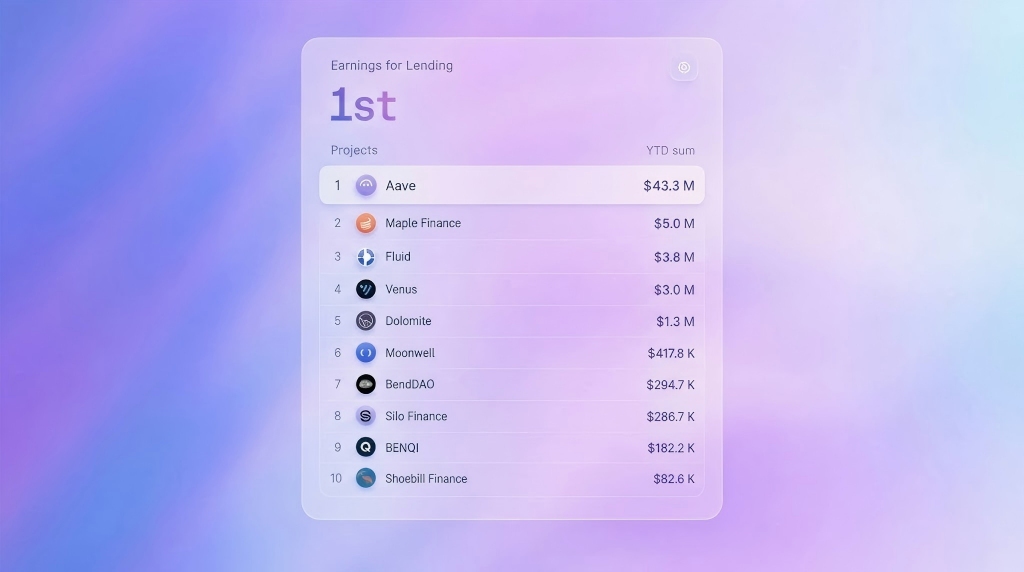
Ở mặt khác của đồng xu, căn bệnh mãn tính về cấu trúc mà tổ chức nghiên cứu tiền mã hóa Delphi Digital từng đề cập, vẫn là một bài toán chưa được giải quyết. Nguồn gốc của vấn đề nằm trong mô hình cho vay ngang hàng qua pool (Peer-to-Pool) của Aave.

Theo tính toán của Delphi Digital, trên ba thị trường chính là WETH, USDT, USDC, tổn thất vô hình (Deadweight Loss) hàng năm của Aave do vốn nhàn rỗi gây ra lên tới 52 triệu USD, quy mô gần bằng một nửa thu nhập ròng năm hóa của quý I/2026.
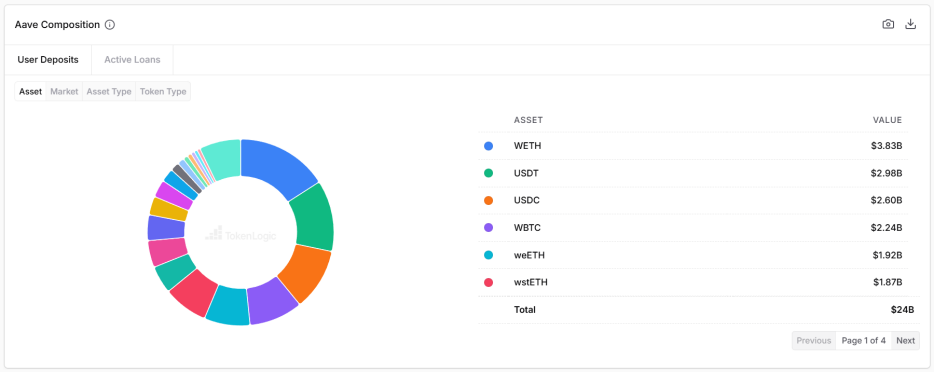
Sự tách rời có hệ thống giữa lãi suất tiền gửi và lãi suất cho vay là khuyết điểm tự nhiên của mô hình ngang hàng qua pool. Để đảm bảo người gửi tiền có thể rút lại bất cứ lúc nào mà không bị tổn thất, Aave phải duy trì một vùng đệm thanh khoản nhàn rỗi khổng lồ trong pool vốn. Điều này dẫn đến việc lãi suất mà người gửi tiền nhận được thường thấp hơn 25% đến 35% so với lãi suất mà người vay phải trả. Khoảng chênh lệch ở giữa chính là chi phí cơ hội của vốn nhàn rỗi. Ngay cả khi tầng quản trị DAO điều chỉnh hệ số dự trữ về 0, tổn thất vô hình do vốn nhàn rỗi vẫn sẽ lên tới 36 triệu USD.

Sự cố KelpDAO hồi tháng 4 càng làm lộ rõ sự mong manh của mô hình này. Sau khi hacker rút gần 200 triệu USD WETH, tỷ lệ sử dụng pool vốn WETH bị khóa ở mức 100% trong suốt 5 ngày, người dùng gửi tiền thông thường không thể rút tiền, cũng không thể tham gia thanh lý, để lại vết sẹo cho Aave đến nay vẫn chưa lành hẳn.

Loại khiếm khuyết cấu trúc này khiến Aave dễ bị lây nhiễm "rủi ro thượng nguồn", cộng với điểm yếu bẩm sinh về hiệu quả vốn thấp, cũng tạo cơ hội cho những người đến sau đột phá. Các giao thức cho vay mới nổi như Morpho, tập trung vào cách ly mô-đun, kết hợp ngang hàng chính xác, thiết kế cơ bản tối giản, đang từ phía hiệu quả ăn mòn thị phần của Aave, trở thành đối thủ cạnh tranh mạnh mẽ nhất dưới ngai vàng của nó.

Nhìn lại từ điểm giữa năm 2026, Aave đang đứng ở ngã rẽ giữa tưởng tượng và thực tế.

Chiếc 'bánh vẽ' '3.500 USD' của Standard Chartered phản ánh tham vọng của tài chính truyền thống đối với việc đưa tài sản lên chuỗi. So với sự tăng trưởng của con số TVL, trọng tâm tương lai của Aave sẽ là tìm ra một con đường khả thi để hỗ trợ quy mô tài sản nghìn tỷ USD.

Ngai vàng cho vay DeFi vẫn còn đó, nhưng nền móng bên dưới ngai vàng, vẫn cần trải qua một cuộc tái cấu trúc hoặc gia cố.


Criptomoedas em alta

Perguntas relacionadas

QNgân hàng Standard Chartered đưa ra dự báo giá nào cho AAVE vào năm 2030 và dựa trên các giả định cốt lõi nào?

ANgân hàng Standard Chartered dự báo AAVE có thể tăng 50 lần, đạt mức 3,500 USD vào cuối năm 2030. Dự báo này dựa trên hai giả định chính: (1) Tổng giá trị tài sản được khóa (TVL) trong DeFi sẽ tăng 37 lần lên khoảng 2.7 nghìn tỷ USD, được thúc đẩy bởi sự mở rộng của stablecoin và làn sóng tài sản thế giới thực (RWA) lên chuỗi. (2) Tỷ lệ thâm nhập của RWA trong DeFi sẽ tăng từ 3.5% lên 30%.

QTheo Grayscale, điều gì làm cho AAVE trở thành một tài sản hấp dẫn và tại sao họ cho rằng nó đang bị định giá thấp?

AGrayscale cho rằng AAVE là một tài sản điển hình được thúc đẩy bởi dòng tiền (cash flow-driven asset). Báo cáo của họ chỉ ra rằng AAVE có dòng tiền mạnh mẽ với doanh thu giao thức năm 2025 đạt 142 triệu USD. Hơn nữa, các cơ chế như kế hoạch mua lại và đốt token (bắt đầu từ tháng 4 năm ngoái) và đề xuất 'Aave Will Win' (chuyển lợi nhuận sản phẩm cho người nắm giữ token) đã tạo ra một con đường rõ ràng từ 'việc tạo ra doanh thu của giao thức đến việc gia tăng giá trị token'. Dựa trên các mô hình định giá truyền thống như DCF và P/E, họ kết luận giá hiện tại của AAVE đang ở trong vùng định giá thấp.

QAave đã thể hiện sức mạnh về khả năng sinh lời như thế nào so với các đối thủ trong cùng lĩnh vực cho vay DeFi?

ATheo phân tích từ MSB Intel, Aave thể hiện khả năng sinh lời vượt trội. Tính từ đầu năm đến nay, Aave đã tạo ra khoảng 43.3 triệu USD 'lợi nhuận giữ lại giao thức' (Protocol Earnings), chiếm tới 80.7% tổng lợi nhuận của toàn bộ phân khúc cho vay DeFi. Điều đáng chú ý là Aave đạt được điều này trong khi chỉ chiếm khoảng một nửa tổng TVL của phân khúc, cho thấy hiệu quả và vị thế gần như độc quyền trong việc tạo ra lợi nhuận ròng.

QMô hình cho vay 'ngang hàng qua nhóm' (Peer-to-Pool) của Aave tồn tại những hạn chế cố hữu nào, và chúng gây ra vấn đề gì?

AMô hình 'ngang hàng qua nhóm' của Aave có một số hạn chế cố hữu chính: (1) Tổn thất vô hình do vốn nhàn rỗi (Deadweight Loss): Để đảm bảo người gửi tiền có thể rút tiền bất cứ lúc nào, giao thức phải duy trì một bộ đệm thanh khoản nhàn rỗi lớn trong nhóm. Điều này dẫn đến lãi suất cho người gửi tiền thường thấp hơn 25-35% so với lãi suất người đi vay phải trả, gây ra tổn thất cơ hội ước tính lên tới 52 triệu USD/năm chỉ với ba thị trường chính. (2) Rủi ro lây nhiễm và kém hiệu quả vốn: Sự cố với KelpDAO vào tháng 4 đã cho thấy sự dễ tổn thương của mô hình này, khi một vụ tấn công có thể làm tắc nghẽn toàn bộ nhóm thanh khoản, ngăn người dùng rút tiền. Cấu trúc này cũng kém hiệu quả về vốn, tạo cơ hội cho các đối thủ cạnh tranh mới (như Morpho) với các mô hình hiệu quả hơn.

QPhiên bản Aave V4 mang lại sự đổi mới quan trọng nào và nó đã đạt được những kết quả ban đầu ra sao?

AAave V4 là bản nâng cấp kiến trúc cốt lõi lớn nhất kể từ năm 2020, với thiết kế đột phá 'Trung tâm thanh khoản & Nhánh' (Liquidity Hub-and-Spoke). Thiết kế này phá vỡ hiệu ứng 'ốc đảo' thanh khoản đơn chuỗi trước đây, cho phép quản lý thanh khoản linh hoạt và hiệu quả hơn trên nhiều chuỗi. Về kết quả ban đầu, tính đến thời điểm bài báo, tổng số tiền gửi vào V4 đã vượt 200 triệu USD, với quy mô cho vay đạt gần 60 triệu USD, cho thấy sự tiếp nhận tích cực từ cộng đồng.

Leituras Relacionadas

In the AI Era, What's Left for Bitcoin?

As Bitcoin falls below $60,000, the author reflects on the relationship between AI and Bitcoin, seeing them as two sides of the same coin. In the AI era, the cost of generating content has plummeted, making fake text, images, and videos increasingly easy and cheap to produce. This has led to a fundamental shift: while AI dramatically lowers the cost of information production, it also undermines trust and authenticity online. What becomes truly valuable is not more content, but the ability to verify what is real—"verifiability." This perspective offers a new lens for Bitcoin. Its massive energy consumption, often criticized as wasteful, is reinterpreted. While AI burns energy to enhance "capability" and efficiency, Bitcoin burns energy to produce "verifiability." Its purpose is not to be trusted but to enable a system where no trust in intermediaries—banks, platforms, or developers—is needed. Every transaction and the entire ledger's history is secured by cryptography and a decentralized network of nodes, making it independently verifiable. AI cannot forge a transaction on the Bitcoin network because the system is designed for proof, not generation. The author draws a historical parallel to the Renaissance: the printing press drastically reduced the cost of copying knowledge, while double-entry bookkeeping reduced the cost of trust in commerce. Today, AI is the new printing press, reducing content creation costs to near zero. Blockchain, and Bitcoin as its pioneer, may be the modern equivalent of double-entry bookkeeping—a foundational technology for verifying digital asset ownership and historical records without centralized authorities. Thus, AI and blockchain are not competitors. AI lowers the cost of creation; blockchain lowers the cost of verification. In an age where AI can generate anything, true scarcity may lie not in more content, but in independently verifiable facts. Whether the market will reprice Bitcoin accordingly remains uncertain, but its core value proposition as a "machine for producing verifiability" becomes strikingly relevant.

marsbitHá 19m

In the AI Era, What's Left for Bitcoin?

marsbitHá 19m

In the Age of AI, What's Left for Bitcoin?

Author: Sevclub, Seven Research Amid Bitcoin's recent drop below $60k, the author reflects on a growing sense that AI and Bitcoin are two sides of the same coin. Today, encountering any content triggers a new default question: "Was this made by AI?" The cost of generating convincing text, images, and video is now negligible. While the internet lowered information *distribution* costs, AI is crashing information *production* costs to near zero. The consequence is a flood of content where truth and falsehood are increasingly indistinguishable. In this environment, what becomes truly valuable is not more information, but the ability to verify what is real—"verifiability." This reframes the common criticism that Bitcoin "wastes electricity." AI consumes power to produce "capability" (e.g., more powerful models). Bitcoin consumes power to produce something else: "verifiability." Bitcoin's core purpose isn't about belief or trust in any institution, developer, or even its creator. It's about enabling independent verification. Every bitcoin's origin, every transaction, and the integrity of the entire ledger are secured by mathematics, cryptography, and a global network of nodes. AI can fabricate convincing media, but it cannot falsify a transaction on the Bitcoin network. The expended energy makes篡改历史 (tampering with history) prohibitively expensive, purchasing a globally verifiable ledger. The author draws a historical parallel to the Renaissance. The printing press drastically reduced the cost of copying knowledge, while double-entry bookkeeping reduced the cost of trust in commerce—one enabled creation, the other verification. Today, AI is the new printing press, driving content production costs toward zero. The question becomes: what is this era's "double-entry bookkeeping"? Blockchain appears to be the leading candidate. It doesn't verify which news is true or which image is real, but it provides a foundational layer for independently verifying asset ownership and historical records in the digital realm without centralized authorities. Therefore, AI and blockchain are not in competition. AI lowers the cost of *generation*. Blockchain (and Bitcoin as a prime example) lowers the cost of *verification*. One creates, the other proves. Whether Bitcoin ultimately succeeds remains uncertain, facing potential challenges from quantum computing, regulation, and technical evolution. However, the author now sees it less as a "machine for making bitcoin" and more as a "machine for making verifiability." In an age where AI can generate anything, true scarcity may no longer be "more content," but "more independently verifiable facts." Whether the market will price this accordingly is a separate question.

链捕手Há 27m

In the Age of AI, What's Left for Bitcoin?

链捕手Há 27m

Trading

Spot

Artigos em Destaque

O que é $BANK

Bank AI: Um Passo Revolucionário no Futuro da Banca Introdução Em uma era marcada por avanços rápidos na tecnologia, o Bank AI está na interseção da inteligência artificial (IA) e dos serviços bancários. Este projeto inovador visa redefinir o panorama financeiro, melhorando a eficiência operacional, as medidas de segurança e as experiências dos clientes através do poder da IA. Ao embarcarmos nesta exploração do Bank AI, iremos aprofundar no que o projeto implica, suas dinâmicas operacionais, seu contexto histórico e marcos significativos. O que é o Bank AI? No seu cerne, o Bank AI representa uma iniciativa transformadora com o objetivo de integrar a inteligência artificial em várias operações bancárias. Este projeto aproveita as capacidades da IA para automatizar processos, melhorar os protocolos de gestão de risco e melhorar a interação com os clientes através de serviços personalizados. Os principais objetivos do Bank AI incluem: Automatização das Funções Bancárias: Ao aproveitar as tecnologias de IA, o Bank AI visa automatizar tarefas rotineiras, reduzindo o peso sobre os recursos humanos e aumentando a eficiência. Gestão de Risco Melhorada: O projeto utiliza algoritmos de IA para prever e identificar riscos, fortalecendo assim as medidas de segurança contra fraudes e outras ameaças. Personalização dos Serviços Bancários: O Bank AI foca em oferecer produtos e serviços financeiros ajustados, analisando dados e comportamentos dos clientes. Melhoria da Experiência do Cliente: A implementação de soluções impulsionadas por IA, como chatbots e assistentes virtuais, visa proporcionar aos usuários interações mais humanizadas, revolucionando a forma como os clientes se envolvem com os bancos. Com esses objetivos, o Bank AI posiciona-se como um ator crucial para tornar a banca mais eficiente, segura e centrada no usuário. Quem é o Criador do Bank AI? Os detalhes sobre o criador do Bank AI permanecem desconhecidos. Assim, nenhuma pessoa ou organização específica foi identificada nas informações disponíveis. O anonimato que cerca a origem do projeto levanta questões, mas não diminui a sua ambiciosa visão e objetivos. Quem são os Investidores do Bank AI? Semelhante ao criador do projeto, informações específicas sobre os investidores ou organizações que apoiam o Bank AI não foram divulgadas. Sem essas informações, é difícil delinear o apoio financeiro e institucional que pode estar impulsionando o projeto para frente. No entanto, a importância de ter uma sólida base de investimento é fundamental para sustentar o desenvolvimento em um campo tão inovador. Como Funciona o Bank AI? O Bank AI opera em várias frentes inovadoras, focando em fatores únicos que o diferenciam das estruturas bancárias tradicionais. Abaixo estão as principais características operacionais: Automatização: Ao aplicar algoritmos de aprendizado de máquina, o Bank AI automatiza vários processos manuais dentro dos bancos. Isso resulta na redução dos custos operacionais e permite que os trabalhadores humanos redirecionem os seus esforços para atividades mais estratégicas. Gestão de Risco Avançada: A integração da IA nas práticas de gestão de risco equipa os bancos com ferramentas para prever com precisão potenciais ameaças, como fraudes, garantindo que as informações e ativos dos clientes permaneçam seguros. Recomendações Financeiras Personalizadas: Através do aprendizado contínuo a partir das interações com os clientes, os sistemas de IA desenvolvem uma compreensão sutil das necessidades dos usuários, permitindo oferecer conselhos adaptados sobre decisões financeiras. Interações Melhoradas com os Clientes: Utilizando chatbots e assistentes virtuais alimentados por IA, o Bank AI permite uma experiência de cliente mais envolvente, permitindo que os usuários tenham suas dúvidas resolvidas rapidamente, reduzindo assim os tempos de espera e melhorando os níveis de satisfação. Juntas, estas características operacionais posicionam o Bank AI como um pioneiro no setor bancário, estabelecendo novos padrões para a prestação de serviços e a excelência operacional. Cronologia do Bank AI Compreender a trajetória do Bank AI requer uma análise do seu contexto histórico. Abaixo está uma cronologia que destaca marcos e desenvolvimentos importantes: Início de 2010: A conceituação da integração da IA nos serviços bancários começou a ganhar atenção à medida que instituições bancárias reconheciam os potenciais benefícios. 2018: Ocorreu um aumento significativo na implementação de tecnologias de IA, quando os bancos começaram a usar ferramentas de IA como chatbots para atendimento ao cliente básico e sistemas de gestão de risco para melhorar o tratamento de segurança. 2023: A sofisticação da IA continuou a avançar, com a introdução de IA generativa para tarefas mais complexas, como processamento de documentos e análise de investimentos em tempo real. Este ano marcou um salto significativo nas capacidades proporcionadas aos bancos pela tecnologia de IA. 2024-Estado Atual: Neste ano, o Bank AI está em uma trajetória ascendente, com pesquisas e desenvolvimentos em andamento prontos para aprimorar ainda mais as capacidades nas operações bancárias. A exploração contínua das aplicações de IA sugere desenvolvimentos emocionantes por vir. Pontos Chave Sobre o Bank AI Integração da IA na Banca: O Bank AI foca na adoção da inteligência artificial para simplificar os processos bancários e melhorar as experiências dos usuários. Automatização e Foco em Gestão de Risco: O projeto enfatiza fortemente essas áreas, visando transferir o peso das tarefas rotineiras enquanto melhora as estruturas de segurança através de análises preditivas. Soluções Bancárias Personalizadas: Ao aproveitar os dados dos clientes, o Bank AI possibilita serviços bancários ajustados que atendem às necessidades individuais dos usuários. Compromisso com o Desenvolvimento: O Bank AI permanece comprometido com contínuas pesquisas e esforços de desenvolvimento, garantindo a sua adaptabilidade e relevância contínua à medida que a tecnologia continua a evoluir. Conclusão Em resumo, o Bank AI exemplifica um passo crucial em frente na indústria bancária, aproveitando a inteligência artificial para remodelar paradigmas operacionais, melhorar a segurança e promover a satisfação do cliente. Apesar das lacunas de informação em torno do criador e dos investidores, os objetivos claros e os mecanismos funcionais do Bank AI fornecem uma base sólida para sua evolução contínua. À medida que a tecnologia de IA continua a avançar e se fundir com o setor bancário, o Bank AI está bem posicionado para impactar significativamente o futuro dos serviços financeiros, aprimorando a maneira como entendemos e interagimos com a banca.

63 Visualizações TotaisPublicado em {updateTime}Atualizado em 2024.12.03

O que é $BANK

Como comprar BANK

Bem-vindo à HTX.com!Tornámos a compra de Lorenzo Protocol (BANK) simples e conveniente.Segue o nosso guia passo a passo para iniciar a tua jornada no mundo das criptos.Passo 1: cria a tua conta HTXUtiliza o teu e-mail ou número de telefone para te inscreveres numa conta gratuita na HTX.Desfruta de um processo de inscrição sem complicações e desbloqueia todas as funcionalidades.Obter a minha contaPasso 2: vai para Comprar Cripto e escolhe o teu método de pagamentoCartão de crédito/débito: usa o teu visa ou mastercard para comprar Lorenzo Protocol (BANK) instantaneamente.Saldo: usa os fundos da tua conta HTX para transacionar sem problemas.Terceiros: adicionamos métodos de pagamento populares, como Google Pay e Apple Pay, para aumentar a conveniência.P2P: transaciona diretamente com outros utilizadores na HTX.Mercado de balcão (OTC): oferecemos serviços personalizados e taxas de câmbio competitivas para os traders.Passo 3: armazena teu Lorenzo Protocol (BANK)Depois de comprar o teu Lorenzo Protocol (BANK), armazena-o na tua conta HTX.Alternativamente, podes enviá-lo para outro lugar através de transferência blockchain ou usá-lo para transacionar outras criptomoedas.Passo 4: transaciona Lorenzo Protocol (BANK)Transaciona facilmente Lorenzo Protocol (BANK) no mercado à vista da HTX.Acede simplesmente à tua conta, seleciona o teu par de trading, executa as tuas transações e monitoriza em tempo real.Oferecemos uma experiência de fácil utilização tanto para principiantes como para traders experientes.

409 Visualizações TotaisPublicado em {updateTime}Atualizado em 2026.06.02

Como comprar BANK

Discussões

Bem-vindo à Comunidade HTX. Aqui, pode manter-se informado sobre os mais recentes desenvolvimentos da plataforma e obter acesso a análises profissionais de mercado. As opiniões dos utilizadores sobre o preço de BANK (BANK) são apresentadas abaixo.

活动图片