In-Depth Report on Web3 in Kyrgyzstan: The Rise of Central Asia as a Strategic Web3 Hub

HTX LearnPublicado em 2026-05-07Última atualização em 2026-05-07

Resumo

On April 18, 2026, Kyrgyz President Sadyr Japarov held an official meeting with Justin Sun, Founder of TRON and Global Advisor to HTX, in the capital city of Bishkek. The two sides engaged in a strategic dialogue centered on the localized deployment of TRON’s infrastructure in Kyrgyzstan, the ecosystem expansion of the national stablecoin KGST, and the deep integration of AI and blockchain technologies. This marks another major step forward in Kyrgyzstan’s international Web3 cooperation—following the 2025 appointment of Binance founder Changpeng Zhao (CZ) as National Strategic Advisor for Blockchain and Web3. Kyrgyzstan’s overarching strategic goal is to position itself as the regional hub for virtual assets and Web3 technologies in Central Asia. As early as 2022, the country became the first in Central Asia to establish a comprehensive legal framework for virtual assets; in 2025, it passed amendments to its Virtual Assets Law, building a systematic regulatory architecture covering stablecoin oversight, tokenization of real-world assets (RWA), a national crypto reserve, and a regulatory sandbox. According to Chainalysis data, Kyrgyzstan ranks 19th globally in cryptocurrency adoption, leading the Central Asian region. For the Web3 industry, Kyrgyzstan is not merely a new market but also a strategic foothold for its expansion across Central Asia and its integration into the digital economy corridor under the Belt and Road Initiative. Proposals—including joint sovereign AI R&D, ...

I. Introduction to Kyrgyzstan

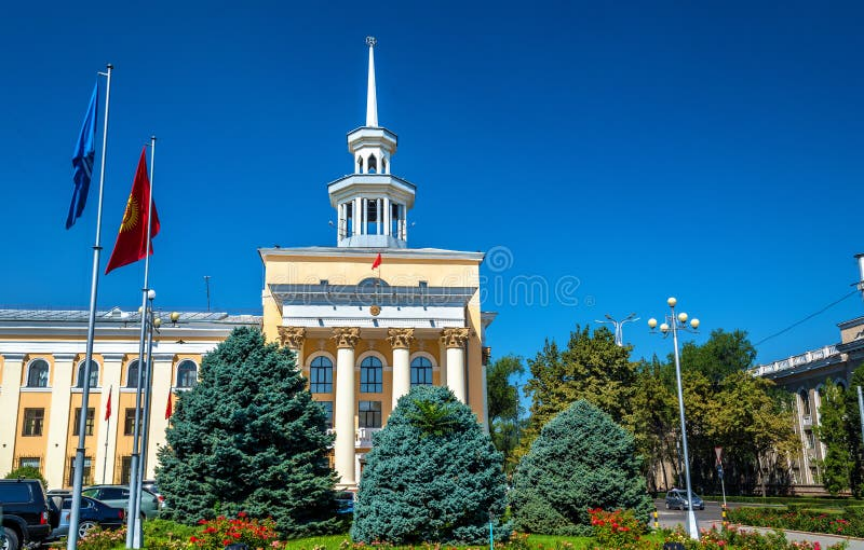
Kyrgyzstan, officially the Kyrgyz Republic (Кыргыз Республикасы / Kyrgyz Republic), is a landlocked country located in eastern Central Asia. It borders China’s Xinjiang Uyghur Autonomous Region to the east, Tajikistan to the south, Uzbekistan to the west, and Kazakhstan to the north. With a total area of approximately 199,900 square kilometers, it ranks fourth among the five Central Asian states by landmass. Its capital, Bishkek, is the nation’s largest city and serves as its political, economic, and cultural center, with a population of about 1.07 million.

According to the latest statistics, Kyrgyzstan’s total population stands at roughly 7 million, with an urbanization rate of approximately 37%. Its age structure is significantly skewed toward younger cohorts: less than 5% of the population is aged 65 or older, while over 70% falls within the youth and working-age demographics. This demographic profile implies a large potential consumer base for digital services and a natural audience foundation for cryptocurrency and blockchain adoption.
In terms of internet infrastructure, Kyrgyzstan’s internet penetration rate stands between 75% and 80%, while mobile phone penetration exceeds 130%. Mobile internet users constitute the vast majority of all internet users. Since the 2020s, the country has consistently advanced its digital infrastructure development: 4G networks cover major urban areas, and Bishkek along with several secondary cities enjoy relatively stable broadband and mobile data services. However, network coverage remains limited across rural and mountainous regions, constraining the speed of Web3 service penetration into lower-tier markets.

Historically, Kyrgyzstan shares deep-rooted ties with China in border trade, energy cooperation, and people-to-people exchanges. China is one of Kyrgyzstan’s largest trading partners, and numerous infrastructure cooperation projects have been implemented under the Belt and Road Initiative framework. This historical background provides cultural affinity and commercial trust for Chinese-origin Web3 enterprises such as TRON to operate in Kyrgyzstan. Justin Sun’s visit thus extends beyond business collaboration, it also embodies a broader strategic intent to deepen digital economic interconnectivity between the two nations.

Regarding local acceptance of cryptocurrency and Web3, Chainalysis’ Global Cryptocurrency Adoption Index ranks Kyrgyzstan 19th globally and places it at the top among Central Asian countries, indicating that public awareness of and participation in crypto assets already surpasses that of most economies of comparable size. This high adoption rate stems from both strong domestic demand for cross-border remittances and asset preservation, and from high receptivity among younger demographics toward digital assets. Additionally, long-standing Russian economic and cultural influence has cultivated broad openness and exploratory willingness toward emerging financial instruments, including cryptocurrencies.

All things considered, Kyrgyzstan is a relatively small yet digitally open Central Asian nation. Its youthful demographic structure, continuously improving internet infrastructure, deep historical ties with China, and leading global ranking in crypto adoption collectively form the societal and economic bedrock supporting its Web3 strategy.

II. Kyrgyzstan’s Web3 Strategy

Kyrgyzstan’s Web3 strategy is fundamentally a national pathway for a landlocked small economy to leapfrog ahead economically through digital finance. Its core concept comprises three progressive layers: First, legalization and regulation of virtual assets—establishing a legal framework for crypto trading, issuance, and services via legislation; second, industrial application of blockchain technology—including mining, data centers, and cross-border payments—under state-led initiatives; third, systematic construction of digital financial infrastructure, encompassing national stablecoins, central bank digital currencies (CBDCs), and a national crypto reserve.
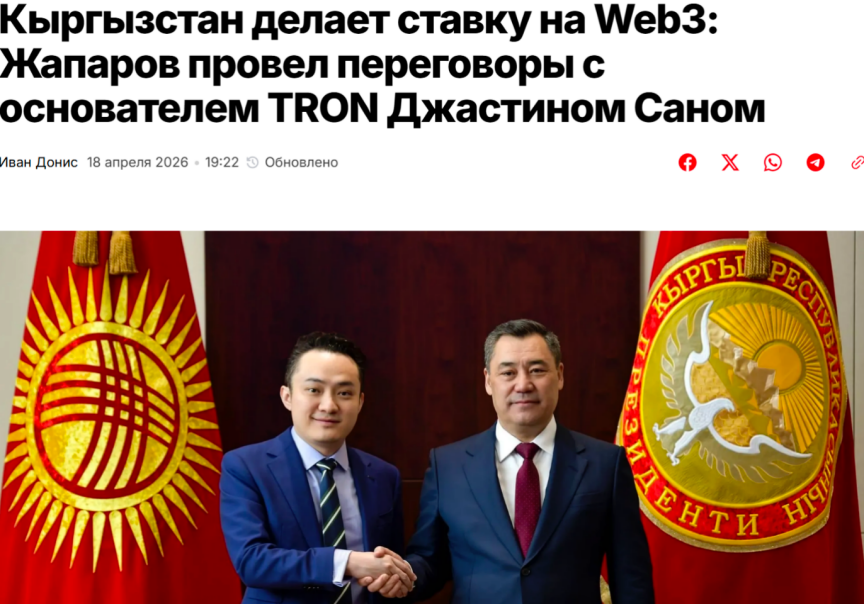
In terms of developmental evolution, Kyrgyzstan’s Web3 journey can be divided into three critical milestones. The first phase—the 2022 Legislative Pioneer Era—saw Kyrgyzstan become the first Central Asian country to introduce a comprehensive legal framework for virtual assets, delivering legal clarity to market participants and attracting mining capital from China, Russia, and elsewhere. The second phase—the 2025 Regulatory Systematization Era—witnessed parliamentary approval of comprehensive digital asset legislation, including key revisions to the Virtual Assets Law, introducing mechanisms such as stablecoin regulation, RWA tokenization, state-run mining, and a regulatory sandbox, which marks a policy shift from “free exploration” to “orderly regulation”. The third phase—the 2026 International Collaboration Era—began with CZ’s appointment as National Strategic Advisor for Blockchain and Web3 in April 2025 and continued with the introduction of Justin Sun and TRON in April 2026, signaling Kyrgyzstan’s entry into an acceleration phase powered by top-tier corporate partnerships.

The internal drivers behind this evolutionary logic are multifaceted. Abundant hydropower resources and low electricity costs provide a natural foundation for mining and data centers; its geographic centrality in Central Asia grants strategic access to the entire regional market; and the government’s strong openness and efficient policy execution provide institutional assurance. Kyrgyzstan is crafting a compelling case study in digital financial transformation—one that far exceeds its economic scale in strategic ambition.

III. Market Structure and Competition Landscape

From a Central Asian and broader Eurasian perspective, Kyrgyzstan’s Web3 market is characterized by a structure of “single dominant leader with multiple players competing". Here, “single dominant leader” does not refer to domestic market size, but rather to the country’s distinctive strategic path centered on high-level international partnerships that grant it first-mover advantages in regional competition.

In terms of legislative frameworks, the 2025 amendment to the Virtual Assets Law established a comprehensive and granular regulatory architecture. Regulatory authorities have been assigned 15 core functions spanning policy implementation, standard-setting, market entry, international cooperation, and enforcement oversight—all coordinated under the State Commission for Virtual Assets and Blockchain Technology Development, which reports directly to the President. The number of licensed virtual asset service providers continues to rise, and regulatory infrastructure projects are gradually emerging, steadily enhancing market maturity.

Regarding the mining ecosystem, statistical data for the first seven months of 2025 shows cryptocurrency exchange turnover reaching 1 trillion som (approximately USD 115 million), with industry tax revenue totaling around 1 billion som (approximately USD 11.5 million). Nationally, there are currently 169 cryptocurrency exchange operators, 13 digital asset exchanges, and 11 registered industrial cryptocurrency mining companies. New regulations (effective since January 2026) require all operational crypto exchanges to demonstrate a minimum capital of at least 1 billion som (approximately USD 115,000), a threshold expected to screen and regulate market participants over the medium to long term.

In terms of competitive positioning, neighboring Kazakhstan began embracing cryptocurrency mining as early as the early 2020s; Uzbekistan granted direct regulatory authority over digital assets via presidential decree; and Tajikistan has recently intensified research into blockchain applications. Kyrgyzstan’s key differentiation lies in the high-end nature of its international collaborations—from CZ to Justin Sun—the country engages directly with the world’s most elite Web3 resources and talent, bypassing generic international consulting firms. In the stablecoin domain, Kyrgyzstan is advancing not only KGST but also exploring gold-backed stablecoins and is promising to become one of the first countries globally to issue a sovereign stablecoin backed by physical gold.

IV. Core Risk Analysis

Although Kyrgyzstan’s Web3 strategy demonstrates robust momentum, investors and participants must remain clear-eyed about multiple risks confronting this initiative.

The primary risk is the structural tension between energy use and civilian livelihoods. The high energy consumption characteristic of mining operations creates visible pressure on residential electricity supply. Representatives from Bishkek have warned that large-scale cryptocurrency mining could disrupt household power delivery. Parliamentary data indicates that mining one bitcoin consumes approximately 800,000 kWh of electricity—enough to power roughly 1,200 apartments for one month. Winter peak electricity demand poses particular concern. As state-led national mining initiatives advance, fairness in energy allocation will remain a persistent source of social controversy and may challenge the sustainability of related policies.

The second risk is compliance cost pressure arising from overly rapid regulatory advancement. Starting in 2026, the 1-billion-som capital requirement, mandatory licensing regime, and national crypto reserve mechanism impose significant barriers to entry for small- and medium-sized startups. If regulatory frameworks evolve too quickly, they may stifle the healthy development of the domestic innovation ecosystem and result in market concentration where “large enterprises dominate, small players exit”, ultimately undermining diversified industry competition.

The third risk is uncertainty surrounding international partnerships. While the “dual-advisor” structure—featuring both CZ and Justin Sun—brings top-tier resources, it also means Kyrgyzstan’s Web3 strategy is partially contingent upon individual commercial interests and diplomatic relationships. Should the global crypto market experience major volatility or if associated enterprises face new regulatory pressures, the stability of these partnerships carries inherent uncertainty. Kyrgyzstan must strike a dynamic balance between leveraging external resources and preserving strategic autonomy.

The fourth risk is bottlenecks in human capital and technological infrastructure. As a landlocked country with a population of roughly 7 million and a modest economy, Kyrgyzstan still faces structural gaps in blockchain technical talent, internet penetration, and fintech startup ecosystems. Although joint sovereign AI R&D and digital banking services included in TRON proposals are directionally sound, their implementation demands substantial local talent and infrastructure support, making rapid, large-scale rollout unlikely in the short term.

V. Innovation Trends and Sector Opportunities

The most compelling aspect of Kyrgyzstan’s Web3 strategy lies in its systematic integration of multiple frontier trends.

Trend One: Dual-track national digital currency system. Kyrgyzstan is simultaneously piloting both the national stablecoin KGST and the central bank digital currency (CBDC) “Digital Som”. KGST is designed as a compliant, fiat-collateralized stablecoin (1:1 backed by real currency), targeting daily cross-border payments and settlement; “Digital Som” represents the nation’s sovereign CBDC exploration—with an official launch decision expected before year-end 2026. Coordinated advancement of these two instruments could enable Kyrgyzstan to build a complete digital currency infrastructure.

Trend Two: RWA tokenization unlocking digital transformation of the real economy. The 2025 Virtual Assets Law formally recognized the legality of tokenized real-world assets for the first time at the legislative level. Eligible assets include real estate, equipment, raw materials, and financial instruments. Given Kyrgyzstan’s abundant natural resources and comparatively low asset valuations, RWA tokenization could become a powerful tool to attract international capital. Kyrgyzstan may further explore tokenizing strategic assets including energy and mineral resources to open new financing channels.

Trend Three: Innovative practice of a national crypto reserve. Per the amended law, the national crypto reserve will be held by the state and accumulated through mining, issuance, tokenization, and targeted acquisitions, with the primary aim to strengthen national financial stability and support national digital initiatives. This arrangement signifies direct state participation in crypto markets; and the fate of this innovation hinges on transparency and governance quality in reserve management and usage.

Trend Four: A regulatory sandbox providing controlled experimental space for innovation. The President may authorize pilot regulation within designated zones and timeframes, allowing participants to develop innovative services and blockchain technologies under special conditions—without being fully bound by traditional legal constraints. Sandbox participants receive time-bound, non-transferable temporary licenses; business conditions follow current laws, while restrictions may be imposed with respect to duration, jurisdiction, transaction volume, and user scale. This mechanism offers secure testing environments for DeFi protocols, AI+blockchain applications, and other emerging use cases.

At the sector opportunity level, taking public blockchains as an example, TRON’s deployment in Kyrgyzstan positions itself not merely as a blockchain network but as the foundational technical infrastructure provider for the nation’s Web3 strategy. Justin Sun’s proposal for hydropower-driven data centers aligns closely with TRON’s green DePIN vision within its ecosystem; joint sovereign LLM development reflects the broader industry trend of AI+blockchain convergence; and digital banking services offer opportunities to embed TRON’s payment and settlement capabilities into traditional financial contexts. This “infrastructure + application ecosystem” dual-engine model lays the groundwork for TRON’s deep penetration across Central Asia.

From a cooperation mechanism perspective, the digital literacy enhancement program and blockchain technology promotion initiative proposed by Justin Sun represent a long-term ecosystem cultivation strategy. These soft-power collaborations will foster local demand for cryptocurrency and blockchain services over the medium to long term, building a sustainable user base for TRON’s growth. Especially in Central Asia, where youth populations dominate, the market potential for digital literacy education is significant.

It must be emphasized that the above investment logic is based on the current policy environment and partner relationships. This analysis is provided for informational purposes only and does not constitute any investment advice. Cryptocurrency markets are highly volatile; investors should conduct thorough risk assessments aligned with their own risk tolerance before making prudent decisions.

VI. Summary and Outlook

Based on the above analysis, Kyrgyzstan is undergoing a strategic transformation from an energy-dependent economy to a digital financial hub. Within less than two years, the country has completed a full-chain layout from pioneering legislation to appointing two globally preeminent Web3 figures, CZ and Justin Sun as strategic partners, demonstrating efficiency and strategic clarity rarely seen among emerging markets in Central Asia or globally.

From an investment timeline perspective, Kyrgyzstan’s Web3 strategy currently sits at a pivotal juncture of transitioning from the “infrastructure-building phase” to the “ecosystem-deployment phase”. The legislative framework is largely in place, top-tier partners have been onboarded, and the next critical step lies in how to convert paper-based agreements into quantifiable market outcomes. The progress of HTX’s operating license approval, the construction timeline of TRON’s data center, and the actual rollout of the KGST stablecoin will serve as crucial indicators for assessing the effectiveness of this strategy.

From a Central Asian and broader perspective, Kyrgyzstan’s Web3 strategy is redefining “the new financial pathway for small nations”. By proactively integrating elite international resources, constructing a systematic regulatory framework, and exploring innovations such as national digital currencies and national crypto reserves, the country stands poised to carve out differentiated competitiveness in the digital economy era. This Web3 experiment launched in Bishkek will not only shape Kyrgyzstan’s own economic future, but also offer a reference-worthy Asian model for developing countries worldwide seeking digital financial sovereignty. For investors and practitioners tracking the Central Asian Web3 landscape, Kyrgyzstan remains a strategically vital target worthy of sustained attention.

Leituras Relacionadas

Trading

Spot
Futuros

Artigos em Destaque

O que é ETH 2.0

ETH 2.0: Uma Nova Era para o Ethereum Introdução ETH 2.0, amplamente conhecido como Ethereum 2.0, marca uma atualização monumental à blockchain do Ethereum. Esta transição não é meramente uma mudança estética; visa melhorar fundamentalmente a escalabilidade, segurança e sustentabilidade da rede. Com uma mudança do mecanismo de consenso em Proof of Work (PoW), intensivo em energia, para um Proof of Stake (PoS) mais eficiente, o ETH 2.0 promete uma abordagem transformadora ao ecossistema blockchain. O que é ETH 2.0? ETH 2.0 é um conjunto de atualizações distintas e interconectadas focadas na otimização das capacidades e desempenho do Ethereum. Esta reformulação foi projetada para abordar desafios críticos que o mecanismo atual do Ethereum enfrentou, particularmente em relação à velocidade das transações e à congestão da rede. Objetivos do ETH 2.0 Os principais objetivos do ETH 2.0 giram em torno da melhoria de três aspectos centrais: Escalabilidade: Com o objetivo de melhorar significativamente o número de transações que a rede pode manejar por segundo, o ETH 2.0 procura ultrapassar a limitação atual de aproximadamente 15 transações por segundo, alcançando potencialmente milhares. Segurança: Medidas de segurança melhoradas são integrais ao ETH 2.0, especialmente através da resistência aprimorada contra ciberataques e da preservação do ethos descentralizado do Ethereum. Sustentabilidade: O novo mecanismo PoS foi projetado não apenas para melhorar a eficiência, mas também para reduzir drasticamente o consumo de energia, alinhando a estrutura operacional do Ethereum com considerações ambientais. Quem é o Criador do ETH 2.0? A criação do ETH 2.0 pode ser atribuída à Ethereum Foundation. Esta organização sem fins lucrativos, que desempenha um papel crucial no apoio ao desenvolvimento do Ethereum, é liderada pelo co-fundador notável Vitalik Buterin. A sua visão de um Ethereum mais escalável e sustentável tem sido a força motriz por trás desta atualização, envolvendo contribuições de uma comunidade global de desenvolvedores e entusiastas dedicados a melhorar o protocolo. Quem são os Investidores do ETH 2.0? Embora os detalhes sobre os investidores do ETH 2.0 não tenham sido tornados públicos, é sabido que a Ethereum Foundation recebe apoio de várias organizações e indivíduos no espaço da blockchain e tecnologia. Esses parceiros incluem firmas de capital de risco, empresas de tecnologia e organizações filantrópicas que compartilham um interesse mútuo em apoiar o desenvolvimento de tecnologias descentralizadas e infraestrutura de blockchain. Como Funciona o ETH 2.0? ETH 2.0 é notável por introduzir uma série de características chave que o diferenciam do seu predecessor. Proof of Stake (PoS) A transição para um mecanismo de consenso PoS é uma das mudanças de destaque do ETH 2.0. Ao contrário do PoW, que depende da mineração intensiva em energia para a verificação de transações, o PoS permite que os utilizadores validem transações e criem novos blocos de acordo com a quantidade de ETH que apostam na rede. Isso leva a uma maior eficiência energética, reduzindo o consumo em aproximadamente 99,95%, tornando o Ethereum 2.0 uma alternativa consideravelmente mais ecológica. Shard Chains As shard chains são outra inovação crítica do ETH 2.0. Estas cadeias menores operam em paralelo com a cadeia principal do Ethereum, permitindo que várias transações sejam processadas simultaneamente. Esta abordagem melhora a capacidade geral da rede, abordando preocupações de escalabilidade que têm atormentado o Ethereum. Beacon Chain No coração do ETH 2.0 está a Beacon Chain, que coordena a rede e gere o protocolo PoS. Ela atua como uma espécie de organizador: supervisiona os validadores, garante que as shards permaneçam conectadas à rede e monitora a saúde geral do ecossistema blockchain. Linha do Tempo do ETH 2.0 A jornada do ETH 2.0 tem sido marcada por vários marcos chave que traçam a evolução desta atualização significativa: Dezembro de 2020: O lançamento da Beacon Chain marcou a introdução do PoS, preparando o caminho para a migração para o ETH 2.0. Setembro de 2022: A conclusão de “The Merge” representa um momento crucial em que a rede Ethereum fez a transição com sucesso de um quadro PoW para um PoS, anunciando uma nova era para o Ethereum. 2023: O lançamento esperado das shard chains visa melhorar ainda mais a escalabilidade da rede Ethereum, solidificando o ETH 2.0 como uma plataforma robusta para aplicações e serviços descentralizados. Características Chave e Benefícios Escalabilidade Melhorada Uma das vantagens mais significativas do ETH 2.0 é a sua escalabilidade melhorada. A combinação de PoS e shard chains permite que a rede expanda a sua capacidade, permitindo que acomode um volume de transações muito maior em comparação com o sistema legado. Eficiência Energética A implementação do PoS representa um enorme passo em direção à eficiência energética na tecnologia blockchain. Ao reduzir drasticamente o consumo de energia, o ETH 2.0 não só reduz os custos operacionais, mas também se alinha mais estreitamente com os objetivos globais de sustentabilidade. Segurança Aprimorada Os mecanismos atualizados do ETH 2.0 contribuem para uma segurança melhorada em toda a rede. O uso do PoS, juntamente com medidas de controle inovadoras estabelecidas através das shard chains e da Beacon Chain, assegura um maior grau de proteção contra potenciais ameaças. Custos Mais Baixos para os Utilizadores À medida que a escalabilidade melhora, os efeitos sobre os custos de transação também serão evidentes. Aumentada a capacidade e reduzida a congestão, espera-se que isso se traduza em taxas mais baixas para os utilizadores, tornando o Ethereum mais acessível para transações do dia a dia. Conclusão ETH 2.0 marca uma evolução significativa no ecossistema da blockchain do Ethereum. Ao abordar questões fundamentais como a escalabilidade, o consumo de energia, a eficiência das transações e a segurança geral, a importância desta atualização não pode ser subestimada. A transição para o Proof of Stake, a introdução das shard chains e o trabalho fundamental da Beacon Chain são indicativos de um futuro em que o Ethereum pode atender à crescente demanda do mercado descentralizado. Em uma indústria movida pela inovação e progresso, o ETH 2.0 representa um testemunho das capacidades da tecnologia blockchain em pavimentar o caminho para uma economia digital mais sustentável e eficiente.

100 Visualizações TotaisPublicado em {updateTime}Atualizado em 2024.12.03

O que é ETH 2.0

O que é ETH 3.0

ETH3.0 e $eth 3.0: Uma Análise Profunda do Futuro do Ethereum Introdução No ambiente em rápida evolução da criptomoeda e da tecnologia blockchain, o ETH3.0, frequentemente denotado como $eth 3.0, emergiu como um tema de considerável interesse e especulação. O termo abrange dois conceitos principais que merecem esclarecimento: Ethereum 3.0: Esta representa uma potencial atualização futura destinada a aumentar as capacidades da atual blockchain do Ethereum, focando especialmente na melhoria da escalabilidade e desempenho. ETH3.0 Meme Token: Este distinto projeto de criptomoeda procura aproveitar a blockchain do Ethereum na criação de um ecossistema centrado em memes, promovendo o envolvimento na comunidade de criptomoedas. Compreender esses aspectos do ETH3.0 é essencial não apenas para entusiastas de criptomoedas, mas também para aqueles que observam as tendências tecnológicas mais amplas no espaço digital. O que é ETH3.0? Ethereum 3.0 Ethereum 3.0 é promovido como uma atualização proposta para a rede Ethereum já estabelecida, que tem sido a espinha dorsal de muitas aplicações descentralizadas (dApps) e contratos inteligentes desde a sua criação. As melhorias vislumbradas concentram-se principalmente na escalabilidade—integrando tecnologias avançadas como sharding e provas de conhecimento zero (zk-proofs). Essas inovações tecnológicas visam facilitar um número sem precedentes de transações por segundo (TPS), potencialmente alcançando milhões, abordando assim uma das limitações mais significativas enfrentadas pela tecnologia blockchain atual. A melhoria não é meramente técnica, mas também estratégica; visa preparar a rede Ethereum para uma adoção generalizada e utilidade em um futuro marcado por uma maior demanda por soluções descentralizadas. ETH3.0 Meme Token Em contraste com o Ethereum 3.0, o ETH3.0 Meme Token aventura-se por um domínio mais leve e divertido, combinando a cultura dos memes da internet com a dinâmica das criptomoedas. Este projeto permite que os usuários comprem, vendam e negociem memes na blockchain do Ethereum, proporcionando uma plataforma que fomenta o envolvimento da comunidade através da criatividade e interesses compartilhados. O ETH3.0 Meme Token visa demonstrar como a tecnologia blockchain pode interseccionar com a cultura digital, criando casos de uso que são tanto divertidos quanto financeiramente viáveis. Quem é o Criador do ETH3.0? Ethereum 3.0 A iniciativa em direção ao Ethereum 3.0 é impulsionada principalmente por um consórcio de desenvolvedores e pesquisadores dentro da comunidade Ethereum, notavelmente incluindo Justin Drake. Conhecido por suas percepções e contribuições para a evolução do Ethereum, Drake tem sido uma figura proeminente nas discussões sobre a transição do Ethereum para uma nova camada de consenso, referida como “Beam Chain”. Esta abordagem colaborativa ao desenvolvimento significa que o Ethereum 3.0 não é fruto de um único criador, mas sim uma manifestação da engenhosidade coletiva focada no avanço da tecnologia blockchain. ETH3.0 Meme Token Os detalhes sobre o criador do ETH3.0 Meme Token são atualmente indetectáveis. A natureza dos tokens de meme frequentemente leva a uma estrutura mais descentralizada e impulsionada pela comunidade, o que poderia explicar a falta de atribuição específica. Isso alinha-se com a ethos da comunidade de criptomoedas mais ampla, onde a inovação geralmente surge de esforços colaborativos em vez de esforços individuais. Quem são os Investidores do ETH3.0? Ethereum 3.0 O apoio ao Ethereum 3.0 provém principalmente da Fundação Ethereum, juntamente com uma comunidade entusiástica de desenvolvedores e investidores. Esta associação fundacional proporciona um grau significativo de legitimidade e melhora as perspectivas de uma implementação bem-sucedida, uma vez que aproveita a confiança e credibilidade construída ao longo de anos de operações de rede. Em um clima em rápida mudança no mundo das criptomoedas, o apoio da comunidade desempenha um papel crucial no impulso ao desenvolvimento e adoção, posicionando o Ethereum 3.0 como um sério candidato a futuros avanços na blockchain. ETH3.0 Meme Token Embora as fontes atualmente disponíveis não forneçam informações explícitas sobre as fundações ou organizações de investimento que apoiam o ETH3.0 Meme Token, é indicativo do modelo típico de financiamento para tokens de meme, que frequentemente depende de apoio base e engajamento da comunidade. Os investidores em tais projetos costumam consistir em indivíduos motivados pelo potencial de inovação impulsionada pela comunidade e pelo espírito de cooperação encontrado dentro da comunidade cripto. Como Funciona o ETH3.0? Ethereum 3.0 As características distintivas do Ethereum 3.0 residem em sua proposta de implementação de sharding e tecnologia zk-proof. Sharding é um método de partição da blockchain em partes menores e gerenciáveis ou “shards”, que podem processar transações simultaneamente em vez de sequencialmente. Esta descentralização do processamento ajuda a prevenir congestionamentos e garante que a rede permaneça responsiva mesmo sob carga pesada. A tecnologia de prova de conhecimento zero (zk-proof) contribui com outra camada de sofisticação ao permitir a validação de transações sem revelar os dados subjacentes envolvidos. Este aspecto não apenas melhora a privacidade, mas também aumenta a eficiência geral da rede. Há também conversas sobre a incorporação de uma Máquina Virtual Ethereum de conhecimento zero (zkEVM) nesta atualização, amplificando ainda mais as capacidades e utilidade da rede. ETH3.0 Meme Token O ETH3.0 Meme Token distingue-se ao capitalizar sobre a popularidade da cultura dos memes. Estabelece um mercado para que os usuários participem da negociação de memes, não apenas para entretenimento, mas também para potencial ganho econômico. Ao integrar recursos como staking, provisão de liquidez e mecanismos de governança, o projeto fomenta um ambiente que incentiva a interação e participação da comunidade. Ao oferecer uma mistura única de entretenimento e oportunidade econômica, o ETH3.0 Meme Token visa atrair um público diversificado, variando de entusiastas de criptomoedas a conhecedores casuais de memes. Cronologia do ETH3.0 Ethereum 3.0 11 de novembro de 2024: Justin Drake sugere a próxima atualização do ETH 3.0, centrada nas melhorias de escalabilidade. Este anúncio sinaliza o início de discussões formais sobre a futura arquitetura do Ethereum. 12 de novembro de 2024: A proposta antecipada para Ethereum 3.0 deve ser revelada no Devcon em Bangkok, preparando o cenário para um feedback mais amplo da comunidade e potenciais próximos passos no desenvolvimento. ETH3.0 Meme Token 21 de março de 2024: O ETH3.0 Meme Token é oficialmente listado no CoinMarketCap, marcando sua entrada no domínio público das criptomoedas e aumentando a visibilidade de seu ecossistema baseado em memes. Pontos Chave Em conclusão, Ethereum 3.0 representa uma evolução significativa dentro da rede Ethereum, focando em superar limitações quanto à escalabilidade e desempenho através de tecnologias avançadas. As atualizações propostas refletem uma abordagem proativa às futuras demandas e usabilidade. Por outro lado, o ETH3.0 Meme Token encapsula a essência da cultura impulsionada pela comunidade no espaço das criptomoedas, aproveitando a cultura dos memes para criar plataformas envolventes que incentivam a criatividade e participação dos usuários. Compreender os distintos propósitos e funcionalidades do ETH3.0 e $eth 3.0 é fundamental para qualquer pessoa interessada nos desenvolvimentos contínuos dentro do espaço cripto. Com ambas as iniciativas a pavimentar caminhos únicos, elas sublinham coletivamente a natureza dinâmica e multifacetada da inovação em blockchain.

98 Visualizações TotaisPublicado em {updateTime}Atualizado em 2024.12.03

O que é ETH 3.0

Como comprar ETH

Bem-vindo à HTX.com!Tornámos a compra de Ethereum (ETH) simples e conveniente.Segue o nosso guia passo a passo para iniciar a tua jornada no mundo das criptos.Passo 1: cria a tua conta HTXUtiliza o teu e-mail ou número de telefone para te inscreveres numa conta gratuita na HTX.Desfruta de um processo de inscrição sem complicações e desbloqueia todas as funcionalidades.Obter a minha contaPasso 2: vai para Comprar Cripto e escolhe o teu método de pagamentoCartão de crédito/débito: usa o teu visa ou mastercard para comprar Ethereum (ETH) instantaneamente.Saldo: usa os fundos da tua conta HTX para transacionar sem problemas.Terceiros: adicionamos métodos de pagamento populares, como Google Pay e Apple Pay, para aumentar a conveniência.P2P: transaciona diretamente com outros utilizadores na HTX.Mercado de balcão (OTC): oferecemos serviços personalizados e taxas de câmbio competitivas para os traders.Passo 3: armazena teu Ethereum (ETH)Depois de comprar o teu Ethereum (ETH), armazena-o na tua conta HTX.Alternativamente, podes enviá-lo para outro lugar através de transferência blockchain ou usá-lo para transacionar outras criptomoedas.Passo 4: transaciona Ethereum (ETH)Transaciona facilmente Ethereum (ETH) no mercado à vista da HTX.Acede simplesmente à tua conta, seleciona o teu par de trading, executa as tuas transações e monitoriza em tempo real.Oferecemos uma experiência de fácil utilização tanto para principiantes como para traders experientes.

3.0k Visualizações TotaisPublicado em {updateTime}Atualizado em 2025.03.21

Como comprar ETH

Discussões

Bem-vindo à Comunidade HTX. Aqui, pode manter-se informado sobre os mais recentes desenvolvimentos da plataforma e obter acesso a análises profissionais de mercado. As opiniões dos utilizadores sobre o preço de ETH (ETH) são apresentadas abaixo.

活动图片