Crypto Giant Coinbase To Acquire Solana Trading Platform Vector.fun In Latest Move

bitcoinistPublicado em 2025-11-22Última atualização em 2025-11-22

Resumo

Coinbase (COIN), the largest cryptocurrency exchange in the US, is maintaining an aggressive acquisition strategy, recently committing to acquire the...

Trusted Editorial content, reviewed by leading industry experts and seasoned editors. Ad Disclosure

Coinbase (COIN), the largest cryptocurrency exchange in the US, is maintaining an aggressive acquisition strategy, recently committing to acquire the Solana-based trading platform Vector.fun. 

Max Branzburg, Coinbase’s Vice President of Product Management, confirmed to Fortune that the deal is expected to close by the end of the year, although he did not disclose the specific terms of the acquisition.

Coinbase’s Ninth Acquisition Of The Year

Vector.fun operates as a decentralized exchange (DEX) on the Solana blockchain, primarily catering to users trading memecoins. The platform features unique functionalities, allowing users to track and mimic the investments of other traders. 

As part of the acquisition process, Coinbase plans to shut down Vector.fun’s mobile and desktop trading applications while absorbing its team of 13 employees.

By integrating Vector.fun’s technology, the firm reportedly aims to enhance the range of assets available for trading on its own app through decentralized exchanges. 

This initiative is distinct from Coinbase’s core centralized trading operations, as the exchange currently permits users to trade tokens primarily on platforms built atop Base, Coinbase’s proprietary blockchain

Branzburg emphasized that the goal of the Coinbase app is to become an “agnostic platform” that facilitates trading across all asset classes, aligning with the company’s vision to become the “everything exchange.

The acquisition of Vector.fun marks the crypto exchange’s ninth purchase in 2025, a significant uptick compared to the previous year, during which the company made just three acquisitions. 

Record-Breaking M&A Activity

Coinbase is investing considerable sums in these ventures; for instance, it agreed to acquire the crypto derivatives exchange Deribit for $2.9 billion in May and spent $375 million on the initial coin offering platform Echo in October. 

Although Coinbase explored acquiring stablecoin company BVNK for approximately $2 billion, that potential deal was mutually shelved last week.

A Coinbase representative articulated the company’s ongoing commitment to expanding its mission and product offerings, noting that opportunities arise when companies reach a certain level of maturity and technological readiness, making collaboration with Coinbase appealing.

However, Coinbase isn’t alone in its acquisition pursuits; the third quarter of 2025 recorded 96 Merger and Acquisitions (M&A) transactions in the crypto industry, totaling over $10 billion.

In its latest earnings report, the exchange surpassed analysts’ expectations, reporting transaction revenue of $1.05 billion—an impressive increase from the $572.5 million achieved during the same period last year. 

Additionally, the company recently unveiled a new platform called, PRESALE, enabling retail investors to purchase digital tokens before they officially list on the exchange.

Coinbase
The 1-D chart shows COIN’s valuation affected by the overall crypto market performance. Source: COIN on TradingView.com

At the time of writing, the exchange’s stock, trading under the ticker name COIN on the Nasdaq, trades slightly above the $241 line, representing a 3% recovery in the past 24 hours. 

Featured image from Shutterstock, chart from TradingView.com 

Editorial Process for bitcoinist is centered on delivering thoroughly researched, accurate, and unbiased content. We uphold strict sourcing standards, and each page undergoes diligent review by our team of top technology experts and seasoned editors. This process ensures the integrity, relevance, and value of our content for our readers.

Ronaldo is a seasoned crypto enthusiast with over four years of experience in the field. He is passionate about exploring the vast and dynamic world of decentralized finance (DeFi) and its practical applications for achieving economic sovereignty. Ronaldo is constantly seeking to expand his knowledge and expertise in the DeFi space, as he believes it holds tremendous potential for transforming the traditional financial landscape.

Criptomoedas em alta

Leituras Relacionadas

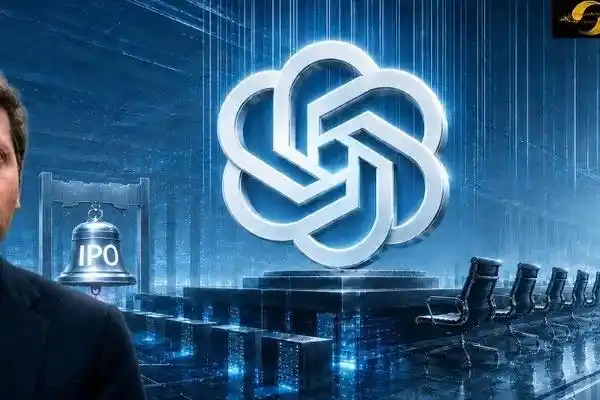
IPO Imminent, OpenAI Faces Major Personnel Upheaval

OpenAI, preparing for a potential IPO, is experiencing significant leadership turmoil. In mid-August 2026, longtime "GPU geek" Scott Gray quietly left, and within three days, Chief Operating Officer Brad Lightcap (8-year veteran) and Chief Revenue Officer Denise Dresser (8-month tenure) departed. This follows a broader exodus of at least 10 senior executives in 2026, including heads of product, safety, and ethics. Analysts view this as a strategic "surgery" to transform from a research lab into a sales-driven enterprise company before going public. Revenue now tilts toward enterprise clients, surpassing consumer income sooner than expected, with annualized revenue reaching $40 billion. The new CRO, Dali Rajic, is a veteran enterprise sales leader. Concurrently, OpenAI has disbanded independent safety teams like "Preparedness," which assessed catastrophic risks, integrating their functions into core research. Critics warn this removes dedicated "brakes" on AI development. The leadership vacuum raises questions about who is the clear second-in-command after former apps CEO Fidji Simo moved to an advisory role. Co-founder Greg Brockman appears to be consolidating power. As OpenAI races against rival Anthropic ($47B annualized revenue), it faces the dual challenge of commercial execution while managing the departure of foundational technical talent and ensuring responsible AI development remains a priority.

marsbitHá 1h

IPO Imminent, OpenAI Faces Major Personnel Upheaval

marsbitHá 1h

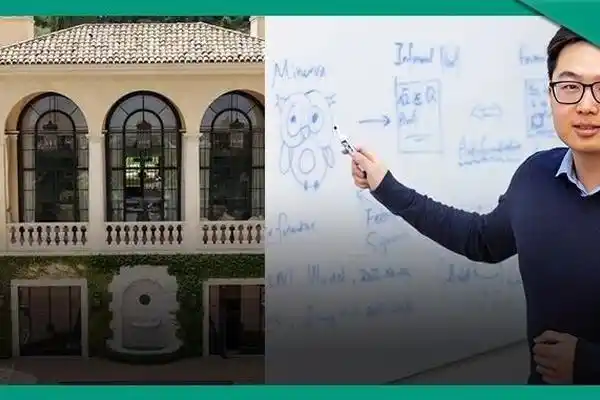
AI Can 'Have Moods Too'! New Research from USTC: Confusion and Anxiety Make AI Work Better

The article discusses research from the University of Science and Technology of China and Oxford, revealing that allowing AI to recognize and act upon simulated "internal emotions" can significantly improve its performance. The study demonstrates a coherent pairing between specific emotional states in AI agents and their subsequent skill choices. For instance, an agent feeling curious and desirous will search for products, while one feeling confused and tense will rephrase queries. This mirrors human decision-making influenced by emotions. Statistical validation showed a 76.5% semantic consistency in these pairings. Crucially, the research challenges the traditional view of AI errors as flaws to be eliminated. It found that "bad" emotions like confusion, tension, or frustration serve as useful metacognitive signals, indicating a mismatch between the current strategy and the environment. By responding to these signals, AI can proactively adjust before a failure occurs. This is particularly effective in complex tasks prone to failure. For example, in tasks like "heating an item" and "picking up two items," success rates surged from 9.6% to 56.9% and 4.4% to 31.3%, respectively, when using the emotion-driven skill selection method (EMOTION2SKILL). The AI's "nervous" state about a closed microwave, for instance, prompted it to check and open it first, preventing failure. The article also mentions related work from Tianjin University, which embeds emotional prediction into world models (Large Emotional World Model, LEWM), significantly improving prediction accuracy in human-centric environments. Removing emotional data was found to degrade performance even in unrelated logical reasoning tasks. These studies build on earlier findings, like those from Anthropic, that identifiable emotional representations exist within large language models (LLMs). The focus is shifting from philosophical debate about AI emotion to practically harnessing these internal states as functional signals to enhance AI robustness and capability.

marsbitHá 1h

AI Can 'Have Moods Too'! New Research from USTC: Confusion and Anxiety Make AI Work Better

marsbitHá 1h

Trading

Spot

Artigos em Destaque

Como comprar FUN

Bem-vindo à HTX.com!Tornámos a compra de FUNTOKEN (FUN) simples e conveniente.Segue o nosso guia passo a passo para iniciar a tua jornada no mundo das criptos.Passo 1: cria a tua conta HTXUtiliza o teu e-mail ou número de telefone para te inscreveres numa conta gratuita na HTX.Desfruta de um processo de inscrição sem complicações e desbloqueia todas as funcionalidades.Obter a minha contaPasso 2: vai para Comprar Cripto e escolhe o teu método de pagamentoCartão de crédito/débito: usa o teu visa ou mastercard para comprar FUNTOKEN (FUN) instantaneamente.Saldo: usa os fundos da tua conta HTX para transacionar sem problemas.Terceiros: adicionamos métodos de pagamento populares, como Google Pay e Apple Pay, para aumentar a conveniência.P2P: transaciona diretamente com outros utilizadores na HTX.Mercado de balcão (OTC): oferecemos serviços personalizados e taxas de câmbio competitivas para os traders.Passo 3: armazena teu FUNTOKEN (FUN)Depois de comprar o teu FUNTOKEN (FUN), armazena-o na tua conta HTX.Alternativamente, podes enviá-lo para outro lugar através de transferência blockchain ou usá-lo para transacionar outras criptomoedas.Passo 4: transaciona FUNTOKEN (FUN)Transaciona facilmente FUNTOKEN (FUN) no mercado à vista da HTX.Acede simplesmente à tua conta, seleciona o teu par de trading, executa as tuas transações e monitoriza em tempo real.Oferecemos uma experiência de fácil utilização tanto para principiantes como para traders experientes.

408 Visualizações TotaisPublicado em {updateTime}Atualizado em 2026.06.02

Como comprar FUN

Discussões

Bem-vindo à Comunidade HTX. Aqui, pode manter-se informado sobre os mais recentes desenvolvimentos da plataforma e obter acesso a análises profissionais de mercado. As opiniões dos utilizadores sobre o preço de FUN (FUN) são apresentadas abaixo.

活动图片