Сохранится ли четырехлетний цикл биткоина?

cryptonews.ruPublicado em 2025-11-23Última atualização em 2025-11-23

Дискуссия о жизнеспособности четырехлетнего цикла биткоина разделила криптовалютных аналитиков на два лагеря, и пока что ни одна сторона не готова сдаваться.

Мы находимся на середине ноября — месяца, который традиционно считается сильнейшим для биткоина в году. Но реальность оказалась суровой: цена криптовалюты сегодня ниже, чем была 1 января. На момент написания материала биткоин торговался на отметке $91 211, потеряв 15% за десять дней. Не самые радужные новости для Тома Ли (Tom Lee) и Артура Хейса (Arthur Hayes), которые пророчили $250 000 к концу года.

Когда ETF меняют правила игры

Если четырехлетний цикл биткоина действительно работает, то октябрьский максимум в $125 100 технически должен стать вершиной цикла. Это примерно через 18 месяцев после халвинга в апреле 2024 года — как раз по традиционной схеме: 18 месяцев бычьего рынка после халвинга, затем резкая коррекция и длительный спад до следующего халвинга.

Михаэль ван де Поппе (Michaël van de Poppe), основатель MN Trading Capital, склоняется к тому, что биткоин достигнет нового исторического максимума в 2026 году: «За последние 18 месяцев через биткоин-ETF было куплено 60 000 биткоинов — это значительный постоянный спрос со стороны институций». Однако он предупреждает, что объявлять цикл мертвым — «близорукое решение».
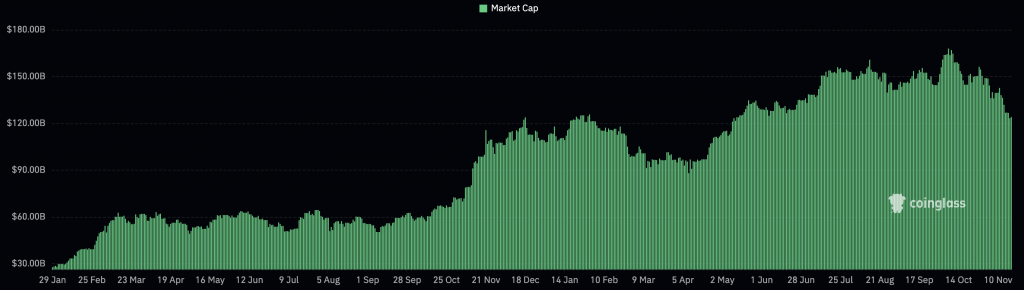
Рыночная капитализация биткоин-ETF. Источник: Coinglass

Ван де Поппе признает: «Этот цикл действительно ведет себя по-другому», но подчеркивает, что октябрьский максимум все еще может оказаться вершиной цикла. «Мы находимся на перепутье рыночных изменений, созревания такого актива, как биткоин, и, следовательно, другой рыночной динамики».

Главный инвестиционный директор Bitwise Мэтт Хуган (Matt Hougan) убежден: отсутствие роста криптовалютного рынка в конце 2025 года увеличивает потенциал для подъема в грядущем 2026. «Фундаментальные основы рынка действительно крепки, — заявил Хоуган. — Институциональные инвестиции, регуляторный прогресс, стейблкоины, токенизация — все эти силы слишком мощные, чтобы их можно было сдержать. Поэтому 2026 год станет успешным».

Макроэкономика против оптимизма

Основатель BitMEX Артур Хейес отметает идею о том, что биткоин придерживается традиционного цикла. Он заметно притих с прогнозом о $250 000 к концу года в своем последнем посте в Substack и утверждает, что биткоин поднимется к новым высотам только тогда, когда рынки достаточно просядут, чтобы заставить центральные банки вернуться к агрессивному денежному стимулированию.

Ведущий аналитик Swyftx Пав Хундал (Pav Hundal) также пристально следит за макроэкономическими данными, говоря, что пока рано объявлять вершину этого цикла. «Любое снижение инфляции или беспокойство по поводу показателей труда просто вернет нас на путь снижения ставок».

Джером Пауэлл (Jerome Powell) своими недавними заявлениями внес неопределенность в рынок, и теперь вероятность декабрьского снижения ставки упала до 40%, согласно инструменту CME FedWatch. Хундал говорит, что рынок сейчас «блуждает вслепую» в ожидании более четких данных. «Проблема не только в биткоине. Красный свет горит для всех рисковых активов».

Защитники традиционного цикла

Но есть аналитики и руководители, которые месяцами твердили: четырехлетний цикл никуда не делся. И нынешний обвал как раз подтверждает их правоту.

Известный аналитик криптовалют Rekt Capital предупреждал еще в июле: в текущем росте остается «совсем немного времени и пространства для движения цены вверх». Недавно он добавил: понадобится много времени, чтобы понять — удлинился ли цикл биткоина или все-таки завершился.
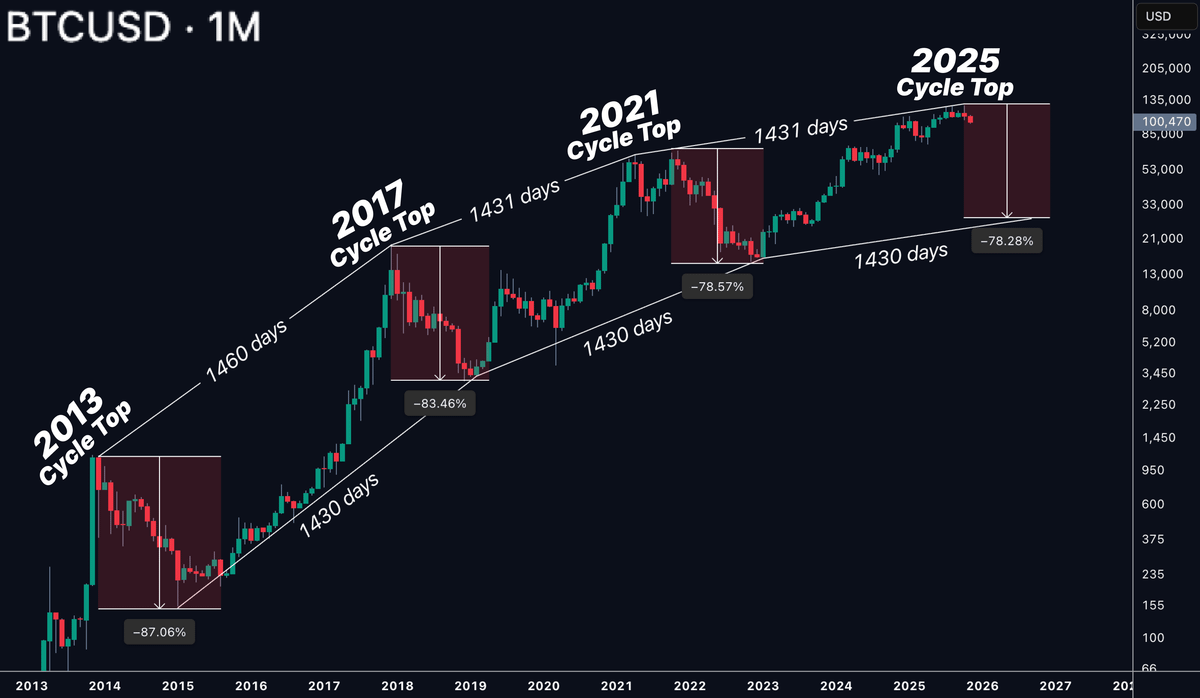
1-месячный график BTC/USD. Аналитика: Линтон Ворм (Linton Worm)

Глава Gemini в Азиатско-Тихоокеанском регионе Саад Ахмед (Saad Ahmed) верит: четырехлетние циклы никуда не денутся. «Скорее всего, мы продолжим наблюдать циклы в том или ином виде. Люди возбуждаются, переоценивают свои силы, затем происходит крах, и цена возвращается к равновесию».

Аналитик Colin Talks Crypto объявил: праздник цены биткоина закончился. «Если быстрого восстановления не случится в ближайшие день-два, мы входим в медвежий рынок или значительную коррекцию».

Четырехлетний цикл биткоина стал предметом ожесточенных споров именно тогда, когда рынку больше всего нужна определенность. Институциональные ETF действительно все поменяли, но пока неясно, положат ли они конец привычным закономерностям.


Leituras Relacionadas

The Future Outlook of Bitcoin

Bitcoin: A Mid-2026 Perspective Bitcoin analyst Will Clemente assesses the asset's outlook, arguing that despite a challenging period, it now presents a compelling long-term value opportunity. The current bear market, while less severe in peak drawdown than 2022, has been difficult due to a lack of clear catalysts, underperformance versus assets like gold, and persistent ETF outflows. However, key negative pressures are showing signs of abating. Digital Asset Treasuries (DATs), a major source of sell pressure during the bull market, are slowing accumulation or shifting strategies. While quantum computing remains a long-term concern, its risk is likely significantly priced in at current levels. Fundamentally, the Bitcoin network remains decentralized and healthy, with a robust global node distribution. Although hash rate has declined as miners pivot to AI/HPC, the network's difficulty adjustment ensures security, and the resilience suggests a diverse, non-public mining base. Valuation metrics indicate Bitcoin is in deeply undervalued territory. It is consolidating near its 2021 highs, below the 200-week EMA, with weekly RSI showing a bullish divergence from oversold levels. The MVRV ratio is at historically low levels, signaling the market's aggregate cost basis is near the current price. Long-term holders have resumed accumulation, and trading volume across spot, ETF, and derivatives markets has dried up to multi-year lows. Implied volatility is cheap, and futures basis is compressed, reflecting a complete lack of speculative interest. The core bullish thesis hinges on seller exhaustion. After a year of selling from DATs and ETFs, and with quantum risks largely discounted, the pool of remaining motivated sellers appears limited. A potential catalyst could be steady, price-insensitive inflows from large institutions adding small strategic allocations to portfolios for diversification, given Bitcoin's recent low correlation with other assets. Conclusion: Bitcoin is considered "cheap" with most risks priced in. While a final leg down is possible, the network is healthy, and long-term holders are buying. Strategies include dollar-cost averaging, waiting for a definitive catalyst or price reversal, or entering a position now while using inexpensive options to hedge against further downside. The current setup suggests an interesting period ahead for the orange coin.

marsbitHá 1h

The Future Outlook of Bitcoin

marsbitHá 1h

Grayscale Clarifies Whether the Cryptocurrency Market Growth-Promoting Clarity Act Will Be Passed This Year

Zach Pandl, the Research Director at Grayscale, stated that the passage of the CLARITY Act—legislation aimed at establishing a comprehensive regulatory framework for the crypto market in the U.S.—is unlikely to occur in Congress this year. According to Pandl, the Senate's tight schedule and the political climate in an election year make bipartisan agreement on the bill difficult. Pandl noted that the failure of the Clarity Act will not directly impact Bitcoin's role as a store of value, the operation of core blockchains, or the growth of stablecoin payments in the short term. The U.S. crypto sector has operated for nearly 17 years without such comprehensive market structure legislation. However, he warned that the absence of a clear regulatory framework could slow the influx of new investment and capital formation in the U.S. The proposed law aims to open new avenues for capital formation via blockchain, support the development of tokenized securities markets, and create a comprehensive oversight system for digital asset intermediaries, along with various consumer, investor, and software developer protections. Pandl believes federal regulators, particularly the SEC, will continue to fill regulatory gaps even without new legislation, issuing rules in areas like tokenized securities in the coming months. While significant progress has been made under the current administration regarding institutional custody, banking access, staking, and crypto ETPs, Pandl cautioned that without comprehensive market structure laws, much new investment and developer activity may shift outside the United States.

cryptonews.ruHá 1h

Grayscale Clarifies Whether the Cryptocurrency Market Growth-Promoting Clarity Act Will Be Passed This Year

cryptonews.ruHá 1h

Michael Saylor Identifies the Next Financial Opportunity Worth Billions

Michael Saylor, Executive Chairman of Strategy Inc. (Nasdaq: MSTR), identified digital credit as the next billion-dollar business opportunity in finance. In an August 7th post on X, he suggested entrepreneurs explore this category. Saylor's post included a chart showing the effective yields of four of Strategy's digital credit products as of 11:10 AM EDT. Leading was Stride Preferred Shares (STRD) with a 15.29% yield, followed by Stretch Preferred Shares (STRC) at 12.63%, Strike Preferred Shares (STRK) at 12.08%, and Strife Preferred Shares (STRF) at 10.38%. These preferred securities allow Strategy to raise capital from income-seeking investors, offering various dividend rates, risk levels, and positions in the company's capital structure. Strategy has developed a suite of preferred shares classified as digital credit instruments. For instance, the Stretch Preferred Shares (STRC) are perpetual, variable-rate securities. This approach applies established credit market structures to companies with digital asset-based balance sheets, connecting capital-seeking issuers with yield-seeking investors through Wall Street-like products. Saylor positioned these as a "digital credit stack," built upon but not backed by Strategy's bitcoin reserve, expanding the company's capital access while targeting yield-focused buyers. The billion-dollar potential lies in creating a scalable, replicable business model where issuers can raise capital via tailored income securities and investors can select products based on yield, risk, and capital priority. For Strategy, this model attracts capital from investors seeking income without direct bitcoin exposure, while the company maintains its broader bitcoin strategy. Growing dividend obligations have influenced how Strategy manages its bitcoin holdings and cash reserves, with the company selling some bitcoin to fund preferred share payments and build a USD reserve for liquidity.

cryptonews.ruHá 1h

Michael Saylor Identifies the Next Financial Opportunity Worth Billions

cryptonews.ruHá 1h

Trading

Spot
活动图片