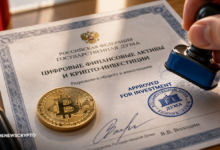
Банк Amina получил лицензию на оказание криптоуслуг в Гонконге

cryptonews.ruPublicado em 2025-11-16Última atualização em 2025-11-18

Швейцарский криптобанк Amina сообщил, что получил одобрение Комиссии по ценным бумагам и фьючерсам Гонконга (SFC) на оказание юрлицам услуг по хранению и торговле криптовалютами.

Amina будет обслуживать местные компании через свою дочернюю компанию Amina HK, зарегистрированную в этом особом регионе Китая. Гонконгская лицензия позволит банку предлагать услуги с 13 криптовалютами, включая биткоин, эфир, стейблкоины USDC и USDT.

Глава подразделения Amina в Гонконге и Азиатско-Тихоокеанском регионе Майкл Бенц (Michael Benz) сказал, что банк стремится расширить деятельность по управлению частными фондами, структурированными продуктами, криптодеривативами и токенизированными активами. Руководство компании сообщило, что Amina стала первой международной банковской группой, получившей лицензию гонконгского регулятора на оказание услуг, связанных с криптовалютами.

Власти Гонконга стали все больше ужесточать требования к деятельности криптокомпаний. В сентябре Денежно-кредитное управление Гонконга (HKMA) предупредило, что ограничит выдачу лицензий эмитентам стейблкоинам — разрешение на работу получат лишь те компании, которые готовы соблюдать строгие нормативные требования.

«Гонконг зарекомендовал себя как самый развитый рынок по надзору за криптовалютами. Получив лицензию, Amina сможет удовлетворить растущий спрос со стороны профессиональных инвесторов, желающих получить регулируемый доступ к криптовалютам», — заявил Майкл Бенц.

По данным Amina, в первой половине года объем торгов на гонконгских криптобиржах вырос на 233% в сравнении с аналогичным периодом 2024-го.

Недавно дочерняя компания банка, Amina Austria, получила от австрийского регулятора лицензию поставщика услуг по управлению криптоактивами (CASP). Банк сможет оказывать европейским клиентам услуги стейкинга и хранения криптоактивов, а также обменивать их на фиатные деньги.


Leituras Relacionadas

Weng Li's New Blog Proposes 'Self-Evolution Should Start from Harness', DeepSeek's Cui Tianyi Endorses with Repost

Lilian Weng, former OpenAI security VP and co-founder of Thinking Machines Lab, has published a new blog post titled "Harness Engineering for Self-Improvement," proposing a pragmatic path for AI self-evolution. She argues that Recursive Self-Improvement (RSI) may practically begin at the "Harness" layer—the external runtime system governing how models use tools, manage context, and execute tasks—rather than directly from the model rewriting its own weights. The blog outlines a progression from optimizing prompts (Context Engineering) to designing workflows, and ultimately to Self-Improving Harness systems. These systems can identify their own weaknesses, propose targeted, verifiable modifications to the harness code, and validate improvements. Works like Self-Harness and Darwin Gödel Machine (DGM) demonstrate significant performance gains on benchmarks like SWE-bench through such automated harness evolution, rivaling handcrafted agents. DeepSeek researcher Tianyi Cui endorsed the view, noting harness-based self-evolution is as promising as model-based approaches. Weng emphasizes this is complementary to model training, with both reinforcing each other. However, key challenges remain: weak evaluators for subjective tasks, reward hacking, diversity collapse, managing long-term system health versus short-term success, and defining the human oversight role. The consensus is growing: the harness is a critical variable, as the same model can exhibit vastly different capabilities within different harness systems.

marsbitHá 1h

Weng Li's New Blog Proposes 'Self-Evolution Should Start from Harness', DeepSeek's Cui Tianyi Endorses with Repost

marsbitHá 1h

Odaily Editorial Department Tea Party (July 8)

Odaily Editorial Team Casual Chat (July 8) This is an informal column from Odaily's editorial team, sharing immediate thoughts on industry news, data, and hot topics from various angles. It presents investment ideas and opportunity hypotheses still under verification—which may not be direct wealth codes but questions in themselves—alongside observations from industry interactions and materials that genuinely enhance the team's understanding. The content is based on real investment and observation experiences, carries no advertising, and does not constitute investment advice. Its purpose is to broaden perspectives and supplement information sources, not to create consensus. Team Member Shares: * **Wenser (@wenser2010):** Noted a deeper correction (nearly 30%) in US and Korean stocks, including memory stocks, but remains bullish on DRAM due to perceived supply shortages. In prediction markets, personal small bets outperformed blind copying; favors France to win the World Cup. Views crypto-related stocks like STRK as bearish for now, while seeing Circle and Coinbase as potential rebound plays. Observes recent strength in software stocks like Microsoft but is unsure if it's a sustained recovery. * **Bcxiongdi (@bcxiongdi):** Discusses the recent "recovery training" in meme coin markets on Solana and BSC, characterized by small-scale PVP opportunities, admitting to having sold many assets too early. Suggests also watching the Robinhood chain. Found World Cup prediction markets challenging, advising to consider buying during matches rather than only before. * **Azuma (@azuma_eth):** Focuses on the US stock market, particularly the significant semiconductor correction. Believes demand fundamentals remain and considers buying the dip in DRAM stocks. Notes a potential rotation signal as hedge funds have recently concentrated buying in tech stocks. Plans to continue adding to RKLB (Rocket Lab) stock, seeing limited downside and high upside potential at current levels after its founder's share sale window closed.

Odaily星球日报Há 1h

Odaily Editorial Department Tea Party (July 8)

Odaily星球日报Há 1h

Trading

Spot
活动图片