Крипторынок силен фундаментально. Но кто все время продает биткоин

cryptonews.ruPublicado em 2025-04-13Última atualização em 2025-11-14

Эксперты рассказали, что главными продавцами биткоина c 2024 года являются долгосрочные держатели

«РБК-Крипто» не дает инвестиционных советов, материал опубликован исключительно в ознакомительных целях. Криптовалюта — это волатильный актив, который может привести к финансовым убыткам.

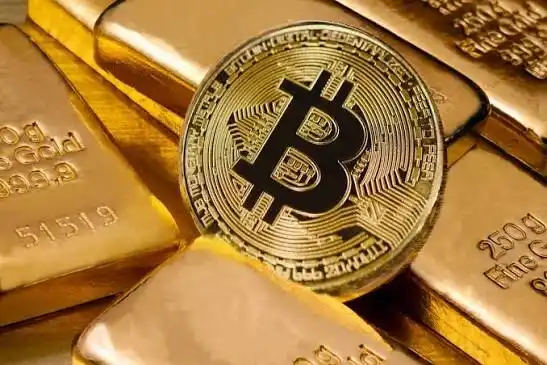
Доходность биткоина с начала 2025 года оказалась худшей среди крупнейших активов мира, таких как золото, серебро и основные индексы американских компаний. И это на фоне расцвета государственного и корпоративного принятия биткоина в разных частях мира, особенно в США. Эксперты объясняют динамику битикоина поведением долгосрочных инвесторов, методично продающих или перераспределяющих биткоин в своих портфелях.

Котировки биткоина (BTC) с начала года прибавили лишь 4%, торгуясь около $97,16 тыс. по состоянию на 13:45 мск 14 ноября. За этот же период золото подорожало примерно на 60%, основные индексы компаний США SP 500 и NASDAQ 100 выросли на 15 и 19% соответственно, цена серебра — более чем на 80%. От исторического пика в октябре цена биткоина упала более чем на 22%.

rbc.group

С начала ноября тенденция схожа. Биткоин потерял более 11%, SP 500 и NASDAQ 100 — 1,5% и 3%, золото и серебро — выросли на 4% и 8% соответственно.

BTC/USD

96 500 -6 610 (-6,41%)
ОКХ Nov 14 14:19:35

В ноябре сразу несколько ключевых игроков рынка заявили о повышенном давлении крупных долгосрочных инвесторов на цены главной криптовалюты. Тезисы подтверждаются данными о рекордных передвижениях биткоина со стороны «старых» держателей. Как сообщили в аналитической компании Cryptoquant, за последние 30 дней эта группа продала около 815 тыс. биткоинов ($82 млрд).

Показатель подобных движений является максимальным с января 2024 года, пишут в Cryptoquant, добавив, что «владельцы биткоинов продолжают продавать, фиксируя прибыль, что усилило давление на цену».

«Кто продает? Это главный вопрос, который мне задают в связи с продолжающимся давлением на цену биткоина. Я не первый, кто предполагает, что продавцами являются долгосрочные держатели», — отметил заместитель директора по исследованиям в Fidelity Digital Assets Крис Койпер.

Глава Galaxy Digital Майк Новограц также считает, что долгосрочные держатели пересматривают свои портфели, диверсифицируя крупные позиции в активе, после длительного бычьего рынка последних лет.

Прогнозы курса биткоина

Несмотря на негативную динамику последних месяцев и давление продаж, эксперты не спешат говорить о начале медвежьего цикла, полагая, что рост котировок еще может возобновиться. Например, глава CryptoQuant Ки Ен Джу полагает, что пока не потерян уровень цены биткоина $94 тыс. медвежий цикл еще не начался. По его расчетам эта цена является средней у инвесторов, купивших биткоин 6-12 месяцев назад.

Новограц утверждает, что «мы еще не увидели пик этого цикла», объясняя это ожиданиями нового главы Федрезерва США к концу года, от которого ждут изменений в монетарной политике. Предполагается, что с его приходом, регулятор будет способствовать лучшему инвестиционному климату, который позитивно будет влиять и на крипторынок: «Надеюсь, этого хватит, чтобы запустить следующую волну роста».

Одновременно с этим Galaxy Новограца снизила целевую цену биткоина на конец года со $185 тыс. до $120 тыс.

Койпер также позитивно смотрит на будущее перспективы, отмечая, что «сильные фундаментальные показатели биткоина и вялое ценовое действие продолжают расходиться». Он также указал, что в этом цикле продажи долгосрочных инвесторов являются плавными и не было никакой резкости в момент достижения новых ценовых максимумов.

Локальное дно текущего цикла роста биткоина (BTC) находится в ноябре 2022 года ниже отметки в $16 тыс. И с точки зрения статистики, этот бычий цикл пока не отличается по времени от двух предыдущих (с 2014 по 2017 год и с 2018 по 2021 год). Тогда от локального минимума до максимума прошло 35-36 месяцев. Текущий цикл, если сохранится максимум, зафиксированный в октябре 2025 года (более $126 тыс.), составит те же 35 месяцев.

Крупные продажи

В итоге наблюдается противоречивая картина, где давние инвесторы «при позитивных фундаментальных показателях» перераспределяют рекордные суммы в биткоине.

По данным аналитика Джеймса Чека, известного как Checkmate, на которого ссылается Coindesk, совокупный объем старых монет, которые находились без движения больше полугода, составил более 4,6 млн BTC (более $460 млрд) в 2025 году.

Также приводятся данные Galaxy, которые показали, что в 2025 году были переведены 470 тыс. BTC (около $50 млрд), не двигавшихся более пяти лет, что стало второй по величине суммой за всю историю наблюдений этой категории (больше было только в 2024 году). В общей сложности эксперты подсчитали, что из «старых рук в новые» с начала 2024 года перешли более $104 млрд в биткоине.

В последние недели эксперты чаще заявляют, что крупные участники рынка действительно фиксируют прибыль и больше не покупают актив. В Bloomberg отметили, что за октябрь, с момента исторического максимума «старые» держатели продали биткоин на $45 млрд.

Блокчейн-аналитики также фиксируют большие переводы криптовалюты на биржи от крупных игроков, что вероятно говорит о подготовке к продаже. Например, один из богатейших владельцев биткоинов Оуэн Гунден, начал выводить свои монеты на десятки миллионов долларов на адрес биржи Kraken.

Тем не менее, все эти продажи или переводы лишь часть общей картины, где существует множество рыночных и других факторов, формирующих цену и движение капитала.

Не все продают биткоин

Перемещения «старых монет» не всегда является продажей в прямом смысле. Так, например, один из первых разработчиков биткоина — глава Blocksream Адам Бэк передал 30 тыс. BTC (более $3 млрд) в уставный капитал BSTR Holdings в обмен на долю в компании, накапливающей криптовалюту в качестве резерва.

Массовый запуск таких компаний в разных странах пришелся на конец 2024 и начало 2025 года. Пополнение резерва в таких компаниях не обязательно означает покупку биткоина с рынка, где инвесторы могут перечислять монеты напрямую в обмен на акции или другие стимулы.

Вероятно, что часть «старых» монет, могла быть перемещена таким образом, что и отразилось на статистике. По данным Bitcointreasuries общее число таких компаний превышает 200, а сумма биткоина на их балансе — более $107 млрд.

Еще одним вариантом перевода биткоина без его продажи со стороны крупных держателей могут оказаться биржевые фонды (ETF). Благодаря одобренному летом механизму, инвесторы теперь могут обменивать BTC напрямую в акции ETF без продажи и налогообложения. По данным Bloomberg на конец октября, только в ETF компании BlackRock объем таких переводов превысил $3 млрд.


Leituras Relacionadas

Breaking News: DeepSeek Announces All-Day Off-Peak Pricing on Weekends, Making Weekend Work More Cost-Effective?

DeepSeek has announced a significant change to its API pricing model, effective August 23. The new policy removes peak/off-peak distinctions on weekends (Saturdays and Sundays), charging the lower off-peak rate for the entire two-day period. This adjustment has sparked mixed reactions within the developer and professional communities. For developers and businesses heavily reliant on DeepSeek's V4-Flash and V4-Pro APIs, this is welcome news. It allows them to schedule bulk processing tasks on weekends without the higher peak-hour costs, potentially halving their API bills for such workloads. Some users have celebrated the move for making weekend work more cost-effective. However, the announcement has also raised concerns among employees. There is apprehension that companies, particularly in cost-sensitive sectors like AI-powered short drama production, might reorganize work schedules to align with these new cost incentives. Instances are already emerging where teams schedule high-token tasks during cheaper nighttime hours or adjust staff shifts. This has led to worries about a potential shift towards weekend workdays and weekday time-off, prioritizing cost savings over traditional work-life balance. Debate has ensued regarding the practicality of such schedule changes, with questions about increased communication overhead and overall efficiency. Speculation about DeepSeek's motives for the change includes theories that peak pricing correlates with internal model training schedules, though others counter that training is largely automated. The new pricing structure is now in effect, prompting users to reconsider their task scheduling strategies.

marsbitHá 10m

Breaking News: DeepSeek Announces All-Day Off-Peak Pricing on Weekends, Making Weekend Work More Cost-Effective?

marsbitHá 10m

Just Now, The World's First Human vs. Robot Tennis Match Begins, Robot's Desperate Save Leaves Zheng Jie Astonished

Just now, the world's first human vs. robot tennis match began, featuring stunning robotic saves that left tennis star Zheng Jie in awe. This historic event, part of the second World Humanoid Robot Games and broadcast live globally by China Media Group, marked a pivotal moment in Chinese technological innovation and embodied artificial intelligence. The match featured both mixed human-robot doubles and a groundbreaking singles match between Zheng Jie and the "Galaxy Xingzai" humanoid robot developed by Galaxy General. The robot demonstrated impressive skills including serving, forehands, backhands, and strategic court movement, with serves exceeding 100 km/h. It exhibited remarkable adaptability, recovering from a fall to continue play and handling slices and spins. The doubles match highlighted its ability to coordinate dynamically with a human partner. The event's significance extends far beyond a novelty match. Tennis represents an ultimate pressure test for embodied AI, demanding real-time integration of perception, decision-making, full-body motion control, and live博弈 within fractions of a second—a stark contrast to the discrete, contemplative environment of board games like Go mastered by AlphaGo. It directly confronts Moravec's paradox, showcasing AI's move from digital cognition to physical execution. This capability is powered by Galaxy General's proprietary "Galaxy Star Brain" (AstraBrain) model. Its key innovation is a unified architecture that integrates high-level task understanding/tactical decision-making ("brain") and dynamic whole-body motion control ("cerebellum") into a single model, eliminating latency and information loss between separate modules. The model was trained using a two-step process via the "Galaxy Star Workshop" platform. First, it learned foundational movement priors from "imperfect" human motion data (both amateur and professional). Second, it underwent massive-scale evolution in a virtual tennis simulator where multiple AI agents played millions of games against each other. Through this adversarial training, skills like极限救球and recovery from falls emerged autonomously without explicit programming, before being transferred to the physical robot. This "AstraTennis" moment symbolizes a major leap: a decade after AlphaGo conquered the digital world, embodied AI from China has now demonstrated it can operate under the extreme, unpredictable physical pressures of real-world competition.

marsbitHá 10m

Just Now, The World's First Human vs. Robot Tennis Match Begins, Robot's Desperate Save Leaves Zheng Jie Astonished

marsbitHá 10m

The Biggest Dark Horse in AI Payments Might Be Coinbase Giving Agents a Wallet

In the AI payments race, while most focus on traditional giants like Visa or AI platforms like OpenAI, Coinbase has quietly emerged as a key player. Data from 2026 shows over 90% of on-chain Agent transactions occur on Coinbase's Base network, with 99% settled in USDC and over 97% using the x402 protocol. Coinbase's pivotal move was launching "Agentic Wallets" in February 2026—a dedicated wallet infrastructure giving AI Agents their own financial identity. Unlike Visa or Stripe, which connect Agents to existing payment rails, Coinbase provides Agents with autonomous wallets to hold assets (like stablecoins), initiate transfers, and execute transactions under predefined rules. This solves core issues for machine-to-machine payments: high credit card fees for micropayments, the need for constant human authorization, and unclear transaction attribution. Coinbase's strength lies in its closed-loop ecosystem: the Base blockchain (low-cost, high-throughput), the x402 payment protocol, Agentic Wallets, and native assets like USDC. This integrated stack, built through years of infrastructure investment, positioned Coinbase to capture early Agent payment demand as the AI economy surged. The key insight is that AI payment adoption may depend less on whose standard wins and more on whose usable infrastructure is ready first. While debates over protocols and payment rails continue, real Agent transactions are already flowing—primarily through Coinbase's ecosystem. It may not be the ultimate winner, but for now, it's the frontrunner by being prepared.

marsbitHá 55m

The Biggest Dark Horse in AI Payments Might Be Coinbase Giving Agents a Wallet

marsbitHá 55m

Dialogue with Bitwise CIO: Bitcoin May Be Near Bottom, Who Will Drive the Next Rally?

In a recent podcast, Bitwise CIO Matt Hougan analyzed Bitcoin's current market cycle, suggesting it is near a bottom characterized by low volatility and investor indifference. He believes the next major price surge will be driven primarily by wealth management platforms, financial advisors, and family offices, who control trillions in assets and are now gaining access to Bitcoin ETFs. Hougan views Bitcoin as a long-dated, out-of-the-money call option on it becoming a global reserve asset. Its value increases with global monetary system volatility, making it a natural hedge against currency disorder. He outlined Bitcoin's adoption path: first as a global digital store of value (competing with gold), and potentially later as a check against fiat currency abuse by sovereign states. Addressing the muted price action despite institutional ETF inflows, Hougan explained that significant selling by long-term retail holders has offset buying pressure. However, he is optimistic as data shows retail selling has subsided, which, combined with continued institutional inflows, could propel prices higher. Hougan downplayed the future impact of Federal Reserve interest rates and MicroStrategy's actions on Bitcoin's price, arguing they are becoming less relevant. Instead, he pointed to runaway U.S. fiscal deficits and debt as the core long-term drivers. Finally, he discussed the transformative potential of asset tokenization, predicting all traditional assets will eventually trade 24/7 on blockchains. This will merge traditional and crypto markets, increasing efficiency but also introducing crypto-like features such as overnight volatility and easier access to leverage into traditional finance.

marsbitHá 1h

Dialogue with Bitwise CIO: Bitcoin May Be Near Bottom, Who Will Drive the Next Rally?

marsbitHá 1h

Dalio Warns of U.S. Bond Supply-Demand Imbalance: Gold and Bitcoin Could Become Hedge Assets in Debt Crisis

Ray Dalio warns of an unsustainable imbalance in US Treasury supply and demand, drawing parallels to the mechanisms of a "big debt cycle" described in his book. Key recent developments include Japan selling US bonds to support the yen, rising US long-term yields amid weak demand, and limited Treasury buybacks. Dalio explains that when debt service burdens become too large relative to income, and bond supply outstrips market demand, a crisis point approaches. Typically, central banks then print money to buy bonds, leading to currency devaluation and inflation. He simplifies the US government's position: with ~$5.5T in revenue, ~$7.5T in spending, a $2T deficit, and $32T in debt, annual debt service is roughly $1T in interest plus ~$10T in maturing principal needing refinancing. Without change, he estimates a potential debt crisis in roughly three years, give or take two. Dalio proposes a "3% three-part solution" to reduce the deficit to 3% of GDP through balanced spending cuts, tax increases, and naturally lower interest rates. He warns that Japan's high debt, often cited as sustainable, has led to poor bond returns and significant currency losses versus gold and the dollar. In response to questions, Dalio states that all reserve currencies eventually decline via this debt cycle mechanism. He advises investors to diversify globally, favor countries with strong finances and stable politics, underweight bonds, overweight gold, and allocate a small portion (e.g., 10-15%) to Bitcoin as hedges against government-created currency devaluation.

marsbitHá 1h

Dalio Warns of U.S. Bond Supply-Demand Imbalance: Gold and Bitcoin Could Become Hedge Assets in Debt Crisis

marsbitHá 1h

Trading

Spot
活动图片