Институциональный ажиотаж вокруг биткоина может смениться спадом, предупреждает аналитик

cryptonews.ruPublicado em 2025-04-12Última atualização em 2025-11-13

Мощная волна институциональных покупок, которая способствовала росту биткоина с начала 2024 года, может также усилить коррекцию, если усталость рынка сохранится. Такое мнение высказал Маркус Тилен, генеральный директор исследовательской компании 10x Research и бывший управляющий портфелем.

Тилен заявил, что криптовалютный рынок, и особенно биткоин, демонстрирует все характерные признаки усталости после сложного октября, отмеченного крупнейшим событием ликвидации в истории отрасли. Он отметил, что эти потери усугубили фундаментальные макроэкономические риски, которые биткоин все больше отражает.

Поскольку институциональные притоки, особенно из спотовых биржевых фондов биткоина, были ключевым драйвером роста в 2024 году, Тилен предупредил, что та же самая база инвесторов может ускорить давление на снижение, если активность продолжит замедляться.

«В какой-то момент менеджер по рискам может вмешаться и сказать: „вам нужно ликвидировать или уменьшить вашу позицию“, — сказал Тилен. — Существует риск, что биткоин продолжит отставать, потому что людям нужно ребалансировать свои портфели».

Эти комментарии поступают на фоне растущего оттока средств из американских спотовых ETF на биткоин. Согласно данным CoinShares, фонды зафиксировали совокупные выводы в размере $939 млн на прошлой неделе, что отражает ослабевающий аппетит среди институциональных инвесторов.
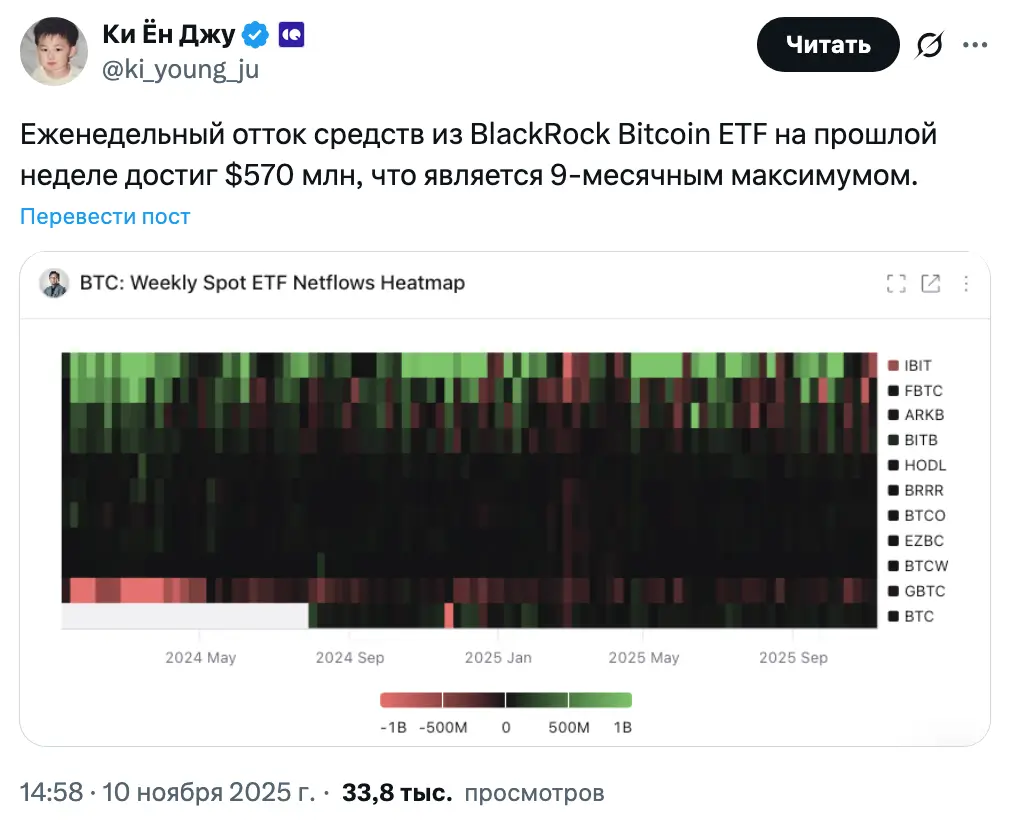

Источник: Ki Young Ju.

Недостаточная эффективность биткоина в 2025 году

В неожиданном повороте биткоин показал худшие результаты по сравнению с большинством основных классов активов с начала этого года — что является необычной моделью в календарном году после его последнего халвинга. Крупнейшая в мире криптовалюта отставала от золота, акций технологических компаний и даже нескольких азиатских фондовых индексов с января, несмотря на установление нескольких рекордных максимумов, включая пик выше $126 000 в начале октября.
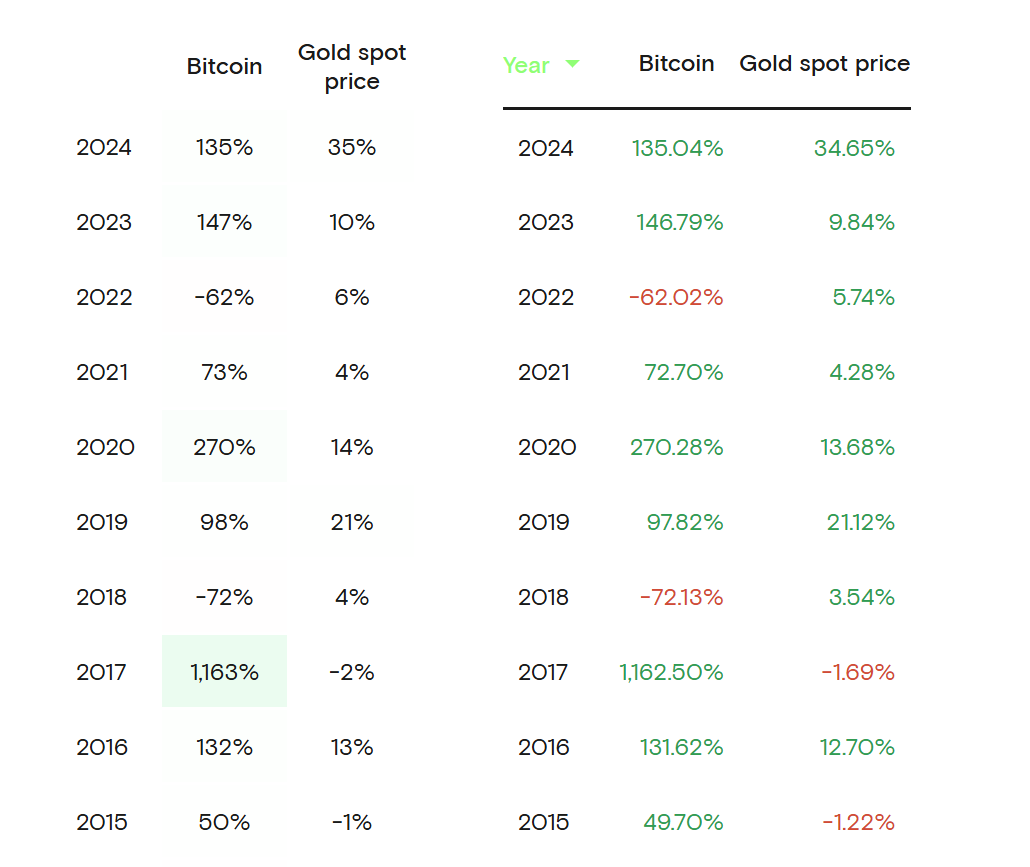

Биткоин показывал более высокую годовую доходность по сравнению с золотом большую часть своей истории, но 2025 год складывается иначе. Биткоин вырос более чем на 8% с начала года, в то время как спотовое золото подорожало на 57%. Источник: Curvo.

Тем не менее, 10x Research Тилена не занимает полностью медвежью позицию по биткоину. Как недавно сообщалось, компания рассматривает короткие позиции по эфиру как более эффективный хедж, чем ставки против самого биткоина, который остается предпочтительным активом для институциональных инвесторов, стремящихся получить доступ к криптовалюте.

Значительная часть недавней слабости биткоина объясняется действиями китов — крупных держателей криптовалюты, которые фиксировали прибыль выше уровня $100 000. Алекс Сандерс из Citigroup сообщил, что количество кошельков, содержащих более 1000 BTC, постепенно сокращается в последние недели.


Leituras Relacionadas

DRAM ETF Issuer: Samsung, SK Hynix, Micron All Surpass $1 Trillion, the AI Era of Memory Chips Has Only Just Begun

Authors: Dave Mazza, Thomas DiFazio | Source: Deep Tide TechFlow The article, written by Roundhill Investments (issuer of the DRAM ETF), responds to Morningstar's caution about investing in memory chip stocks. Morningstar warns of the sector's history of boom-bust cycles, a lack of economic moats, and potential momentum-driven overvaluation. Roundhill argues the current situation is structurally different due to AI. Key points in Roundhill's rebuttal include: * **Changed Demand & Supply Dynamics:** AI infrastructure, not consumer electronics, is now the primary growth driver for memory demand. New, strict long-term supply agreements with hyperscalers reflect the high capital intensity of advanced manufacturing. * **Existence of a Moat:** High-Bandwidth Memory (HBM), essential for AI, has extremely high manufacturing barriers. The market is dominated by Samsung, SK Hynix, and Micron, with new entrants blocked by technological complexity and long lead times for equipment like ASML's EUV machines. * **Strong Fundamental Outlook:** Analyst consensus projects the three companies will rank among the world's most profitable by 2027, with combined profits of $704 billion on over $1 trillion in revenue. Their operating margins have already reached record highs. * **Valuation Re-rating:** Despite significant stock price gains, memory stocks trade at attractive valuations (e.g., a median NTM P/E of 8.37x for the DRAM ETF) relative to projected explosive EPS growth. Roundhill suggests historical valuation frameworks may no longer apply given the new profitability paradigm. Conclusion: Roundhill contends the rally is justified by fundamentals, marking a structural shift for the memory industry into a new era of sustained, AI-driven demand against constrained supply, rather than a repeat of past cycles.

marsbitHá 8m

DRAM ETF Issuer: Samsung, SK Hynix, Micron All Surpass $1 Trillion, the AI Era of Memory Chips Has Only Just Begun

marsbitHá 8m

EF's Epic Reorganization: 20% Layoffs, Budget Halved, Is Ethereum Gearing Up for a Leaner Future?

The Ethereum Foundation (EF) has announced a major organizational restructuring, involving a 20% staff reduction (approx. 54 employees) and a division into functional clusters like Protocol, Access, User, Community, and Institutional layers. Co-founder Vitalik Buterin further revealed plans to cut the EF's budget by around 40% over the coming years, aiming to reduce its annual spending rate from about 15% to roughly 5% by 2030, transitioning to an endowment-driven model. This overhaul is seen as a long-overdue correction to the EF's ambiguous role. As Ethereum grew, the foundation faced persistent criticism over ETH sales, perceived lack of execution, and unclear strategy, often becoming a focal point for community frustration amid ETH's price stagnation. The reform aims to redefine the EF's boundaries, narrowing its focus to core protocol research, public goods funding, and ecosystem coordination, while offloading more applied development work to the broader market. Concurrently, ecosystem forces like the newly formed Ethlabs (founded by ex-EF researchers) and other independent groups are stepping in to fill the space, signaling a shift from a centralized model to a more distributed, collaborative ecosystem structure. The move was notably praised by Solana co-founder toly, who viewed a "leaner" EF as potentially more decisive and agile.

Odaily星球日报Há 49m

EF's Epic Reorganization: 20% Layoffs, Budget Halved, Is Ethereum Gearing Up for a Leaner Future?

Odaily星球日报Há 49m

Dragonfly Partner Haseeb: The Fastest-Growing Companies of the Future May All Get Stuck at 149 Employees

Dragonfly partner Haseeb explores the distorted economics of AI model pricing, drawing parallels to tax policy. He notes that startups and small teams (under 150 users) enjoy heavily subsidized, fixed-price AI subscriptions (like Claude Code), where the marginal cost of an additional token is effectively zero. This creates a powerful incentive for them to maximize token usage ("token-maxxing") and innovate aggressively with AI automation. In contrast, large enterprises (over 150 users) are forced onto "Enterprise" plans, paying per-token API fees with high (~75%) markups. This acts like a steep "tax" on AI-powered labor, disincentivizing marginal automation and experimental use, and encouraging them to retain more human workers. Haseeb argues this pricing creates a "150-person cliff," a regulatory notch similar to labor laws in France that discourage firms from growing past 50 employees. He predicts the fastest-growing future companies may deliberately cap their headcount at 149 to avoid the punitive enterprise pricing. This would foster an "AI-first" management philosophy obsessed with automation and outsourcing to stay lean. While not intentionally designed, this bifurcated pricing could become one of the most influential de facto tax policies, shaping how AI replaces labor—not through mass layoffs at big firms, but through agile, AI-native startups outcompeting them.

marsbitHá 1h

Dragonfly Partner Haseeb: The Fastest-Growing Companies of the Future May All Get Stuck at 149 Employees

marsbitHá 1h

How xBubble Breaks Through in the VC-Heavily-Backed OPC Economy

xBubble: Addressing the Structural Gap in the VC-Backed OPC Economy The concept of OPC (One Person Company) is evolving from a buzzword to a significant AI-driven market. While AI coding tools like Replit and Lovable have validated demand from non-technical users wanting to build applications, a key gap remains: the leap from creating a demo to running a stable, evolving business. These tools still require users to manage the development process, including technical judgments for integrations, modifications, and deployments—a major hurdle for OPCs. xBubble, by DAPPOS, tackles this by shifting from "Prompt-to-Code" to "SOP-to-Business." Instead of generating code from instructions, its core is a system of pre-organized SOPs (Standard Operating Procedures) that translate business goals—like "sell World Cup merchandise"—into complete, executable workflows. This includes generating cohesive assets, pages, payment systems, and backend logic. The platform is augmented by a network of third-party service providers who handle infrastructure (hosting, domains, payment setup), acting like "on-site service engineers." Users can pay for these services directly with xBubble credits, simplifying onboarding. This ecosystem aims to deliver not just an app, but a complete, modifiable business launch path. xBubble targets a clear OPC segment: small commercial nodes (e.g., creators, merchants) with existing products, customers, or channels, but for whom a full tech team is unjustifiable. Its potential lies in SOPs accumulating expertise from real cases, improving reliability and reducing delivery costs over time. Additionally, its native support for crypto payments caters to global or digital-native OPCs. In summary, as AI democratizes software creation, xBubble's opportunity is to prove that "SOP-to-Business" provides more immediate value for launching a real, operational business than a powerful but unstructured AI coding tool.

链捕手Há 1h

How xBubble Breaks Through in the VC-Heavily-Backed OPC Economy

链捕手Há 1h

Trading

Spot
Futuros
活动图片