Next Crypto to Explode Live News Today: Timely Insights for Chart Sniffers (November 10)

bitcoinistPublicado em 2025-11-10Última atualização em 2025-11-10

Resumo

Stay Ahead with Our Timely Insights of Today's Next Crypto to Explode Check out our Live Next Crypto to Explode...

Trusted Editorial content, reviewed by leading industry experts and seasoned editors. Ad Disclosure

Stay Ahead with Our Timely Insights of Today’s Next Crypto to Explode

Check out our Live Next Crypto to Explode Updates for November 10, 2025!

Crypto is so unthinkably huge at the moment, a nearly $4 trillion industry that’s aiming for world domination.

Recent headlines talk of Circle and Mastercard planning to add USDC to global payment systems, Ethereum and Bitcoin treasuries in the billions of dollars, and Google building its own blockchain.

Bitcoin has an all-time growth of over 180,000,000%, Dogecoin over 43,000%, and some of the newest presale coins often pump 10x, 100x, or even 1,000x on rare occasions.

Explosive potential is probably the single best description for what we’re seeing today in crypto.

Quick Picks for Coins with Explosive Potential

If you’re looking for the most recent insights on the next crypto to explode, stay tuned. We update this page frequently throughout the day, as we get the latest and greatest insider insights for chart sniffers and traders looking for the next coin to explode.

Disclaimer: Crypto is a high-risk investment, and you may lose your capital. Our content is informational only, and it does not constitute financial advice. We may earn affiliate commissions at no extra cost to you.

Solana’s $5B DEX Surge Could Make Best Wallet Token the Next Crypto to Explode

November 10, 2025 • 12:00 UTC

Solana’s decentralized exchange volumes hit $5.11B, surpassing Ethereum and BNB Chain in weekend DeFi activity.
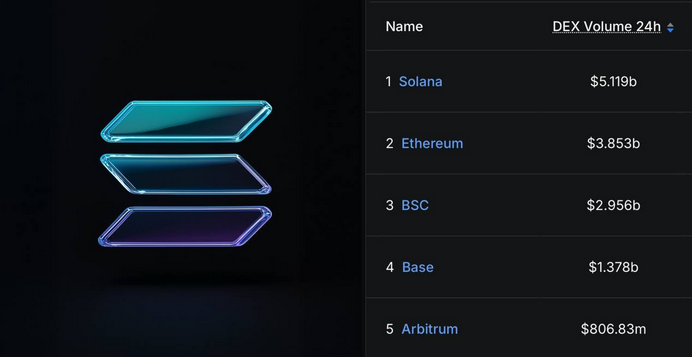
Solana top #1 in DEX Volume
Source: Solana Sensei on X

This explosive growth demonstrates that traders are rotating capital within DeFi ecosystems, seeking passive yield opportunities across multiple networks.

With over 2.9M $SOL staked and reducing circulating supply, the DeFi revolution is accelerating across chains.

As multi-chain DeFi adoption surges, projects that facilitate easy access to these ecosystems stand to benefit enormously.

With a price of $0.025925 per token, Best Wallet Token ($BEST) has raised over $16.9M in its presale, positioning itself as the gateway to DeFi across multiple blockchains.

With reduced transaction fees, presale access, and staking rewards, $BEST offers utility that extends far beyond single-chain solutions.

Check out our Best Wallet Token in-depth review.


Ethereum’s $63K Target Signals Broader Tokenization Wave and SUBBD Token Could Be the Next Crypto to Explode

November 10, 2025 • 11:00 UTC

Ethereum’s ambitious $63K price target has investors searching for the next crypto to explode. Tom Lee’s bold prediction hinges on tokenization capturing even a fraction of the $300T global financial market, with institutional giants like BlackRock leading the charge.

While Ethereum builds the rails for institutional tokenization, SUBBD Token ($SUBBD) is applying the same disruptive model to the $85B creator economy.

With a price of $0.0569 per token, this project powers an AI Web3 platform that tokenizes content subscriptions, offering real utility beyond speculation.

With a functioning mini app and active creator onboarding, $SUBBD presale has raised over $1.3M and represents the kind of early-stage infrastructure that could deliver exponential returns as tokenization momentum builds across traditional industries.

Discover what SUBBD Token is.


Best Wallet Token Might Be the Next Crypto to Explode After Market Rally

November 10, 2025 • 10:00 UTC

Bitcoin surged past $106K and Ethereum climbed above $3.6K as reports emerged that the 40-day U.S. government shutdown was nearing its end.

$XRP and Solana also jumped approximately 6%, signaling renewed investor confidence across major cryptocurrencies.

While established cryptos rally on macroeconomic relief, presale opportunities like Best Wallet Token ($BEST) could offer exponential upside as the next crypto to explode during the market recovery phase.

Having already raised over $16.9M, the token is now available at $0.025925.

Best Wallet ecosystem combines portfolio management, swaps, and presale access in one platform, positioning it to capture the growing crypto adoption.

With Bitcoin still 15% below its October record high and ETF outflows totalling over $2.1B during this longest shutdown, early-stage projects like Best Wallet Token could benefit from renewed capital inflows and risk-on sentiment.

Check out the Best Wallet Token price prediction.


Could Bitcoin Hyper Be the Next Crypto to Explode After Trump’s $2K Tariff Announcement?

November 10, 2025 • 10:00 UTC

Markets are surging after President Trump announced $2K tariff dividends for every American. Bitcoin jumped 2% to $103.7K, while the total market cap climbed to $3.5T.

With thousands of dollars potentially hitting American wallets, investors are searching for high-growth opportunities beyond mainstream coins.

Bitcoin Hyper ($HYPER) could capitalize on this perfect storm of market momentum and fresh capital inflows and become the next crypto to explode.

The project has already raised over $26.4M and combines Bitcoin’s brand recognition with enhanced utility features designed for the next generation of crypto adoption.

With investors already making purchases of $379.9K and $274K, Bitcoin setting new price records, and a price of only $0.013245 per token, positioning now in the Bitcoin Hyper presale could multiply those government checks significantly.

Check out our in-depth Bitcoin Hyper review.


Authored by Bogdan Patru, Bitcoinist — https://bitcoinist.com/next-crypto-to-explode-live-news-today-november-10-2025

Editorial Process for bitcoinist is centered on delivering thoroughly researched, accurate, and unbiased content. We uphold strict sourcing standards, and each page undergoes diligent review by our team of top technology experts and seasoned editors. This process ensures the integrity, relevance, and value of our content for our readers.

As a crypto writer, Bogdan’s responsibilities are split between researching and writing articles and entertaining the team with his humor bordering on the politically incorrect, an aspiring Bill Burr, if you will. Thanks to his 12+ years of writing experience in just as many fields, including tech, cybersecurity, modelling, fitness, crypto, and other topics-that-shall-not-be-named, he's become a genuine asset to the team. While his position as a senior writer at PrivacyAffairs thought him valuable lessons about the power of self-management, his entire writing career was and is an exercise in self-improvement. Now, he's ready to sink his teeth into crypto and teach people how to take control of their own money on the blockchain. With fiat as an eternally devaluing currency, Bitcoin and altcoins seem like the best-fitting alternative for Bogdan. Bogdan’s biggest professional accomplishment, aside from securing a position as a main writer for Bitcoinist, was his 5-year run as a writing manager at Blackwood Productions, where he coordinated a team of four writers. During that time, he learned the value of teamwork and that of creating a working environment that breeds efficiency, positivity, and friendship.

Leituras Relacionadas

When Hyperliquid Takes Away Solana's "Internet Capital Markets" Script

The article discusses how Solana's vision of becoming the "Internet Capital Markets" is being challenged, primarily by the rise of Hyperliquid. While Solana positioned itself as a high-performance blockchain for tokenizing all global assets, its native token SOL has significantly underperformed, and its core narrative faces pressure. Hyperliquid, initially a perpetual contracts platform, has evolved into a specialized Layer 1 financial network. Its focused, trading-optimized design is attracting users and capital, suggesting a vertical L1 may be better suited for a core capital market than a general-purpose chain like Solana. This external competition was compounded by an internal $200M+ exploit on Solana's key derivatives protocol, Drift, creating a strategic vacuum. In response, Solana founder Anatoly Yakovenko heavily promoted the Phoenix protocol as a decentralized, composable alternative. However, Phoenix's trading volume remains far behind leading platforms. Solana supporters also launched critiques against Hyperliquid's decentralization, citing its limited validators and closed-source code. Critics countered that Solana's own decentralization metrics have weakened, and the foundation's overt backing of Phoenix caused friction with other ecosystem builders. The piece concludes that Solana risks losing the "Internet Capital Markets" race if it cannot regain dominance in derivatives, potentially remaining a meme coin hub rather than achieving its grand ambition of hosting all global assets.

marsbitHá 1h

When Hyperliquid Takes Away Solana's "Internet Capital Markets" Script

marsbitHá 1h

Trump Signs Executive Order, Kraken, Coinbase and Others May Gain Access to Fed Payment Channels

President Trump has signed an executive order, "Incorporating Financial Technology Innovation into the Regulatory Framework," pressuring the Federal Reserve to reassess its rules on granting non-bank financial companies—including crypto and fintech firms—access to its payment systems, specifically master accounts that connect to the Fedwire settlement system. Currently, such accounts are primarily reserved for depository institutions. The order mandates a review to determine if broader access is permissible and to establish an application process. This move, supported by figures like Senator Cynthia Lummis, aims to reduce barriers to innovation and lower public payment costs by fostering fairer competition. It does not grant immediate access but could pave the way for companies like Kraken, Coinbase, Ripple, and Circle to reduce reliance on intermediary banks, lowering costs and speeding up settlements. A key precedent is the Kansas City Fed granting Kraken's parent company a restricted master account in March, offering limited payment services without interest or credit privileges. This model is seen as a potential template for allowing controlled access while mitigating systemic risk. Other firms like Anchorage, Paxos, and BitGo, which hold specialized banking charters, are also well-positioned to apply. The banking industry, represented by the American Bankers Association, opposes easing access, arguing any institution handling bank-like payments must meet the same stringent regulatory, consumer protection, and risk-management standards as traditional banks. Their core concerns include potential systemic risks, compliance gaps in areas like anti-money laundering, and the diversion of liquidity from the traditional banking system. The outcome of the Fed's review will be crucial in determining whether and how crypto and fintech firms can integrate more directly into the core U.S. financial infrastructure, balancing innovation with financial stability.

marsbitHá 1h

Trump Signs Executive Order, Kraken, Coinbase and Others May Gain Access to Fed Payment Channels

marsbitHá 1h

The First Large-Scale Strike in the AI Era Comes from the Factories That Build AI

The article describes a potential large-scale strike at Samsung Electronics, narrowly averted in May 2026 after a temporary agreement. The strike, planned by the company's union, would have been the first major labor action in the AI era targeting a core AI supply chain player. Samsung, alongside SK Hynix, produces roughly two-thirds of the world's memory chips, critical components for AI training and data centers like HBM. An 18-day strike could have disrupted global supply, affecting prices and production for tech companies and cloud providers. For South Korea, where semiconductors constitute about 35% of exports and Samsung represents a quarter of the stock market's value, such an action threatens national economic stability. The union's demands include a 7% base wage increase and, crucially, a clear, substantial profit-sharing model. They want 15% of annual operating profit as an employee bonus pool and the removal of the existing cap (about 50% of annual salary). This frustration is amplified by seeing rival SK Hynix successfully negotiate a deal granting employees 10% of operating profit as bonuses, with reports suggesting some workers could receive bonuses equivalent to hundreds of thousands of dollars. The conflict stems from deeper issues in South Korea's chaebol (conglomerate) system, where rapid national industrialization often prioritized corporate growth over labor rights. Samsung long maintained a "no union" policy until a 2020 apology from its leader. The article argues this strike highlights a fundamental tension in the AI age: as technology advances and corporate profits soar—often driven by AI—the workers who build the infrastructure are demanding a fair share and dignity, rejecting the notion that they are mere expendable components in a machine that "must not stop." The piece concludes that the true test of the AI era isn't just computational power, but whether the people who build the future can secure a stable and valued place within it.

marsbitHá 2h

The First Large-Scale Strike in the AI Era Comes from the Factories That Build AI

marsbitHá 2h

Ripple’s Fed Master Account Bid Gains Momentum After Trump Order

President Donald Trump has signed an executive order directing financial regulators and the Federal Reserve to review expanding fintech and crypto firms' access to core payment infrastructure. This order significantly advances the industry's push for direct Fed connectivity, a central issue for Ripple. The company has been seeking a Federal Reserve master account as part of its strategy for its RLUSD stablecoin, which would allow it to hold reserves directly with the central bank and access its payment rails. The order, titled "Integrating Financial Technology Innovation into Regulatory Frameworks," mandates a Fed review within 120 days on allowing access for entities like uninsured depository institutions and non-bank financial companies, including those in digital assets. This creates a formal policy timeline for resolving whether crypto payment firms must rely on traditional bank intermediaries. Ripple's application for a national bank charter and a master account is part of this broader landscape. The issue gained precedent when Kraken Financial received a limited-purpose master account, while Custodia Bank's application was denied after a legal battle. The Fed has also proposed a more restricted "payment account" option. Trump's order does not guarantee approval for Ripple but forces a high-level examination of the regulatory barriers, bringing the company's long-running effort to the forefront of Washington's financial policy agenda.

bitcoinistHá 2h

Ripple’s Fed Master Account Bid Gains Momentum After Trump Order

bitcoinistHá 2h

Trading

Spot
Futuros
活动图片