Глава фонда Kaia DLT выступил против банковских стейблкоинов

cryptonews.ruPublicado em 2025-01-28Última atualização em 2025-10-29

Председатель фонда Kaia DLT Санмин Со (Sangmin Seo) заявил, что, если Банк Кореи разрешит запускать привязанные к воне стейблкоины только банкам, эти действия будут лишены логики и смысла. Фонд зарегистрирован в 2024 году в Абу-Даби для развития южнокорейской блокчейн-платформы Kaia.

Корейский ЦБ утверждал, что коммерческие банки подчиняются строгим правилам борьбы с отмыванием денег и соблюдают требования к капиталу, тем самым сокращая любые риски, связанные с использованием стейблкоинов. Председатель Kaia DLT заявил, что ему понятны опасения регулятора по поводу рисков, связанных со стейблкоинами, однако он предлагает не ограничивать выпуск одними только банками.

Гораздо лучше разработать четкие правила для всех эмитентов стейблкоинов, будь то банк или частная компания, а также предоставить рекомендации о снижении финансовых рисков. Это могло бы сократить сопутствующие риски и способствовать развитию инноваций, поскольку банки способны конкурировать с другими регулируемыми организациями и демонстрировать свои сильные стороны, настаивает руководитель Kaia DLT.

Ранее управляющий Банка Кореи Ли Чан Ён (Lee Chang-yong) выразил опасение: небанковские стейблкоины усилят отток капитала из страны, что может привести к увеличению спроса на доллары США. Недавно Комиссия по финансовым услугам Южной Кореи (FSC) предложила запретить выплату процентов по стейблкоинам, чтобы не создавать конкуренции банковским депозитам.

Председатель Kaia DLT считает, что запрет будет чрезмерной мерой, которая нанесет ущерб криптоиндустрии.

«Я согласен, что сами стейблкоины не должны включать функции, приносящие доходность, но совершенно излишне ограничивать получение дополнительной доходности за счет использования стейблкоинов. Подобные жесткие меры в значительной степени ограничат распространение стейблкоинов», — сказал Санмин Со.

В сентябре FSC ужесточила криптовалютное кредитование в стране — процентная ставка не должна превышать 20%, а займы могут выдаваться только в тех криптоактивах, которые входят в ТОП-20 криптовалют по рыночной капитализации.


Criptomoedas em alta

Leituras Relacionadas

In the AI Era, What's Left for Bitcoin?

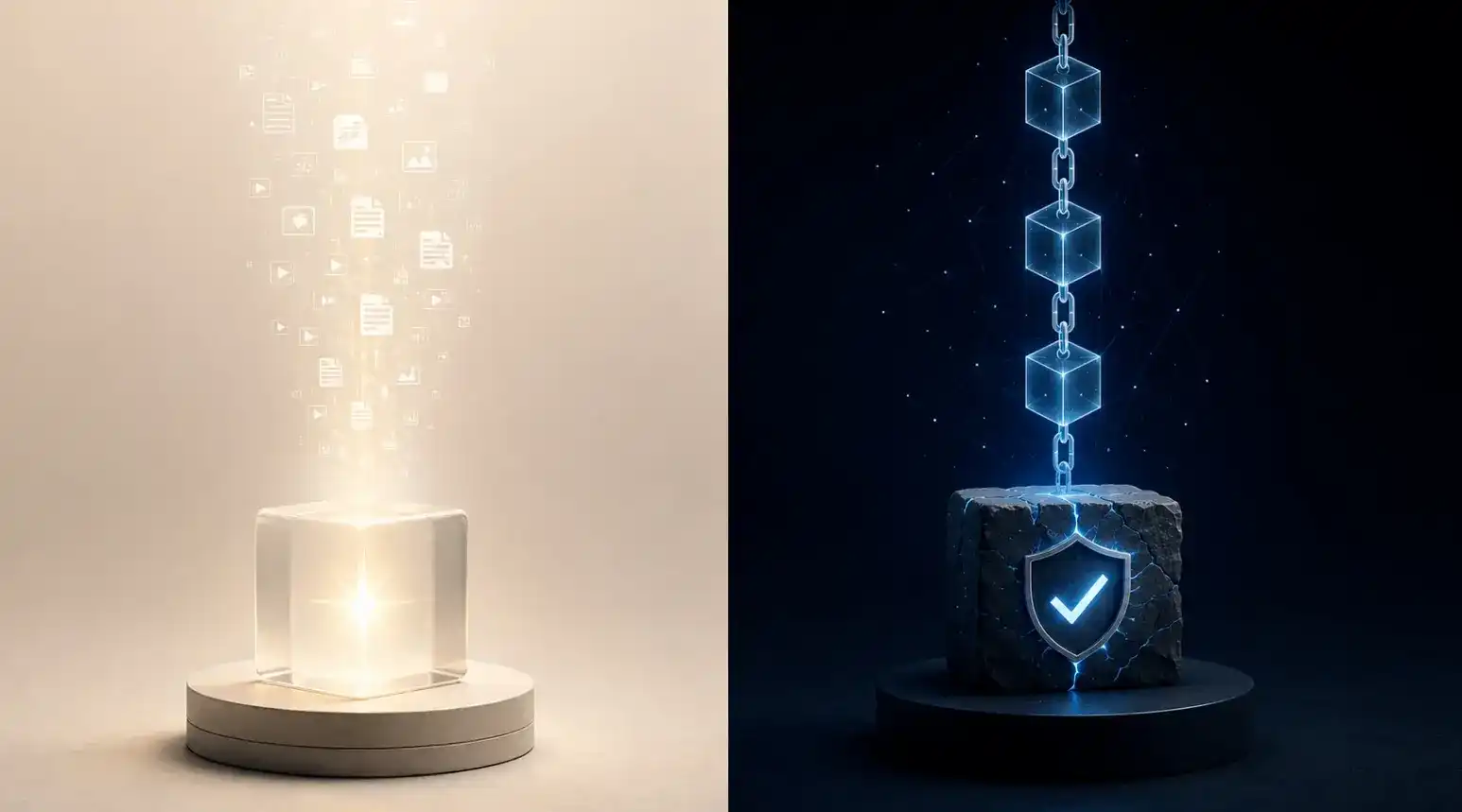
As Bitcoin falls below $60,000, the author reflects on the relationship between AI and Bitcoin, seeing them as two sides of the same coin. In the AI era, the cost of generating content has plummeted, making fake text, images, and videos increasingly easy and cheap to produce. This has led to a fundamental shift: while AI dramatically lowers the cost of information production, it also undermines trust and authenticity online. What becomes truly valuable is not more content, but the ability to verify what is real—"verifiability." This perspective offers a new lens for Bitcoin. Its massive energy consumption, often criticized as wasteful, is reinterpreted. While AI burns energy to enhance "capability" and efficiency, Bitcoin burns energy to produce "verifiability." Its purpose is not to be trusted but to enable a system where no trust in intermediaries—banks, platforms, or developers—is needed. Every transaction and the entire ledger's history is secured by cryptography and a decentralized network of nodes, making it independently verifiable. AI cannot forge a transaction on the Bitcoin network because the system is designed for proof, not generation. The author draws a historical parallel to the Renaissance: the printing press drastically reduced the cost of copying knowledge, while double-entry bookkeeping reduced the cost of trust in commerce. Today, AI is the new printing press, reducing content creation costs to near zero. Blockchain, and Bitcoin as its pioneer, may be the modern equivalent of double-entry bookkeeping—a foundational technology for verifying digital asset ownership and historical records without centralized authorities. Thus, AI and blockchain are not competitors. AI lowers the cost of creation; blockchain lowers the cost of verification. In an age where AI can generate anything, true scarcity may lie not in more content, but in independently verifiable facts. Whether the market will reprice Bitcoin accordingly remains uncertain, but its core value proposition as a "machine for producing verifiability" becomes strikingly relevant.

marsbitHá 1h

In the AI Era, What's Left for Bitcoin?

marsbitHá 1h

In the Age of AI, What's Left for Bitcoin?

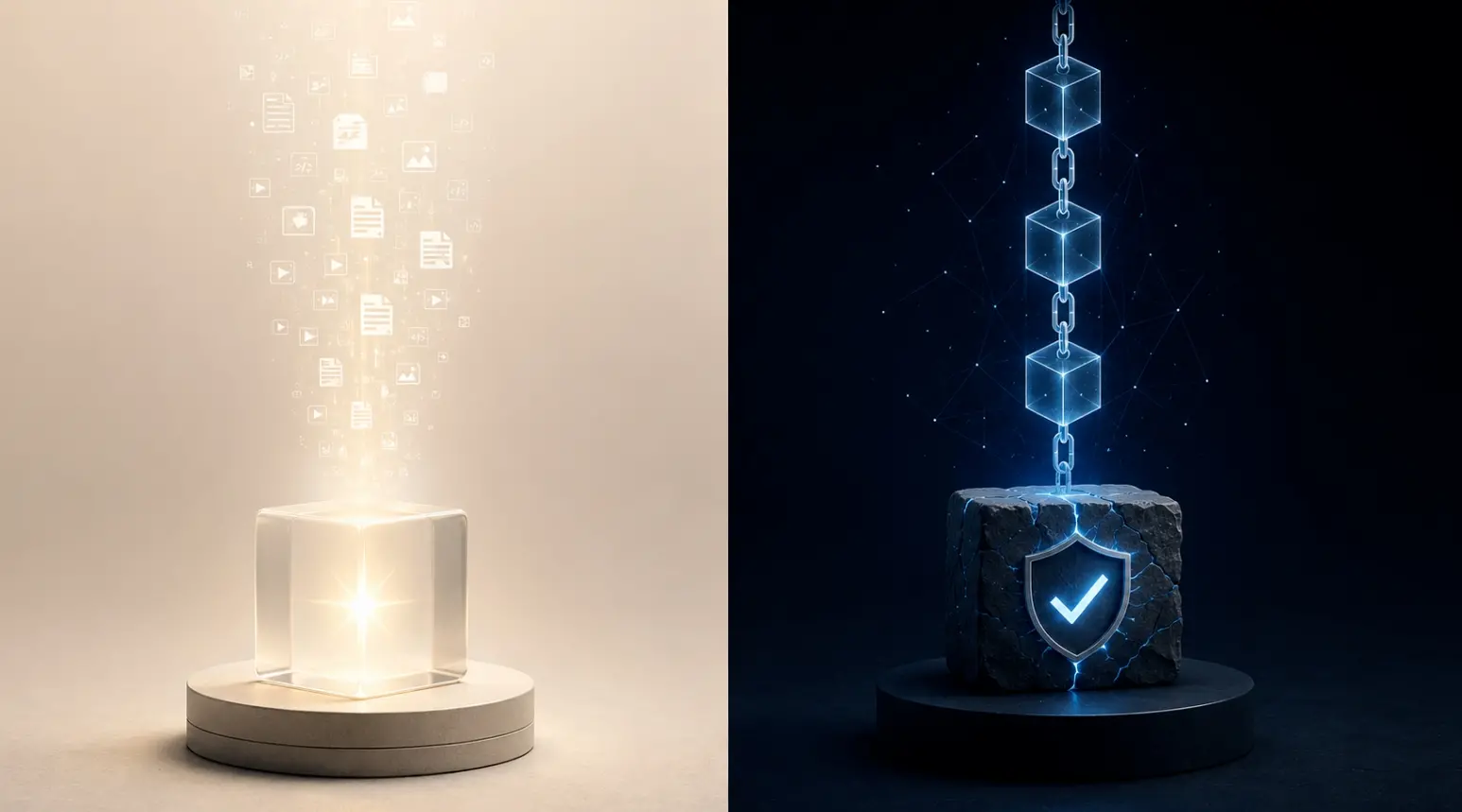
Author: Sevclub, Seven Research Amid Bitcoin's recent drop below $60k, the author reflects on a growing sense that AI and Bitcoin are two sides of the same coin. Today, encountering any content triggers a new default question: "Was this made by AI?" The cost of generating convincing text, images, and video is now negligible. While the internet lowered information *distribution* costs, AI is crashing information *production* costs to near zero. The consequence is a flood of content where truth and falsehood are increasingly indistinguishable. In this environment, what becomes truly valuable is not more information, but the ability to verify what is real—"verifiability." This reframes the common criticism that Bitcoin "wastes electricity." AI consumes power to produce "capability" (e.g., more powerful models). Bitcoin consumes power to produce something else: "verifiability." Bitcoin's core purpose isn't about belief or trust in any institution, developer, or even its creator. It's about enabling independent verification. Every bitcoin's origin, every transaction, and the integrity of the entire ledger are secured by mathematics, cryptography, and a global network of nodes. AI can fabricate convincing media, but it cannot falsify a transaction on the Bitcoin network. The expended energy makes篡改历史 (tampering with history) prohibitively expensive, purchasing a globally verifiable ledger. The author draws a historical parallel to the Renaissance. The printing press drastically reduced the cost of copying knowledge, while double-entry bookkeeping reduced the cost of trust in commerce—one enabled creation, the other verification. Today, AI is the new printing press, driving content production costs toward zero. The question becomes: what is this era's "double-entry bookkeeping"? Blockchain appears to be the leading candidate. It doesn't verify which news is true or which image is real, but it provides a foundational layer for independently verifying asset ownership and historical records in the digital realm without centralized authorities. Therefore, AI and blockchain are not in competition. AI lowers the cost of *generation*. Blockchain (and Bitcoin as a prime example) lowers the cost of *verification*. One creates, the other proves. Whether Bitcoin ultimately succeeds remains uncertain, facing potential challenges from quantum computing, regulation, and technical evolution. However, the author now sees it less as a "machine for making bitcoin" and more as a "machine for making verifiability." In an age where AI can generate anything, true scarcity may no longer be "more content," but "more independently verifiable facts." Whether the market will price this accordingly is a separate question.

链捕手Há 1h

In the Age of AI, What's Left for Bitcoin?

链捕手Há 1h

Trading

Spot

Artigos em Destaque

Como comprar KAIA

Bem-vindo à HTX.com!Tornámos a compra de kaia (KAIA) simples e conveniente.Segue o nosso guia passo a passo para iniciar a tua jornada no mundo das criptos.Passo 1: cria a tua conta HTXUtiliza o teu e-mail ou número de telefone para te inscreveres numa conta gratuita na HTX.Desfruta de um processo de inscrição sem complicações e desbloqueia todas as funcionalidades.Obter a minha contaPasso 2: vai para Comprar Cripto e escolhe o teu método de pagamentoCartão de crédito/débito: usa o teu visa ou mastercard para comprar kaia (KAIA) instantaneamente.Saldo: usa os fundos da tua conta HTX para transacionar sem problemas.Terceiros: adicionamos métodos de pagamento populares, como Google Pay e Apple Pay, para aumentar a conveniência.P2P: transaciona diretamente com outros utilizadores na HTX.Mercado de balcão (OTC): oferecemos serviços personalizados e taxas de câmbio competitivas para os traders.Passo 3: armazena teu kaia (KAIA)Depois de comprar o teu kaia (KAIA), armazena-o na tua conta HTX.Alternativamente, podes enviá-lo para outro lugar através de transferência blockchain ou usá-lo para transacionar outras criptomoedas.Passo 4: transaciona kaia (KAIA)Transaciona facilmente kaia (KAIA) no mercado à vista da HTX.Acede simplesmente à tua conta, seleciona o teu par de trading, executa as tuas transações e monitoriza em tempo real.Oferecemos uma experiência de fácil utilização tanto para principiantes como para traders experientes.

167 Visualizações TotaisPublicado em {updateTime}Atualizado em 2026.06.02

Como comprar KAIA

Discussões

Bem-vindo à Comunidade HTX. Aqui, pode manter-se informado sobre os mais recentes desenvolvimentos da plataforma e obter acesso a análises profissionais de mercado. As opiniões dos utilizadores sobre o preço de KAIA (KAIA) são apresentadas abaixo.

活动图片