315 Exposes AI Poisoning: A Business from Putian to Silicon Valley

marsbitPublicado em 2026-03-16Última atualização em 2026-03-16

Resumo

China's 315 Gala exposed "AI poisoning" through a practice called Generative Engine Optimization (GEO), where companies pay to manipulate AI recommendations. A case study featured a fictitious smartwatch with absurd features being promoted via auto-generated articles, which were then ranked highly by AI models within hours. This mirrors the early days of Search Engine Optimization (SEO), where paid rankings, notably by莆田系 hospitals on Baidu, dominated search results. While regulation later mandated "ad" labels, user trust in top results persisted. Now, with AI as the new information gateway, GEO has emerged as SEO's successor. The market quickly capitalized on GEO. BlueFocus invested millions in a GEO firm, triggering a stock surge and significant executive stock sales, despite the actual GEO market remaining relatively small. Simultaneously, OpenAI announced ads in ChatGPT for free users, separating responses from sponsored content—a move expected to generate $17 billion annually. This highlights a key contrast: unapproved GEO content is "poisoning," while platform-approved ads are "commercialization." The core issue remains: users inherently trust top AI responses, often unaware they can be bought. As GEO evolves rapidly, the article warns: answers may be free, but critical thinking shouldn’t be outsourced.

Author: David, Deep Tide TechFlow

Last night, 315 exposed a business based on GEO.

Full name is Generative Engine Optimization, which you can understand as:

Paying to have AI say nice things about you.

How is it done?

Brands want AI to prioritize them when consumers ask for recommendations. So they find GEO service providers, who mass-publish promotional soft articles online. After AI crawls and captures this content, it treats it as real information and recommends it to users.

A CCTV reporter used a software called "Liqing GEO," which can be bought on Taobao.

The reporter fabricated a smart wristband and made up several outrageous product features, such as "quantum entanglement sensing" and "black hole-level battery life." The software automatically generated over a dozen promotional soft articles and published them online.
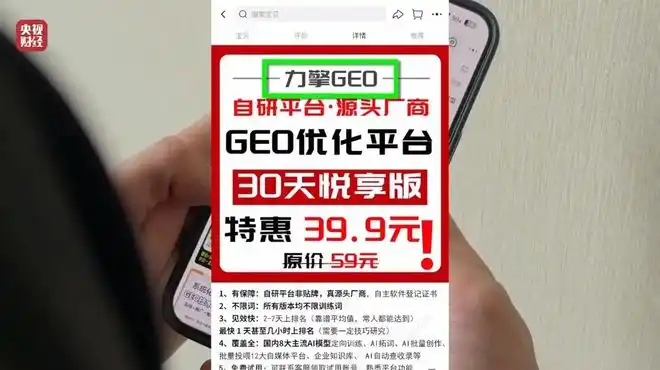
Two hours later, the reporter asked an AI: "Can you recommend a smart health wristband for me?"

The AI ranked this non-existent wristband at the top of the recommendation list.

The company behind this software is called Beijing Lisi Culture Media, a one-person company with zero employees enrolled in social insurance for years.

A tool made by such a company managed to deceive mainstream domestic AI models in just two hours.

315 exposed AI poisoning, but this business might be much bigger than a Taobao software.

SEO, the Putian Past

First of all, this is nothing new.

In 2008, CCTV's "News 30 Minutes" exposed Baidu's paid ranking over two consecutive days. Paying money could get your website to the top of search results, even if it was for fake medicine.

Back then, this business was called SEO, Search Engine Optimization.

The biggest buyers were Putian-based private hospitals. In 2013, the Putian system spent 12 billion yuan on Baidu advertising, accounting for nearly half of Baidu's total ad revenue.

Many unqualified medical institutions used SEO to push themselves to the first page of Baidu search results, appearing alongside top-tier hospitals, making it hard for ordinary people to tell the difference.

It wasn't until the 2016 Wei Zexi incident, where a university student died after seeking treatment at a Putian hospital that ranked high in search results, that regulators legislated to clarify: paid search is advertising.
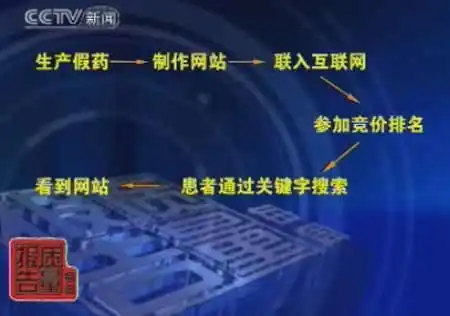
But this didn't kill the business. It just set the rules, turning it from a gray market activity into a legitimate business. The Putian system still buys rankings, but now there's a small label next to the result: "Ad."

But even with the label, people who would click still click.

The fundamental problem with search engines was never whether they were labeled, but that users inherently trust the top results.

Now people have moved from search engines to AI, thinking AI is more objective and can't be polluted by paid rankings. But whoever controls the gateway to information distribution can sell rankings.

The gateway has changed, SEO has changed a letter to become GEO, but the logic of selling rankings hasn't changed one bit.

What has changed is the price.

GEO, Loved by the Capital Market

Businesses that can't be killed are the ones the capital market loves most.

In September 2025, BlueFocus, China's largest marketing communication company, invested tens of millions of yuan in a GEO company called PureblueAI Qinglan.

Qinglan helps real brands optimize their ranking and recommendation rate in AI search results. Clients include Ant Group, Tencent Cloud, and Volvo.

The products are real, the company is real, and their work involves helping AI understand brand information more accurately.

This is completely different from the AI poisoning exposed by 315 involving Liqing. Liqing fabricated products, parameters, and used false information to deceive AI; Qinglan uses real brand content to adapt to AI's recommendation logic.

But from AI's perspective, the technical path for both things is the same: both involve publishing content online for AI to crawl.

AI can't distinguish between marketing and fabrication. This is the most ambiguous aspect of the GEO business.

When BlueFocus invested in Qinglan, GEO was just an industry term within marketing circles. Three months later, it became a stock market concept.

At the end of December 2025, BlueFocus's stock price hit the daily limit up.

Brokerages began holding intensive conference calls to interpret GEO, with research reports defining it as "the next generation traffic entrance in the AI era." Capital flooded in, not only buying BlueFocus but also driving up stocks of any company related to digital marketing and AI concepts. BlueFocus rose 132% in 9 trading days, and a batch of follower concept stocks also doubled.
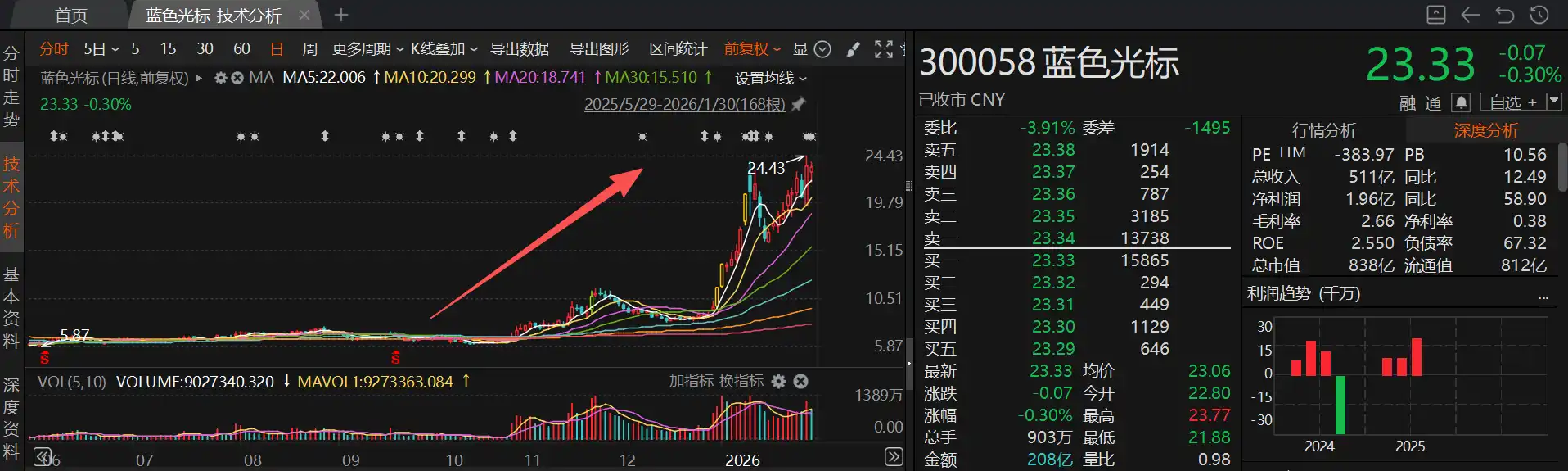
Image source: Cailian Press

After the surge, these companies issued risk warnings:

GEO business has no revenue and has no significant impact on the company's operations. BlueFocus also admitted that AI-driven revenue accounts for a very small proportion of overall revenue.

The implication is that while the stock price more than doubled, the GEO business itself hasn't made much money yet.

At the end of January, BlueFocus's stock price rose from 9.6 yuan to 23.3 yuan, a 143% increase in a month. Right then, Chairman Zhao Wenquan announced a plan to sell up to 20 million shares. Based on the stock price at the time, this would cash out approximately 467 million yuan.

Public research reports show that last year, the entire domestic GEO industry's market size was about 2.9 billion yuan. The increase in market capitalization of BlueFocus's stock alone in one month far exceeded this number.

315 exposed Liqing system's AI poisoning, costing a few hundred yuan. But the GEO concept made a round in the A-share market, earning billions.

Whether it's poisoning or not is debatable, but the money made is real.

315 Calls it Poisoning, Silicon Valley Calls it Commercialization

In January this year, OpenAI announced on its official blog: ChatGPT will start selling ads.

Free users and $8-per-month Go users will see ads; paid subscription premium users are unaffected.

On February 9th, ads officially launched. Some ads appear at the bottom of ChatGPT's answers, marked with a small word: Sponsored. The first batch of advertisers includes Ford, Adobe, Target, Best Buy...

You ask ChatGPT what car is good to buy, it gives you an answer, and below the answer hangs a sponsored link from Ford.

OpenAI made it clear: ads will not influence the content of ChatGPT's answers. The answer is the answer, the ad is the ad, they are separate.

Does that sound familiar?

Baidu said the same thing back in the day. Paid ranking is paid ranking, organic search is organic search, they are separate. Later, the top five search results were all ads.

OpenAI expects ads to help it double its consumer-side annual revenue to $17 billion. ChatGPT has over 800 million weekly active users, 95% of whom are free users, all potential audiences for ads.
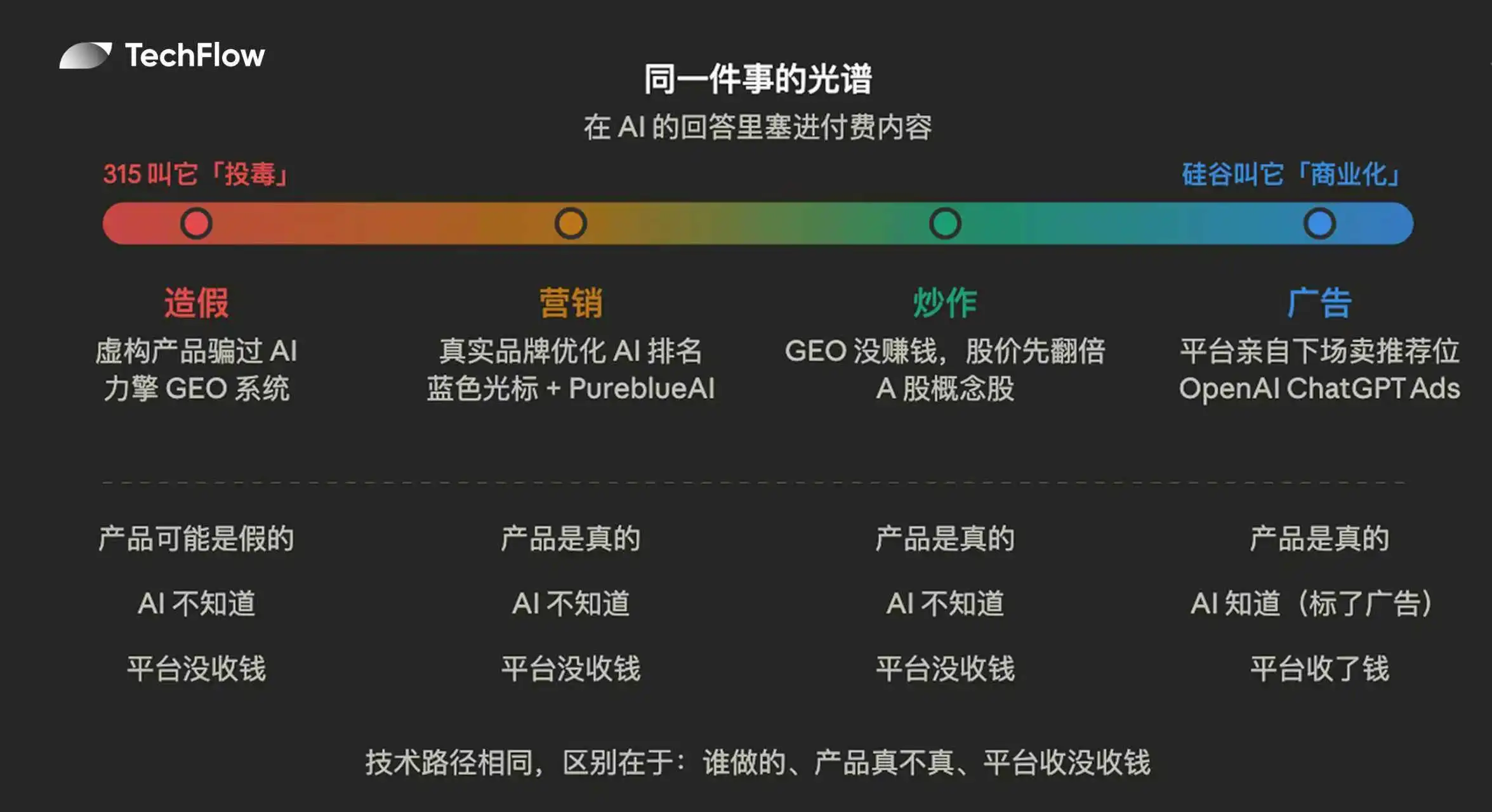
Looking back now at the industrial chain exposed by 315: Liqing floods AI with soft articles, making AI recommend non-existent products. OpenAI places sponsored content below the AI's answers, making AI recommend products that paid.

One didn't notify the platform, it's poisoning. One signed a contract with the platform, it's commercialization.

For the user, what's the difference?

One is inside the answer, one is below the answer. One has no label, one has a label saying "Ad".

315 caught Liqing for a few hundred yuan, A-shares hyped the GEO concept for billions, OpenAI plans to make $17 billion a year from this.

The same thing, its nature changes from poisoning to commercialization, and the price increases tens of thousands of times.

In November 2023, researchers from the Indian Institute of Technology Delhi and Princeton University published a paper on arXiv titled "GEO: Generative Engine Optimization".

This was the first formal academic definition of this concept.

From the paper's publication to the 315 exposure, just over two years. In between, it went through gray market activities, financing, concept stock surges, chairman cashing out, AI platforms personally entering to sell ads...

The path SEO took twenty years ago, GEO completed in two years.

The difference is, back then it took several years to learn not to fully trust search engine results; now AI is still in its trust红利期 (trust bonus period), most people haven't realized yet that AI's answers can also be bought.

However, this红利期 might not last too long. Next time you ask AI what's worth buying, remember to think for an extra second:

The answer can be free, but the brain cannot be outsourced.

Criptomoedas em alta

Perguntas relacionadas

QWhat is GEO (Generative Engine Optimization) as described in the article?

AGEO (Generative Engine Optimization) is a practice where brands pay to have AI systems prioritize and recommend their products or services. It involves publishing promotional soft articles online, which AI models then crawl and treat as authentic information, leading to biased recommendations for users.

QHow did the CCTV 315 exposure demonstrate the potential harm of GEO?

AThe CCTV 315 exposure demonstrated GEO's harm by showing how a fictional smart bracelet with absurd features, like 'quantum entanglement sensing,' was promoted using the 'Liqing GEO' software. Within two hours, major AI models in China recommended this non-existent product, highlighting how easily AI can be misled by manipulated content.

QWhat historical precedent does the article draw between GEO and SEO?

AThe article draws a parallel between GEO and SEO (Search Engine Optimization), noting that SEO allowed businesses, like Putian-based hospitals in China, to pay for top search rankings on platforms like Baidu. This often led to unqualified or fraudulent services being promoted, similar to how GEO now manipulates AI recommendations.

QHow did the GEO concept impact the stock market, particularly for companies like BlueFocus?

AThe GEO concept caused a significant stock market surge, with BlueFocus's stock price rising 132% in nine days after investing in a GEO company. This sparked a broader rally in AI and digital marketing stocks, even though many companies admitted GEO had minimal actual revenue impact, leading to substantial market speculation and insider selling.

QWhat is the key difference between the GEO 'poisoning' exposed by CCTV and OpenAI's approach to advertising in ChatGPT?

AThe key difference is legitimacy: GEO 'poisoning' involves third parties secretly feeding AI with fake content to manipulate recommendations, while OpenAI's advertising is a transparent, platform-sanctioned商业化 (commercialization) where sponsored content is clearly marked and separated from AI responses, though both aim to influence user choices through paid promotion.

Leituras Relacionadas

Annual Salary of Millions Competing for Electricians, Meta Rushes to Open Its Own Technical School

The AI boom is facing an unexpected bottleneck: a severe shortage of skilled construction workers and electricians. As tech giants like Meta, OpenAI, and Alphabet race to build massive data centers—such as OpenAI's $16 billion "Stargate" project—they are hitting a critical labor wall. The U.S. needs an estimated 130,000 more electricians, 240,000 construction workers, and 150,000 supervisors by 2030 for AI infrastructure alone, but tens of thousands of electrician jobs go unfilled each year. While AI companies offer high premiums, with electricians earning up to $280,000 annually, worker scarcity still causes massive losses—delays on a single project can cost $14.2 million per month. The complexity of building AI data centers, which require immense power (equivalent to powering hundreds of thousands of homes), sophisticated electrical systems, and advanced liquid cooling solutions, demands highly skilled technicians who are in short supply. To combat this, companies are investing heavily in training. Meta has committed $115 million to a free training school offering tuition, housing, and stipends, targeting 5,000 new workers. OpenAI is partnering with unions to secure skilled labor. These efforts are paying off, with a significant rise in Gen Z interest in trade schools over college. However, the power demands are staggering. AI data centers are driving a rapid surge in electricity consumption, projected to account for up to 12% of U.S. power use by 2028 and raising costs for consumers. Furthermore, the construction boom is project-based, leading to a potential future glut of trained workers once building peaks, which could depress wages industry-wide. The race for AI supremacy now depends as much on skilled hands as on advanced chips.

marsbitHá 27m

Annual Salary of Millions Competing for Electricians, Meta Rushes to Open Its Own Technical School

marsbitHá 27m

OpenAI No Longer Sells Its Most Expensive Model for Profit

OpenAI is shifting its business strategy away from promoting its most expensive, flagship models for every task. Recent price cuts—80% for GPT-5.6 Luna and 20% for Terra—signal a deeper change: the company now actively advises users that many tasks don't require the most powerful model. Instead, OpenAI recommends a tiered approach: use the high-end GPT-5.6 Sol for complex planning and analysis, then delegate execution to cheaper models like Luna. This mirrors moves by Anthropic, which recently launched Claude Opus 5 at half the price of its top model, Fable 5. Both companies are de-emphasizing flagship models as primary revenue drivers, using them instead for brand prestige and technological showcases. The industry is entering a "mass-market" phase, similar to automotive, where high-volume, cost-effective models handle daily operations and drive scale. OpenAI's price reductions are partly enabled by AI models themselves optimizing underlying code and infrastructure, creating a self-reinforcing cycle of efficiency gains and cost reduction. Competition is shifting from "who is smartest" to "who offers the best value." The goal is no longer selling individual models but fostering widespread API adoption and ecosystem lock-in. By making AI calls cheap and ubiquitous, companies like OpenAI aim to become the indispensable, utility-like infrastructure powering automated workflows—the "water and electricity" of software, quietly embedded everywhere.

marsbitHá 27m

OpenAI No Longer Sells Its Most Expensive Model for Profit

marsbitHá 27m

Will the Fed Definitely Raise Interest Rates in September? How Will Crypto and U.S. Stocks Withstand the Pressure?

The market's expectation for a September Fed rate hike surged dramatically in early August, jumping from under 50% to over 80% within a week. This shift followed a contentious July FOMC meeting, where a 9-3 vote to hold rates revealed growing dissent from hawkish members advocating for an immediate hike to combat persistent inflation. The primary catalyst for this repricing is rising oil prices, driven by renewed geopolitical tensions around the Strait of Hormuz, which threaten global supply. Energy costs directly influence inflation metrics, making the upcoming July CPI report (due August 12th) a critical data point. If it shows inflation reaccelerating, the probability of a September hike will solidify. For Bitcoin and crypto assets, this is typically bearish news. Bitcoin continues to behave as a high-beta, liquidity-sensitive risk asset. A rate hike raises the opportunity cost of holding non-yielding assets and could drive capital toward money markets, pressuring crypto prices in the short term. However, historical patterns suggest that if a hike is perceived as the end of a tightening cycle rather than the start, any negative price impact may be brief. U.S. stocks, particularly crypto-linked equities like Coinbase and growth-oriented tech stocks, are also vulnerable. Higher rates increase discount rates in valuation models, putting pressure on high-multiple companies. This coincides with a pivotal tech earnings season where investor focus has shifted from massive AI capital expenditure to tangible revenue and cash flow generation. Companies with negative cash flow and weak growth narratives could face heightened volatility if borrowing costs rise in September. In summary, a September Fed hike has evolved into a mainstream market scenario. Key factors to watch are oil prices, the July CPI report, and Fed communications, which will determine the final decision and its impact on volatile crypto and equity markets.

marsbitHá 38m

Will the Fed Definitely Raise Interest Rates in September? How Will Crypto and U.S. Stocks Withstand the Pressure?

marsbitHá 38m

Trading

Spot

Artigos em Destaque

Como comprar NIGHT

Bem-vindo à HTX.com!Tornámos a compra de Midnight (NIGHT) simples e conveniente.Segue o nosso guia passo a passo para iniciar a tua jornada no mundo das criptos.Passo 1: cria a tua conta HTXUtiliza o teu e-mail ou número de telefone para te inscreveres numa conta gratuita na HTX.Desfruta de um processo de inscrição sem complicações e desbloqueia todas as funcionalidades.Obter a minha contaPasso 2: vai para Comprar Cripto e escolhe o teu método de pagamentoCartão de crédito/débito: usa o teu visa ou mastercard para comprar Midnight (NIGHT) instantaneamente.Saldo: usa os fundos da tua conta HTX para transacionar sem problemas.Terceiros: adicionamos métodos de pagamento populares, como Google Pay e Apple Pay, para aumentar a conveniência.P2P: transaciona diretamente com outros utilizadores na HTX.Mercado de balcão (OTC): oferecemos serviços personalizados e taxas de câmbio competitivas para os traders.Passo 3: armazena teu Midnight (NIGHT)Depois de comprar o teu Midnight (NIGHT), armazena-o na tua conta HTX.Alternativamente, podes enviá-lo para outro lugar através de transferência blockchain ou usá-lo para transacionar outras criptomoedas.Passo 4: transaciona Midnight (NIGHT)Transaciona facilmente Midnight (NIGHT) no mercado à vista da HTX.Acede simplesmente à tua conta, seleciona o teu par de trading, executa as tuas transações e monitoriza em tempo real.Oferecemos uma experiência de fácil utilização tanto para principiantes como para traders experientes.

354 Visualizações TotaisPublicado em {updateTime}Atualizado em 2026.06.02

Como comprar NIGHT

Discussões

Bem-vindo à Comunidade HTX. Aqui, pode manter-se informado sobre os mais recentes desenvolvimentos da plataforma e obter acesso a análises profissionais de mercado. As opiniões dos utilizadores sobre o preço de NIGHT (NIGHT) são apresentadas abaixo.

活动图片













