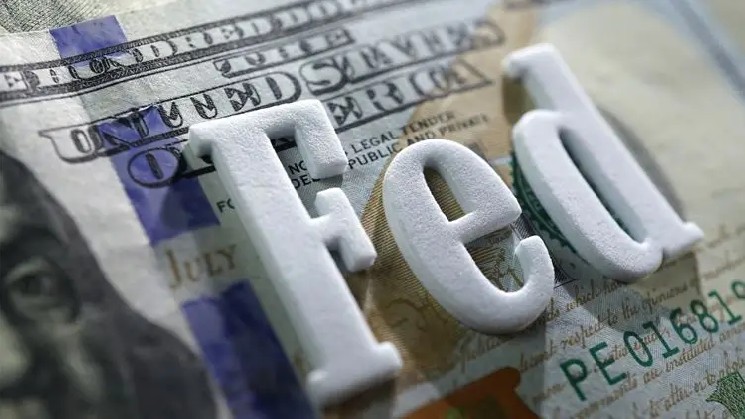
Polymarket CEO hints at POLY token after $2B ICE backing – Details

ambcryptoPublicado em 2025-10-09Última atualização em 2025-10-10

Key Takeaways

What is the POLY token, and what role could it play?

POLY is expected to support governance, liquidity, and user rewards, potentially becoming one of the largest tokens.

Did the POLY token affect other cryptocurrencies?

Coplan’s data briefly nudged XRP from the fourth-largest spot, likely due to a dataset quirk.


Polymarket is once again in the spotlight. This time, fueled by its founder Shayne Coplan after he was recently hailed by Bloomberg as the “youngest self-made billionaire.”

That’s not all, though. In fact, Coplan has stirred excitement in the crypto-community by hinting at the launch of a native token for the widely used predictions platform.

Is a token being teased?

In a post on X (formerly Twitter), he suggested that the proposed POLY token could rise to become one of the largest in terms of market capitalization.

He said, 

Shayne CoplanShayne Coplan

Source: Shayne Coplan/X

Recent data shared by Coplan appeared to have nudged XRP out of its spot as the fourth-largest freely traded crypto asset. However, this shift may simply reflect a quirk in the Kaito dataset he referenced.

Looking ahead, the potential POLY token is expected to play a central role on the platform. It would underpin governance, while providing liquidity incentives and rewarding users for participation.

Celebrating this news, an X user noted, 

“Polymarket can easily flip PumpFun just by adding opportunity to create their own poylemarkets with different name ( Example PolyStars).”

Polymarket’s funding rounds

Recent revelations highlight two previously undisclosed funding rounds for Polymarket over the past two years. The most notable was a $150 million raise in 2025 led by Founders Fund, valuing the predictions platform at $1.2 billion.

Polymarket’s momentum accelerated following a major investment deal with Intercontinental Exchange (ICE), the parent company of the NYSE. ICE committed up to $2 billion at a post-money valuation of $9 billion – A hike from its previous $8 billion estimate.

Now, although the idea of a native token isn’t new, Polymarket hinted at a possible airdrop for users who redeemed winning bets last November. This fueled a lot of speculation about a POLY token launch.

Despite notable achievements, including accurately forecasting the 2024 U.S. elections and navigating regulatory hurdles, the platform continues to face strong competition from Kalshi.

This will continue to cast uncertainty over its long-term growth outlook.

Share

Leituras Relacionadas

Understanding the Q2 Crypto Market in 5 Charts: RWA Explosion, Fundamentals Continue to Recover

Summary of Q2 Crypto Market: RWA Boom and Continued Fundamental Recovery The second quarter of 2026 presented a mixed picture for the crypto market. While major crypto asset prices declined by 36% in H1 2026, the fundamentals of the industry showed significant strength. Key highlights from Bitwise's market review include: 1. **Divergence Between Crypto Stocks and Tokens:** Crypto-related public equities, tracked by the Bitwise Crypto Innovators 30 Index, rose 23% in H1, outperforming most major asset classes. This signals robust investment opportunities within the crypto ecosystem, such as Bitcoin miners benefiting from AI and traditional finance firms deepening crypto integration, even during a bear market for tokens. 2. **Substantial Crypto Application Revenue:** Leading decentralized applications generated a combined $5.9 billion in revenue over the past 12 months, with top protocols like PancakeSwap, Hyperliquid, and Aave each nearing $1 billion. This demonstrates the existence of real, revenue-generating businesses within the sector. 3. **Breakout Growth in Real-World Asset (RWA) Tokenization:** The total value of tokenized real-world assets reached a record $33 billion in Q2, up 12% quarterly and 45% year-to-date. Growth is driven by tokenized U.S. Treasuries, corporate credit, equities, and venture capital shares, indicating accelerating institutional adoption. 4. **Expanding Prediction Markets:** Prediction market open interest hit a new high of $1.8 billion in Q2, with sports being a key category. Quarterly trading volume also reached a record $43 billion. Platforms like Polymarket represent a form of mainstream, albeit often unaware, adoption of crypto infrastructure for event betting, with further growth expected around the U.S. midterm elections. 5. **Attractive Profile of Crypto Equities:** The Bitwise Crypto Innovators 30 Index exhibited low 90-day rolling correlations with most major assets (developed market stocks, EM stocks, REITs, bonds, gold) and negative correlation with commodities. This combination of high returns and portfolio diversification is highly attractive to institutional investors. In conclusion, despite weak token prices, core industry fundamentals—including user activity, business revenues, and institutional adoption—continue to advance, building a strong foundation for the next market cycle.

Foresight NewsHá 29m

Understanding the Q2 Crypto Market in 5 Charts: RWA Explosion, Fundamentals Continue to Recover

Foresight NewsHá 29m

GPT-5.6 Cracks a 50-Year-Old Math Problem in 1 Hour, 64 AIs Claim the Crown Jewel of Graph Theory

OpenAI announced that its AI model, GPT-5.6 Sol Ultra, has successfully proved the 50-year-old Cycle Double Cover (CDC) conjecture in graph theory in under an hour. This long-standing problem, posed independently by several prominent mathematicians, states that every bridgeless finite undirected graph contains a set of cycles where each edge is covered exactly twice. The breakthrough was achieved using a novel "parallel test-time computation" (TTC) approach. Instead of a single AI working sequentially, the system deployed 64 concurrent AI agents, each exploring distinct proof strategies—from algebraic perspectives to structural induction. The process included strict protocols to avoid common research pitfalls: initial exploration of fundamentally different paths, preventing herd mentality by not revealing the most promising direction, and employing a "critic squad" of agents to rigorously attack and verify every proposed proof step. The system forbade vague assertions, demanding concrete lemmas and constructions. The resulting proof, generated by GPT-5.6 and formatted with Codex, employed a sophisticated multi-step strategy. It first reduced the general case to cubic graphs, then leveraged Tutte's group-flow theorem to establish the existence of a nowhere-zero 8-flow on the graph. A key inventive step was introducing a "two-element set" labeling scheme (Lemma 2.1), which, if satisfied, guarantees a cycle double cover. The AI then transformed this combinatorial condition into a large system of linear equations (Lemma 2.2), using linear algebra over finite fields to conclusively demonstrate that a solution always exists. Researchers highlighted that parallel TTC dramatically compressed the reasoning time, making deep, extended AI problem-solving practically feasible. While some observers marveled at the implications for mathematics and science, others questioned whether parallel breadth can fully substitute for deep, continuous logical chains. Nonetheless, this achievement marks a significant advance in AI's autonomous capacity for high-level abstract reasoning and complex proof generation.

marsbitHá 35m

GPT-5.6 Cracks a 50-Year-Old Math Problem in 1 Hour, 64 AIs Claim the Crown Jewel of Graph Theory

marsbitHá 35m

Prompt Engineering Paper Accepted at ICML 2026 Sparks Heated Debate Among Netizens

A paper on prompt engineering, titled "Verbalized Sampling (VS)," has been accepted by the prestigious machine learning conference ICML 2026, sparking significant debate online. The paper addresses the problem of "mode collapse" in large language models (LLMs), where models tend to produce repetitive, safe, and homogeneous outputs. Instead of proposing new training algorithms or model architectures, the authors introduce a simple yet effective prompt-based method. The core technique, Verbalized Sampling, instructs the model to generate multiple responses (e.g., five jokes) while also outputting a possible probability value for each. This prompt adjustment alone was shown to significantly increase output diversity by 1.6x to 2.1x in creative writing tasks, without compromising factual accuracy or safety. The authors argue that the root cause of mode collapse lies not in optimization algorithms but in the "typicality bias" present in human preference data used for alignment. Human annotators naturally favor familiar and fluent text, which steers models toward conservative outputs. The VS method aims to counteract this by leveraging the model's inherent pre-training distribution during inference. The paper's acceptance has led to polarized reactions. Critics argue that prompt engineering lacks the theoretical depth and algorithmic innovation expected from top-tier conferences like ICML, questioning its novelty, generalizability across models, and experimental scale. Some draw parallels to reproducibility crises in other fields, citing a potential over-reliance on empirical results. Supporters, including an author who responded online, defend the work's rigor. They emphasize its comprehensive problem analysis, theoretical grounding, mathematical derivation, and extensive quantitative experiments. Proponents compare VS to seminal techniques like Chain-of-Thought (CoT) prompting, suggesting that inference-stage methods are becoming a core part of ML research capable of expanding model capabilities without retraining. The research was conducted by a team from Northeastern University, Stanford University, and West Virginia University, with Jiayi Zhang, Simon Yu, and Derek Chong as co-first authors.

marsbitHá 36m

Prompt Engineering Paper Accepted at ICML 2026 Sparks Heated Debate Among Netizens

marsbitHá 36m

Trading

Spot
活动图片