Morgan Stanley’s Global Investment Committee (GIC) has issued an unexpected recommendation: treat Bitcoin as “digital gold” and allocate up to 4% of suitable portfolios to cryptocurrency exposure.
The action marks one of Wall Street’s most public institutional nods to digital assets yet, emphasizing how crypto is migrating from fringe speculative bets toward mainstream portfolio construction.
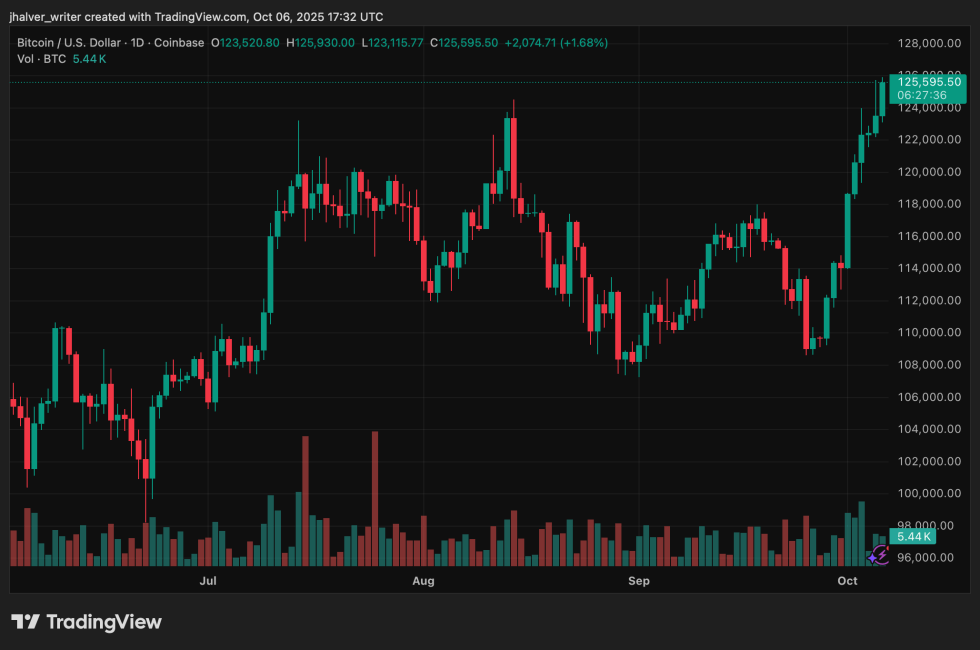
BTC's price trends to the upside on the daily chart. Source: BTCUSD on Tradingview
Institutional Validation & Allocation Framework
In its October advisory memo, Morgan Stanley explicitly likened Bitcoin to a scarce wealth store, “digital gold”, and signaled that the crypto market has matured enough to warrant modest allocations within diversified portfolios.
The GIC’s guidance is structured by risk profile:
- Balanced Growth portfolios are recommended allocations around 2%
- Opportunistic Growth models may go as high as 4%
- Portfolios focused on Wealth Conservation or Income are advised 0% crypto exposure, given the volatility risks
Morgan Stanley also emphasizes that exposure should generally happen through regulated vehicles such as crypto ETFs rather than direct holdings.
This endorsement could sway a large swath of the financial advisory landscape, as the GIC influences over 16,000 advisors managing around $2 trillion in client capital.
Why Now? Macro Drivers & Structural Signals
Several tailwinds give gravity to Morgan Stanley’s shift. Bitcoin recently ripped past $125,000, while exchange balances have dipped to 6–7 year lows, pointing to less supply readily available for sale.
Macro conditions also support the thesis. The U.S. government shutdown, rising concerns over inflation, and softer dollar dynamics have driven investors toward nontraditional hedges. In that context, Bitcoin’s appeal as a scarce, digital store of value becomes more credible.
Meanwhile, Morgan Stanley is moving beyond mere commentary: the firm is preparing to offer crypto trading to retail clients via its E*Trade partnership with Zerohash, expected to start in 2026.
Risks, Constraints & What to Watch
Morgan Stanley is also candid about crypto’s limitations. It warns of higher volatility, correlations under stress, and the importance of disciplined rebalancing. The company advises advisors to keep exposure in check and prevent crypto holdings from becoming dominant during sharp rallies.
Here are some of the key catalysts to monitor:
- Regulation clarity in the U.S. and globally
- Sustained ETF inflows or institutional capital
- Further supply contraction from exchanges
- Execution of Morgan Stanley’s retail crypto offering via E*Trade
Morgan Stanley’s public embrace of crypto, anchoring Bitcoin as “digital gold,” is a watershed moment. With allocations of 2-4% now part of the playbook for growth clients, the institutional gate to digital assets just cracked wider. But for those allocations to matter, execution and macro alignment must follow.
Cover image from ChatGPT, BTCUSD chart from Tradingview

Related Posts