Crypto market’s weekly winners and losers – MYX, ASTER, PUMP, IP

ambcryptoPublicado em 2025-09-28Última atualização em 2025-09-28

Key Takeaways

Which crypto tokens were the highest gainers this week?

MYX Finance [MYX], Zcash [ZEC], and Aster [ASTER] led the week in gains.

Which crypto tokens lost the most this week?

Pump.fun [PUMP], Story [IP], and Pi [PI] saw significant declines.


This week in the crypto market was a bloodbath. 

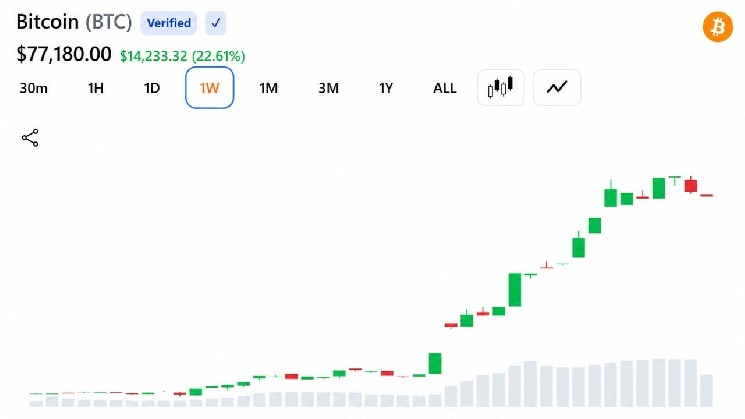
Over $1 billion in single-day liquidations rattled the market, with altcoins leading the drop and Bitcoin [BTC] following close behind. This, in turn, wiped out all of September’s gains. 

In the aftermath, mid-cap coins stepped up, leading the week’s gains.

Weekly winners

MYX Finance [MYX] — DeFi project recovered about 50% of its weekly losses

MYX Finance [MYX] led this week’s gains with a 30% pop off $9.8. Last week, it dipped 11.2% after hitting a local top at $18, but the rebound shows there’s still solid bid-side support.

On the daily chart, things look a bit shaky. Since mid-September’s $19 high, MYX has made two lower highs and two higher lows, putting $15 support at risk of turning into resistance.

That said, the RSI isn’t even close to overbought, which could be a bullish sign, showing the market isn’t overextended and could attract bulls to test higher levels. But if they don’t, a deeper pullback is possible.

MYX

Source: TradingView (MYX/USDT)

MYX has struggled to flip key levels into support. $10 first, then $8. If this pattern keeps playing out, it could eat further into September’s gains, signaling bulls aren’t showing up as expected.

Zcash [ZEC] — Privacy token broke a key resistance level

Zcash [ZEC] posted a 13% rally this week, coming in as the second-top performer after MYX. While it’s a smaller token, its measured, steady grind created a bullish divergence, signaling strength despite a slower pace.

On the weekly chart, ZEC has posted four straight green weeklies, making September its best month since November with a 44% ROI. The altcoin is on track to close the month above a key resistance zone.

After breaking the $54 ceiling for the first time in four months with a 12% move, the RSI remains well-controlled, avoiding overbought conditions. This positions ZEC to target the $60 resistance next.

Aster [ASTER] —  Emerging crypto project broke out into a new ATH

Aster [ASTER] was this week’s third-top gainer, but volatility is off the charts. The week kicked off at $1.3, spiked to a $2.4 all-time high, then gave back 26% to $1.7, showing classic chop.

On the daily, the swings are even sharper. ASTER jumped 18% early in the week, but after two weeks of solid gains, it’s already given back 60% of its weekly move, signaling a typical hype cycle unwind.

By week’s end, ASTER struggled to flip $1.80–$2.15 into support, keeping the ask side in control. The next level to watch is $1.6, which could decide if bulls step in or the pullback extends.

Other notable winners

Outside the majors, altcoin rockets stole the spotlight this week.

APEX [APEX] led the charge with a 704% surge, followed by I Love Puppies [PUPPIES], which jumped 411%, and PunkStrategy [PNKSTR], rallying 211% to round out the leaderboard.

Weekly losers

Pump.fun [PUMP] —  Meme token reinforced bearish market structure

Pump.fun [PUMP] led the losers this week, dropping 20% from $0.006, marking its second straight week of lower lows and reinforcing a bearish structure with bulls mostly sidelined.

On the daily timeframe, it kicked off with a 12% drop to $0.005, then posted a tiny 2.3% bounce (the first bullish attempt in days) but momentum fizzled. The next two sessions brought a 13% dip.

The result? The downtrend has pushed PUMP back toward its mid-September range, with bulls trying to step in, but weak volume shows there’s no strong accumulation yet.

PUMP

Source: TradingView (PUMP/USDT)

However, by week’s end, PUMP settled into a consolidation zone around $0.005, hinting at sell-side exhaustion. If bulls step up here, a rebound is possible; if not, post-launch gains could be wiped out.

Story [IP] —  NFT project plunged this week with its biggest red candle

Story [IP] was the second-biggest loser this week, dropping 15%+ and printing its largest red candle yet, with the RSI down 25 points, signaling heavy sell-side pressure.

Unlike PUMP, this pullback comes after a strong H2 rally that peaked at $15 in mid-September. With three straight months of green ROI, the dip looks more like a healthy reset than a trend flip.

In fact, by week’s end, IP is consolidating around $8, hinting at a possible bear trap. If bulls step in, we could see a squeeze back toward $14, making it a solid entry for the next leg up.

Pi [PI] —  Network’s native token broke below key support level

Pi [PI] struggled this week, emerging as the third-biggest loser with a 15%+ drop, underscoring that the bears remain firmly in control.

After six weeks of sideways chop around $0.30, the selling finally intensified, pushing PI to an all-time low of $0.26, confirming the downtrend is still intact, with sellers dictating price action.

The RSI is deep in oversold territory, which could trigger a short-term bounce, but weak bid support and thin volume make it a risky trade. Unless buyers step in aggressively, PI looks set to extend its weekly losses.

Other notable losers

In the broader market, downside volatility hit hard.

Syndicate [SYND] led the losers with a 58% drop, followed by Fasttoken [FTN], down 54%, and OpenLedger [OPEN], which slipped 50% as momentum sharply cooled.

Conclusion

This week was a rollercoaster. Big pumps, sharp dips, and nonstop action. As always, stay sharp, do your own research, and trade smart.
Share

Criptomoedas em alta

Leituras Relacionadas

Will the STRC Issue Price Determined by ChatGPT Lead to a Death Spiral?

A "death spiral" concerns surround the "STRC" preferred shares from MicroStrategy, a financial instrument designed by CEO Michael Saylor with significant AI consultation to trade near a $100 face value. Since its July 2025 launch alongside a ~40% Bitcoin (BTC) decline, STRC has traded at a discount, hitting a low of $82.53 and pushing its effective dividend yield above 12.9%. The debate centers on whether STRC's structure—which relies on MicroStrategy issuing more shares to fund Bitcoin purchases and dividends—is sustainable or a "centralized Ponzi scheme," as economist Peter Schiff claims. Skepticism grew after Saylor revealed the product's design involved extensive AI dialogue to create a legally viable, monthly-dividend, price-stable preferred share—a novel concept. MicroStrategy's recent sale of 32 BTC to cover dividends, coupled with a sharp slowdown in its weekly Bitcoin buys (from billions to ~$100 million in June), has intensified fears. The "at-the-market" equity issuance, a key funding mechanism, is paused while STRC trades below par. This raises the "death spiral" risk: a lower STRC price triggers automatic dividend rate hikes, increasing cash obligations and potentially forcing more share sales or Bitcoin divestments. Bullish analysts like Jesse Myers argue the sell-off stems from leveraged positions unwinding, not fundamental failure, noting the company can cover dividends for decades if BTC appreciates modestly. The shift to semi-monthly dividends and the high yield at discounted prices may attract new buyers. Major AI models (ChatGPT, Grok, Claude) suggest a return to $100 is possible but conditional on restored market confidence, sustainable dividend coverage without asset sales, and a Bitcoin price recovery. The critical test arrives as new dividend rules take effect June 30, likely raising rates again with STRC below $95. The central question remains: Can MicroStrategy fulfill its obligations without selling Bitcoin, or will the mechanism accelerate its own decline?

marsbitHá 6m

Will the STRC Issue Price Determined by ChatGPT Lead to a Death Spiral?

marsbitHá 6m

Why Did NVIDIA's Bond Issue Go Unnoticed While SpaceX's Caused a Plunge?

The article analyzes the contrasting market reactions to recent bond issuances by SpaceX and NVIDIA. While NVIDIA's $25 billion bond offering was met with strong demand and seen as securing long-term capital for its already profitable AI business, SpaceX's move to raise at least $20 billion in bonds (primarily to refinance bridge loans) triggered a sell-off in its stock (SPCX). The key difference lies in the stage of cash flow validation for their respective core narratives. For NVIDIA, the AI boom is generating substantial, visible revenue and profits, making debt a tool to amplify a proven growth curve. For SpaceX, despite a strong cash position post-IPO and a revenue-generating business in Starlink, its valuation is heavily tied to future, capital-intensive projects like Starship, global satellite networks, and potential AI infrastructure. The bond issuance acted as a trigger, shifting market focus from SpaceX's long-term vision to the pressing question of whether Starlink's profits can fund these ambitious, unproven ventures before they generate their own returns. Thus, the market penalizes not the act of borrowing itself, but the perceived gap between high capital expenditure and the speed of cash flow realization. SpaceX's valuation recovery hinges on demonstrating that Starlink's profitability can outpace the burn rate of its futuristic projects or that those projects (like Starship achieving reliable, low-cost reusability) can soon transition from costly visions to commercial realities.

marsbitHá 11m

Why Did NVIDIA's Bond Issue Go Unnoticed While SpaceX's Caused a Plunge?

marsbitHá 11m

Will the STRC Issue Price Determined by ChatGPT Really Fall into a Death Spiral?

"Strategy's" (STRC) preferred share, a financial instrument designed by CEO Michael Saylor in consultation with AI to trade steadily at $100, faces mounting pressure. Since its July 2025 launch alongside a ~40% Bitcoin price drop, STRC has traded at a steep discount, hitting a low of $82.53. This discount pushes its effective dividend yield above 12.9%. The core debate revolves around whether STRC's structure is sustainable or a "centralized Ponzi scheme," as economist Peter Schiff claims. The mechanism relies on issuing new shares ("at-the-market" offerings) to fund Bitcoin purchases and dividend payments. However, the deep discount has paused these ATM offerings, slowing Bitcoin accumulation and forcing a minor sale of 32 BTC to cover obligations. Proponents, like The Smarter Web Company's Jesse Myers, argue the sell-off is a leveraged unwinding, not a fundamental failure. They note Strategy has ample resources to cover dividends for years if Bitcoin appreciates modestly. The deep discount also makes STRC attractive for yield-seeking buyers, as dividends are calculated on the $100 face value. The key test is whether Strategy can maintain dividends without sustained Bitcoin sales. A critical watchpoint is June 30th, when STRC switches to semi-monthly dividends. An automatic rule will likely raise the dividend rate further because the price remains below $95$, potentially creating a "death spiral": lower prices trigger higher yields, increasing the cash burden and forcing more dilution or asset sales. The question of whether this AI-designed "flywheel" is a stable instrument or a flawed accelerator will be answered by its price action and Strategy's funding choices in the coming months.

链捕手Há 12m

Will the STRC Issue Price Determined by ChatGPT Really Fall into a Death Spiral?

链捕手Há 12m

Ethereum's Next Stop Glamsterdam: The Core Upgrades You Must Know

The Glamsterdam upgrade, scheduled for late 2026, is a major Ethereum hard fork combining the Amsterdam execution layer and Glasgow consensus layer updates. Its primary goal is not simply increasing throughput but restructuring Ethereum's block production, validation, and resource pricing to enable future scaling. Key technical changes include **EIP-7732 (ePBS)**, which formally enshrines proposer-builder separation into the protocol. This decouples consensus and execution tasks, extending the execution payload propagation window to ~9 seconds. This provides more time for node verification, allowing for safer increases in block capacity (Gas limit) in the future. Another core component is **EIP-7928 (Block-Level Access Lists - BAL)**. It mandates a list of all state accessed within a block, moving this feature from an optional transaction-level (EIP-2930) to a mandatory block-level requirement. This explicit access list enables client optimizations like parallel disk reads and state root computations, paving the way for parallel execution. To manage long-term state growth, **EIP-8037** increases the cost of creating new state (e.g., accounts, storage slots), separating the pricing of permanent database bloat from temporary computation. This allows execution capacity to scale more aggressively without causing state size to explode proportionally. The planned upgrade bundle includes around 10 EIPs categorized into: 1) Core protocol restructuring (ePBS, BAL), 2) Resource pricing adjustments (state costs, calldata costs), and 3) EVM/developer improvements. Several other EIPs, including those potentially improving staker exit liquidity (EIP-8061, EIP-8080), are under consideration. The technical development coincides with significant personnel changes within the Ethereum Foundation's Protocol team. The Foundation's official communications frame this as part of a broader shift towards a "coalition of organizations" working on the Ethereum roadmap, citing new entities like ethlabs and the Ethereum Economic Zone. In summary, Glamsterdam represents a foundational re-engineering of Ethereum's block pipeline and economic model—focusing on ePBS, BAL, and multi-dimensional resource pricing—to prepare the network for sustainable, high-throughput scaling in the years ahead.

Foresight NewsHá 24m

Ethereum's Next Stop Glamsterdam: The Core Upgrades You Must Know

Foresight NewsHá 24m

The Ethereum Foundation Has Split?! An In-depth Look at Ethlabs' "Bright Future"

"Ethereum Foundation Splits? Understanding Ethlabs and Its 'Bright Future'" Former Ethereum Foundation members Ansgar Dietrichs, Barnabé Monnot, Caspar Schwarz-Schilling, Josh Rudolf, and Julian Ma have announced the launch of Ethlabs, an independent non-profit research and development lab. Announced on June 22nd, the initiative comes amidst discussions about the need for new organizational structures within the Ethereum ecosystem, a point highlighted by Bankless founder David Hoffman. Ethlabs' mission is to establish Ethereum as the foundational settlement layer for the global economy. The organization positions itself as a bridge connecting frontline developers, applications, and user needs with the core protocol. It aims to translate real-world demands into protocol improvements, industry standards, and deployable products. The founding team brings significant expertise: Dietrichs and Monnot are highly cited researchers in areas like Proposer-Builder Separation (PBS) and MEV, while Schwarz-Schilling, Rudolf, and Ma contribute backgrounds in economic modeling, consensus research, and applied cryptography. Initial supporters include BitMine, a major corporate ETH treasury; Sharplink, another treasury firm; and Consensys founder Joe Lubin in a personal capacity. Community backers include figures like Uniswap's Hayden Adams and Base's Jesse Pollak. The timing coincides with internal Ethereum Foundation discussions about "spinout" projects. While Ethlabs and the Foundation share research interests like MEV mitigation, Ethlabs frames its role not as a competitor but as part of a shift from a "single-core coordination model" to a "multi-R&D entity collaboration model." It views Ethereum as a public project belonging to all builders, with Ethlabs as one node in a broader governance network. Ultimately, Ethlabs represents an organizational evolution within the maturing Ethereum ecosystem. The key question is whether multiple research bodies can collaborate effectively to advance Ethereum as a competitive global settlement infrastructure.

Odaily星球日报Há 28m

The Ethereum Foundation Has Split?! An In-depth Look at Ethlabs' "Bright Future"

Odaily星球日报Há 28m

Trading

Spot
Futuros

Artigos em Destaque

O que é STORY

Compreender o Story Protocol: Pioneirismo numa Nova Era na Gestão de Propriedade Intelectual Introdução ao Story Protocol No mundo em rápida evolução da tecnologia blockchain, o Story Protocol emerge como uma solução inovadora destinada a transformar o panorama da gestão de propriedade intelectual (PI). Criado para capacitar os criadores, o Story Protocol está a abrir o caminho para um ecossistema digital que promove transparência, criatividade e empoderamento legal. O protocolo opera com base nos princípios do web3, introduzindo uma estrutura descentralizada que permite aos criadores não só proteger, mas também monetizar as suas obras de forma eficiente. Numa era em que o conteúdo pode facilmente ser reproduzido e partilhado, o Story Protocol pretende estabelecer um mecanismo que respeite os direitos dos criadores e promova uma cultura de colaboração. O que é o Story Protocol? No seu âmago, o Story Protocol é uma ferramenta avançada de gestão de PI baseada em blockchain que procura revolucionar a forma como a propriedade intelectual é criada, gerida e licenciada. O objetivo do projeto é desestabilizar os métodos tradicionais, aproveitando a natureza descentralizada da tecnologia blockchain. Isto oferece uma biblioteca global e escalável de ativos de propriedade intelectual, permitindo aos criadores interagir com o seu público de uma forma mais direta. Os criadores podem facilmente registar as suas obras utilizando a plataforma, definindo diretrizes personalizáveis sobre como o seu conteúdo pode ser utilizado. Este processo não só protege os seus direitos legais, mas também facilita a monetização das suas criações de uma forma que é ao mesmo tempo transparente e eficiente. Como resultado, o Story Protocol atende a uma ampla gama de criadores — desde escritores e artistas a músicos e programadores — promovendo um ambiente inclusivo e acessível. Quem é o Criador do Story Protocol? A visão do Story Protocol é trazida à vida por Seung Yoon Lee, conhecido como SY Lee, e Jason Zhao. SY Lee atua como CEO e co-fundador, trazendo consigo uma vasta experiência da sua formação em jornalismo e empreendedorismo. As suas iniciativas anteriores, incluindo Byline e Radish Fiction — posteriormente vendidas à Kakao — posicionaram-no como uma figura pioneira nas plataformas de conteúdo digital. O co-fundador Jason Zhao complementa a visão de SY Lee com a sua robusta experiência técnica. Licenciado em Ciências da Computação pela Universidade de Stanford e ex-funcionário da DeepMind, a experiência de Jason em tecnologias avançadas potencia as capacidades do Story Protocol no ecossistema digital. Quem são os Investidores do Story Protocol? O Story Protocol recebeu um forte apoio financeiro de uma série de investidores respeitáveis conhecidos pelo seu olhar atento para tecnologias transformadoras. Este suporte vital reflete a confiança no potencial do projeto para reconfigurar o mercado da PI. Entre os investidores notáveis está a A16z Crypto, que liderou tanto a ronda de financiamentos inicial quanto o financiamento da Série B, demonstrando ainda mais o seu compromisso com o futuro das economias digitais. Outros investidores significativos que contribuíram para o projeto incluem: Polychain Capital: Um líder reconhecido em investimento em blockchain que participou na ronda da Série B. Hashed Endeavor Samsung Next Foresight Ventures Dao5 Insignia Venture Partners Alliance DAO Mirana Ventures A amplitude desta rede de investimento não só fornece financiamento, mas também adiciona credibilidade e perspicácia estratégica à plataforma, posicionando o Story Protocol como um líder no seu campo. Como funciona o Story Protocol? O Story Protocol oferece uma estrutura abrangente que permite aos criadores gerirem a sua propriedade intelectual de forma fluida. A plataforma é sustentada por várias características únicas e inovadoras que a distinguem dos sistemas tradicionais de gestão de PI. Principais Características: PI Programável: Esta funcionalidade permite aos criadores definir os termos de como a sua PI pode ser utilizada, incluindo diretrizes para remixes e colaboração. Ao estabelecer parâmetros claros e programáveis, os criadores podem garantir que as suas obras sejam utilizadas de formas que estejam alinhadas com a sua visão. Ecosistema Descentralizado: O protocolo permite que os criadores operem de forma independente, sem a necessidade de intermediários frequentemente encontrados em arranjos de licenciamento tradicionais. Esta abordagem descentralizada não só capacita os criadores, mas também reduz a fricção normalmente associada à gestão de PI. Licenciamento Transparente: Ao simplificar o processo de licenciamento, o Story Protocol torna mais fácil para os criadores rastrear como as suas obras estão a ser utilizadas. Esta transparência manual é essencial para estabelecer confiança e fomentar a colaboração num ambiente digital onde os direitos de PI são frequentemente contestados. Juntas, estas características criam um ambiente robusto que incentiva a inovação, cooperação e respeito pelos direitos dos criadores, ao mesmo tempo que simplifica as complexidades da legislação de propriedade intelectual na era digital. Linha do Tempo do Story Protocol Compreender os marcos de desenvolvimento do Story Protocol pode fornecer insights sobre o seu crescimento estratégico e visão para o futuro. Abaixo está uma linha do tempo que destaca eventos significativos na história do projeto: 2021: Fundamentos estabelecidos para o conceito de Story Protocol enquanto se formulavam os seus objetivos. 2023: O projeto conseguiu angariar $29,3 milhões numa ronda de financiamento inicial liderada pela A16z Crypto, marcando a sua entrada oficial no panorama competitivo das inovações em blockchain. 2024: Após o sucesso do seu financiamento inicial, o Story Protocol anunciou uma ronda de financiamento da Série B de $80 milhões com uma avaliação substancial de $2,25 bilhões, solidificando ainda mais a sua posição no mercado. Esta linha do tempo ilustra não só o rápido crescimento do Story Protocol, mas também o crescente interesse e investimento que atraiu de players proeminentes na indústria. O Futuro do Story Protocol À medida que o panorama do conteúdo digital continua a evoluir, o Story Protocol encontra-se na linha da frente de uma revolução na gestão de PI. Ao aproveitar a tecnologia blockchain para o empoderamento dos criadores e a transparência, o protocolo oferece uma visão convincente para um ecossistema sustentável de propriedade intelectual. Num mundo que exige criatividade e inovação, o Story Protocol permite que os criadores mantenham a propriedade e o controlo sobre os seus ativos, promovendo, por fim, um ambiente onde a criatividade pode florescer. O extenso apoio de investidores experientes sublinha ainda mais o potencial desta plataforma para redefinir como a propriedade intelectual opera na economia digital em rápida mudança. Em conclusão, o Story Protocol não é apenas um projeto; é um movimento em direção a um panorama de PI mais equitativo e acessível. À medida que o mundo digital se expande, o Story Protocol promete liderar a carga, garantindo que os criadores sejam reconhecidos e compensados de forma justa pelas suas contribuições para a cultura e a sociedade. A jornada apenas começou, e as implicações de tal iniciativa são profundas — não apenas para os criadores, mas para o futuro do conteúdo digital em si.

193 Visualizações TotaisPublicado em {updateTime}Atualizado em 2024.12.03

O que é STORY

Como comprar IP

Bem-vindo à HTX.com!Tornámos a compra de Story (IP) simples e conveniente.Segue o nosso guia passo a passo para iniciar a tua jornada no mundo das criptos.Passo 1: cria a tua conta HTXUtiliza o teu e-mail ou número de telefone para te inscreveres numa conta gratuita na HTX.Desfruta de um processo de inscrição sem complicações e desbloqueia todas as funcionalidades.Obter a minha contaPasso 2: vai para Comprar Cripto e escolhe o teu método de pagamentoCartão de crédito/débito: usa o teu visa ou mastercard para comprar Story (IP) instantaneamente.Saldo: usa os fundos da tua conta HTX para transacionar sem problemas.Terceiros: adicionamos métodos de pagamento populares, como Google Pay e Apple Pay, para aumentar a conveniência.P2P: transaciona diretamente com outros utilizadores na HTX.Mercado de balcão (OTC): oferecemos serviços personalizados e taxas de câmbio competitivas para os traders.Passo 3: armazena teu Story (IP)Depois de comprar o teu Story (IP), armazena-o na tua conta HTX.Alternativamente, podes enviá-lo para outro lugar através de transferência blockchain ou usá-lo para transacionar outras criptomoedas.Passo 4: transaciona Story (IP)Transaciona facilmente Story (IP) no mercado à vista da HTX.Acede simplesmente à tua conta, seleciona o teu par de trading, executa as tuas transações e monitoriza em tempo real.Oferecemos uma experiência de fácil utilização tanto para principiantes como para traders experientes.

390 Visualizações TotaisPublicado em {updateTime}Atualizado em 2026.06.02

Como comprar IP

Discussões

Bem-vindo à Comunidade HTX. Aqui, pode manter-se informado sobre os mais recentes desenvolvimentos da plataforma e obter acesso a análises profissionais de mercado. As opiniões dos utilizadores sobre o preço de IP (IP) são apresentadas abaixo.

活动图片