没想到 PunkStrategy 真转起来了

深潮Publicado em 2025-09-25Última atualização em 2025-09-26

以太坊主网上突现 5000 万市值金狗?

撰文:Cookie

在以太坊主网上,一枚名叫 $PNKSTR 的币在过去 2 天上涨了约 160%,市值一度突破 5000 万美元,成为了干枯至极的链上行情中一道亮眼的风景。目前,该代币稍有回落,市值约为 4300 万美元。
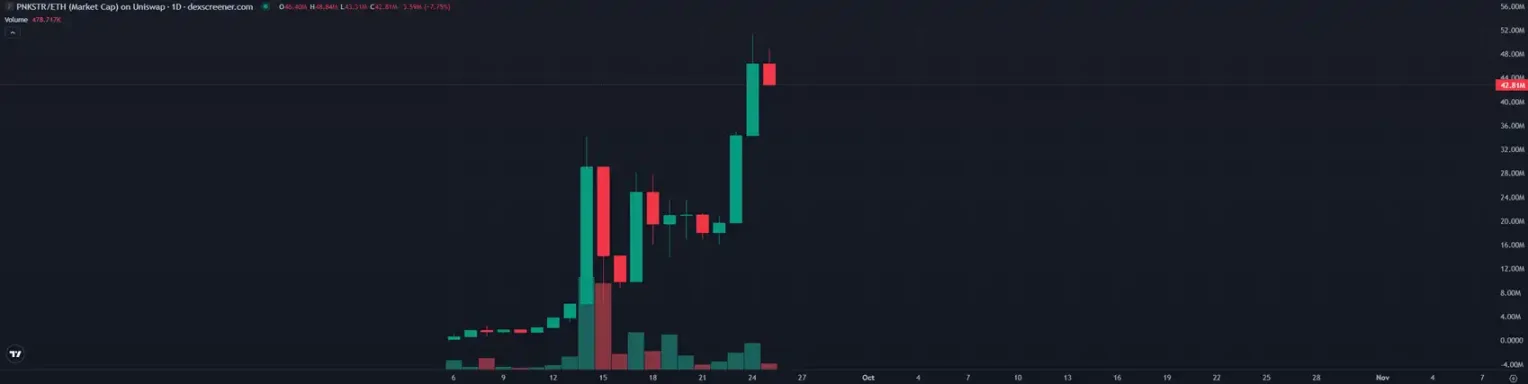
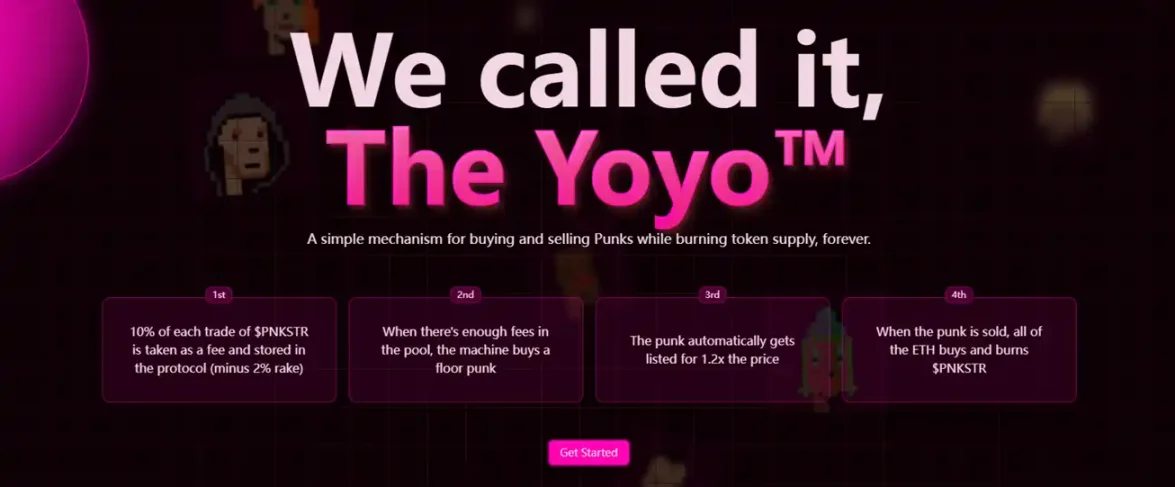
$PNKSTR 的全称是「PunkStrategy」,通过交易 CryptoPunks NFT 来完成 NFT 和代币的循环飞轮。每笔 $PNKSTR 交易都会收取 10% 的费用,并且有 8% 存入协议中。一旦协议资金池中积累到可以用于购买 CryptoPunks 的费用,合约就会自动购买一个地板价的 CryptoPunks,并且自动以买入价格的 1.2 倍挂售。出售成功后,所得的 ETH 又会购买并销毁 $PNKSTR。
目前,$PNKSTR 的手续费收入已经接近 700 ETH,已经完成了对 12 个 CryptoPunks 的完整买入卖出交易流程,总计约占总供应量 2.8% 的代币被销毁。

基本上,这是 NFT 圈近期最热门的话题,还在活跃的 NFT KOL 以及各种挂着 CryptoPunks 的 Twitter 用户讨论甚多。比较有趣的是,@waleswoosh 这个大 NFT KOL 曾经在 9 月 15 日 $PNKSTR 市值跌破 1000 万美元时发推文表示 $PNKSTR 很快就会消亡,但一周后,$PNKSTR 狂涨。
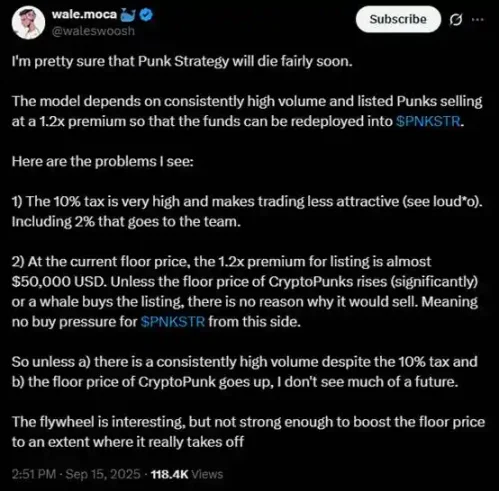
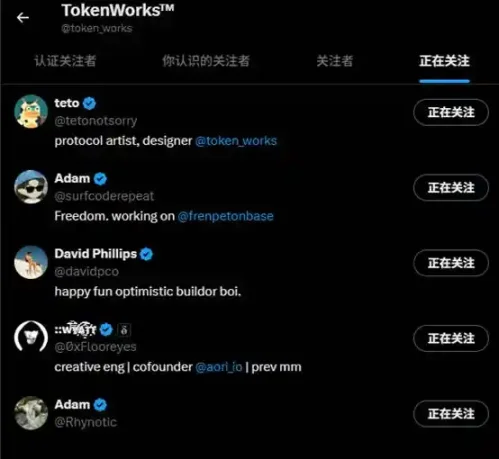
部署 $PNKSTR 的 dev 并不是无名之辈,而是一直活跃做各种链上项目的 TokenWorks,由一帮长期活跃在链上的开发者组成的团体。TokenWorks 的官推关注了 5 个人,每一个都是链上熟悉的老玩家,比如曾经在 Arbitrum 上做过 Lotus、在 Base 上做过 FrenPet 的 @surfcoderepeat。
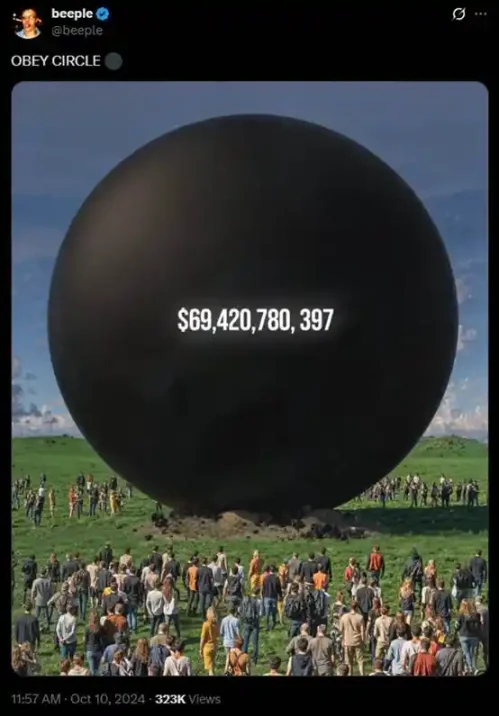
在 $PNKSTR 之前,TokenWorks 最出名也最成功的项目是在 Shape 网络上的「黑洞币」$O,beeple 甚至都曾经发推为 $O 宣传。
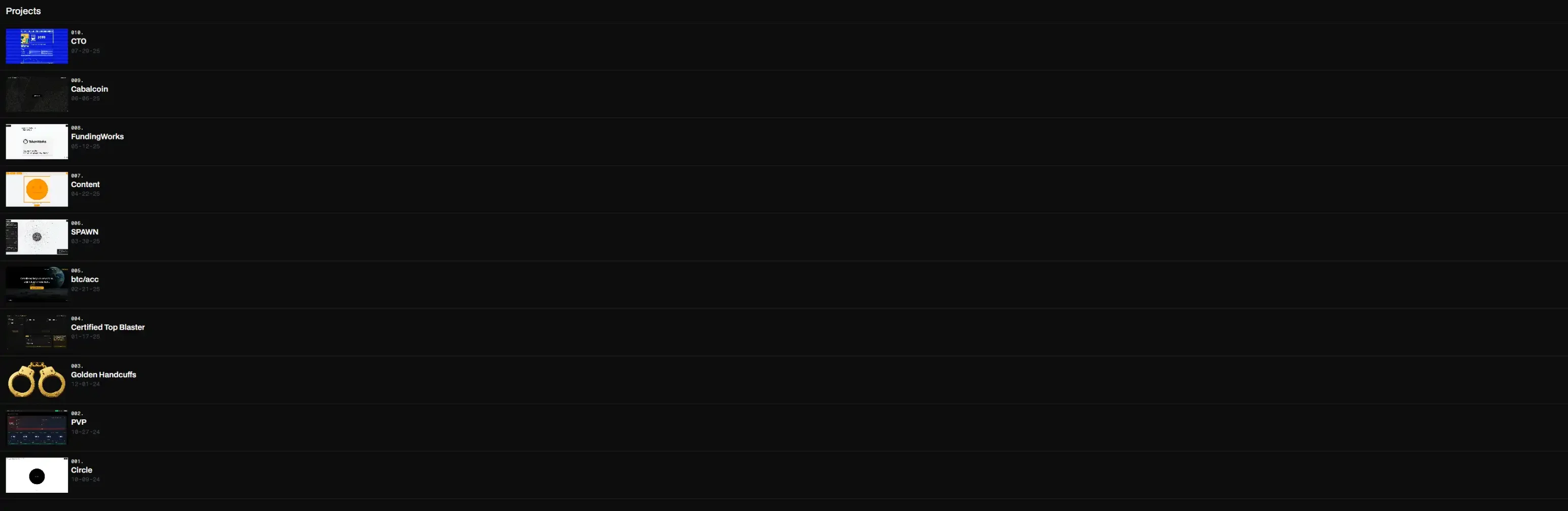
在 $PNKSTR 推出前,TokenWorks 已经推出过 10 个链上项目,每一个都采用了独特的链上玩法。
随着 $PNKSTR 的成功,9 月 20 日,TokenWorks 又进一步上线了 NFTStrategy,推出了针对 BAYC、Pudgy Penguins、Moonbirds、Meebits 和 CryptoDickbutts 共 5 个 NFT 项目的代币。机制和 $PNKSTR 没有区别,只是交易收取的 10% 手续费中,有 1% 作为版税支付给 NFT 系列所有者,有 1% 用于购买并销毁 $PNKSTR。

这 5 个新的代币目前表现都差不多,没有超过 300 万美元市值的。但在过去的 24 小时中,Meebits 对应的代币有着最高的成交额,约 160 万美元,目前在市值上也处于微弱的领跑状态。
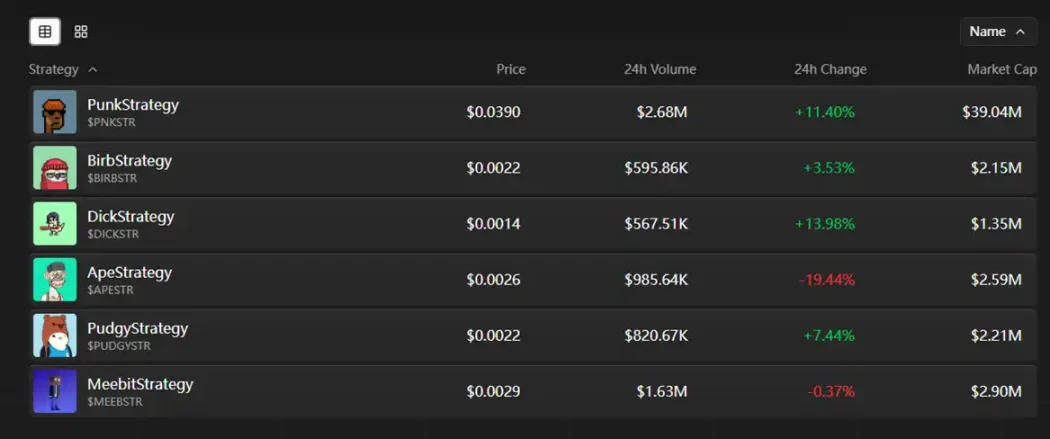
在 NFTStrategy 刚上线时,为了防止狙击手,购买费将从 95% 开始,每分钟降低 1%,最终稳定在 10%。由于早期的大量买入,协议快速积累了超过购买对应 NFT 系列地板价 NFT 的费用,给了套利者可趁之机。0xa3d297423b17a3894dddd582dc41ff20e237ab75 在三个小时内通过买卖 10 只 BAYC、7 只 Moonbirds、5 只 Pudgy Penguins 和 4 只 Meebits 净赚 181.706 ETH,约 813,400 美元。

原因不是合约的漏洞,而是项目方并没有部署相应的操作。CryptoPunks 是有链上市场的,这导致新代币与 $PNKSTR 在 NFT 的买卖流程上略有不同。由于没有链上市场,新代币只能保证通过合约能够确实地获取到所购买的 NFT,而每个人都可以去调用合约触发特定购买。

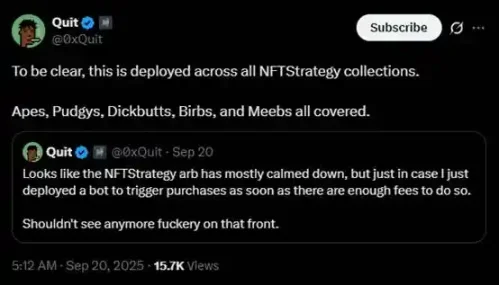
可能是由于团队工作量过载,TokenWorks 并没有部署相应的机器人来确保资金达到最低可购买数额时立即买入。不过,这个问题似乎并没有影响新代币的表现,而 Yuga Labs 区块链部门的 VP @0xQuit 也表示,他个人已经部署了一个机器人来解决这个问题。
今天,TokenWorks 再次宣布,将于本周五开始,每天推出一个新的 NFTStrategy 代币,持续一周,Chromie Squiggles、CrypToadz、Goblintown、Checks、Max Pain by Xcopy、Good Vibes Club 以及 Milady 共 7 个项目的 NFTStrategy 代币将很快上线。
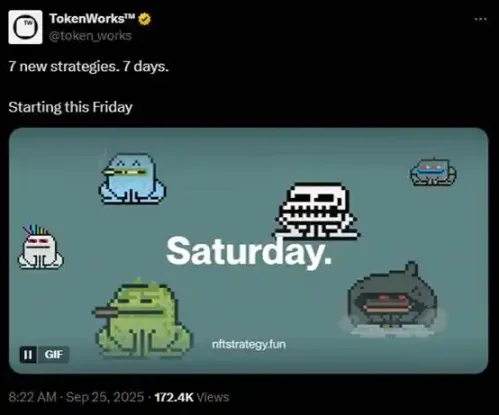
未来,TokenWorks 也会开放任何 NFT 系列拥有者来部署自己系列的 NFTStrategy 代币。

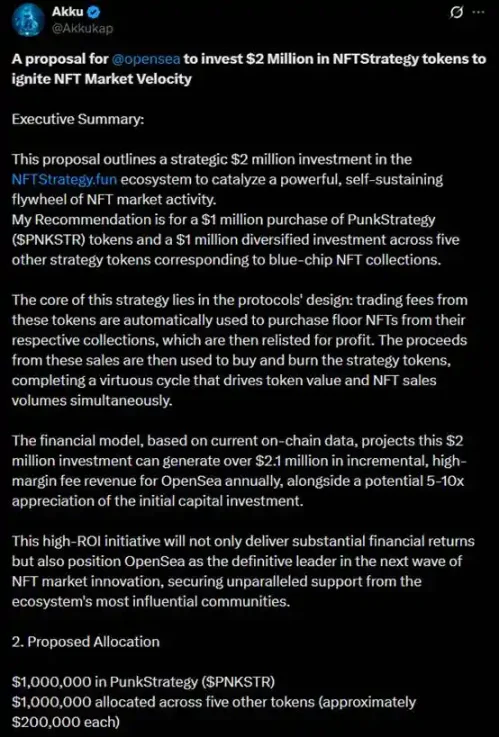
关于 NFTStrategy 的讨论目前仍然保持热烈。在昨天,有一篇提议 OpenSea 花 200 万美元购买 NFTStrategy 相关代币的推文引发了不少讨论。
综上,我们可以对 $PNKSTR 的成功做出一个总结:

  • 有着一定知名度的开发团队

  • 获得 NFT 玩家群体的广泛认可

  • 比起快节奏的 meme 玩家,NFT 玩家会更热衷接受 NFT 相关的 meme 以及链上实验玩法

  • 虽然 NFT 长期低迷,但头部 NFT 系列的价格已经稳定在一个相对的区间,虽然辉煌不复,但已经沉淀出足够的稳定度和受众

但是,这终归还是一种「左脚踩右脚」的刺激,能够维持多久,需要时间检验。

Criptomoedas em alta

Leituras Relacionadas

Claude's Watermark Has Been Cracked, Gaining 11k Stars, But Installation Is Refused

The article discusses the controversy surrounding Anthropic's implementation of a hidden watermark in all text generated by its AI, Claude. This policy, based on Google DeepMind's SynthID-Text technique, embeds a statistical signature by making inconsequential word choices. The watermark applies globally, even to human-written text lightly edited by Claude, sparking user backlash over issues of ownership and the creation of an "AI content second-class citizen" status. In response, an open-source tool called "watermarks-remover" (originally "remove-claude-marks") was released on GitHub, quickly gaining 11k stars. It works on three levels: removing invisible Unicode characters, using an agent to rewrite text and break statistical patterns, and stripping metadata from various file formats. Notably, Claude itself refused to install this removal tool as an Agent Skill, a task ultimately completed by another AI model, GLM 5.2. The article points out the irony that the removal code may have been written by Claude. The piece frames this as an ongoing battle between watermarking for traceability against misinformation and the desire for unmarked, owned content from paying users. It questions the practicality of mandatory technical markings when AI-generated text becomes indistinguishable from human writing, suggesting the open-source community's rapid development of countermeasures will continually outpace regulatory efforts.

marsbitHá 22m

Claude's Watermark Has Been Cracked, Gaining 11k Stars, But Installation Is Refused

marsbitHá 22m

SafePal Leaks Data of Nearly 40,000 Hardware Wallet Buyers: Private Keys Intact, Yet Danger Moves Closer to the Physical

Hardware wallet manufacturer SafePal has disclosed a data breach affecting approximately 39,798 customers who placed orders between March 2025 and April 2026. The leak exposed personal information including names, email addresses, phone numbers, physical delivery addresses, and purchase records. The company confirmed that private keys, recovery phrases, wallet passwords, and financial details were not compromised, as the cold storage systems operate in an isolated environment separate from the e-commerce servers. However, the breach poses significant risks beyond digital theft. Attackers now possess a high-value list of confirmed hardware wallet owners, effectively marking them as likely holders of substantial cryptocurrency. This enables highly targeted social engineering attacks, such as phishing emails referencing real order details, fake hardware deliveries, or phone scams impersonating SafePal support. The company has already identified and taken down over 30 related phishing sites. A critical aspect of the incident is the delayed disclosure timeline. SafePal acknowledged receiving initial user reports of phishing attempts in May but treated them as isolated. A full investigation began in July, with a public announcement not made until August, leaving users exposed for approximately three months. Furthermore, a configuration error prevented a data-purge routine from deleting old order information as intended, potentially increasing the scope of the leaked data. The incident highlights a structural paradox in the hardware wallet industry: while the devices are designed to secure private keys offline, the necessary e-commerce process collects sensitive personal data that, if leaked, makes the user a target. This mirrors a similar breach suffered by Ledger in 2020. Affected users are advised to be extremely vigilant. They should verify if they are impacted via SafePal's dedicated page, treat all unsolicited communications (emails, calls, physical mail) referencing SafePal as suspicious, and never share recovery phrases. Users who may have entered sensitive information on a phishing site must create a new wallet immediately. The breach underscores that in cryptocurrency security, the most vulnerable link is often the human user, not the cryptographic technology.

marsbitHá 43m

SafePal Leaks Data of Nearly 40,000 Hardware Wallet Buyers: Private Keys Intact, Yet Danger Moves Closer to the Physical

marsbitHá 43m

30 Years After Being Crushed by AI, People Have Fallen Back in Love with Chess

On May 11, 1997, IBM's "Deep Blue" defeated chess champion Garry Kasparov, marking the first time a machine triumphed in a top-level intellectual game. The narrative of human defeat by AI seemed cemented when AlphaGo beat Lee Sedol in Go in 2016, a game once considered AI's final frontier. Yet, nearly 30 years after AI's dominance began, chess is experiencing unprecedented popularity. Chess.com boasts over 250 million registered users and 10 million daily active players. Its CEO, Erik Allebest, attributes this resurgence to several waves: the pandemic, the Netflix series *The Queen's Gambit*, and viral AI chess bots like "Mittens" on social media. Crucially, each surge left a permanently higher user base. The key insight is that AI liberated the game. When machines unequivocally became the best, the pressure to "win" as the ultimate human was removed. Chess returned to its core: the intrinsic joy of play—the thrill of a tactical combo, the tension of a time scramble, the curiosity of post-game analysis. AI, now serving as an always-available coach and anti-cheat tool, became infrastructure that enhanced rather than killed the experience. In contrast, Go, deeply rooted in East Asian elite culture and often pursued for mastery and status, suffered a "collapse of meaning" at the professional level after AlphaGo. Players began mimicking AI moves, erasing distinctive styles and narrative. While some Go players gained fame as online personalities, it didn't translate to widespread engagement with the game itself. The divergence highlights a fundamental question in the age of AI: is the motivation for an activity about *winning* or *playing*? Activities where the process itself is the reward, like chess, can thrive when the pressure of being the best is gone. AI may rightly take over tasks done purely for outcome, but it cannot replace the human experience of simply enjoying the game.

marsbitHá 57m

30 Years After Being Crushed by AI, People Have Fallen Back in Love with Chess

marsbitHá 57m

Exiting Top Ten Shareholders of Kweichow Moutai, 'Long-term Capital' Portfolio Adjustments Revealed: National Social Security Fund Enters 12 New Stocks, Invests in Hard Tech Mthreads

With the ongoing release of semi-annual reports, the second-quarter investment moves of long-term institutional investors like the National Social Security Fund (NSSF) and insurance capital are becoming clear. Central Huijin Asset Management and China Securities Finance Corp., often referred to as the "national team," are no longer among the top ten shareholders of Kweichow Moutai. Data shows that as of August 14th, the NSSF held positions in 33 A-share companies, with a total portfolio value exceeding 11 billion yuan. It added 12 new stocks in Q2, spanning sectors like chemicals, food & beverage, and semiconductors. The NSSF maintains its stable investment style, favoring companies with solid performance and attractive valuations. Apart from exiting Moutai, Huijin and China Securities Finance also left the top ten shareholder lists of companies like Ping An Bank and Dahua Technology. Insurance capital heavily invested in 41 companies in Q2, with a total holding value over 26 billion yuan. They showed a continued preference for cyclical sectors like non-ferrous metals and chemicals, as well as high-dividend-yield stocks. Analysts note that these long-term funds act as market stabilizers and investment bellwethers. Their presence is reshaping the market ecology, steering focus towards fundamental corporate value and away from speculative trading. A notable move was the NSSF's new investment in Moore Threads, a loss-making but leading domestic GPU design company listed on the STAR Market, indicating interest in hard technology sectors. Looking ahead, analysts expect long-term capital to continue a dual-strategy: maintaining a foundation in high-dividend-value stocks while gradually increasing exposure to growth areas aligned with industrial upgrading, such as advanced manufacturing and tech self-sufficiency. The market's recovery is seen as gaining a firmer footing after recent adjustments.

marsbitHá 1h

Exiting Top Ten Shareholders of Kweichow Moutai, 'Long-term Capital' Portfolio Adjustments Revealed: National Social Security Fund Enters 12 New Stocks, Invests in Hard Tech Mthreads

marsbitHá 1h

Data of 54,000 wallet users leaked, Clarity odds just 10%: Hodler’s Digest, Aug. 16

Galaxy Digital has slashed the odds of the CLARITY Act passing in 2026 from 75% to just 10%, citing limited Senate session days. If it fails, the SEC and CFTC plan to issue their own crypto rules, though an SEC meeting was abruptly cancelled. High-profile meetings at the White House are planned to discuss the bill. Amid growing hack fears, crypto companies are urging AI labs to grant developers early access to advanced AI models for cybersecurity, following a $116M Coldcard wallet theft. Data breaches at Trezor and SafePal have exposed over 54,000 users' personal information. The CFTC is clashing with states over regulating prediction markets like Kalshi, ordering it to ignore a New York restraining order to maintain a national market, while a Washington state judge ruled against it. The Ethereum Foundation is revising its post-quantum plan, moving away from the Poseidon hash function, and scoping its next major upgrade, Hegotá, for next year. Tether received its first full clean audit opinion from KPMG, showing reserves exceeding liabilities by $6.814 billion. Marketwise, major cryptos saw weekly declines. Predictions include a possible Bitcoin bottom in October, while analysts dispute the feasibility of BTC reaching $1M by 2030. Glassnode notes Bitcoin is in its longest capitulation phase since FTX's collapse. Three men were charged for an alleged Bitcoin kidnapping plot in Missouri.

cointelegraphHá 2h

Data of 54,000 wallet users leaked, Clarity odds just 10%: Hodler’s Digest, Aug. 16

cointelegraphHá 2h

Trading

Spot

Artigos em Destaque

Como comprar COOKIE

Bem-vindo à HTX.com!Tornámos a compra de Cookie DAO (COOKIE) simples e conveniente.Segue o nosso guia passo a passo para iniciar a tua jornada no mundo das criptos.Passo 1: cria a tua conta HTXUtiliza o teu e-mail ou número de telefone para te inscreveres numa conta gratuita na HTX.Desfruta de um processo de inscrição sem complicações e desbloqueia todas as funcionalidades.Obter a minha contaPasso 2: vai para Comprar Cripto e escolhe o teu método de pagamentoCartão de crédito/débito: usa o teu visa ou mastercard para comprar Cookie DAO (COOKIE) instantaneamente.Saldo: usa os fundos da tua conta HTX para transacionar sem problemas.Terceiros: adicionamos métodos de pagamento populares, como Google Pay e Apple Pay, para aumentar a conveniência.P2P: transaciona diretamente com outros utilizadores na HTX.Mercado de balcão (OTC): oferecemos serviços personalizados e taxas de câmbio competitivas para os traders.Passo 3: armazena teu Cookie DAO (COOKIE)Depois de comprar o teu Cookie DAO (COOKIE), armazena-o na tua conta HTX.Alternativamente, podes enviá-lo para outro lugar através de transferência blockchain ou usá-lo para transacionar outras criptomoedas.Passo 4: transaciona Cookie DAO (COOKIE)Transaciona facilmente Cookie DAO (COOKIE) no mercado à vista da HTX.Acede simplesmente à tua conta, seleciona o teu par de trading, executa as tuas transações e monitoriza em tempo real.Oferecemos uma experiência de fácil utilização tanto para principiantes como para traders experientes.

353 Visualizações TotaisPublicado em {updateTime}Atualizado em 2026.06.02

Como comprar COOKIE

Discussões

Bem-vindo à Comunidade HTX. Aqui, pode manter-se informado sobre os mais recentes desenvolvimentos da plataforma e obter acesso a análises profissionais de mercado. As opiniões dos utilizadores sobre o preço de COOKIE (COOKIE) são apresentadas abaixo.

活动图片