Гендиректор JPMorgan не видит в стейблкоинах угрозы банкам

cryptonews.ruPublicado em 2025-08-23Última atualização em 2025-09-24

Генеральный директор JPMorgan Джейми Даймон заявил, что Федеральной резервной системе США будет сложно снизить процентную ставку, если инфляция не снизится, и что он не обеспокоен тем, что стейблкоины представляют угрозу банковскому сектору.

«Если инфляция не снизится, ФРС будет сложно сократить ставку еще больше, — заявил в понедельник в эфире телеканала CNBC-TV18 Даймон, глава крупнейшего банка США. — Похоже, инфляция немного застряла на уровне 3%. Опять же, я могу привести несколько аргументов, почему она будет расти, а не падать», — сказал он, добавив, что надеется на «приличный рост» и снижение ставки вместо снижения ставок ФРС в условиях рецессии.

Рынок ожидает многократного снижения ставок

Слова Даймона несколько охладили ожидания рынка относительно множественных снижений ставок: некоторые ожидают до пяти снижений в течение следующих 12 месяцев.

Снижение процентных ставок обычно благоприятно сказывается на криптовалютных рынках, поскольку более дешевые заимствования дают инвесторам уверенность делать ставки на более рискованные активы. В среду ФРС впервые с начала 2025 года снизила ставки на 25 базисных пунктов, что подстегнуло рост биткоина до более чем 117 500 долларов впервые за более чем месяц.

Данные CME FedWatch показывают, что рынок ожидает еще одного снижения на 25 базисных пунктов на заседании ФРС в конце октября и того же самого на заседании в начале декабря.
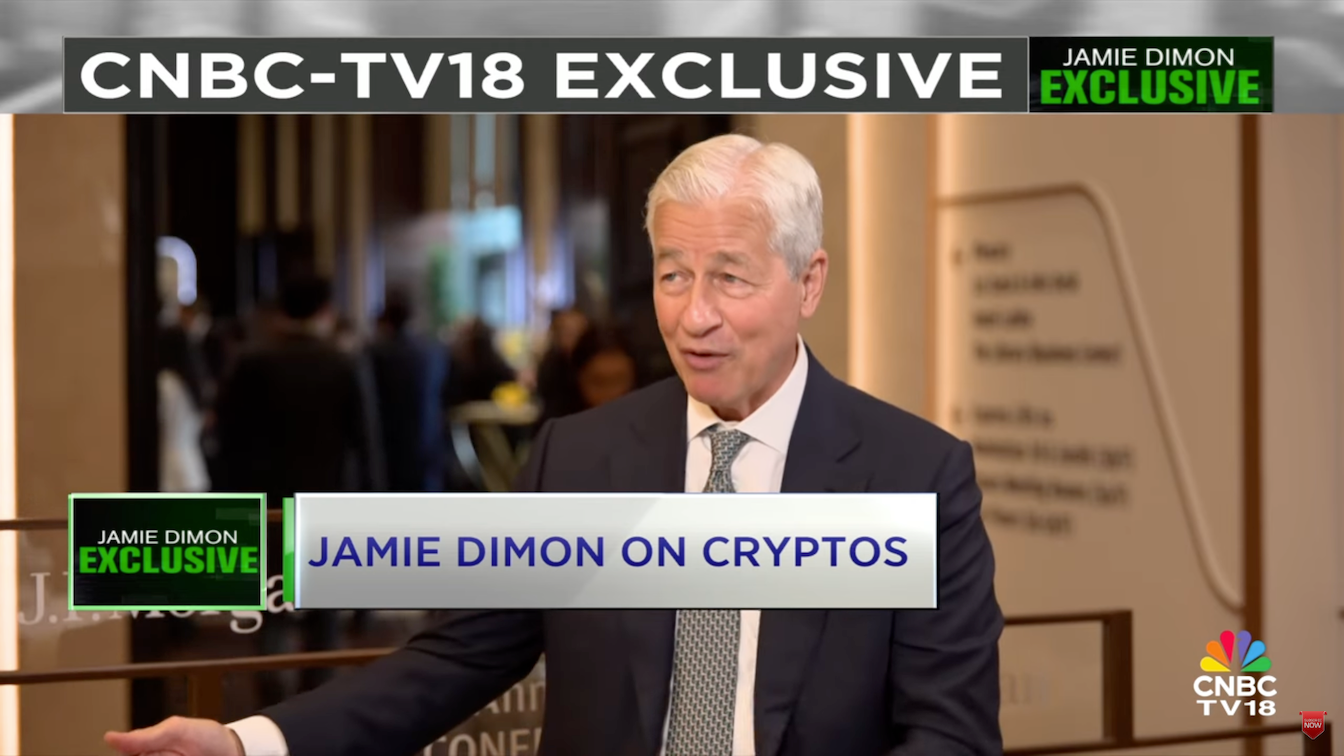
Джейми Даймон в интервью на канале CNBC-TV18 в понедельник. Источник: YouTube.

Прогнозы демонстрируют существенные расхождения, но намекают на еще два снижения ставок до конца года, а еще одно, возможно, произойдет в 2026 году.

Последние данные по инфляции в США, опубликованные 11 сентября, показали, что в августе она выросла на 2,9%, что выше целевого уровня инфляции ФРС в 2%.

Даймон «не особо беспокоится» о стейблкоинах

Даймон отдельно высказался по поводу стейблкоинов , которые стали ключевым вопросом политики для банков после того, как в июле Конгресс принял законы, регулирующие стейблкоины.

Даймон заявил, что он «не особенно обеспокоен» стейблкоинами, но его банк и другие участники сектора «должны быть в курсе ситуации и понимать ее».

«За пределами США найдутся люди, которые захотят владеть долларами через стейблкоины, как плохие парни, так и хорошие парни, а также люди из определенных стран, где вам, вероятно, лучше иметь доллары и не вкладывать их в банковскую систему», — сказал он.

Он повторил, что JPMorgan участвует в разработке стейблкоинов, а банковский сектор «рассматривает вопрос о целесообразности создания консорциума» для запуска токена.

«Я не уверен, что центральным банкам нужно использовать его между собой, так что со временем это разовьется», — сказал он.

Банковские группы призвали Конгресс ужесточить законы о стейблкоинах, утверждая, что лазейки позволяют эмитентам стейблкоинов и их аффилированным лицам выплачивать проценты или доходность по стейблкоинам, а это может подорвать банковские счета и дестабилизировать банковскую систему.


Leituras Relacionadas

Upbit is Anxious: A Hasty Counterattack Aimed at Regaining Stablecoin Market Share

Title: Upbit's Rushed Counterattack to Reclaim Stablecoin Market Share Facing a dramatic shift in South Korea's stablecoin market, leading exchange Upbit launched a promotional campaign from July 26 to August 9, waiving the 0.05% trading fee for stablecoins paired with the Korean Won (KRW) and rapidly listing new stablecoins like RLUSD and USDG. This move is a direct response to its plummeting market share in this sector. Historically a duopoly with Bithumb, the market has been reshaped since October 2025 when Coinone permanently removed fees for USDC trading. By June 2026, Coinone led with 34.8% of stablecoin volume, followed by Bithumb (31.1%) and Upbit (30.1%). This contrasts sharply with the overall crypto market, where Upbit commands 60%. The data shows stablecoin demand is highly sensitive to fees, as users primarily buy them to transfer capital overseas for derivatives trading or forex arbitrage. South Korean exchanges have seen a net outflow of stablecoins for 18 consecutive months, totaling approximately 14.9 trillion KRW, underscoring their role as a cross-border capital conduit. Upbit's limited-time promotion initially boosted its daily stablecoin volume by 162%, but the surge was almost entirely in USDT (98.1% of volume). The newly listed stablecoins saw negligible, fleeting interest. Furthermore, the promotional effect quickly waned in the second week, with volume dropping 33% on weekdays. A concurrent weakening of the KRW also contributed to the trading spike, independent of the fee waiver. The analysis suggests that once the promotion ends, Upbit is unlikely to retain its temporary gains unless it matches Coinone's permanent zero-fee policy, forcing a choice between market share and fee revenue. Upbit's strategic push may be less about immediate profit and more about preparing for future regulatory shifts. With South Korea's *Digital Asset Basic Act* on the horizon, which will regulate KRW-backed stablecoins, and following Dunamu's (Upbit's parent) integration into Naver Financial to build a payment ecosystem, securing a dominant position in the dollar stablecoin distribution channel holds long-term strategic value. However, potential regulatory conflicts could prevent Upbit from listing a future Naver-issued KRW stablecoin, making the current fight for dollar stablecoin flow even more critical.

marsbitHá 5h

Upbit is Anxious: A Hasty Counterattack Aimed at Regaining Stablecoin Market Share

marsbitHá 5h

Michael Saylor Compares Bitcoin and Gold!

Michael Saylor, founder of MicroStrategy, argues that Bitcoin fundamentally changes how wealth is stored and transferred by transforming digital scarcity into economic value. He describes Bitcoin as the first digital monetary network, combining computers, digital networks, and cryptography. It digitizes monetary assets, allowing their supply to be controlled by public protocols rather than institutions, thus converting economic value into information transmissible over global networks. Comparing Bitcoin to gold, Saylor states that while increasing Bitcoin's supply is harder, its integration with software and transfer is easier. He highlights Bitcoin's proof-of-work mechanism, which ties it to the physical world by consuming real energy to secure the ledger, making past transactions immutable. This creates a shared security system involving miners, energy companies, and investors. Saylor suggests "digital monetary energy" is a more accurate term than "digital gold." He emphasizes that the Bitcoin network is an adaptive ecosystem of miners, nodes, developers, and users. Its core design is intentionally simple, focused on maintaining a secure ledger for scarce digital assets, with complex functionalities built in higher-layer applications. This architecture allows Bitcoin to serve as a foundation for transmitting value and fostering innovation in payments and financial services. Saylor notes Bitcoin's deeper impact lies in creating digital sovereignty, where private keys give individuals permissionless control over their economic power, with ownership verified mathematically, not by institutions. He concludes that while gold's physical scarcity makes it money, Bitcoin's digital scarcity does the same, characterizing Bitcoin as the monetary energy of the digital age.

cryptonews.ruHá 6h

Michael Saylor Compares Bitcoin and Gold!

cryptonews.ruHá 6h

Trading

Spot
活动图片