史上最激进提案:50% $HYPE 要被烧掉?

深潮TechFlowPublicado em 2025-09-22Última atualização em 2026-08-17

Resumo

若提案成功,意味着 HYPE 每个代币的价值几乎翻倍。

撰文:David,深潮 TechFlow


最近,在 Perp DEX 的热潮中,各路新项目如雨后春笋般冒出来,不断挑战着 Hyperliquid 的老大哥地位。


大家的目光都集中在新玩家的创新上,以至于似乎忽略了 $HYPE 这个龙头代币的价格会如何变化。而和代币价格变化最直接相关的,则是 $HYPE 的供应量。


影响供应量的,一是持续的回购,等于不断地在存量市场上买买买来减少流通,减少水池里的水;而另一个则是整体供应机制的调整,等于关掉水龙头。


仔细看 $HYPE 当前的供应量设计,其实是有问题的:


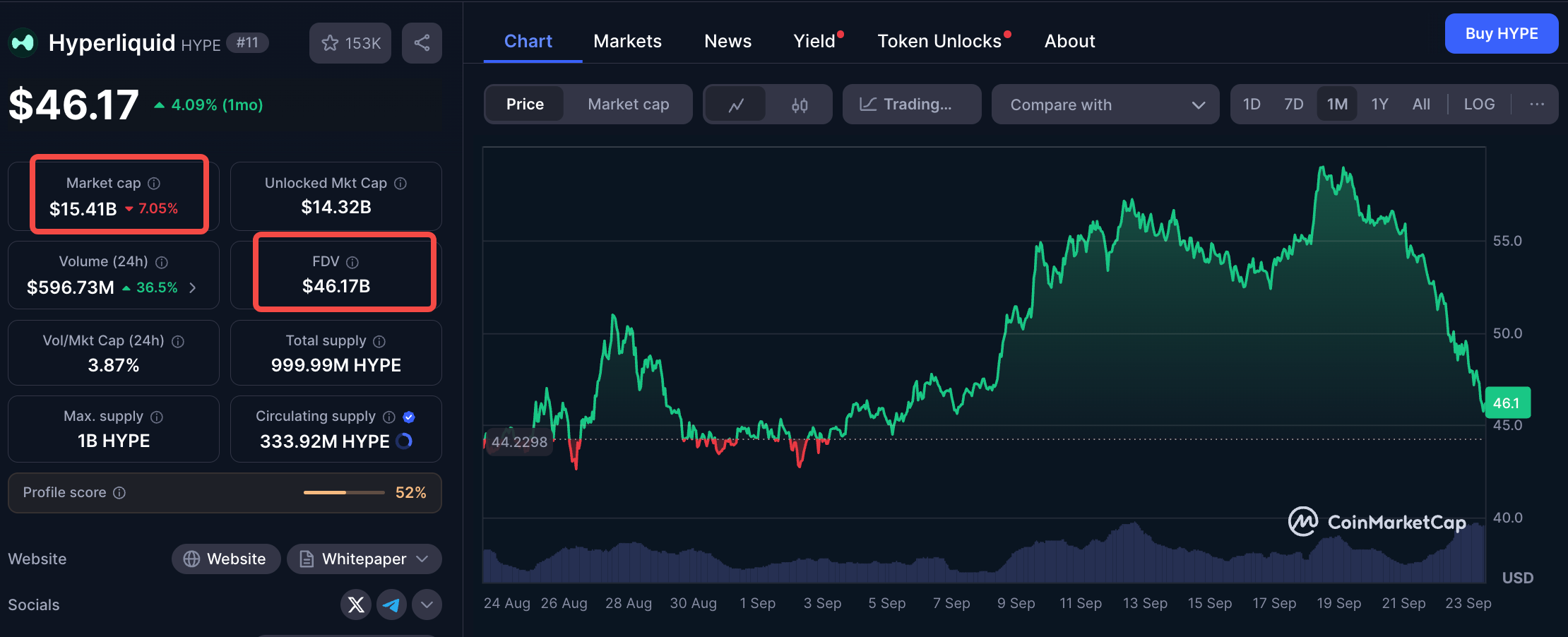
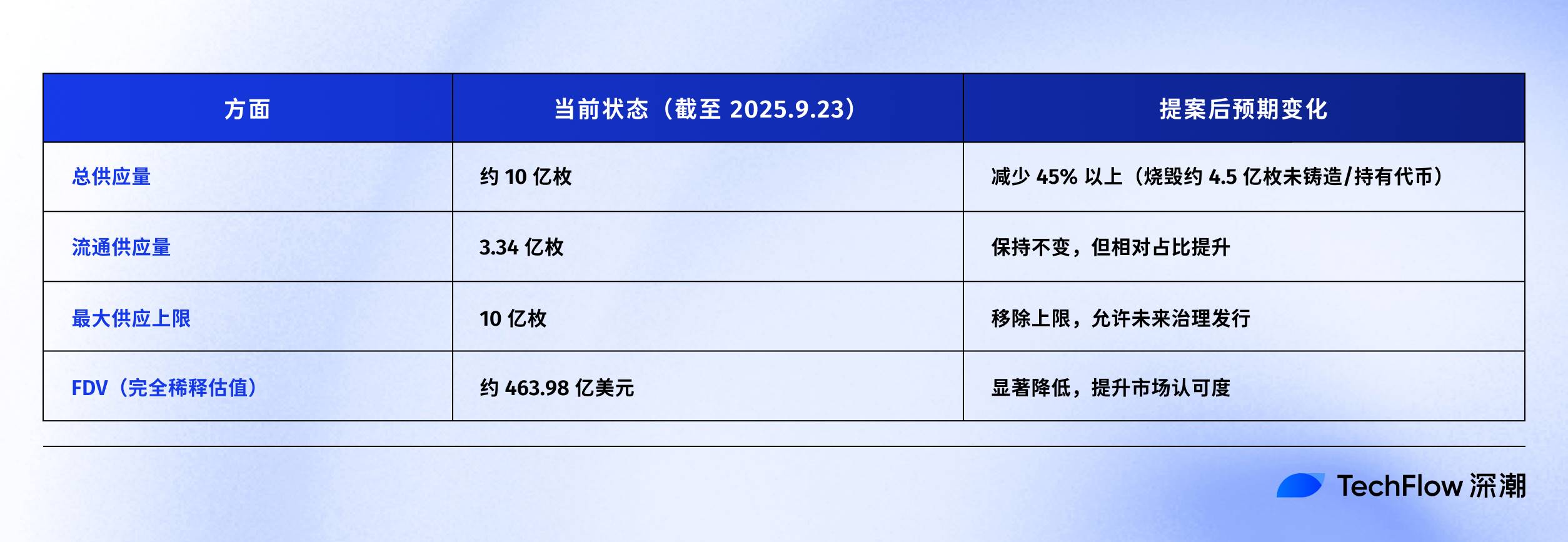
流通供应量约3.39亿枚,市值154亿美元左右;但总供应量接近10亿枚,FDV高达460亿美元。


MC和FDV这将近三倍的差距主要来自两部分。一部分是4.21亿枚分配给“未来排放与社区奖励”(FECR),以及3126万枚在援助基金(AF)手里。


援助基金是Hyperliquid用协议收入回购HYPE的账户,每天买入但不销毁,而是持有。问题在于,投资者看到460亿的FDV往往还是会觉得估值过高,即使实际流通的只有三分之一。

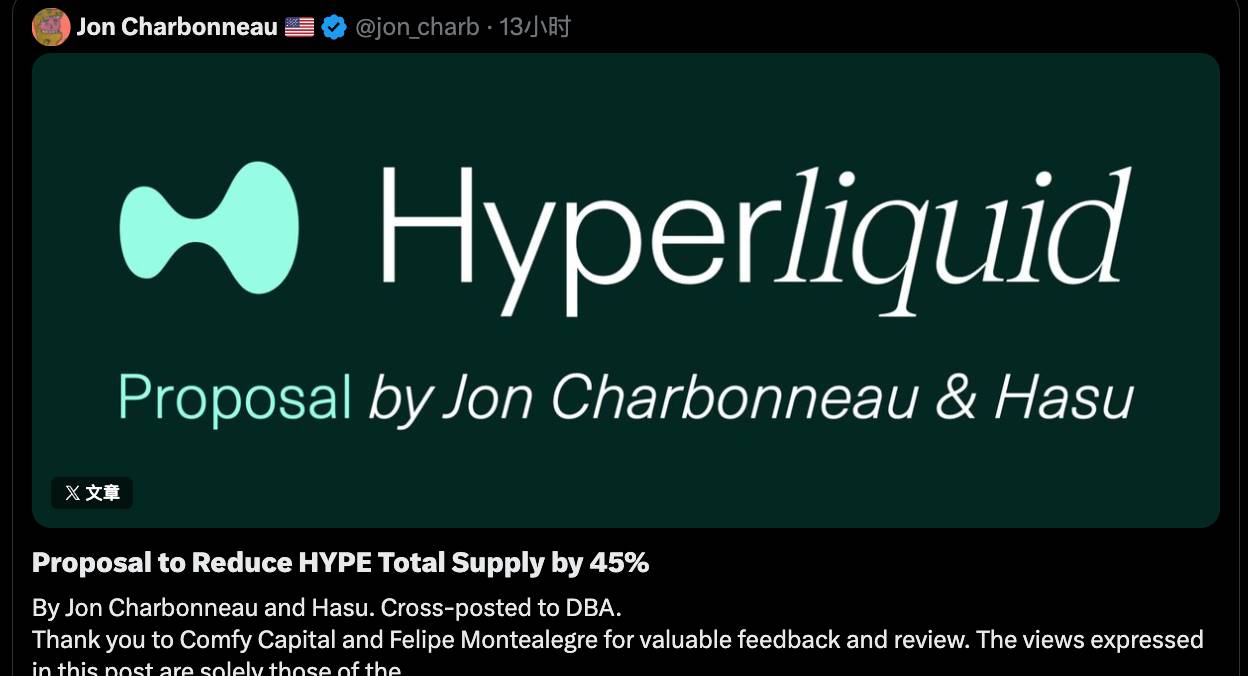
在这个背景下,投资经理 Jon Charbonneau(DBA Asset Management,持有大量HYPE仓位)和独立研究员Hasu在9月22日发布了一份关于$HYPE 的非官方提案,内容十分激进;省流版本是:


烧掉目前 $HYPE 总供应量的45%,让FDV更接近实际流通价值。


这个提案发出后迅速引爆社区讨论,截至发稿时该帖子已有41万浏览量。


为什么反响这么大?如果提案真的被采纳,那么烧掉45%的 HYPE 供应量,意味着 HYPE 每个代币代表的价值几乎翻倍。更低的FDV也可能吸引之前观望的投资者入场。

我们也快速总结了这份提案的原贴内容,将其整理如下。


减少 FDV, 让 HYPE 看起来不那么贵


Jon和Hasu的提案看起来简单,烧掉45%的供应量,但实际操作却比较复杂。


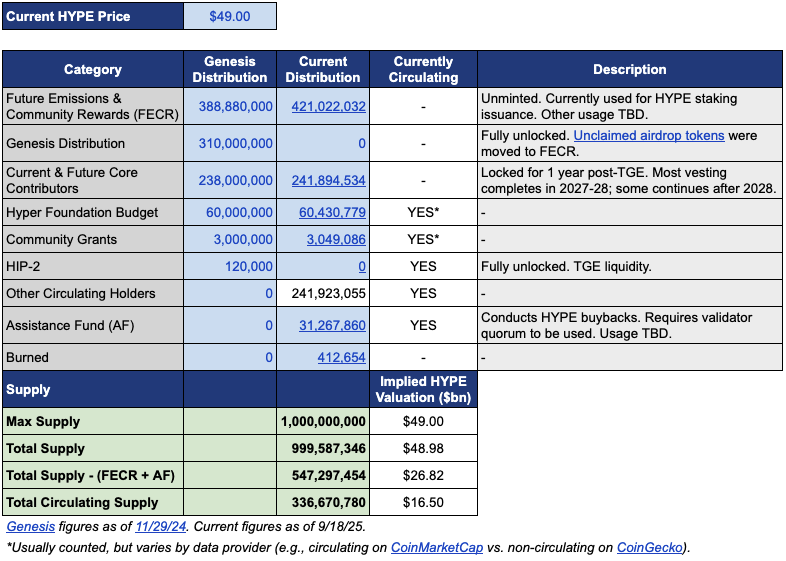
要理解这个提案,先得看清HYPE当前的供应结构。根据Jon提供的数据表,在49美元(他们提案时的HYPE价格)的价格下,HYPE总共10亿枚的盘子里,实际流通的只有3.37亿枚,对应165亿美元市值。


但剩下的6.6亿枚去哪了?


最大的两块是:4.21亿枚被分配给"未来排放与社区奖励"(FECR),相当于一个巨大的储备池,但没人知道什么时候、怎么用;另外3126万枚在援助基金(AF)手里,这个基金每天买入HYPE但不卖出,就这么囤着。

先说怎么烧。提案包含三个核心动作:


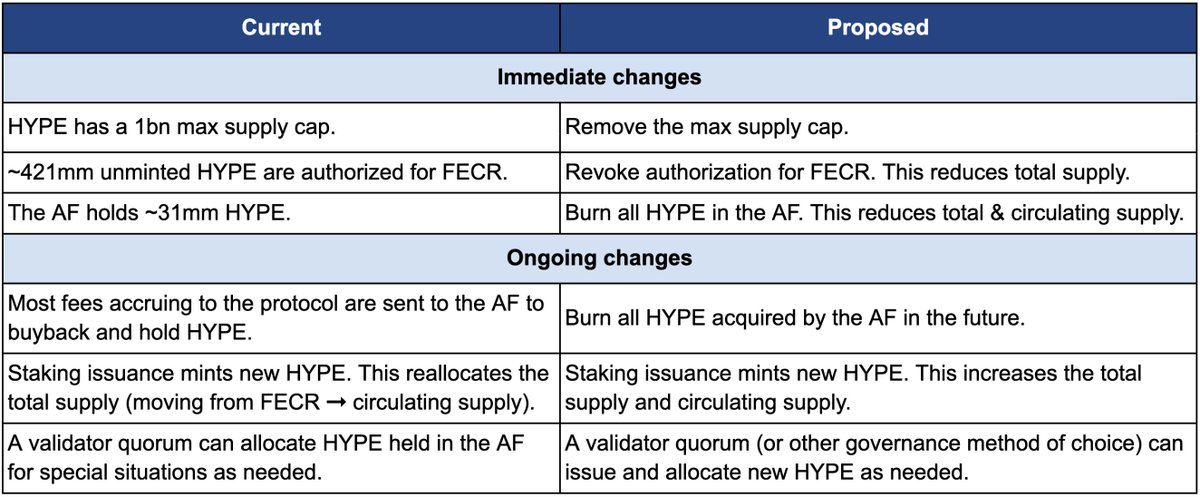
第一,撤销FECR(未来排放与社区奖励)的4.21亿枚授权。这些代币原本计划用于未来的质押奖励和社区激励,但一直没有明确的发行时间表。Jon认为,与其让这些代币像达摩克利斯之剑一样悬在市场头上,不如直接撤销授权。需要的时候,可以通过治理投票重新批准发行。


第二,销毁援助基金(AF)持有的3126万枚HYPE,并且未来AF买入的所有HYPE也直接销毁。目前AF每天用协议收入(主要是交易手续费的99%)回购HYPE,日均买入量约100万美元。按Jon的方案,这些买入的代币不再持有,而是立即烧掉。


第三,移除10亿枚的供应上限。这听起来反直觉,既然要减少供应,为什么还要取消上限?


Jon解释说,固定上限是比特币2100万枚模式的遗留,对大多数项目来说没有实际意义。取消上限后,未来如果需要发行新币(比如质押奖励),可以通过治理决定具体数量,而不是从预留的池子里分配。


下面这张对比表清晰展示了提案前后的变化:左边是现状,右边是提案后的情况。

为什么要这么激进?Jon和Hasu给出的核心理由是:HYPE 的代币供应设计是一个会计问题,不是经济问题。


问题出在 CoinmarketCap 等各大数据平台的计算方式上。


已烧毁的代币、FECR储备、AF持有量,在计算FDV、总供应和流通供应时,各平台的处理完全不同。比如CoinMarketCap 始终用10亿最大供应量算FDV,即使代币被烧毁也不调整。


结果就是,无论HYPE怎么回购、怎么烧毁,显示的FDV都降不下来。


可以看到,提案最大的变化是FECR的4.21亿枚和AF的3100万枚都会消失,同时10亿的硬顶也会取消,改为根据需要通过治理发行。

Jon在提案中写道:“许多投资者,包括一些最大、最成熟的基金,都只看表面的FDV数字。”460亿美元的FDV,让HYPE看起来比以太坊还贵,谁还敢买?


不过,大多数提案都有屁股决定脑袋的意味。Jon明确说明,他管理的DBA基金持有"material position"(重大仓位)的HYPE,他个人也持有,如果有投票,他们都会投赞成票。


提案最后强调,这些改变不会影响现有持有者的相对份额,不会影响Hyperliquid资助项目的能力,也不改变决策机制。用Jon的话说,


“这只是让账本更诚实。”

当“分配给社区”成为一种潜规则


但这个提案社区会买账吗?原贴评论区已经炸开了锅。


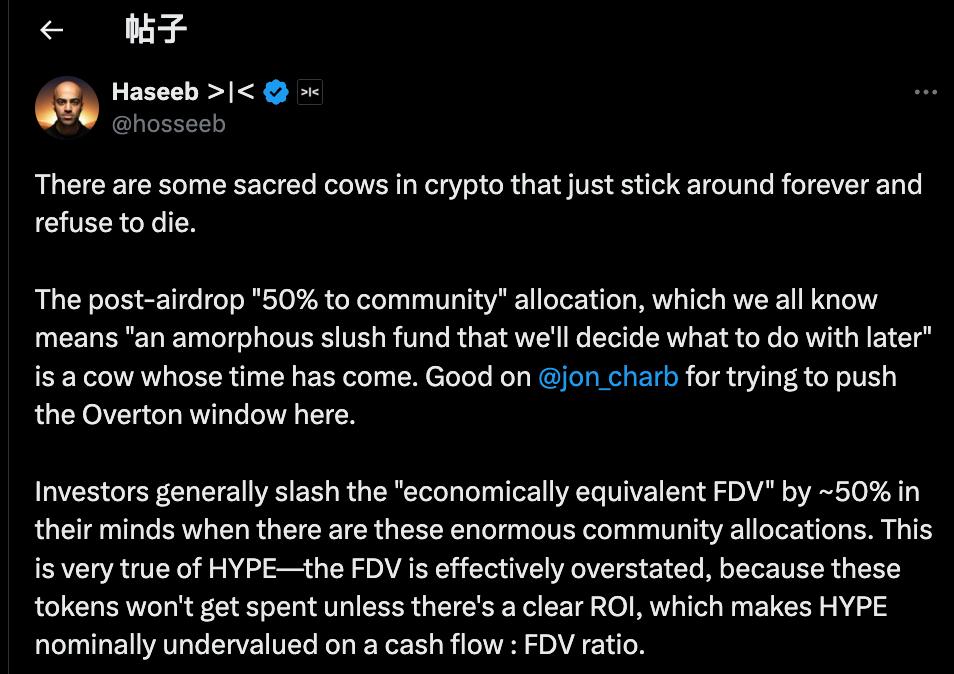
其中,Dragonfly Capital 合伙人 Haseeb Qureshi 的评论,把这个提案放到了更大的行业普遍现象里:


“加密行业有些'神圣奶牛'(sacred cows) 就是死不了,是时候宰掉了。”


他指的是整个加密行业的一个潜规则: 项目方在代币生成后,总要预留所谓 40-50% 的代币份额给“社区”。这听起来很去中心化很Web3,但实际上是一种表演艺术。


2021年时正值牛市巅峰,每个项目都在比谁更“去中心化”。于是代币经济里写到社区分配50%、60%甚至70%,数字越大越政治正确。


但这些代币到底怎么用?没人说得清。

从更大的恶意出发,某些项目方在分配给社区的代币这一块,更现实的情况是想什么时候用就什么时候用,想怎么用就怎么用,美其名曰“为了社区”。


问题是,市场不傻。


Haseeb 也透露了一个公开的秘密,专业投资者在评估项目时,会对这些“社区储备”自动打五折。


一个FDV 500亿但有50%“社区分配”的项目,在他们眼里实际估值只有250亿。除非有明确的ROI,否则这些代币就是画饼。


这也正是HYPE面临的问题。HYPE 490亿的FDV中,超过40%是“未来排放与社区奖励”的储备。投资者看到这个数字就望而却步。


不是因为HYPE不好,而是因为账面数字太虚。Haseeb 认为,Jon的提案是有推动作用的,把原本不能公开讨论的激进想法逐步变成可以接受的主流观点;我们需要质疑把代币分配给“社区储备”这个加密行业的惯例。


总结一下,支持者的观点很简单:


要用代币就走治理,说清楚为什么要发、发多少、预期回报是什么。透明、可问责,而不是一个黑箱。


同时,因为这个帖子由于过于激进,评论区也有一些反对声音。我们总结了一下大概可以分成三个部分:


第一,有些HYPE必须拿来当做风险储备。


从风险管理的角度出发,一些人认为 援助基金AF 里的3100万HYPE不只是库存,更是应急资金。如果遇到监管罚款或黑客攻击需要赔偿怎么办?烧掉所有储备,等于失去了危机时的缓冲。


第二,HYPE 在技术上已经有完备的销毁机制。


Hyperliquid已经有三个自然的销毁机制:现货交易费销毁、HyperEVM gas费销毁、代币拍卖费销毁。


这些机制根据平台使用情况自动调节供应,为什么要人为干预?基于使用的销毁比一次性销毁更健康。


第三,大额销毁不利于激励。


未来排放是Hyperliquid最重要的增长工具,用来激励用户、奖励贡献者。烧掉就等于自断手脚。而且大额质押者会被锁定。如果没有新的代币奖励,谁还愿意质押?


代币服务于谁?


表面上看,这是一场关于烧不烧币的技术讨论。但如果仔细分析各方立场,会发现分歧其实是屁股问题。


Jon和Haseeb代表的观点很明确:机构投资者是增量资金的主要来源。


这些基金管理着数十亿美元,他们的买入能真正推动价格。但问题是,他们看到490亿的FDV就不敢进场。所以要修正这个数字,让HYPE对机构更有吸引力。


社区的看法完全不同。在他们眼里,每天在平台上开仓平仓的散户交易者才是根基。Hyperliquid 能有今天,靠的不是VC的钱,而是9.4万个空投用户的支持。为了迎合机构而改变经济模型,是本末倒置。


这个分歧不是第一次出现了。


回看DeFi历史,几乎每个成功项目都经历过类似的十字路口。Uniswap发币时,社区和投资人为了金库控制权吵得不可开交。


每次的核心其实都一样:一个链上的项目到底是为大资金服务,还是为草根加密原住民服务?


这个提案看起来是服务前者的,“许多最大、最成熟的基金只看FDV。”言下之意很清楚,要让这些大钱进来,就得按他们的规则玩。


提案者 Jon 自己就是机构投资者,他的DBA基金持有大量HYPE。如果提案通过,受益最大的恰恰是他这样的大户。供应量减少,币价可能上涨,持仓价值水涨船高。
结合前几天 Arthur Hayes 刚卖了80万美元的 HYPE 戏称去买法拉利,能感受到一种时机上的微妙。最早的支持者都在套现,而现在有人提案又要烧币推高价格,到底是在给谁抬轿子?


截至发稿,Hyperliquid官方还未表态。但不管最终决定如何,这场辩论已经撕开了大家不愿面对的真相:


利字当头,我们可能从来就没那么在乎去中心化,只是在假装而已。

Criptomoedas em alta

Leituras Relacionadas

Report on the State of the Crypto Industry by 2026, Featuring Sumsub Vice President for North America, Danielle LaBarbera

The cryptocurrency industry is entering an era of regulated maturity, driven by frameworks like the CLARITY Act and the $GENIUS Act in the US. These provide clearer rules but also raise operational standards, requiring platforms to effectively demonstrate compliance. Simultaneously, fraud is evolving into sophisticated, AI-powered, lifecycle-based attacks, moving beyond simple onboarding scams. According to Daniel LaBarbera, VP of Sumsub for North America, companies must shift from one-time KYC checks to continuous, risk-based verification. This involves integrating identity, behavioral, device, and transaction data into a unified risk view. The 2026 State of Crypto Industry report highlights that while 55% of crypto firms faced fraud last year, effective strategies now combine AI-driven detection, continuous monitoring, and behavioral analytics. Key compliance challenges persist, particularly with the Travel Rule. Only 23% of companies are fully compliant, with high implementation costs, data security concerns, and regulatory fragmentation being major hurdles. Meanwhile, stablecoins are gaining traction, accounting for 36% of all crypto transactions in 2025, and evolving from trading tools into financial infrastructure for payments and settlements. The path forward lies in risk-based approaches that balance security, speed, and user experience. This includes adopting documentless verification, reusable KYC, and breaking down silos between compliance functions to create a holistic, lifecycle view of customer risk and trust.

cryptonews.ruHá 8m

Report on the State of the Crypto Industry by 2026, Featuring Sumsub Vice President for North America, Danielle LaBarbera

cryptonews.ruHá 8m

U.S. National Debt Approaches $40 Trillion in 5 Months, Bitcoin Debate Gains Momentum

The US national debt has surged to nearly $40 trillion in just five months, the fastest trillion-dollar increase on record. The debt's growth has accelerated dramatically over time, from taking 192 years to reach the first $1 trillion in 1981 to adding the latest $1 trillion in only five months. The federal budget deficit for the fiscal year is already over $1.8 trillion, exceeding last year's total, and net interest payments on the debt have surpassed $1 trillion, now exceeding defense or Medicare spending. This rapid debt accumulation is fueling arguments within the cryptocurrency industry that Bitcoin serves as a hedge against government-backed currencies and fiscal irresponsibility. Proponents, including some lawmakers and industry leaders, argue Bitcoin could act as a "hard currency" fiscal control mechanism. Legislation has even been proposed for the Treasury to acquire Bitcoin to help reduce the national debt. The International Monetary Fund has warned that global public debt could hit 100% of world GDP by 2029 if current trends continue, with the US and China as primary drivers. Some analyses suggest a sovereign debt crisis could drive capital into alternative assets like Bitcoin, similar to past regional banking crises. However, skeptics point out that both Bitcoin and gold have fallen in price at times during 2026 despite record debt, indicating the depreciation hedge theory may operate over a much longer timeframe than short-term price action.

cryptonews.ruHá 18m

U.S. National Debt Approaches $40 Trillion in 5 Months, Bitcoin Debate Gains Momentum

cryptonews.ruHá 18m

Technological Self-Reliance in China: A War from Lithography Machines to ABF Films

"China's Tech Independence: A Battle from Lithography Machines to ABF Film" In August 2026, Japan's Ajinomoto announced a 30% supply cut of ABF film to Chinese mainland clients, causing industry-wide shock and fears of price hikes and shortages in the semiconductor supply chain. That same year, Chinese company Lotus Holdings, known for its MSG business, acquired a small domestic ABF film startup for 103 million yuan, aiming to change this passive situation. ABF film is a core insulating material for advanced CPU, GPU, and AI chip packages. Ajinomoto, originally a food flavoring company, has monopolized over 95% of the global ABF film market for nearly 30 years, deriving its technology from byproducts of monosodium glutamate production. With AI chips consuming 5-10 times more ABF film than traditional chips, the supply-demand gap is widening. Ajinomoto's supply cut to China, where domestic ABF film production accounts for less than 5%, directly threatens the production of domestic high-end AI chips and their substrates. This incident highlights a crucial but often overlooked truth: the vulnerabilities in China's quest for technological self-reliance extend beyond headline areas like lithography machines to critical but seemingly minor components—insulating films, photoresists, electronic specialty gases, etc. The article frames China's tech independence as a multi-front war. While major breakthroughs have been achieved in chip design (e.g., Huawei's HiSilicon), foundry (e.g., SMIC), and memory chips (e.g., YMTC), countless smaller "Ajinomoto-style" chokepoints remain. Lotus Holdings' acquisition represents a significant shift: the battle is no longer fought only by tech giants but has become a collective, industry-wide effort involving companies from diverse backgrounds. Historically, external blockades have often spurred China's technological breakthroughs, as seen with Huawei's Kirin chips and YMTC's 3D NAND flash memory. Ajinomoto's supply cut, while a short-term challenge, may similarly catalyze domestic innovation in ABF film and other critical materials. The path to technological sovereignty is long and arduous, requiring sustained patience and investment to fill every gap in the complex supply chain. Lotus's move is not an immediate solution but a step towards that future, symbolizing a broader, relentless march toward independence.

marsbitHá 38m

Technological Self-Reliance in China: A War from Lithography Machines to ABF Films

marsbitHá 38m

Trading

Spot

Artigos em Destaque

Como comprar HYPE

Bem-vindo à HTX.com!Tornámos a compra de Hyperliquid (HYPE) simples e conveniente.Segue o nosso guia passo a passo para iniciar a tua jornada no mundo das criptos.Passo 1: cria a tua conta HTXUtiliza o teu e-mail ou número de telefone para te inscreveres numa conta gratuita na HTX.Desfruta de um processo de inscrição sem complicações e desbloqueia todas as funcionalidades.Obter a minha contaPasso 2: vai para Comprar Cripto e escolhe o teu método de pagamentoCartão de crédito/débito: usa o teu visa ou mastercard para comprar Hyperliquid (HYPE) instantaneamente.Saldo: usa os fundos da tua conta HTX para transacionar sem problemas.Terceiros: adicionamos métodos de pagamento populares, como Google Pay e Apple Pay, para aumentar a conveniência.P2P: transaciona diretamente com outros utilizadores na HTX.Mercado de balcão (OTC): oferecemos serviços personalizados e taxas de câmbio competitivas para os traders.Passo 3: armazena teu Hyperliquid (HYPE)Depois de comprar o teu Hyperliquid (HYPE), armazena-o na tua conta HTX.Alternativamente, podes enviá-lo para outro lugar através de transferência blockchain ou usá-lo para transacionar outras criptomoedas.Passo 4: transaciona Hyperliquid (HYPE)Transaciona facilmente Hyperliquid (HYPE) no mercado à vista da HTX.Acede simplesmente à tua conta, seleciona o teu par de trading, executa as tuas transações e monitoriza em tempo real.Oferecemos uma experiência de fácil utilização tanto para principiantes como para traders experientes.

542 Visualizações TotaisPublicado em {updateTime}Atualizado em 2026.06.02

Como comprar HYPE

Discussões

Bem-vindo à Comunidade HTX. Aqui, pode manter-se informado sobre os mais recentes desenvolvimentos da plataforma e obter acesso a análises profissionais de mercado. As opiniões dos utilizadores sobre o preço de HYPE (HYPE) são apresentadas abaixo.

活动图片