After the U.S. inflation rate reached the highest level in 40 years, the Federal Reserve's expectation of a substantial interest rate hike after the excess of money supply was strong. After bitcoin fell below $20000, the growth of low absorption opportunities was gradually confirmed.
High inflation pushes up interest rates
In 2022, more price sensitive investors began to talk about inflation. For example, rising prices in the United States have squeezed consumers' budgets more than the highest level in the past 40 years. Both investors and consumers need to find good ways to protect their purchasing power and capital security.
Used to track the change of consumer price index, the U.S. consumer price index (CPI) rebounded from -1.2% in April 2020 to 11.5% in April 2022. The growth trend is very significant, and the inflation rate is the highest level in 40 years.
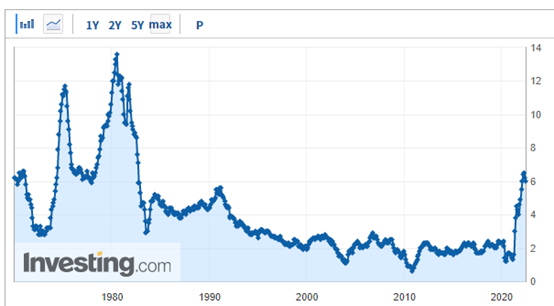
Us non seasonally adjusted core consumer price index (CPI) annual rate
In this case, the Federal Reserve raised interest rates at full steam, making the expected US dollar interest rate reach an unprecedented high.
For the forecast of the federal funds rate at the end of this year, the market is currently betting at most on 3.5%-3.75%, slightly lower than the peak forecast of 3.75%-4% in the dot matrix chart released by the Federal Reserve on June 16.
Dot matrix of Fed's interest rate hike expectation
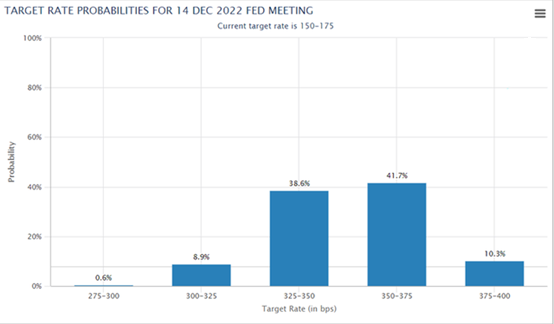
Fed's expectation of raising interest rate
The dot matrix chart in June shows that the benchmark interest rate of the Federal Reserve will rise from the current target range of 1.5%-1.75% to 3.25%-3.5%; As a result, the next four meetings will raise interest rates by 175 basis points.
The expectation of the Federal Reserve to raise interest rates is rising. After a substantial interest rate increase, the attractiveness of the US dollar to investors has been greatly enhanced. Because there is a large room for interest rate growth during the year, this has become an important driving factor for large capital investors to reallocate assets in the short term.
Bitcoin inflation rate change
The data shows that after the 742988 block was excavated by the bitcoin miner poolin, the BTC supply reached 19081175 pieces, and the circulation reached 90.86%.
In the current mining cycle, the output of BTC can reach 6.25 pieces per 10 minutes, and the annual output of BTC is calculated to be 328500 pieces. In other words, for the supply of 19081175 BTCs, the current annual inflation rate can reach 1.72%. Numerically, the ratio is lower than the annual interest rate of most national currencies.
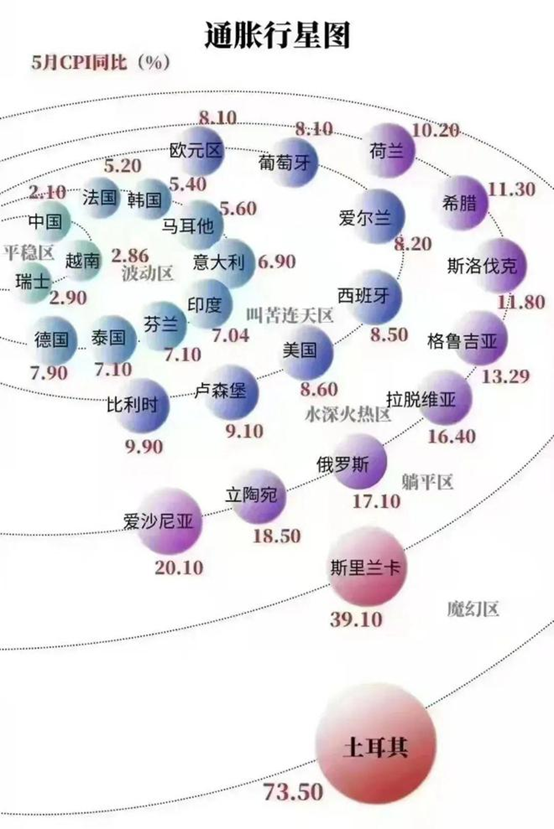
Inflation rate of countries in May 2022
From the inflation performance of various countries in May, the interest rate level of most countries is much higher than 1.72%. In other words, BTC has a competitive advantage in terms of inflation rate. It is a very low inflation rate variety. And with the continuation of BTC's block reward halving every four years, the downward trend of its inflation rate will also exist for a long time. Therefore, the scarcity of BTC is more effective for anti inflation.
Us money supply is abundant
In recent years, the money supply in the United States has grown rapidly. The peak value of M2 supply per week can exceed US $400billion. Judging from this, this is the culprit driving up the inflation rate. The proliferation of US dollars has virtually enhanced the attractiveness of BTC with declining long-term inflation rate. After all, BTC's inflation target is 0 after BTC finally ends its mining incentives. Among them, the increase in the number of long-term investors holding currency has increased the long-term deflation expectation after reducing the circulation of BTC.
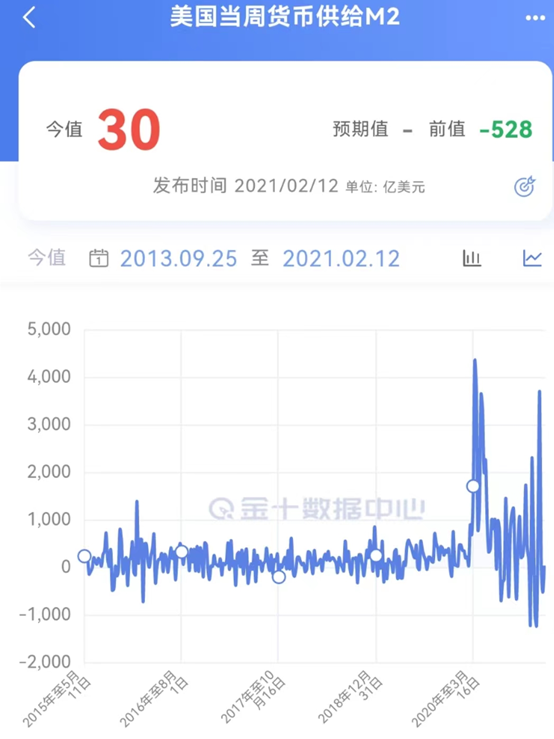
Us money supply
Whale increased its holdings and held a large amount of BTC
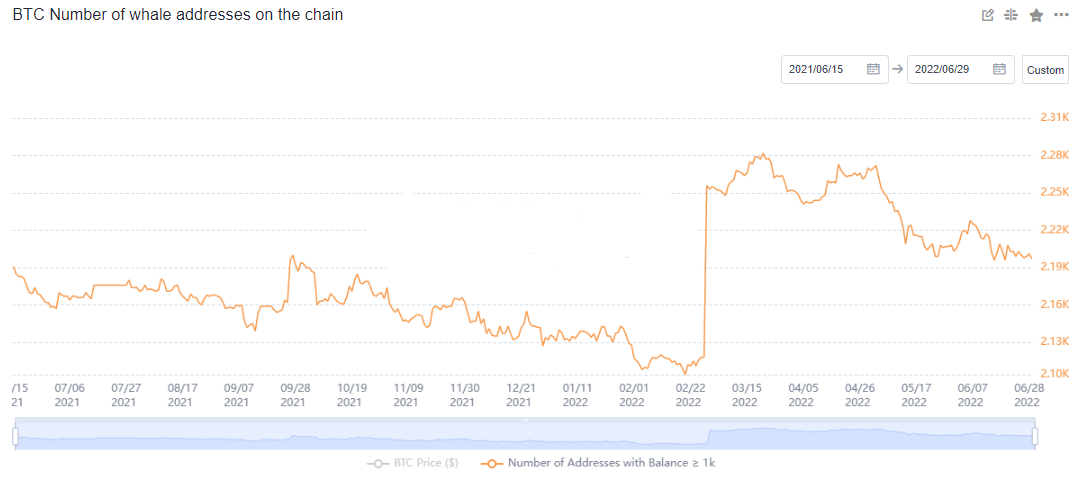
The data on the number of currency holding addresses shows that the number of BTC's giant whale addresses is growing, against the background of the Fed's interest rate hike and the substantial decline in BTC prices. The number of BTC addresses with 1000 BTCs remained at a high level. After a substantial increase on February 28, the value remained at a high level. This shows that the concentration of main cash holdings is still high. Although the factor of the increase of the exchange's currency holdings is not excluded here, on the whole, the increase of BTC's giant whale's currency holdings may be recognition of the long-term performance against inflation. Therefore, in terms of investment opportunities, long-term fixed investment and low absorption may be a better choice.