撰文:Tanay Ved,Coin Metrics
编译:AididiaoJP,Foresight News
核心要点
-
稳定币总市值达 2800 亿美元,年初至今增长 40%。USDT(64%)和 USDC(25%)仍占据最大市场份额,而 USDe 在 GENIUS 法案通过后扩张了 133%,成为第三大稳定币。
-
GENIUS 法案以美国国债作为标准化的储备支持,将竞争差异化转向了分销、生态覆盖范围和扩大市场采用的能力。
-
Circle 的收入由 USDC 储备的利息收入驱动,主要来自以太坊和 Solana。然而 USDC 的大部分交易活动收益归 Coinbase(通过 Base 上的序列收入)以及以太坊和 Solana(通过费用和 MEV)。
-
这些动态表明,应用专用稳定币和专注于稳定币的链正在兴起,旨在从整个技术栈中捕获并内部化更多价值。
引言
稳定币领域的活跃势头毫无减缓迹象。五月我们分析了各类稳定币、储备模型以及各网络的发行方。近几个月我们见证了美国通过 GENIUS 法案出台稳定币监管政策,同时 Circle 的 IPO 将稳定币商业模式带入主流市场。竞争格局加剧且似乎处于不断变化中,Tether 宣布通过 USAT 进入美国市场,Hyperliquid 的 USDH 代号争夺战激烈,以及 Stripe 和 Circle 等公司推出了一系列专注于支付链的发布。
在此背景下,本文探讨了在监管和利率环境变化下稳定币领域的风云变幻。随着 GENIUS 法案为支付稳定币标准化了储备支持,竞争日益转向那些掌握并捕获分销渠道的参与者。我们追踪了 Circle 在不同区块链上从 USDC 获得的收入,以理解推动专有稳定币和专用网络出现的动态。
竞争背景:GENIUS 法案后的市场
当前市场格局
GENIUS 法案于 7 月 18 日签署成为法律,为美元支持的支付稳定币发行方创建了一个监管框架。该立法的主要要求包括以安全、流动性资产(现金及短期美国国库券和货币市场基金)进行 100% 储备支持,且禁止发行方向发行的稳定币提供收益或利息。这创造了一个新环境,其中稳定币的抵押在各发行方之间更加标准化。
在考虑其影响之前,有必要盘点一下当前市场的状况。稳定币总市值现已超过 2750 亿美元,年初至今增长 40%。Tether 的 USDT 以 64% 的市场份额(1770 亿美元)领先,主要分布在以太坊(50%)和波场(47%),而 Circle 的 USDC 以 25% 的市场份额(710 亿美元)位居第二,分布在以太坊、Solana、Arbitrum 等网络。
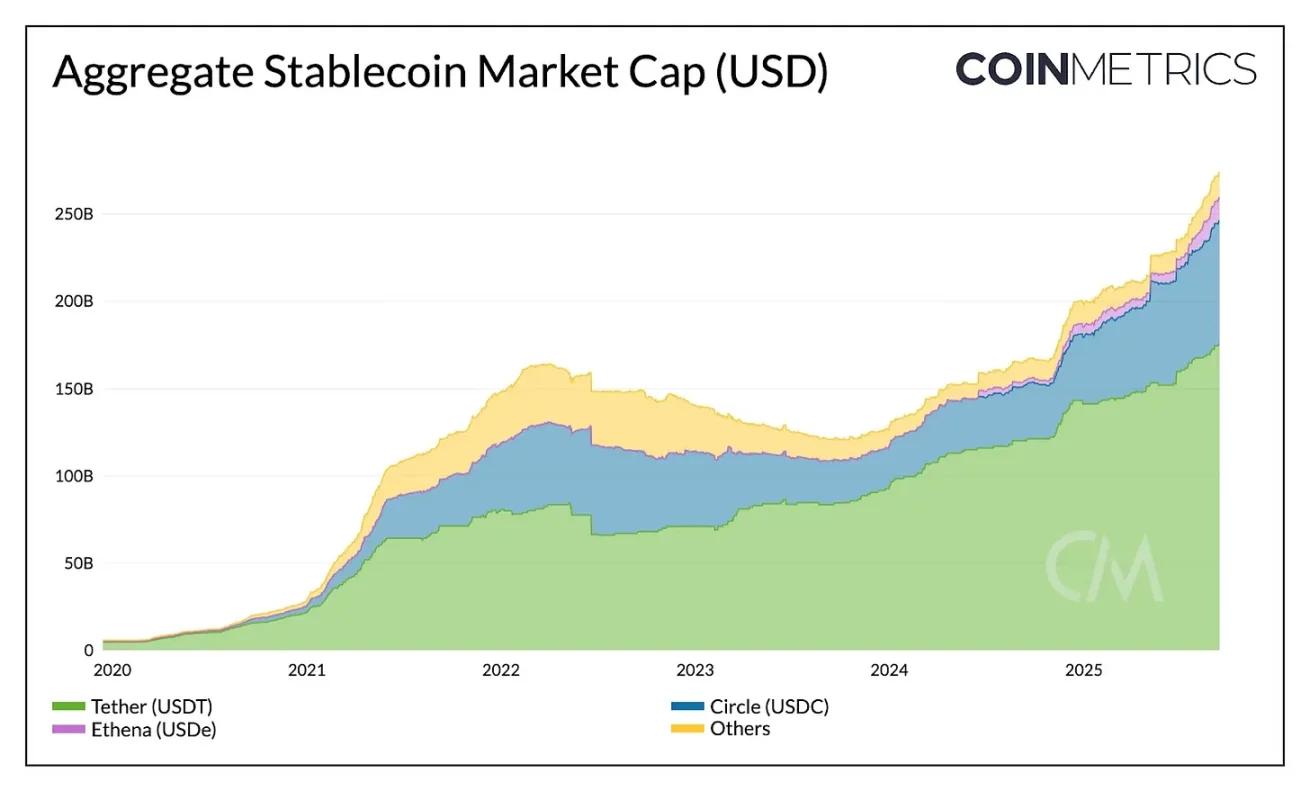
来源:Coin Metrics Network Data Pro
Tether 进入美国市场
迄今为止,Tether 作为一家离岸发行方运营,总部位于萨尔瓦多,USDT 主要服务于新兴市场的需求。另一方面,Circle 的 USDC 受益于在岸市场强大的监管定位,目前占美国本土稳定币供应量的 97%。
2025 年,USDC 市场份额增长了约 6%,而 USDT 则减少了约 7%。然而 Tether 推出符合美国规定的稳定币 USAT,可能会侵蚀 USDC 的在岸主导地位。由 Anchorage Digital 作为发行方,Cantor Fitzgerald 管理储备,USAT 需要打入交易所上市和流动性领域,以匹配 USDC 通过 Coinbase 等合作伙伴实现的多链覆盖和分销。
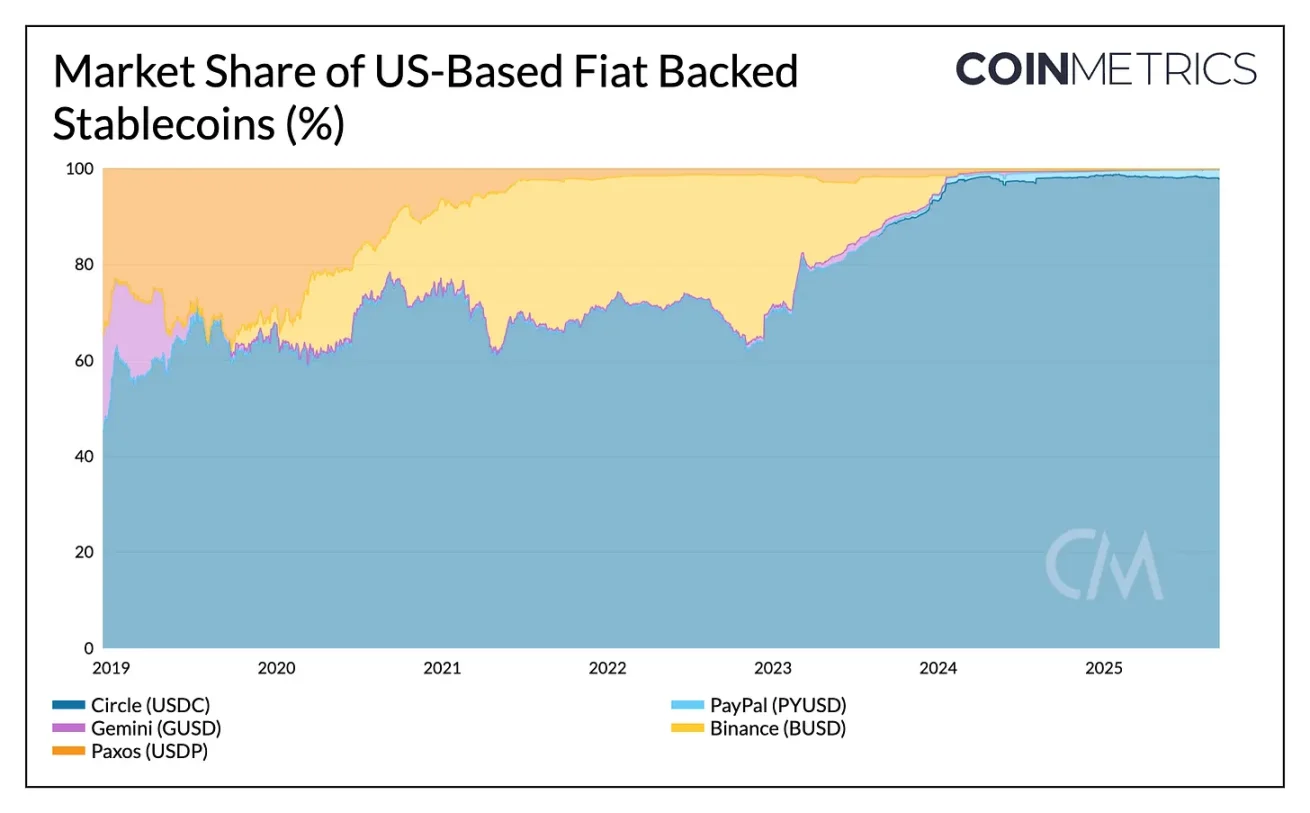
来源:Coin Metrics Network Data Pro
利率与收益动态
GENIUS 法案禁止支付收益以及不断变化的利率环境也可能对竞争格局产生重要影响。由于稳定币持有者被禁止直接获得补偿,美国国债储备的利息收入继续归发行方所有。Tether 和 Circle 已持有超过 1450 亿美元的国债,Tether 保留收益,而 Coinbase 间接将 USDC 储备的利息传递给持有者。
这一差距可能使带息替代品以及通过质押或借贷产生的链上收益来源更具吸引力。自 GENIUS 法案通过以来,Ethena 的 USDe 增长了 133%,而其质押版本 sUSDe 增长了 73%,使 USDe 成为第三大稳定币,市值达 136 亿美元。通过使用质押 ETH 和永续期货的 delta 中性策略代币化基差交易,Ethena 能够提供即使在利率下降时仍具有竞争力的收益。
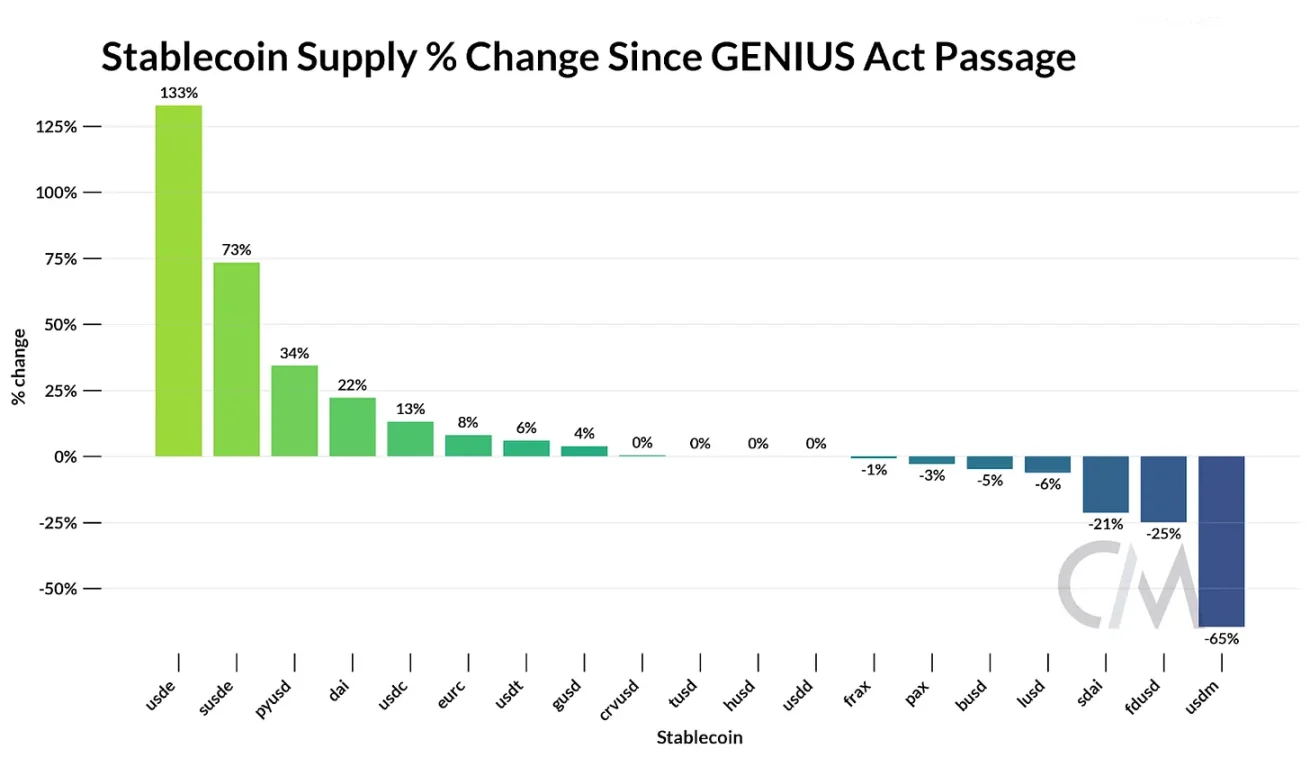
来源:Coin Metrics Network Data Pro
这些动态共同凸显了竞争格局如何从储备模型转向分销、收益和生态增长。
追踪 Circle 在各区块链上的收入
作为一家上市公司,Circle 为了解稳定币商业模式提供了一个清晰的蓝图。其当前收入的主要驱动力很直接:支持未偿 USDC 供应量的储备利息收入。
2025 年第二季度,Circle 获得了约 6.34 亿美元的利息收入,这是其当时约 610 亿美元 USDC 供应量及支持它的短期美国国债收益。按链细分,我们可以看到最大的贡献者是以太坊,收入 4.23 亿美元(68%),以及 Solana,收入 9700 万美元(15%),而 Arbitrum 成为供应量和收入增长最快的来源(自第一季度以来增长 24%)。
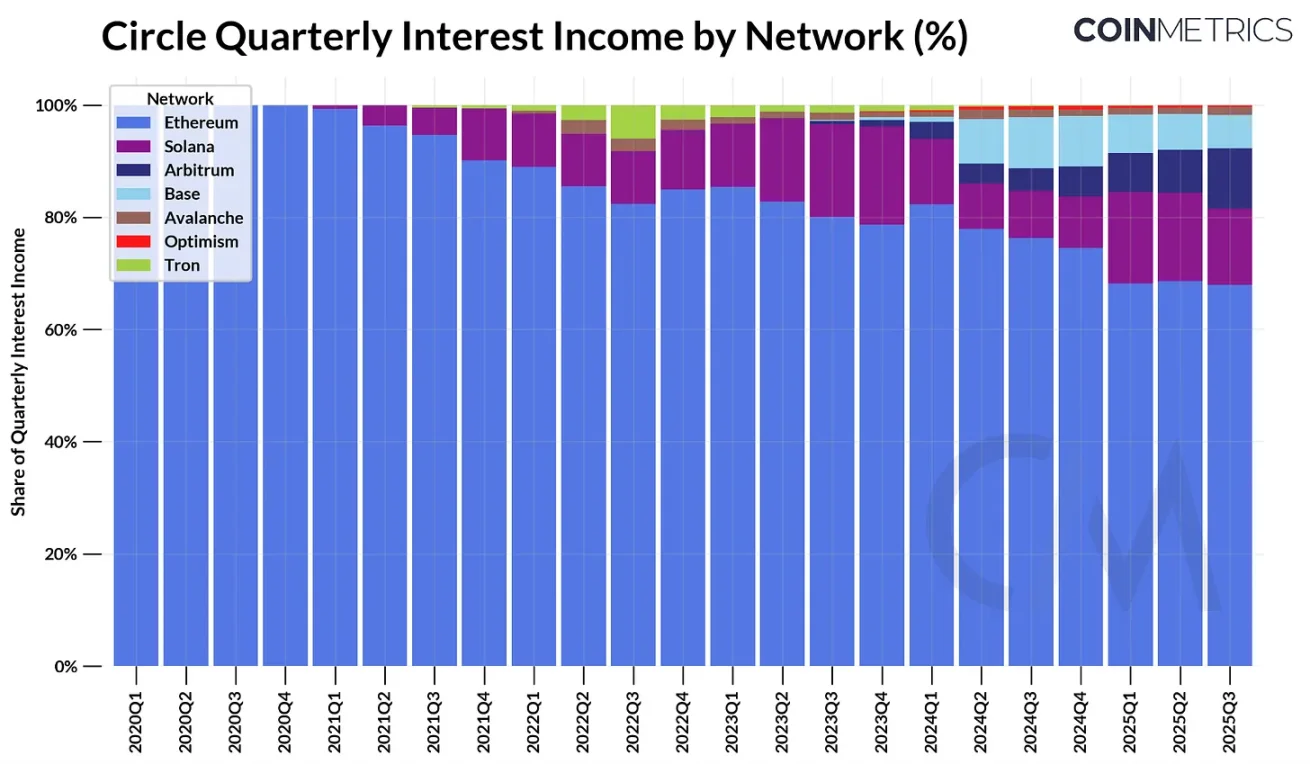
来源:Coin Metrics Network Data Pro
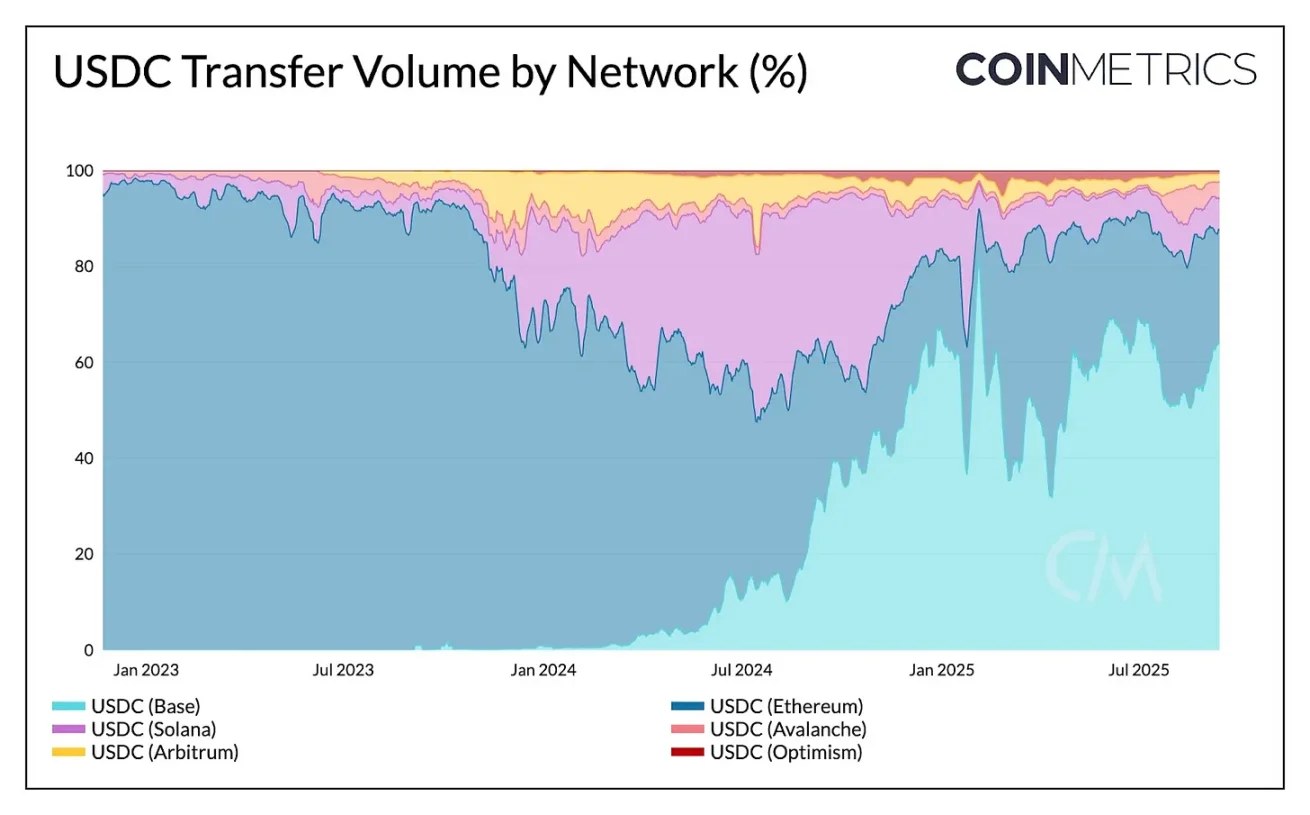
虽然 USDC 供应为 Circle 产生利息收入,但 USDC 在链间的转移并不产生收入。在分析各网络上 USDC 转账次数和转账量的份额时,我们看到 Solana 在转账频率上占主导地位,而 Base(64%)和以太坊(23%)占总交易量的大部分。因此 USDC 的这些交易活动收益归 Coinbase(通过 Base 上的序列收入)以及以太坊和 Solana 的验证者所有,而非 Circle 自身。
来源:Coin Metrics Network Data Pro
这强调了 Circle 的收入如何与未偿 USDC 供应量挂钩,而区块链通过序列、费用和 MEV 捕获转账活动的价值。像 Hyperliquid 的 USDH 这类应用专用稳定币的出现,说明了平台如何在其生态系统内内部化储备收入。同时,Circle 推出其 Layer-1 链 Arc,表明其努力从支付和外汇相关用例中捕获基于交易的收入,这些可能并不完全与当前网络上发生的活动类型重叠。
推出激励措施,掌控分销
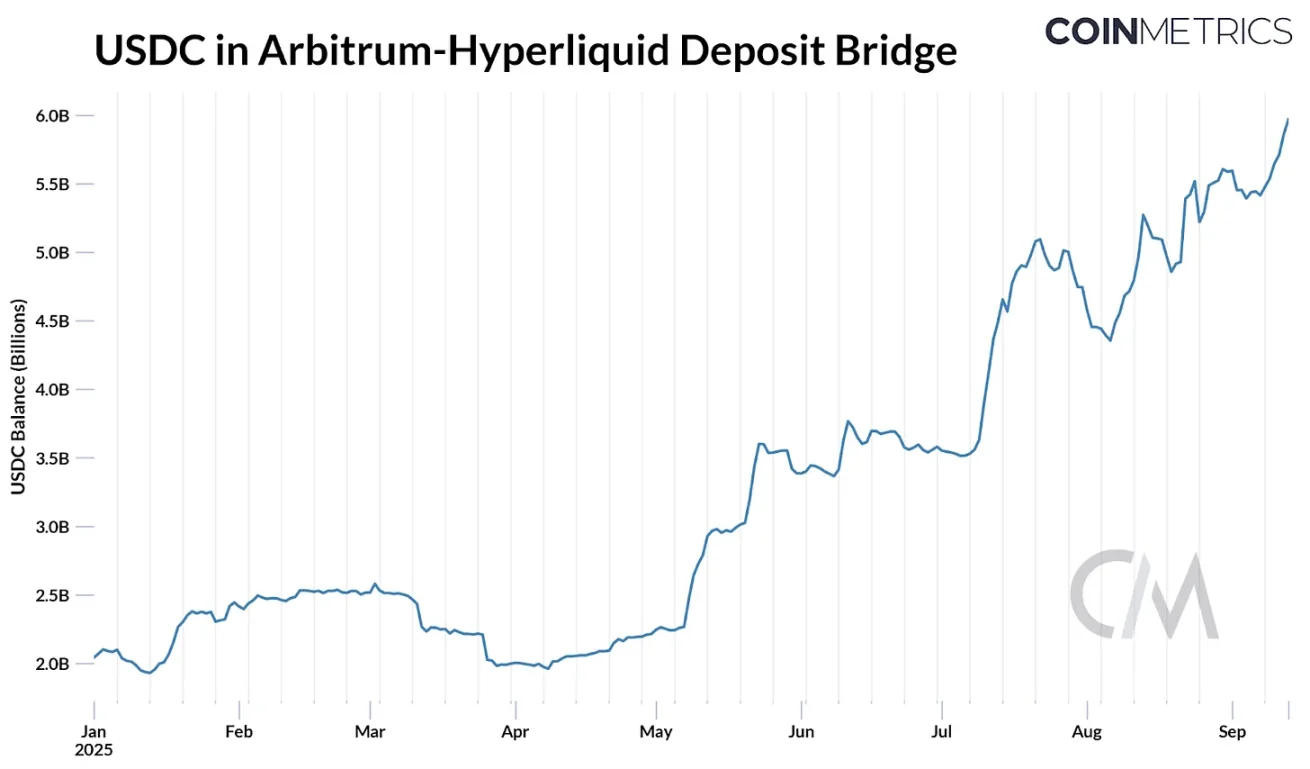
近期 Hyperliquid 的 USDH 代号争夺战突显了平台为何希望减少对外部来源的依赖并自行内部化经济收益。上周 Hyperliquid 开启治理投票,将 USDH 代号授予一个“Hyperliquid 优先、与 Hyperliquid 一致且合规”的发行方。Hyperliquid 的 Arbitrum 桥中约有所有 USDC 供应量的 8%(约 59 亿美元),按 4.1% 的储备回报率计算,这代表着约 2.47 亿美元的利息收入正流向 Circle(以及通过收入分成协议流向 Coinbase)。
来源:Coin Metrics ATLAS
这引发了一场竞标战,吸引了 Paxos、Ethena、Agora 和 Sky 等主要发行方以及 Native Markets 等新进入者的提案。发行方提出了使 USDH 对 Hyperliquid 生态系统具有吸引力的条款,提议返还高达 95% 的利息收入,提供有吸引力的收入分成模式,或加强合规一致性和分销。
最终,Native Markets 通过链上投票获得了 USDH 代号。Native Markets 的 USDH 将由现金和美国国债等价物全额支持,链下储备最初由 BlackRock 管理,链上储备由 Superstate 通过 Stripe 拥有的 Bridge 管理。作为回应,Circle 也准备在 Hyperliquid 的 HyperEVM 上推出原生 USDC,这表明在不断发展的平台上进行分销对于争夺稳定币主导地位仍然至关重要。
其他近期的稳定币发布也显示了为何应用、钱包、网络甚至州都在朝同一方向行动:发行自己的专有稳定币以捕获利息收入并将其再循环到生态增长中。
结论
稳定币领域似乎正在同时经历自上而下和自下而上的重塑阶段。在宏观层面,GENIUS 法案标准化了要求,将稳定币储备与美国国债挂钩,并使分销变得至关重要。现有参与者 Tether 和 Circle 之间的竞争进入新阶段,USAT 准备在 USDC 的主场向其发起挑战。由于发行方被禁止传递收益,利率下降可能会提升像 Ethena 的 USDe 这样的替代品的作用,因为对收益的需求持续存在。在微观层面,储备收入和交易活动的经济性正促使平台内部化更多价值。
从 Hyperliquid 的 USDH 传奇到 Circle 的 Arc 链,这一趋势指向控制更多技术栈,无论是通过内部化储备收入还是捕获基于交易的收入。这些努力也反映了将稳定币锚定在支付和结算中。但前进的道路提出了重要问题。新一轮专有稳定币浪潮会分散流动性,还是分销优势会将需求集中在少数赢家周围?随着具有更集中架构的专用支付链出现,它们会补充通用 L1,还是与之竞争活动?该领域的演变远未结束,这些力量如何发挥作用将定义稳定币采用的下一章。