你正在错过 DeFi 领域有史以来最重大的收购之一

深潮Publicado em 2025-08-17Última atualização em 2025-08-18

谁将从中获益最多?

撰文:mattdotfi

编译:AididiaoJP,Foresight News

目前只有少数人关注到@LayerZero_Core 对@StargateFinance 的收购,但由于此类合并极为罕见,我认为值得深入探讨。

提案摘要

LayerZero 计划收购 Stargate 的代币及资金库(按当前比例,每枚 $STG 由 $0.1444 的资金支持),并终止 Stargate DAO,将其并入 $ZRO 主导的经济体系。

  • 收购价格:每枚 $STG 为 $0.1675,或每 1 枚 $ZRO 兑换 0.08634 枚 $STG。

  • 该提案将遵循 Stargate DAO 的标准流程,需至少 120 万票且赞成率达到 70% 才能通过。

  • 未来 Stargate 产生的超额收入将用于通过回购减少 $ZRO 的流通量。

利弊分析

这引出一个关键问题:「谁将从中获益最多?」

当前情况下,LayerZero 和 $ZRO 持有者似乎是最大受益方,因为这是一次通过其代币进行的流动性收购,具体表现为:

  • 以 16% 的适度溢价收购 Stargate 资金库支持的 $STG,同时增加 $ZRO 持有者数量。

  • 赚取协议产生的费用(据@DefiLlama 数据,年化约 174 万美元),这些费用将用于在公开市场回购 $ZRO。

  • 通过回购垂直整合 $ZRO 代币经济与跨链业务(LayerZero 处于领先地位),并提升其效用。

而 $STG 和 $veSTG(锁定 STG)持有者能得到什么?并不多:

由于 $ZRO 近期价格上涨,其兑换折扣较低;$STG 因市场波动仅有微弱溢价,但价格下限明确。

经过最初 24 小时讨论,LayerZero 决定向 $veSTG 持有者支付六个月的 Stargate 收入,因为他们无法在锁定期结束前解锁代币。

弊端与隐忧

此处问题复杂,但归根结底在于一个词:妥协。
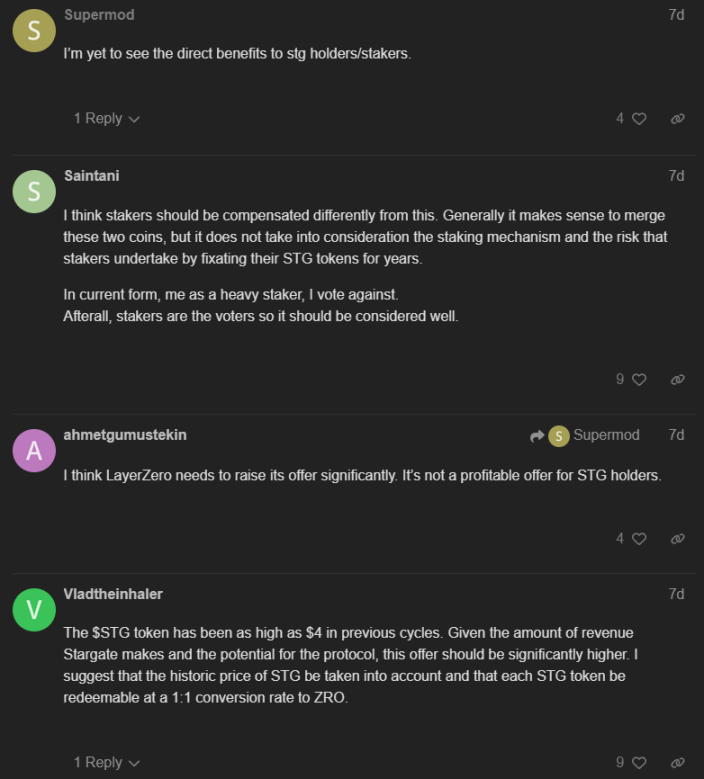
LayerZero 在当前形势下获利更多,而 Stargate 代币持有者则难以满意。以下是三大问题和不确定性:

  • 应如何计算 LayerZero 收购 $STG 的合理溢价?

  • 对 $STG 持有者而言,「两害相权」如何选择?是继续承受代币持续抛压,还是选择安全但缺乏上升空间的方案?

  • $veSTG 持有者的平均锁仓期约为一年,若提案通过,仅获六个月补偿,其激励何在?

  • 目前 $STG 的完全稀释估值(FDV)不足 $ZRO 的 10%,而价值 810 万美元的 $STG 以 $veSTG 形式锁定。

许多持有者要求 1:1 兑换 $ZRO 与 $STG,但这并不合理,这意味着他们瞬间获得 12 倍收益,而 LayerZero 需动用全部 FDV 收购一个资金库稳健但收入有限的业务。

个人观点

尽管我认为 LayerZero 团队应重新评估支付给 $STG 持有者的溢价,并为质押者设计更合理的收入分成方案,但此次收购对项目本身未必是灾难。

DAO 主要依赖收入和代币发行维持运营,而 $STG 从历史高点暴跌超 95%,年化收入仅 200 万美元的 Stargate 已难有扩展空间。此外 Stargate 本就依赖 LayerZero 的基础设施,整合后更易借助其技术栈和资金实现增长。

尽管如此,我认为该提案对 Stargate 有意义,但无需急于定论。$STG 持有者对 LayerZero 的留存与忠诚度,很大程度上取决于团队如何处理此事。否则,他们可能失去一批潜在的新 $ZRO 忠实持有者及从项目伊始支持 Stargate 的参与者。

更新:

提案已在 Stargate DAO 上线,最低门槛已达成,目前 230 万枚流通中的 $veSTG(总计 1700 万枚)投出「赞成」(98% 对 2%「反对」)。

我不认为这是恶意收购,但现阶段 LayerZero 的获益显然远超 $STG 和 $veSTG 持有者。
Leituras Relacionadas

RWA Tokenization Enters the Next Phase: What is the Truly Time-Consuming Advantage to Build?

The article argues that as tokenization frameworks for Real-World Assets (RWA) mature, the ability to issue assets is becoming less of a competitive advantage. The focus is shifting to what happens *after* issuance: which RWA operations can build enduring trust, maintain stable operations, and remain integrated into the financial ecosystem over the long term. The piece introduces the concept of a **Reserve Layer**—infrastructure that connects tokenized assets to the necessary verification, liquidity, and operational systems for on-chain finance. For an asset to serve as a reliable reserve (e.g., short-term U.S. Treasuries, gold), it needs predictable value, standardized features, deep markets, and observable pricing. However, the true, hard-to-replicate advantage lies not just in the underlying asset but in the **operational track record** built over time. This includes consistent reserve management, independent audits, successful redemptions, maintained liquidity, and protocol integrations. Each successful operation adds evidence, creating a reinforcing cycle: more evidence builds stronger institutional confidence, leading to wider distribution, deeper liquidity, and more use cases as collateral. The article presents a framework combining two dimensions: an asset's suitability as a reserve and the issuer's operational capability. The most sustainable model combines **high-quality reserve assets with strong, long-term operational discipline**. A critical blind spot is an asset with high reserve suitability (like gold) issued by an entity with a limited operational track record; the quality of the infrastructure is separate from the quality of the asset itself. In conclusion, the next phase of RWA will be defined by participants who can pair appropriate reserve assets with the operational rigor to support them through market cycles, thereby transforming tokenized RWAs into durable financial infrastructure.

marsbitHá 32m

RWA Tokenization Enters the Next Phase: What is the Truly Time-Consuming Advantage to Build?

marsbitHá 32m

Trading

Spot
活动图片