特朗普WLFI项目推出USD1 积分计划,首发上线HTX

深潮TechFlowPublicado em 2025-08-07Última atualização em 2025-08-08

Resumo

此次合作充分体现了火币HTX推动加密行业创新与大规模采用的战略决心。


火币HTX成为World Liberty Financial USD1 积分计划首发合作伙伴


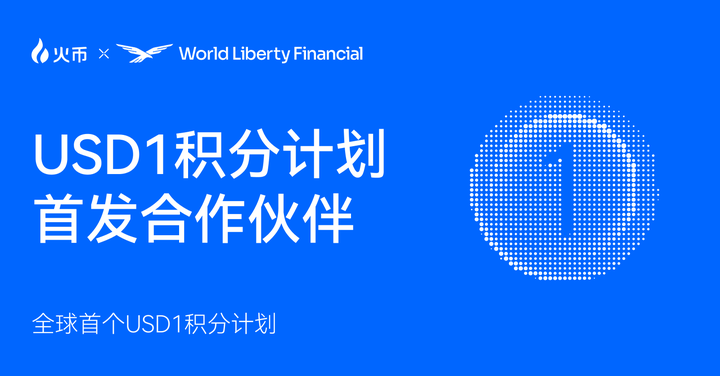
8月7日,加密货币交易平台火币HTX正式宣布与World Liberty Financial(WLFI)达成合作,成为USD1积分计划的首批重要合作伙伴之一。该计划是全球首个专为USD1稳定币打造的积分激励机制,旨在通过创新方式推动稳定币生态的普及和发展。


作为率先与WLFI展开合作的交易平台之一,火币HTX不仅是全球首家上线USD1的交易所,也再次彰显了其在构建以用户为中心的合规稳定币生态方面的领先地位。此次合作充分体现了火币HTX推动加密行业创新与大规模采用的战略决心。


火币HTX全球顾问孙宇晨表示:“我们始终相信,稳定币将在未来数字金融中扮演核心角色。火币HTX非常荣幸能够支持USD1的发展,并参与到这一具有突破性的积分奖励计划中。随着稳定币日益成为全球交易、支付和链上生态的重要基石,我们将继续通过安全可靠的交易服务、深入的战略合作伙伴关系和前瞻性举措,推动其广泛采用。”


关于WLFI与USD1


World Liberty Financial(WLFI)由美国总统唐纳德·J·特朗普(Donald J. Trump)(荣誉联合创始人)、Steve Witkoff(荣誉联合创始人)、Eric Trump、Donald Trump Jr.、Barron Trump、Zach Witkoff、Alex Witkoff、Chase Herro与Zak Folkman共同创立,是一家融合数字资产创新与美国价值观、经济主权的金融科技公司。在与美国政界深度连接的背景下,WLFI正引领全球稳定币制度的建立与发展。


其核心产品USD1稳定币代表了高度合规与金融透明度的典范。USD1完全由短期美国国债、美元存款以及现金等价物支持,储备管理由WLFI严格监管,确保其币值始终与美元1:1锚定。依托机构级别的储备机制和可信的托管方,USD1致力于成为数字支付、交易与DeFi生态中的关键底层资产。


USD1积分计划亮点


USD1积分计划借鉴航空、酒店、信用卡等传统行业的积分机制,将其首次引入加密货币领域,为稳定币用户提供实际奖励,回馈他们对去中心化金融未来的支持与参与。
在火币HTX,用户可通过交易USD1交易对、持有USD1资产、质押USD1等方式参与该计划并获取积分奖励。


未来规划


火币HTX将与WLFI及其他行业领导者携手合作,共同推动USD1稳定币生态的成长。此次合作是火币HTX致力于为全球用户提供安全、创新、以用户为本的加密产品道路上的又一重要里程碑。


有关积分计划的更多信息将在后续公布。火币HTX将持续与WLFI及其他合作伙伴一道,共同打造一个更加开放、包容的稳定币新生态 —— 每一个积分,都是向未来迈出的关键一步。


关于火币HTX


火币HTX成立于2013年,经过12年的发展,已从加密货币交易所成为一个全面的区块链业务生态系统,涵盖数字资产交易、金融衍生品、研究、投资、孵化和其他业务。
火币HTX作为全球领先的Web3门户,秉承全球扩张、生态繁荣、财富效应、安全合规的发展战略,为世界虚拟货币爱好者提供全面、安全、可靠的价值与服务。


如需了解更多火币HTX信息,请访问https://www.htx.com/HTX Square,并关注XTelegramDiscord。如有进一步的疑问,请联系glo-media@htx-inc.com

Leituras Relacionadas

Can DeepSeek Save China One Trillion Dollars?

"DeepSeek and the $1 Trillion Infrastructure Question" The article examines whether DeepSeek's AI optimization breakthroughs could potentially save China $1 trillion in future AI infrastructure costs. The analysis begins with Nvidia's upcoming Vera Rubin AI platform, costing ~$7.8 million, where memory (HBM4/LPDDR5X) constitutes $2 million—a 435% cost increase in one year, highlighting how AI hardware spending is shifting toward expensive memory components. DeepSeek's approach works in the opposite direction. Through three key technical innovations showcased in DeepSeek V4, the company dramatically improves hardware efficiency: 1. **Memory Compression (MLA)**: Re-engineers the attention mechanism to compress long-context memory (KV Cache) by over 90%, drastically reducing expensive HBM usage. 2. **Selective Activation (MoE)**: Employs Mixture-of-Experts architecture where only a small fraction of parameters (e.g., 49B out of 1.6T in V4-Pro) are activated per token, allowing most parameters to reside in cheaper memory/SSD. 3. **Computation Caching**: Reuses previously computed results via cache hits, replacing expensive GPU computations with cheap memory reads. Combined, these optimizations allow the same hardware to produce approximately 4x more tokens, effectively reducing required hardware investment by 75%. DeepSeek's pricing reflects this: a 10-billion token workload costs ~$522 monthly versus ~$9,000-$10,000 for competitors. The $1 trillion savings projection stems from McKinsey's estimate that global AI infrastructure will require ~$5.2 trillion investment by 2030. As China's daily token consumption grows toward quadrillions, even marginal efficiency gains scale massively. With a conservative 4x throughput improvement, China could avoid building tens of thousands of AI data centers equivalent to ~7 trillion RMB ($1 trillion) in saved investment. Critically, this strategy shifts dependency from scarce, expensive GPU/HBM—where China lags—toward more accessible storage, caching, and systems engineering where domestic suppliers like CXMT are gaining strength. Rather than "replacing Nvidia," DeepSeek rebalances AI's value chain away from monolithic hardware dependency. Ultimately, DeepSeek's technical breakthroughs could lower the barrier to AI adoption across Chinese industries by making advanced capabilities affordable at scale—transforming who can access next-generation AI.

marsbitHá 1h

Can DeepSeek Save China One Trillion Dollars?

marsbitHá 1h

Overturning the Mainstream Approach to Hallucinations: Metacognition is the New Solution for Large Models to Break the Hallucination Barrier

This paper, "Hallucinations Undermine Trust; Metacognition is a Way Forward," proposes a paradigm shift in combating AI hallucination. It argues that the current mainstream approaches—striving for omniscience by scaling data/models or having AI abstain from uncertain answers—are fundamentally flawed. The former has inevitable knowledge gaps, while the latter imposes a crippling "utility tax," requiring the rejection of many correct answers to achieve high accuracy, due to models' poor "discrimination" (the ability to distinguish correct from incorrect answers internally). The core contribution is redefining hallucination not as "being wrong," but as "expressing false information with unwarranted certainty." The proposed solution is **Faithful Uncertainty** or **Metacognition**: enabling AI to accurately perceive its internal uncertainty and honestly express it in its language (e.g., using hedging phrases when unsure). This creates a more reliable assistant that provides useful information while signaling its confidence, minimizing harm from errors. The paper emphasizes that metacognition is critical for the era of AI Agents. Without it, Agents cannot intelligently decide when to use tools like search engines, leading to inefficiency and misuse. Key implementation challenges are highlighted: the "bootstrapping paradox" of training with static uncertainty data, the "alignment distortion signal" where human preference training suppresses internal uncertainty cues, and the difficulty of causally evaluating true metacognition vs. its superficial imitation. The paper concludes that the goal should not be an infallible AI, but one that is honest about the limits of its knowledge, thereby building user trust through transparent communication of its certainty.

marsbitHá 1h

Overturning the Mainstream Approach to Hallucinations: Metacognition is the New Solution for Large Models to Break the Hallucination Barrier

marsbitHá 1h

Hedge by Buying Gold and Oil, Chase Soaring Returns with AI. ‘Dated’ Bitcoin Enters a Bear Market

Bitcoin has recently declined, hitting a two-month low near $66,123, while Ethereum fell to a three-month low around $1,837. Analysts suggest the drop is not merely due to factors like ETF outflows or MicroStrategy's selling but reflects a deeper issue: Bitcoin is losing a broader asset competition. In a near-zero interest rate environment, Bitcoin previously thrived as an outlet for investor dissatisfaction with inflation and limited options. However, the market landscape has shifted. Bitcoin now occupies an "awkward middle ground," facing competition on three fronts. For inflation hedging, investors prefer gold, energy stocks, and commodity producers—assets with tangible backing and clearer pricing power. For growth exposure, AI-related companies with actual revenues and profits are more attractive. Even within crypto, investors can choose stablecoins, exchanges, or infrastructure firms tied directly to adoption, offering clearer business models and leverage. Thus, Bitcoin is no longer the top choice for hedging, growth, or crypto exposure. This shift is evident in market reactions: despite recent warnings about persistent inflation from a Fed official, Bitcoin did not rally as it might have in the past. Instead, capital flowed to assets with direct commodity or energy exposure. The recent ETF outflows and MicroStrategy sales are symptoms, not causes, of this new reality. Investors are becoming more selective, demanding clearer value propositions beyond mere scarcity. The emerging bear case for Bitcoin is not about it being a bubble or failed technology, but that scarcity alone is no longer sufficient.

华尔街日报Há 1h

Hedge by Buying Gold and Oil, Chase Soaring Returns with AI. ‘Dated’ Bitcoin Enters a Bear Market

华尔街日报Há 1h

Trading

Spot
Futuros

Artigos em Destaque

Como comprar USD1

Bem-vindo à HTX.com!Tornámos a compra de USD1 (USD1) simples e conveniente.Segue o nosso guia passo a passo para iniciar a tua jornada no mundo das criptos.Passo 1: cria a tua conta HTXUtiliza o teu e-mail ou número de telefone para te inscreveres numa conta gratuita na HTX.Desfruta de um processo de inscrição sem complicações e desbloqueia todas as funcionalidades.Obter a minha contaPasso 2: vai para Comprar Cripto e escolhe o teu método de pagamentoCartão de crédito/débito: usa o teu visa ou mastercard para comprar USD1 (USD1) instantaneamente.Saldo: usa os fundos da tua conta HTX para transacionar sem problemas.Terceiros: adicionamos métodos de pagamento populares, como Google Pay e Apple Pay, para aumentar a conveniência.P2P: transaciona diretamente com outros utilizadores na HTX.Mercado de balcão (OTC): oferecemos serviços personalizados e taxas de câmbio competitivas para os traders.Passo 3: armazena teu USD1 (USD1)Depois de comprar o teu USD1 (USD1), armazena-o na tua conta HTX.Alternativamente, podes enviá-lo para outro lugar através de transferência blockchain ou usá-lo para transacionar outras criptomoedas.Passo 4: transaciona USD1 (USD1)Transaciona facilmente USD1 (USD1) no mercado à vista da HTX.Acede simplesmente à tua conta, seleciona o teu par de trading, executa as tuas transações e monitoriza em tempo real.Oferecemos uma experiência de fácil utilização tanto para principiantes como para traders experientes.

155 Visualizações TotaisPublicado em {updateTime}Atualizado em 2026.06.02

Como comprar USD1

Discussões

Bem-vindo à Comunidade HTX. Aqui, pode manter-se informado sobre os mais recentes desenvolvimentos da plataforma e obter acesso a análises profissionais de mercado. As opiniões dos utilizadores sobre o preço de USD1 (USD1) são apresentadas abaixo.

活动图片