SNS Insider Report: B2B Digital Payment Sector to Break $27T by 2032: $BEST to Soar?

bitcoinistPublicado em 2025-08-04Última atualização em 2025-08-04

Resumo

The B2B digital payment market’s value could reach $27.8T by 2032, with AI and blockchain technology paving the way for...

Trusted Editorial content, reviewed by leading industry experts and seasoned editors. Ad Disclosure

The B2B digital payment market’s value could reach $27.8T by 2032, with AI and blockchain technology paving the way for safer and faster transactions.

As the digitization of global transactions grows exponentially, we can expect crypto wallets like Best Wallet and its Best Wallet Token ($BEST) to capitalize on this development.

B2B Digital Payments: Answering the Call for Fast and Secure Transactions

Consulting company SNS Insider revealed in its report that it expects the B2B digital payment market to expand from $8T in 2024 to as much as $27.8T by 2032, translating to a compound annual growth rate (CAGR) of 16.79%.

The increasing demand for fast, secure, and transparent means of transactions in digital commerce and digital remittances will drive this growth worldwide.

S&N Insider projects that North America will register the fastest CAGR from now until 2032, with Canada potentially leading the increase in B2B digital payments in the region.
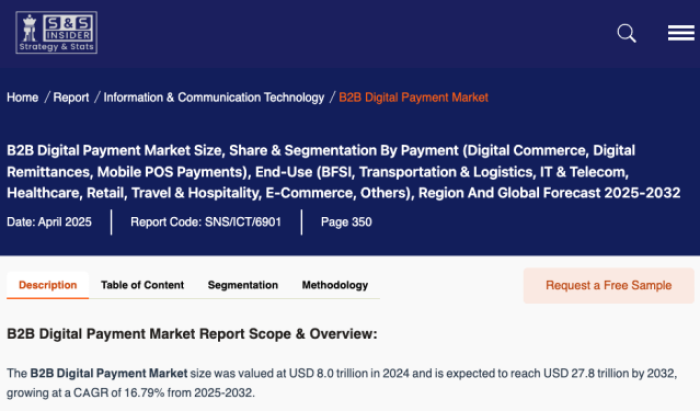
SNS Insider report snippet.

But the digitization of B2B payments also comes with risks, such as data breaches, phishing, fraud, and ransomware. This is where AI and blockchain technology will come into play.

According to the report, AI can help detect fraud, speed up the invoicing process, and personalize payment experiences. Meanwhile, blockchain will allow for the creation of transaction records that are secure, transparent, and permanent.

Growing Adoption of Digital Payments Benefits Best Wallet

The adoption of digital payments for B2B transactions will naturally spill over to the consumer space as well. While a lot of people use online banking and other online payment platforms every day, demand for crypto payment services is sure to grow, too.

This, in turn, will boost the need for crypto wallets. Aiming to grab a huge chunk of the market by 2026, Best Wallet is making waves with its mobile-based, non-custodial crypto wallet.

It’s available for both iOS and Android devices, making it ideal for those looking for convenience. With the app installed on your phone, you no longer need to carry a separate device for storing your crypto and using it for your everyday transactions.
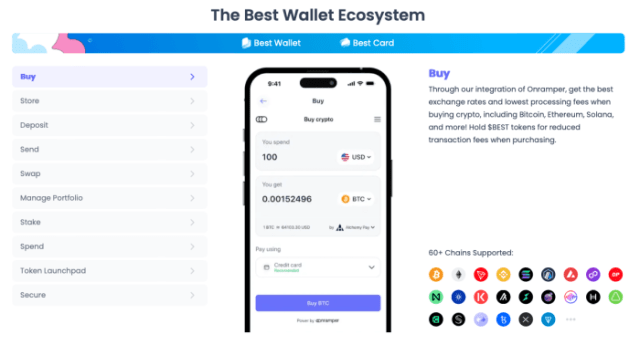
Best Wallet Ecosystem.

As a non-custodial wallet, Best Wallet ensures that only you have access to your private keys. This is crucial because these keys are used to sign your transactions and prove ownership of your crypto.

While crypto storage is its main selling point, Best Wallet offers other features too. You can use it to manage your portfolio, as well as swap, trade, and buy crypto. You can even join the best crypto presales via its Token Launchpad.

To get the most out of these features, get its native Best Wallet Token ($BEST). You’ll enjoy exclusive perks, like reduced transaction fees, higher staking rewards, early access to presales, and the ability to vote on key decisions within the Best Wallet ecosystem.

You can also choose to stake your $BEST tokens after you purchase them. The team currently offers a reward rate of 93% p.a., a compelling incentive to support the project.

Each token costs just $0.025435, which gives you an affordable way to invest in the growth of the crypto market. You can go to its official presale page to buy yours now, or check out our Best Wallet Token buying guide for more details.

But act quickly, as the token’s price will increase tomorrow.

To learn more about the presale, read the Best Wallet Token whitepaper.

There’s No Turning Back—Digital Payments are Here

As digital payments offer a fast and safe way to transfer funds, it will only be a matter of time before all businesses fully embrace them. Blockchain technology will play an important role, too, as it adds a layer of transparency to transactions.

Of course, these developments will have an impact on consumer payments too, which is where Best Wallet comes in. As a user-friendly and secure mobile crypto wallet, it’s well-positioned to capture a share of the growing crypto wallet market, boosting the value of its Best Wallet Token ($BEST).

Disclaimer: Do your own research before you invest. This is not investment advice.

Editorial Process for bitcoinist is centered on delivering thoroughly researched, accurate, and unbiased content. We uphold strict sourcing standards, and each page undergoes diligent review by our team of top technology experts and seasoned editors. This process ensures the integrity, relevance, and value of our content for our readers.

Ben is a freelance writer specializing in crypto developments (mainly altcoins) and the intricate ways global economics shape the digital asset space. His B.Ed. in Education provides a unique foundation for his writing, enabling him to distill complex crypto concepts and market shifts into clear, digestible insights. This skill is key to helping readers adapt and apply their understanding to the ever-evolving world of crypto investment. Passionate about making crypto accessible, Ben crafts content designed to educate a broad audience, from current market events to the essential foundational knowledge that underpins them. His goal is to empower readers through understanding. When he’s not immersed in crypto analysis and breaking down complex topics, Ben is an avid Pokémon fan and enjoys all things Disney.

Leituras Relacionadas

77 Bloody Codes: When the '$5 Wrench' Shatters the Privacy Myth of France's Crypto Elite

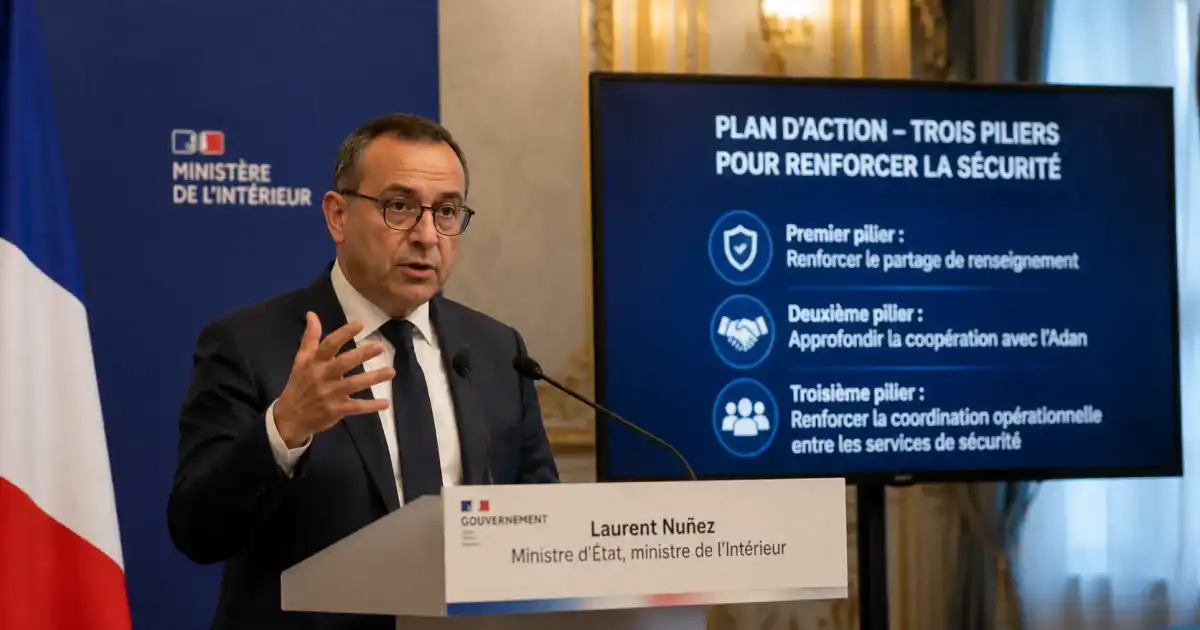
**Summary** In the first half of 2026, France recorded 77 violent crimes—including kidnappings, illegal confinement, and extortion—targeting cryptocurrency holders, a 71% increase over the 45 cases in all of 2025. This equates to an attack every 2.3 days, making France a global hotspot for so-called "wrench attacks," where criminals use physical violence to coerce victims into surrendering crypto assets. High-profile cases include the 2025 kidnapping of Ledger co-founder David Balland, who was shown with a severed finger in a ransom video, and an attempted kidnapping of the family of Paymium's CEO in Paris. Prosecutors note these are not isolated incidents but part of structured criminal networks, sometimes involving minors. Several factors contribute to France's vulnerability: a large holder base (approx. 7.3 million people), the presence of major crypto firms and executives, a culture of public disclosure among enthusiasts, and potential data leaks. The trend is spreading across Europe, which now accounts for over 40% of such global attacks. Research indicates a correlation between Bitcoin price surges and increased wrench attacks. In response, French Interior Minister Laurent Nuñez announced a three-pillar action plan focusing on enhanced intelligence sharing, deeper cooperation with the industry association Adan, and improved operational and cross-border coordination. Authorities have made over 200 arrests in the past year. Security experts warn that digital asset safety now extends to the physical world. They advise holders to use hardware wallets, avoid disclosing holdings on social media, enable multi-factor authentication, and report suspicious activity. The situation underscores the urgent need for the crypto community to shift from a "show-off" culture to one of discretion as physical security becomes paramount.

marsbitHá 1h

77 Bloody Codes: When the '$5 Wrench' Shatters the Privacy Myth of France's Crypto Elite

marsbitHá 1h

Both OpenAI and Anthropic are 'Developing Their Own Chips' — Beyond Cost, the Control Over Computing Power is Paramount

OpenAI and Anthropic are both advancing plans to develop custom AI chips, driven by the need to control computing power and reduce costs. According to reports, Anthropic is in early-stage development of its own chips and in talks with Samsung for manufacturing, while OpenAI is collaborating with Broadcom and TSMC, aiming to deploy its first inference chip by late 2026. The primary motivation extends beyond just lowering expenses. For these large model companies, chips are core production assets. By designing specialized hardware (ASICs) tailored to their specific model architectures—OpenAI's being more sparse and Anthropic's more dense—they aim to achieve deeper software-hardware co-design. This synergy can significantly improve inference speed, energy efficiency, and overall unit economics, offering advantages that off-the-shelf GPUs cannot. This move does not signify an immediate replacement for suppliers like Nvidia. The process from design to deployment takes 18-24 months, and Nvidia's GPU ecosystem remains deeply entrenched. Instead, custom chips provide a strategic alternative and negotiating leverage, allowing companies to use them for specific, high-volume workloads like inference while still relying on external GPUs and TPUs for other tasks. The trend reflects a broader industry shift where AI competition is evolving from pure algorithmic prowess to integrated control over the entire software-hardware stack. Companies like Google, Amazon, Meta, and Microsoft are already on this path. For foundries like Samsung, securing orders from AI leaders like Anthropic represents a significant opportunity to expand its footprint in the advanced semiconductor market for AI. Ultimately, the race for "computing sovereignty" is now a central battleground for major AI players.

marsbitHá 1h

Both OpenAI and Anthropic are 'Developing Their Own Chips' — Beyond Cost, the Control Over Computing Power is Paramount

marsbitHá 1h

Trading

Spot
活动图片