U.K. Lags in Crypto Race says Former Finance Minister George Osborne

TheCryptoTimesPublicado em 2025-08-04Última atualização em 2025-08-04

George Osborne, the UK’s former Finance Minister who now advises crypto giant Coinbase, is saying that the UK is falling behind other countries when it comes to regulating cryptocurrencies, especially “stablecoins.”

In an op-ed for the Financial Times, Osborne claimed this delay could cause the UK to miss out on a major financial revolution, just like the one in the 1980s known as the “Big Bang”. According to him, Chancellor Rachel Reeves and Bank of England Governor Andrew Bailey are not moving fast enough. 

Osborne said the UK rose to global financial leadership by embracing risk. He also warned that now it’s falling behind as others like the US, EU, Singapore, and Abu Dhabi push forward.

Call for Clear Rules

Osborne stated that Reeves should follow the U.S. Congress and create proper laws for stablecoins. He claimed that blaming regulators for delays is just an excuse. The U.S. has recently passed a law called the Genius Act supporting the use of stablecoins, while the EU has also introduced its own rules.

The UK government has said that it is working on crypto regulation and plans to create clear, strong rules to protect investors and support innovation. It also pointed out that the UK is still Europe’s top fintech hub and cooperating with the U.S. on tech-related policies.

Bank of England Still Cautious

In 2023, the Bank had said any stablecoin used widely in the UK should be 100% backed by central bank deposits that earn no interest, a move that made UK-based stablecoins less appealing.

But now, the Bank of England is rethinking that approach. It may allow these stablecoins to earn some return, and a public consultation is expected later this year.

Andrew Bailey, the Bank of England governor, is more careful. He recently said stablecoins need to be safe and reliable. If they’re not, they could disrupt the UK’s financial system. He doesn’t support allowing regular banks to issue stablecoins but prefers something called “tokenized deposits,” a safer digital version of money already held in banks.

U.K. Lags Behind Others

Despite early proposals from the UK’s Treasury and Financial Conduct Authority, the country still doesn’t have a full legal framework for stablecoins. Meanwhile, U.S. dollar-based stablecoins dominate 99% of the global $250 billion market.

While Osborne pushes for action, Reeves’ team insists there is no conflict with the Bank of England and that efforts are ongoing.

Also Read: Coinbase UK Ad Ban Sparks Crypto Debate, Says CEO Brian Armstrong


Leituras Relacionadas

77 Bloody Codes: When the '$5 Wrench' Shatters the Privacy Myth of France's Crypto Elite

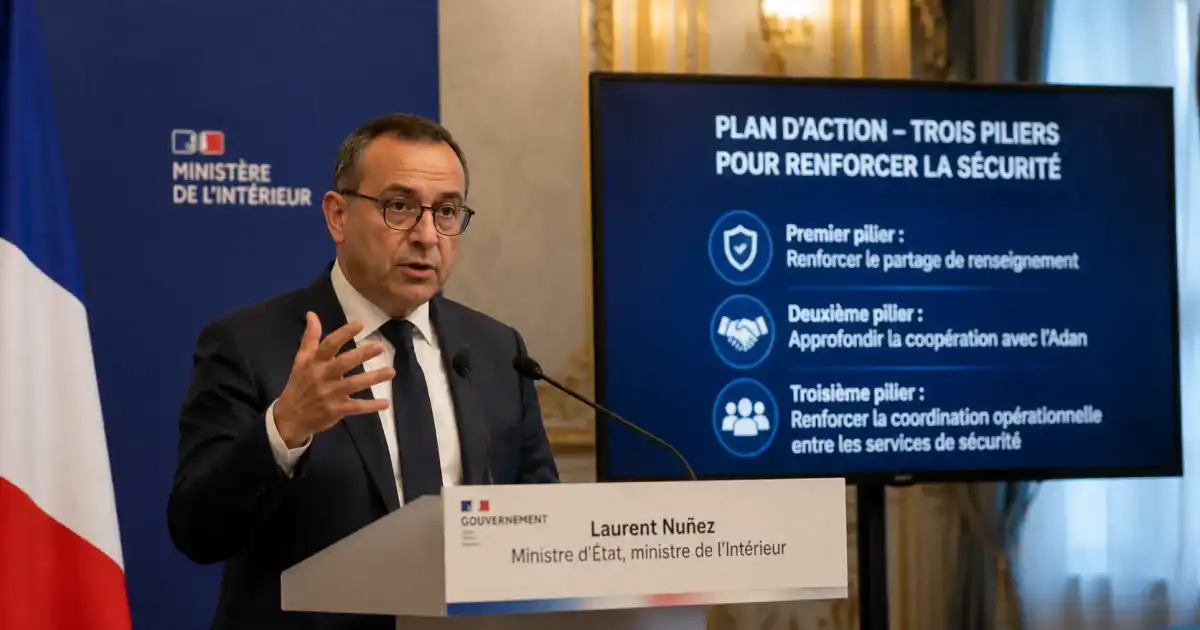
**Summary** In the first half of 2026, France recorded 77 violent crimes—including kidnappings, illegal confinement, and extortion—targeting cryptocurrency holders, a 71% increase over the 45 cases in all of 2025. This equates to an attack every 2.3 days, making France a global hotspot for so-called "wrench attacks," where criminals use physical violence to coerce victims into surrendering crypto assets. High-profile cases include the 2025 kidnapping of Ledger co-founder David Balland, who was shown with a severed finger in a ransom video, and an attempted kidnapping of the family of Paymium's CEO in Paris. Prosecutors note these are not isolated incidents but part of structured criminal networks, sometimes involving minors. Several factors contribute to France's vulnerability: a large holder base (approx. 7.3 million people), the presence of major crypto firms and executives, a culture of public disclosure among enthusiasts, and potential data leaks. The trend is spreading across Europe, which now accounts for over 40% of such global attacks. Research indicates a correlation between Bitcoin price surges and increased wrench attacks. In response, French Interior Minister Laurent Nuñez announced a three-pillar action plan focusing on enhanced intelligence sharing, deeper cooperation with the industry association Adan, and improved operational and cross-border coordination. Authorities have made over 200 arrests in the past year. Security experts warn that digital asset safety now extends to the physical world. They advise holders to use hardware wallets, avoid disclosing holdings on social media, enable multi-factor authentication, and report suspicious activity. The situation underscores the urgent need for the crypto community to shift from a "show-off" culture to one of discretion as physical security becomes paramount.

marsbitHá 1h

77 Bloody Codes: When the '$5 Wrench' Shatters the Privacy Myth of France's Crypto Elite

marsbitHá 1h

Both OpenAI and Anthropic are 'Developing Their Own Chips' — Beyond Cost, the Control Over Computing Power is Paramount

OpenAI and Anthropic are both advancing plans to develop custom AI chips, driven by the need to control computing power and reduce costs. According to reports, Anthropic is in early-stage development of its own chips and in talks with Samsung for manufacturing, while OpenAI is collaborating with Broadcom and TSMC, aiming to deploy its first inference chip by late 2026. The primary motivation extends beyond just lowering expenses. For these large model companies, chips are core production assets. By designing specialized hardware (ASICs) tailored to their specific model architectures—OpenAI's being more sparse and Anthropic's more dense—they aim to achieve deeper software-hardware co-design. This synergy can significantly improve inference speed, energy efficiency, and overall unit economics, offering advantages that off-the-shelf GPUs cannot. This move does not signify an immediate replacement for suppliers like Nvidia. The process from design to deployment takes 18-24 months, and Nvidia's GPU ecosystem remains deeply entrenched. Instead, custom chips provide a strategic alternative and negotiating leverage, allowing companies to use them for specific, high-volume workloads like inference while still relying on external GPUs and TPUs for other tasks. The trend reflects a broader industry shift where AI competition is evolving from pure algorithmic prowess to integrated control over the entire software-hardware stack. Companies like Google, Amazon, Meta, and Microsoft are already on this path. For foundries like Samsung, securing orders from AI leaders like Anthropic represents a significant opportunity to expand its footprint in the advanced semiconductor market for AI. Ultimately, the race for "computing sovereignty" is now a central battleground for major AI players.

marsbitHá 1h

Both OpenAI and Anthropic are 'Developing Their Own Chips' — Beyond Cost, the Control Over Computing Power is Paramount

marsbitHá 1h

Trading

Spot
活动图片