牛市暂歇,一览2025年筛选潜力山寨币的四大要点

marsbitPublicado em 2025-07-31Última atualização em 2025-08-01

加密牛市氛围回来了,至少近期是这样。

问题来了:哪些山寨币的表现会带来超额收益?

2021年大牛市期间,几乎随便什么山寨币都在暴涨。但自那以后,情况已经有所不同了。

目前市面上已经上线了数百万种新山寨币,要想获得超额收益就必须对投资标的进行精心挑选。

在篇文章中,我想分享我的加密项目清单以及项目筛选的关注要点。

我们开始吧

1.叙事热度与用户心智

想一想过去12个月中表现最好的代币。

首先想到的有HYPE、VIRTUAL和memecoins。

它们都有强大的基本面吗?像HYPE这样的平台确实有,不过以下表现最好的名单中的绝大多数肯定没有。
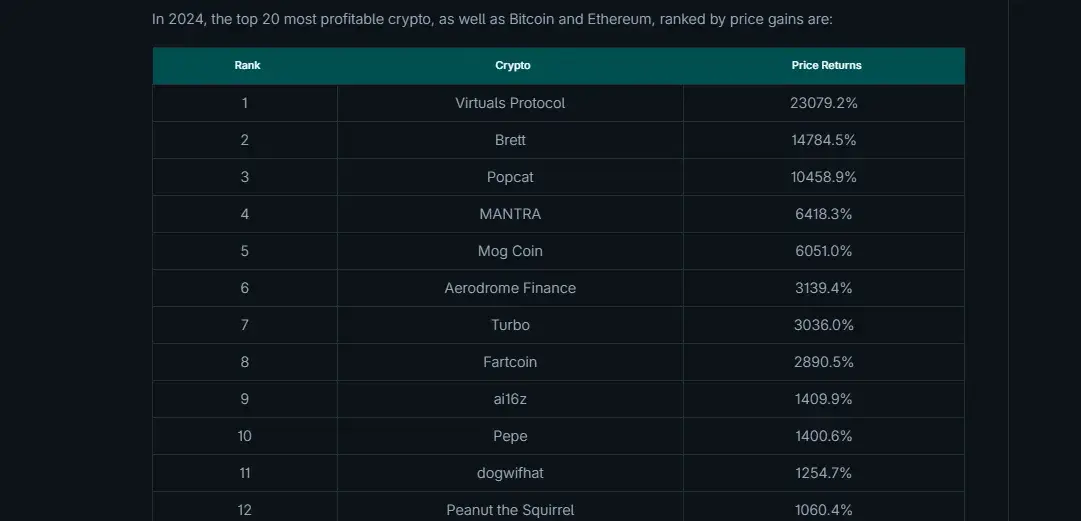
代币经济学

来源:Coingecko’s Top Crypto Gainers in 2024 article

它们都有一个共同点:在社交媒体上拥有极高的用户心智占比,且总有一群死忠粉在X平台上孜孜不倦地宣传。

除此以外,大多数佼佼者的成功还与强有力的叙事相关。

  • Virtual在AI概念走热时持续暴涨
  • Meme币在2024年第四季度至2025年第一季度初因网络Meme流行而上涨

我的建议是寻找当前热门的叙事,并进行搜索,再挑选在推特平台上拥有极高活跃度的社群的代币。


2.增长指标

在牛市中,市场热度(不幸地)远比基本面重要,但好消息是:有些项目既能占据高关注度,又实现了产品与市场的高度匹配。

如果某个项目能同时具备这两点,就可能是一笔很棒的投资。特别是当该项目的各项主要指标近期都呈现爆发式增长时。

我来举个例子:稳定币协议Ethena在过去30天里TVL飙升了50%。与此同时,推特平台上也有不少用户和分析师关注并分析该项目。

结果是?Ethena的代币ENA在过去一个月里上涨了154%。

通过押注那些处在早期且数据指标持续增长(比如TVL、收入、手续费不断增长)同时具备一定社群热度的项目,你就能大赚一笔。

我常常用DeFiLlama来发掘那些增长最快的项目。


3.合理的代币经济学

如果你计划买入代币后仅持有几天,代币经济学的意义不大;但若是中长期投资规划,情况则完全不同。

举个例子,TIA代币在过去17个月暴跌超过90%,原因在于每次代币解锁后早期投资者的大规模抛售。

这就是为什么在购买代币前弄清代币经济学很重要。

我研究某个代币时所关注的几个要点:

代币解锁表

Tokenomist能查许多热门代币的代币经济学和解锁情况。

​​通常来说,我希望流通供应量至少达到30%,且年度代币释放量(即通胀率)最多不超过20%—35%。​​

另外,如果近期有大规模的代币解锁(例如解锁量相当于当前流通供应量的20%以上),我宁愿不买该代币。

代币实用性

我总是问我自己两个问题:

我想购买的这个代币是否会因协议的成功而获益?为什么有人会愿意以比我更高的价格购买它?

分红机制或代币回购方案就是我能想到的最佳方案。

诚然,尽管强劲的代币实用性是巨大优势,但它并非必要条件。我见证过许多几乎没有任何实用性的代币依然表现出色。


4.社区优先

当下,一个奉行社区优先的项目比以往任何时候都更重要。

越来越多人不愿投资那些模糊且无趣的项目,他们更愿意支持那些心系社区的团队。

这也是我认为HYPE和PENGU这类代币最近表现如此亮眼的原因之一。

加密项目以社区优先为导向的一些特征:

  • 进行了大规模的空投
  • 其团队总是轻许诺而重兑现。
  • 团队主导型营销:其团队在X平台上非常活跃,并持续与社区互动
  • 代币供应量的很大一部分分配给了社区。

这些就是我在选择代币时主要考虑的一些因素。

还有一个重要因素可能推动代币价格上涨,那就是即将出现重大催化剂,而该利好尚未计入当前价格。

可能的利好内容包括:即将到来的协议升级、代币经济模型改进,或是发布能显著增加项目收益的新产品。

​​再好的资产,买贵了也是糟糕的投资。​​

静待良机择机而动,切忌贸然FOMO追涨。

Leituras Relacionadas

Shanghai's $10 Billion Unicorn Is About to Go Public

Shanghai-based automotive-grade millimeter-wave radar chip unicorn Calterah Microelectronics Technology (Shanghai) Co., Ltd. has filed for an IPO on Shanghai's STAR Market, aiming to raise 3.49 billion yuan. Founded in 2014 by Chen Jiashu, a UC Berkeley PhD graduate, and his professor Ali Niknejad, Calterah pioneered CMOS technology for 77GHz radar chips, breaking the decades-long monopoly of international giants like Texas Instruments. Its low-cost, highly integrated solutions enabled millimeter-wave radar to move from luxury to mass-market vehicles. By 2025, Calterah captured a 31.1% share in China's automotive millimeter-wave radar chip market (second domestically, fourth globally), with cumulative shipments exceeding 30 million units. Its client list includes BYD, Geely, Nio, and Volvo. The company has undergone 11 funding rounds, attracting high-profile investors such as the National Integrated Circuit Industry Investment Fund Phase II, China Capital Management, and GD Capital. Its valuation has reached tens of billions of yuan, with a projected post-IPO valuation of approximately 14 billion yuan. Despite rapid revenue growth—increasing from 206 million yuan in 2023 to 632 million yuan in 2025 with a 75.28% CAGR—Calterah remains unprofitable. It reported net losses of 323 million yuan, 334 million yuan, and 193 million yuan from 2023 to 2025, accumulating over 900 million yuan in losses over three and a half years. These losses are primarily attributed to heavy R&D investment, which totaled over 1.039 billion yuan in the reporting period, often exceeding annual revenue. The company faces significant risks, including high customer concentration (its top five customers accounted for over 99% of revenue from 2023-2025, with BYD alone representing over 50% in 2025) and supply chain concentration. Revenue pressure from key customers and dependencies on overseas suppliers for EDA tools and IP pose challenges to sustainable growth. The IPO is seen as crucial for securing capital to expand production, diversify its customer base, and reduce supply chain dependencies.

marsbitHá 25m

Shanghai's $10 Billion Unicorn Is About to Go Public

marsbitHá 25m

Ray Dalio's Latest Macro Analysis Full Text: Buy More Gold, Add Some Bitcoin

In his latest macro analysis, Ray Dalio applies his framework from "How Countries Go Broke: The Big Cycle" to the current global debt environment. He highlights recent events like Japan selling U.S. Treasuries and rising U.S. long-term yields as signs of an unsustainable debt dynamic. Dalio explains that excessive government debt leads to either unacceptably high interest rates, severe economic downturns, or significant currency debasement through central bank money printing. He summarizes the U.S. fiscal situation: with $5.5 trillion in revenue, $7.5 trillion in spending, a $2 trillion deficit, and total debt at six times annual revenue, debt servicing costs are immense. Without correction, U.S. debt could reach $55-$60 trillion in a decade. Dalio proposes a "3% Three-Way" solution: reducing the budget deficit to 3% of GDP through balanced spending cuts, tax increases, and interest rate reductions to avoid a traumatic adjustment. In response to FAQs, he argues that the risk of a U.S. debt crisis is high and could materialize within a few years if the current path continues. He dismisses the notion that the dollar's reserve status makes the U.S. immune, citing historical precedents of reserve currency declines. He is also unconvinced by Japan's high-debt stability, noting poor returns for yen-denominated assets. For investors, Dalio recommends diversifying globally, underweighting bonds, and overweighting assets like gold and a small allocation to Bitcoin (around 10-15% to gold) to hedge against currency debasement and poor debt returns.

marsbitHá 1h

Ray Dalio's Latest Macro Analysis Full Text: Buy More Gold, Add Some Bitcoin

marsbitHá 1h

Stripe’s 16-Year Chronicle: From 7 Lines of Code to a $100 Billion Valuation

Stripe's 16-year journey began with a simple promise: "7 lines of code to accept payments." Founded by Patrick and John Collison, the company started by hiding the complexity of bank integrations and merchant accounts behind a clean API, initially targeting developers at startups. This early focus on user experience and technical simplicity fueled rapid adoption. A key early milestone was establishing vital bank partnerships, a challenge overcome by hiring Billy Alvarado, who brought crucial institutional relationship skills. From this foundation, Stripe systematically expanded its product boundaries. It launched Connect for platform payments, Atlas for company formation, Radar for fraud prevention, and Billing for subscriptions. This transformed Stripe from a payment processor into a broader financial infrastructure suite for internet businesses. The COVID-19 pandemic accelerated growth but also led to over-hiring. A 14% layoff in 2022 marked a period of organizational correction. Subsequently, Stripe shifted its growth strategy towards strategic acquisitions to enter new domains quickly. It acquired Bridge (stablecoin infrastructure), Privy (wallet infrastructure), Metronome (usage-based billing), and agreed to buy OpenRouter (AI model routing). These moves signal Stripe's ambition to build a "programmable money system" for the emerging AI and agent-based economy, managing not just currency flows but also the measurement and pricing of computational resources like AI tokens. Internally, Stripe leverages AI agents (like "Minions") to boost engineering productivity. Despite scaling to nearly 8,000 employees and processing $1.9 trillion in payment volume annually, the company remains private. A recent employee tender offer valued it at $159 billion. The core question for Stripe's future is whether it can successfully integrate its expanding product matrix—spanning payments, crypto, and AI infrastructure—into a cohesive platform, positioning itself as the foundational economic layer for autonomous software agents.

marsbitHá 1h

Stripe’s 16-Year Chronicle: From 7 Lines of Code to a $100 Billion Valuation

marsbitHá 1h

Treasury Secretary's Move to Suppress Treasury Yields Ignites 'Currency Debasement Trade'! Gold Hits Three-Month High, Bitcoin Surges Over 25% in a Single Week

US Treasury Secretary Besant's efforts to lower long-term Treasury yields by announcing expanded buybacks had only a brief market impact. However, this move fueled a "currency devaluation trade," weakening the US dollar while boosting both gold (to a three-month high) and Bitcoin (up over 25% for the week). Analysts attribute this reaction to deepening market concerns over the massive US fiscal deficit and structural pressures keeping long-term rates elevated, including fierce competition for capital from global government borrowing and massive AI sector financing. Despite the Treasury's actions, fundamental forces like growth, inflation, and capital demand are seen as limiting its ability to sustainably suppress yields. Bitcoin's strong positive correlation with gold has reinforced its narrative as a hedge against devaluation. While equity markets have shown resilience, some strategists warn that Treasury yields nearing 5% increase pressure on the dollar and high-leverage assets. Figures like Ray Dalio have advised reducing bond exposure in favor of gold and some Bitcoin, citing US debt risks. Market opinions are divided on the sustainability of the devaluation trade, with some noting the lack of a near-term catalyst for its next leg higher. The underlying tension between the Treasury's desire for lower borrowing costs and the Federal Reserve's focus on inflation and reducing market intervention remains a key theme. Upcoming events like Nvidia's earnings and the Jackson Hole symposium will test whether AI profits can continue supporting stocks and if the Fed aligns more with Washington's preference for easier financial conditions.

华尔街日报Há 3h

Treasury Secretary's Move to Suppress Treasury Yields Ignites 'Currency Debasement Trade'! Gold Hits Three-Month High, Bitcoin Surges Over 25% in a Single Week

华尔街日报Há 3h

Trading

Spot
活动图片