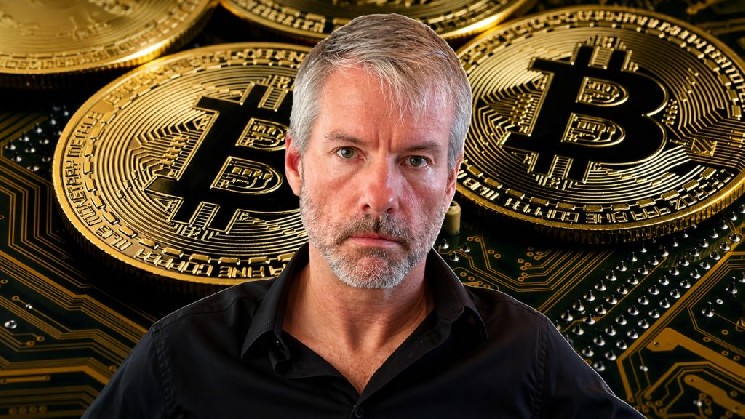
Сооснователь Tornado Cash Роман Шторм может отправиться в тюрьму на 40 лет

cryptonews.ruPublicado em 2025-08-29Última atualização em 2025-08-29

Заключительные обсуждения по делу соучредителя Tornado Cash, Романа Шторма, завершились в федеральном суде Нью-Йорка. Теперь присяжным предстоит вынести вердикт, который определит его судьбу. Стало известно, что разработчику грозит более 40 лет тюрьмы, если его признают виновным по всем пунктам обвинения.

Прокуратура представила свою позицию, утверждая, что Шторм создал Tornado Cash не для защиты конфиденциальности, а в качестве инструмент для отмывания денег. По их словам, платформа стала убежищем для хакеров, в том числе для северокорейской группировки Lazarus Group. Злоумышленники отмыли через нее миллиарды долларов.

Адвокаты Шторма пока продолжают настаивать на невиновности своего клиента. Они утверждают, что подсудимый создавал Tornado Cash как нейтральный инструмент для повышения анонимности транзакций. При этом он никак не мог предвидеть, что им будут пользоваться злоумышленники.

Защита подчеркивает, что Шторм, как и любой другой разработчик, не должен нести ответственность за действия третьих лиц, использующих его софт. В своих аргументах они ссылаются на Первую поправку к Конституции США, которая защищает свободу слова.

Во время судебного процесса адвокаты Шторма рассматривали возможность объявить ивент Mistrial (классифицируется как судебная ошибка) из-за, по их мнению, неуместных свидетельств. Однако судья не удовлетворила их ходатайство.

Обвинительный приговор может создать опасный прецедент для криптосообщества. Авторы кода будут нести прямую ответственность за действия третьих лиц. Многие эксперты опасаются, что такой исход затормозит внедрение инноваций в США. Подобная логика может быть применена и к создателям других открытых инструментов, например, операционных систем или протоколов связи.
Leituras Relacionadas

Upbit is Anxious: A Hasty Counterattack Aimed at Regaining Stablecoin Market Share

Title: Upbit's Rushed Counterattack to Reclaim Stablecoin Market Share Facing a dramatic shift in South Korea's stablecoin market, leading exchange Upbit launched a promotional campaign from July 26 to August 9, waiving the 0.05% trading fee for stablecoins paired with the Korean Won (KRW) and rapidly listing new stablecoins like RLUSD and USDG. This move is a direct response to its plummeting market share in this sector. Historically a duopoly with Bithumb, the market has been reshaped since October 2025 when Coinone permanently removed fees for USDC trading. By June 2026, Coinone led with 34.8% of stablecoin volume, followed by Bithumb (31.1%) and Upbit (30.1%). This contrasts sharply with the overall crypto market, where Upbit commands 60%. The data shows stablecoin demand is highly sensitive to fees, as users primarily buy them to transfer capital overseas for derivatives trading or forex arbitrage. South Korean exchanges have seen a net outflow of stablecoins for 18 consecutive months, totaling approximately 14.9 trillion KRW, underscoring their role as a cross-border capital conduit. Upbit's limited-time promotion initially boosted its daily stablecoin volume by 162%, but the surge was almost entirely in USDT (98.1% of volume). The newly listed stablecoins saw negligible, fleeting interest. Furthermore, the promotional effect quickly waned in the second week, with volume dropping 33% on weekdays. A concurrent weakening of the KRW also contributed to the trading spike, independent of the fee waiver. The analysis suggests that once the promotion ends, Upbit is unlikely to retain its temporary gains unless it matches Coinone's permanent zero-fee policy, forcing a choice between market share and fee revenue. Upbit's strategic push may be less about immediate profit and more about preparing for future regulatory shifts. With South Korea's *Digital Asset Basic Act* on the horizon, which will regulate KRW-backed stablecoins, and following Dunamu's (Upbit's parent) integration into Naver Financial to build a payment ecosystem, securing a dominant position in the dollar stablecoin distribution channel holds long-term strategic value. However, potential regulatory conflicts could prevent Upbit from listing a future Naver-issued KRW stablecoin, making the current fight for dollar stablecoin flow even more critical.

marsbitHá 2h

Upbit is Anxious: A Hasty Counterattack Aimed at Regaining Stablecoin Market Share

marsbitHá 2h

Michael Saylor Compares Bitcoin and Gold!

Michael Saylor, founder of MicroStrategy, argues that Bitcoin fundamentally changes how wealth is stored and transferred by transforming digital scarcity into economic value. He describes Bitcoin as the first digital monetary network, combining computers, digital networks, and cryptography. It digitizes monetary assets, allowing their supply to be controlled by public protocols rather than institutions, thus converting economic value into information transmissible over global networks. Comparing Bitcoin to gold, Saylor states that while increasing Bitcoin's supply is harder, its integration with software and transfer is easier. He highlights Bitcoin's proof-of-work mechanism, which ties it to the physical world by consuming real energy to secure the ledger, making past transactions immutable. This creates a shared security system involving miners, energy companies, and investors. Saylor suggests "digital monetary energy" is a more accurate term than "digital gold." He emphasizes that the Bitcoin network is an adaptive ecosystem of miners, nodes, developers, and users. Its core design is intentionally simple, focused on maintaining a secure ledger for scarce digital assets, with complex functionalities built in higher-layer applications. This architecture allows Bitcoin to serve as a foundation for transmitting value and fostering innovation in payments and financial services. Saylor notes Bitcoin's deeper impact lies in creating digital sovereignty, where private keys give individuals permissionless control over their economic power, with ownership verified mathematically, not by institutions. He concludes that while gold's physical scarcity makes it money, Bitcoin's digital scarcity does the same, characterizing Bitcoin as the monetary energy of the digital age.

cryptonews.ruHá 3h

Michael Saylor Compares Bitcoin and Gold!

cryptonews.ruHá 3h

Trading

Spot
活动图片