Еще один кошелек перевел нетронутые годами биткоины почти на $2 млрд

cryptonews.ruPublicado em 2025-04-09Última atualização em 2025-07-09

«Биткоин-киты», не проявлявшие активность последние годы, переводят криптовалюту на новые адреса

Серия загадочных переводов крупных сумм в биткоинах долгосрочными держателями продолжилась. Очередной «биткоин-кит», не проявлявший активности четыре года, 9 июля переместил 9000 BTC ($977 млн), согласно данным Onchain Lens. Всего, по информации аналитиков, за последние 24 часа он переместил 17 283 BTC ($1,88 млрд).
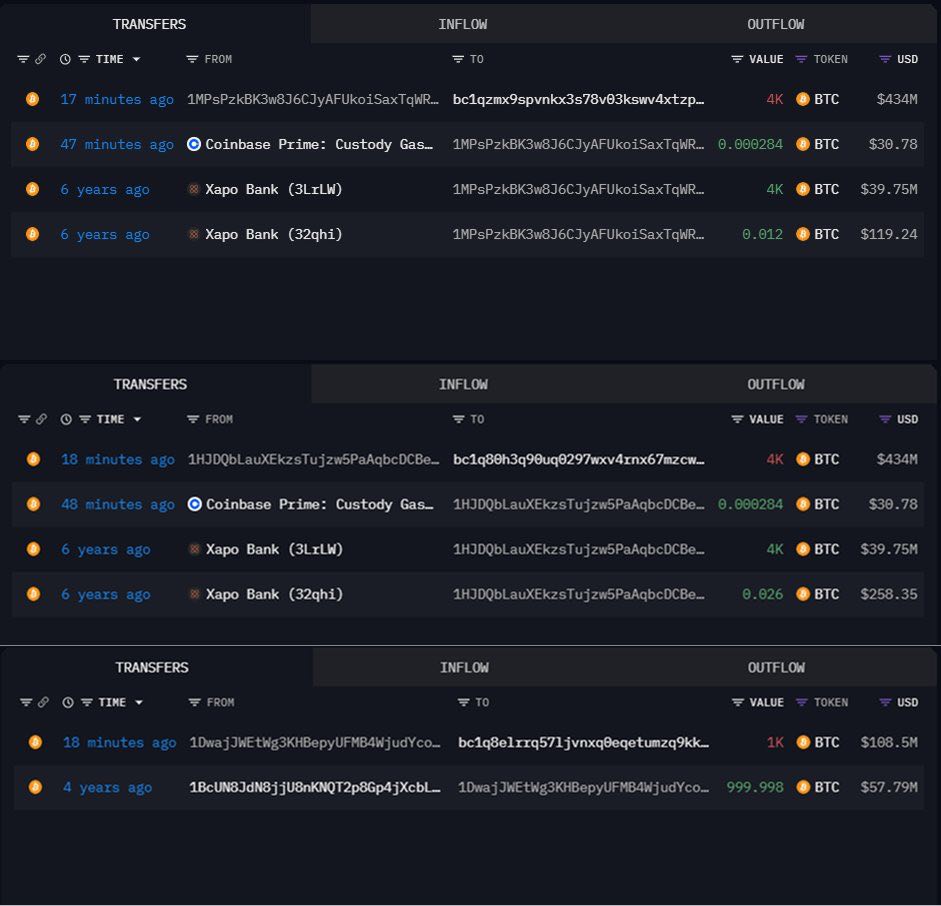
История транзакций. Источник: Onchain Lens

Согласно истории транзакций, комиссию за два перевода в общей сложности на 8 тыс. BTC взял сервис Coinbase Prime — платформа американской биржи Coinbase для институциональных инвесторов. Это говорит о том, что сумма была переведена на эту площадку, где они могли быть либо проданы, либо переданы в кастодиальное хранение.

rbc.group

Для сравнения, на один из кошельков этого «кита» поступило 6000 биткоинов в июле 2019 года, когда курс равнялся $9,8 тыс. за монету. На сегодняшний день прибыль этого адреса от роста курса за 6 лет составляет $590 млн.

На прошлой неделе другие 80 тыс. биткоинов (около $8,6 млрд) пришли в движение после 14 лет бездействия. Технический директор компании — производителя криптокошельков Ledger Шарль Гийоме обнаружил, что за несколько дней до состоявшихся восьми переводов по 10 тыс. BTC каждый кто-то рассылал на эти и множество схожих крупных адресов мелкие переводы, в комментарии к которым вшивалось сообщение.

Оно называлось юридическим уведомлением, и в нем говорилось, что компания Saloman Brothers взяла кошельки под контроль и требует подтверждения от владельцев, что кошельки не заброшены. Сообщение направляло владельцев кошельков на сайт фирмы.

В BitMEX Research заявили, что это мошенничество. Аналитики обнаружили, что такое же уведомление было направлено на криптокошелек с почти 80 000 BTC ($8,7 млрд), украденными в 2011 году с японской биржи MtGox. В BitMEX сообщили, что сайт ныне закрытого инвестиционного банка с Уолл-стрит Saloman Brothers «выглядит нелегальным» и это часть «продолжающейся аферы с биткоинами».


Leituras Relacionadas

Mysterious "Ox Alpha" Large Model Goes Viral with Limited-Time Free Access

A mysterious anonymous AI model named "Ox Alpha," nicknamed "Cow is Coming" by Chinese netizens, has appeared on OpenRouter, sparking widespread speculation. The model offers a 1 million token context, supports text, image, and video inputs, can call tools, and is currently free. Its standout feature is strong coding ability. Initial tests on the DeepSWE benchmark, which evaluates real-world software engineering tasks, showed an 80% pass rate on a subset of tasks, reportedly nearing top-tier code models. However, follow-up tests yielded a 63% score, with variations attributed to different task sets and configurations. The model's true developer is a major topic of debate. The prevailing theory points to Zhipu AI's unreleased GLM-5.3 Flash or its multimodal variant. Evidence cited includes identical visual token consumption patterns with GLM-5V-Turbo for videos, a consistent offset in text token counts compared to GLM-5.3, and similar behavioral traits like refusing audio processing. Zhipu has a precedent of anonymous testing. Simultaneously, another anonymous model, "korrine," appeared on Code Arena, with guesses ranging from Moonshot's Kimi K3.1 to models from Qwen or MiMo, adding to the industry's guessing game. This trend of anonymous "undercover" testing allows for unbiased performance evaluation in platforms like Arena and provides real-world, high-pressure testing through tools like OpenRouter before official release. It also serves as an effective marketing tactic, prolonging discussion through suspense. If Ox Alpha is indeed a "Flash" model, its performance raises expectations for the full-scale version's potential.

marsbitHá 4h

Mysterious "Ox Alpha" Large Model Goes Viral with Limited-Time Free Access

marsbitHá 4h

Breaking News: DeepSeek Announces All-Day Off-Peak Pricing on Weekends, Making Weekend Work More Cost-Effective?

DeepSeek has announced a significant change to its API pricing model, effective August 23. The new policy removes peak/off-peak distinctions on weekends (Saturdays and Sundays), charging the lower off-peak rate for the entire two-day period. This adjustment has sparked mixed reactions within the developer and professional communities. For developers and businesses heavily reliant on DeepSeek's V4-Flash and V4-Pro APIs, this is welcome news. It allows them to schedule bulk processing tasks on weekends without the higher peak-hour costs, potentially halving their API bills for such workloads. Some users have celebrated the move for making weekend work more cost-effective. However, the announcement has also raised concerns among employees. There is apprehension that companies, particularly in cost-sensitive sectors like AI-powered short drama production, might reorganize work schedules to align with these new cost incentives. Instances are already emerging where teams schedule high-token tasks during cheaper nighttime hours or adjust staff shifts. This has led to worries about a potential shift towards weekend workdays and weekday time-off, prioritizing cost savings over traditional work-life balance. Debate has ensued regarding the practicality of such schedule changes, with questions about increased communication overhead and overall efficiency. Speculation about DeepSeek's motives for the change includes theories that peak pricing correlates with internal model training schedules, though others counter that training is largely automated. The new pricing structure is now in effect, prompting users to reconsider their task scheduling strategies.

marsbitHá 5h

Breaking News: DeepSeek Announces All-Day Off-Peak Pricing on Weekends, Making Weekend Work More Cost-Effective?

marsbitHá 5h

Trading

Spot
活动图片