29 Million Impressions, Only $71 Earned: How to Make Money from Traffic on X Platform?

深潮Publicado em 2025-12-26Última atualização em 2025-12-26

Resumo

An experiment on X platform revealed that chasing high exposure metrics does not translate to significant earnings. After generating 28.9 million impressions and gaining 37.5k followers through aggressive commenting and engagement chasing under popular posts, the author earned only $71.49. The key insight is that exposure alone is a vanity metric. X’s monetization algorithm prioritizes quality interactions from paid verified users—not raw visibility. Comments and reposts from premium users carry the most weight, while likes and free-user engagements have little value. The author’s high-exposure strategy attracted bot traffic, diluted audience quality, and risked algorithmic demotion. The account was flagged as low-quality despite high impression numbers. The revised strategy focuses on nurturing a genuine community: removing fake followers, creating original content, and fostering meaningful interactions with verified users. Key metrics for success now include a 3-5% engagement rate, over 45% verified user ratio, and comment-driven interactions. The conclusion: X rewards content creators who build authentic communities, not those who exploit exposure loopholes.

Written by: MAD Vincent

Compiled by: Chopper, Foresight News

I did exactly what they said: frantically spammed comments, closely followed top accounts to ride on their traffic, jumped on every trending topic, and chased impressions like chips in a bull market.

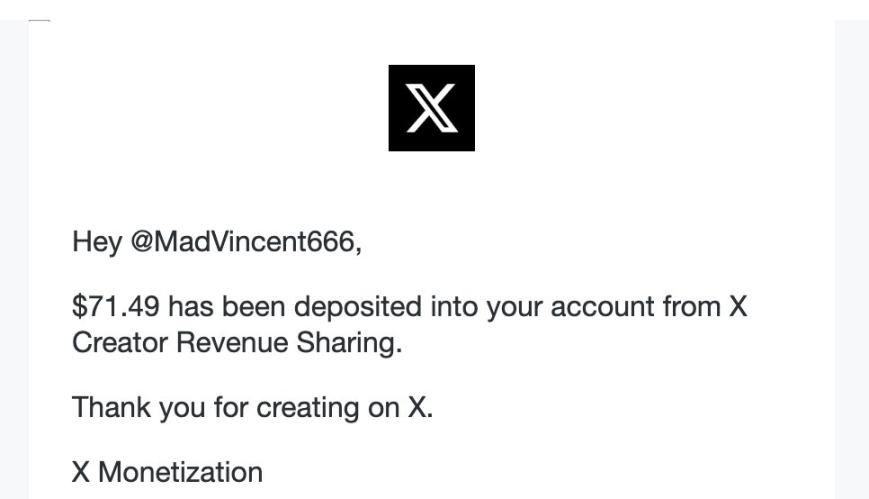
After 29 million impressions, the X platform paid me $71.49.

This is a warning. As of 2025, those still chasing impressions on the X platform are neither seizing the initiative nor working hard—they are just the bag holders of bot traffic.

The Lie Everyone Believes

At some point, the cryptocurrency community (CT) reached a consensus: "The higher the impressions, the more money you make." This was half-true in the past. But by 2025, it has become a complete fallacy.

Today, impressions are just a flashy vanity metric: they look glamorous and addictive but are utterly useless for actual earnings. They can make your data panel as beautiful as a bull market chart, but the corresponding bank deposit is pitifully small, akin to an abandoned small wallet.

I learned this lesson the hard way.
My Personal Experiment (A.K.A. How I Got Rekt)

In mid-December 2025, I launched this aggressive traffic experiment: posting over 200 comments daily, specifically targeting top accounts' posts to蹭热度 (ride on their popularity), without limiting myself to any vertical—a full-scale "indiscriminate bombardment."

Movies, gaming, politics, cryptocurrency, memes, sports... as long as it was a hot topic, I jumped in to comment.

Soon, my actions echoed on the platform: "Bro, I see you everywhere," "The algorithm must love you," "This data is explosive growth."

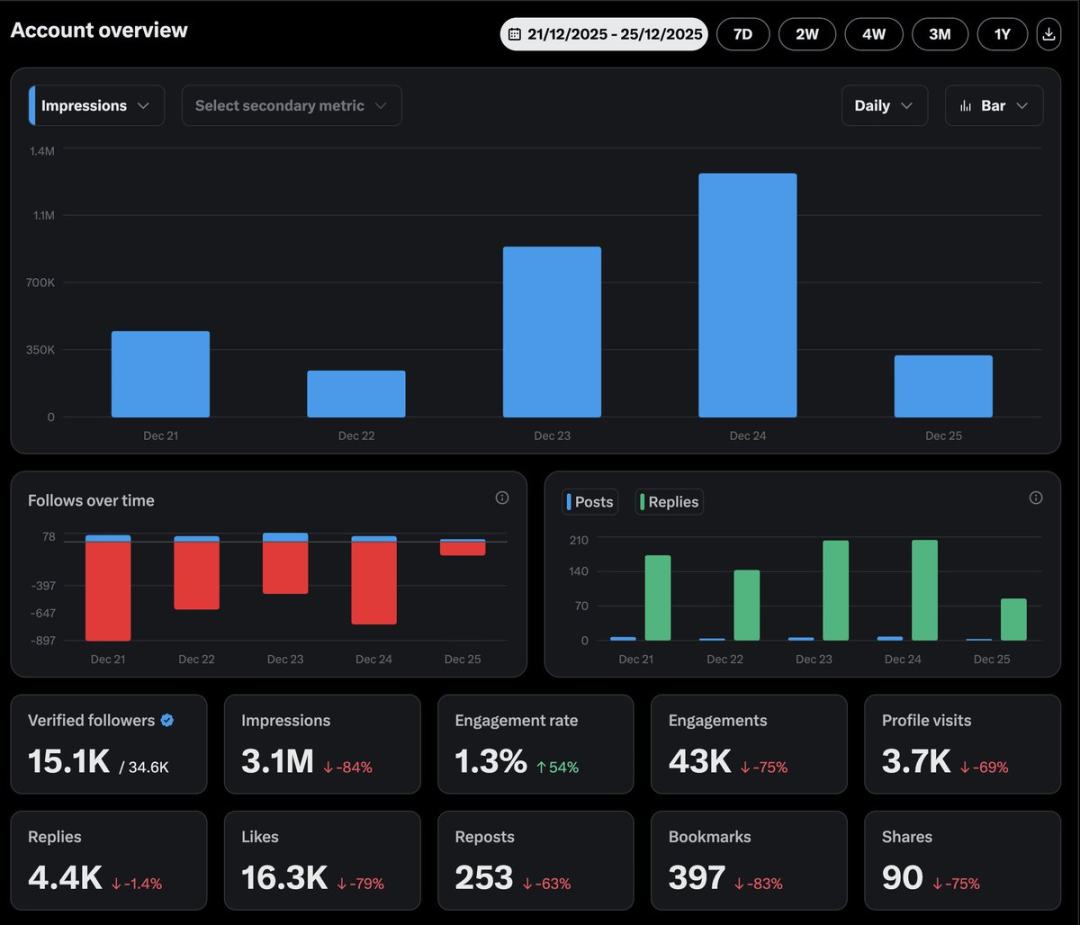
Now, let's look at the specific results: 28.9 million impressions, 267.7k engagements, 119.5k likes, 11.8k comments, 3.1k bookmarks, 20k profile visits, 37.5k followers, with verified users accounting for about 41%.

I only posted an average of 4 original pieces of content per day, with the rest of the traffic全靠 "comment section蹭热度" (relying entirely on comment section popularity chasing). Looking solely at the data panel, it was a crushing advantage. But when payday came, the deposit was only $71.49.

That's when it hit me: Impressions don't make money; high-quality paid user engagement is king.

The monetization logic of the X platform has long changed. It no longer rewards exposure but rather who engages with you.

If your engagement data doesn't come from paid verified users, it's no different from having no engagement at all.

The Real Monetization Rules of the X Platform in 2025

There's no mystery behind this; many just refuse to accept reality. The real monetization rules are as follows.

Only engagement types from paid verified users count towards monetization: comments, reposts, bookmarks, likes, and the engagement must occur within monetizable reply posts.

Some engagement types are无效 for monetization (ineffective for monetization): free user engagement, bot traffic, skyrocketing impressions without paid user participation, "fake viral hits" without paid user engagement.

One comment from a paid verified user might be worth far more than 100 bot likes.

Furthermore, engagement has varying weights; not all are equal. Comments and reposts carry the highest weight, followed by bookmarks, with likes being the lowest.

So, if your engagement data shows these characteristics: many likes, few comments, low percentage of verified users—then your account looks hot but has zero monetization value.

The Unmentioned Bot Traffic Trap

Chasing热度 (popularity) in the comment sections of top accounts seems like a shortcut to gaining followers, but it's actually a distribution engine for bot traffic.

Here's the real situation: Your comment gets pushed to a bot network → Impressions skyrocket → Engagement data looks healthy → Platform filters out all invalid traffic during settlement.

This is why the absurd result of "29 million impressions, only $71 earned" occurs. This isn't a system glitch; it's the precise execution of platform rules.

This Playstyle Is Ruining Your Account

This is not only an extremely low ROI practice but also causes irreversible damage to your account.

Bot Follower Pollution

In just a few days, my account gained over 2500 bot followers. These bots lower:

  • The percentage of verified users in your account

  • The platform's trust rating for you

  • Future settlement amounts

Audience Dilution

Your followers are no longer a targeted audience but become worthless "noise." The platform understands this, advertisers understand this, and ultimately, your earnings will reflect it directly.

Algorithmic Downgrade Penalty

Posting 200+ comments daily → Easily triggers rate limits. Content lacks vertical focus → Unable to send clear account labels to the algorithm. Eventually, your account gets flagged by the algorithm as a "suspected spam account."

Creator Burnout

You think you're dominating the platform's hot lists, but the bank deposit notification punches you in the gut. This is the moment most creators give up.

What I Did

I completely overturned my previous strategy: cleaned up 2500 bot followers, removed 5000 zombie followers, stopped the comment section热度 chasing operation, focused on building a genuine community of followers.

In the short term, account metrics did decline, but the long-term health of the account is recovering.

In the next settlement cycle, my account data showed new characteristics: lower impressions, higher quality engagement (check the engagement rate percentage), more precise follower growth, and significantly reduced creative pressure.
The Core Metrics Actually Worth Focusing On

If you want to make money on the X platform, aim for these targets:

  • 3%-5% engagement rate

  • High-engagement posts dominated by comments

  • 45%-50% verified user ratio

  • Consistent output of original content

It's okay to have fewer impressions; the key is high quality of engaging users. Achieve these, and you'll go from "Why are my earnings so terrible?" to "So this is how you achieve stable monetization."

The Final Truth

Impressions are like the song of the Sirens: they make you think you've seized the initiative, make you feel like you're the platform's focus, and give you an illusion of "importance."

But they don't bring a single cent of profit. What monetizes is the engagement from high-quality paid users. In 2025, the X platform will not reward "traffic speculators"; it will only reward "content builders."


Perguntas relacionadas

QWhat was the author's total earnings from 29 million impressions on X platform?

AThe author earned only $71.49 from 29 million impressions on the X platform.

QAccording to the author, what is the key to earning money on X platform in 2025?

AThe key is high-quality interactions from paid users, not just high impression counts.

QWhat types of user interactions are considered valuable for monetization on X platform?

AValuable interactions are those from paid, verified users, specifically comments, reposts, bookmarks, and likes. Interactions from free users or bots are filtered out and are worthless for monetization.

QWhat negative consequences did the author experience from chasing impressions by spamming comments?

AThe author gained over 2500 bot followers, diluted their audience with 'noise', risked algorithm downgrades for being flagged as spam, and experienced creator burnout.

QWhat are the core metrics the author suggests focusing on for successful monetization?

AThe core metrics are a 3%-5% engagement rate, high-quality interactions (especially comments), a 45%-50% verified user ratio among followers, and a focus on creating original content.

Leituras Relacionadas

$292 Million KelpDAO Cross-Chain Bridge Hack: Who Should Foot the Bill?

On April 18, 2026, an attacker stole 116,500 rsETH (worth ~$292M) from KelpDAO’s cross-chain bridge in 46 minutes—the largest DeFi exploit of 2026. The stolen assets were deposited into Aave V3 as collateral, causing $177–200M in bad debt and triggering a cascade of losses across nine DeFi protocols. Aave’s TVL dropped by ~$6B overnight. This legal analysis argues that KelpDAO and LayerZero Labs share concurrent liability, with fault apportioned 60%/40%. KelpDAO negligently configured its bridge with a 1-of-1 decentralized verifier network (DVN)—a single point of failure—despite LayerZero’s explicit recommendation of a 2-of-3 setup. LayerZero, which operated the compromised DVN, failed to secure its RPC infrastructure against a known poisoning attack vector. Both protocols’ terms of service cap liability at $200 (KelpDAO) or $50 (LayerZero), but these limits are likely unenforceable due to unconscionability, gross negligence exceptions, and potential securities law invalidation (if rsETH is deemed a security under the Howey test). Aave’s governance also faces fiduciary duty claims for raising rsETH’s loan-to-value ratio to 93%—far above competitors’ 72–75%—without adequately assessing bridge risks, amplifying the systemic fallout. Practical recovery targets include LayerZero Labs (a registered Canadian entity), KelpDAO’s founders, auditors, and identifiable Aave governance delegates. The incident underscores escalating legal risks for DeFi protocols, infrastructure providers, and governance participants.

marsbitHá 1h

$292 Million KelpDAO Cross-Chain Bridge Hack: Who Should Foot the Bill?

marsbitHá 1h

Insider Trading in War: 5 People Involved, the Highest Earner Was Arrested

On April 24, the U.S. Department of Justice arrested U.S. Army Special Forces Staff Sergeant Gannon Ken Van Dyke for insider trading related to the capture of Venezuelan President Nicolás Maduro on January 3. Van Dyke allegedly profited over $400,000 by placing bets on a prediction market, Polymarket, using insider knowledge of the covert operation. According to the indictment, Van Dyke registered an account (0x31a5) on December 26 and made a series of bets predicting Maduro’s capture and U.S. military involvement in Venezuela. He withdrew most of his funds on the day of the operation and attempted to obscure his tracks by transferring assets through crypto and brokerage accounts. This case marks the first time the DOJ has prosecuted insider trading on Polymarket. PolyBeats had previously identified five suspicious accounts, including Van Dyke’s—the highest earner—in January. The other accounts, with profits ranging from $34,000 to $145,000, remain under unofficial scrutiny but have not been charged. Their lower profits, indirect access to information, and unclear legal boundaries may complicate prosecution. Polymarket has since strengthened its market integrity rules, explicitly prohibiting trading based on confidential or insider information. Van Dyke’s arrest, nearly four months after his trades, signals increased regulatory attention and the persistent traceability of blockchain-based transactions.

marsbitHá 1h

Insider Trading in War: 5 People Involved, the Highest Earner Was Arrested

marsbitHá 1h

Bitwise: Bullish on Bitcoin's Performance in the Second Half of the Year, AI and Regulation Will Spark a New Altcoin Season

Bitwise CIO Matt Hougan and Research Lead Ryan Rasmussen express strong bullish sentiment on Bitcoin's long-term prospects, suggesting that its $1 million price target may be too conservative. They argue Bitcoin serves a dual role: as digital gold and a potential global settlement asset, especially amid declining trust in traditional monetary systems. Despite a weak Q1 2026 where nearly all crypto assets and prices saw double-digit declines, the analysts remain optimistic due to strong forward-looking catalysts, including institutional adoption via Bitcoin ETFs from major firms like Morgan Stanley and Goldman Sachs. Geopolitical instability, such as Iran’s mention of using Bitcoin for international payments, increases the value of Bitcoin’s “out-of-the-money call option” as a non-political, global settlement currency. This enhances its appeal beyond a mere store of value. . Additionally, Hougan highlights that a clearer regulatory token framework under current SEC leadership, combined with AI efficiency gains and high-performance blockchains, could fuel a new “altseason” by late 2026. This may lead to a wave of legitimate, value-capturing token projects, unlike the earlier ICO boom. . Bitwise also announced an Avalanche ETF, citing its unique architecture and rapid growth in real-world asset (RWA) tokenization, which has surged 10x to nearly $30 billion in two years. The firm believes Layer 1 blockchains are still early in their growth cycle, with significant potential ahead.

marsbitHá 1h

Bitwise: Bullish on Bitcoin's Performance in the Second Half of the Year, AI and Regulation Will Spark a New Altcoin Season

marsbitHá 1h

Trading

Spot
Futuros
活动图片




