Tether инвестировала в финтехпроект Fizen для упрощения криптоплатежей :: РБК.Крипто

cryptonews.ruPublicado em 2023-09-15Última atualização em 2025-04-15

Компании предлагают решение для проведения повседневных транзакций в стейблкоинах, удобное как для розничных покупателей, так и для бизнеса

Компания Tether объявила, что сделала стратегическую инвестицию в проект Fizen, решения которого упростят транзакции со стейблкоинами. Повседневные криптовалютные платежи станут доступнее как для потребителей, так и для бизнеса, говорится в пресс-релизе эмитента USDT. Сумма инвестиций не раскрывается.

Финтехкомпания Fizen специализируется на криптовалютных кошельках и цифровых платежах. Для частных лиц проект предлагает некастодиальный кошелек Fizen Surep App, а для продавцов — решение для принятия платежей Fizen Pay.

В Tether отмечают, что новые решения должны предоставить пользователям доступ к «более эффективному и удобному способу хранения, перевода и транзакций» с использованием стейблкоинов, исключив проблемы, с которыми люди сталкиваются в традиционных финансах.

rbc.group

«В Tether мы осознаем важнейшую роль некастодиальной платежной инфраструктуры в реальных сценариях использования», — сказал генеральный директор Tether Паоло Ардоино.

В компании также подчеркнули, что ключевой проблемой остается использование стейблкоинов продавцами. Сотрудничество Tether и Fizen поможет «устранить этот пробел», позволив продавцам получать средства мгновенно в фиатных валютах с помощью таких известных способов приема платежей, как QR-коды и платежные терминалы.

На сайте проекта говорится, что покупатели могут выбирать для оплаты USDT, BNB и другие криптовалюты, а продавцы — обменивать криптовалюты на фиатные деньги с комиссией 1% через Fizen Pay. Сам платежный шлюз не берет комиссии за проведение транзакций между потребителем и бизнесом.

Технологическая инфраструктура для платежей в стейблкоинах существует, но потребителям не хватает удобных приложений с интуитивно понятным пользовательским интерфейсом, отметил основатель и генеральный директор Fizen Лео Ву. По его словам, решения его компании позволят пользователям «легко платить, даже не осознавая, что они используют технологию блокчейн».

USDT — крупнейший по капитализации стейблкоин, его цена привязана к доллару США. Рыночная стоимость USDT 15 апреля составляет около $144,5 млрд.

По данным на июль 2024 года, стейблкоином Tether пользовались 350 млн человек во всем мире, и их количество продолжило расти. 14 апреля глава Tether заявил, что только за первый квартал этого года число пользователей USDT выросло на 13%.
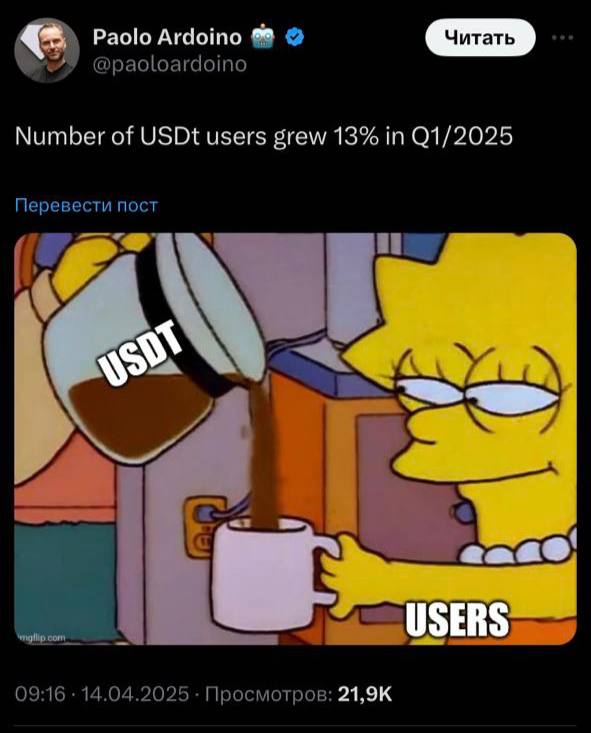

Пост Паоло Ардоино в соцсети Х

Leituras Relacionadas

From SpaceX to Galaxy Digital: A Detailed Look at 37 New AI Companies and 7 Crypto Dark Horses Added to the Russell Indexes

On June 26th, following its annual reconstitution, the Russell US Indexes finalized their new components, with changes taking effect for market trading on June 29th. The Russell 3000 Index, representing approximately 98% of the investable US equity market, saw significant turnover. A record $334 billion was traded during Nasdaq's closing cross on reconstitution day, highlighting the massive passive fund flows tied to these benchmarks. Companies newly added to the index are set to benefit from mandatory buying by these funds. The reconstitution raised the market cap threshold between the large-cap Russell 1000 and small-cap Russell 2000 by 24% to $5.7 billion. Overall, 224 new companies entered the Russell 3000. Of these, 19 joined the Russell 1000, and 205 joined the Russell 2000, while 118 firms were removed. Notably, among the newcomers, approximately 37 are companies operating in the AI and semiconductor ecosystem, accounting for roughly 17% of new additions. The most prominent is SpaceX, which, following its recent IPO and soaring valuation, was fast-tracked directly into the Russell 1000 and Top 200 indexes. Additionally, about 7 cryptocurrency-related companies were newly included, representing about 3% of new entrants. These include Galaxy Digital, Bitmine, and Tron, among others. The inclusion of several Decentralized Autonomous Trust (DAT) entities signals the model's sustained market presence. For these smaller AI and crypto firms, index inclusion boosts visibility, potentially attracting further institutional investment and supporting their stock performance.

Odaily星球日报Há 4m

From SpaceX to Galaxy Digital: A Detailed Look at 37 New AI Companies and 7 Crypto Dark Horses Added to the Russell Indexes

Odaily星球日报Há 4m

Token Uneconomical

"Token Inefficiency" explores the rising economic burden of AI model token usage in enterprises, where escalating costs often fail to match tangible productivity gains. Major companies like Microsoft, Uber, and Meta are facing "token inefficiency"—characterized by budget overruns for tools like Claude Code with unclear returns. This inefficiency stems from supply-side factors like strategic model price hikes by leaders (e.g., Anthropic) and price increases in budget-friendly models, alongside technical waste in Agent systems through context traps, tokenizer inflation, redundant skill calls, and multi-Agent coordination overhead. A deeper demand-side challenge limits token value: their primary utility remains confined to highly digitalized domains like programming, which benefits from automatic, low-cost feedback loops. Extending tokens to physical world tasks or less digitalized industries faces the "Sim-to-Real Gap," where real-world validation is costly and slow, unlike in code compilation. The article warns that this inefficiency concentrates financial risk in mid-tier model developers, potentially fueling circular financing schemes and shadow credit bubbles. It also highlights societal externalities, as data center expansion strains local power grids and inflates utility costs for residents. To achieve a positive net token economy, the path forward requires dual efforts: technical optimizations (context compression, skill reduction, model routing, budget constraints) and business-side discipline (governance, cost attribution, ROI focus). The ultimate goal is shifting from showcasing AI capabilities to maximizing value per token, finding scalable commercial applications that justify the investment and bridge the digital-physical divide.

marsbitHá 23m

Token Uneconomical

marsbitHá 23m

Stock Price Halved in 45 Days, Is Circle Actually the "DeFi Barometer"?

Over a 45-day period, Circle's stock price plummeted by approximately 50% to around $63, coinciding with a significant $70 billion decline in the circulation of its USDC stablecoin from its peak. In contrast, Tether's USDT saw a much smaller reduction. Analyst Ed Engel posits that Circle acts as a barometer for DeFi activity, as a high correlation exists between USDC supply and ETH price movements. The vast majority of USDC is concentrated within crypto exchanges and DeFi protocols for yield generation, rather than for widespread daily use in payments or commerce, unlike USDT which has stronger real-world adoption in various regions. The recent contraction in DeFi Total Value Locked (TVL), following security incidents like the Kelp DAO attack, appears to mirror Circle's declining stock performance. While Circle is actively promoting USDC's use as a settlement asset on platforms like Hyperliquid and in institutional payment corridors—where its organic transfer volume surpasses USDT's—these efforts have not sufficiently driven growth in USDC's overall supply. The company's revenue remains heavily tied to DeFi's expansion. For Circle's investment narrative to change, it must either significantly reduce its reliance on the volatile DeFi sector or demonstrably prove that real-world adoption can substantially and sustainably increase USDC circulation. In the near term, market confidence hinges on DeFi addressing its inherent risk-reward imbalances.

marsbitHá 56m

Stock Price Halved in 45 Days, Is Circle Actually the "DeFi Barometer"?

marsbitHá 56m

Trading

Spot
活动图片