Как крипторынок отреагировал на долгожданный Трамп-памп

cryptonews.ruPublicado em 2021-08-10Última atualização em 2025-04-10

Инвесторы дождались позитивных новостей по тарифам из США. На фоне очередных решений Трампа фондовый рынок, а за ним и крипта продемонстрировали рост

Рассказываем, что случилось и чего теперь участники рынка ждут от биткоина.

Долгожданный Трамп-памп

Вечером 9 апреля 2025 года президент США Дональд Трамп объявил о приостановке на 90 дней введения некоторых тарифов. Решение вызвало резкий рост на фондовых рынках. Шаг стал неожиданным, поскольку ранее Трамп настаивал на продолжении политики высоких тарифов, особенно в отношении торговых партнеров. Однако, в своем заявлении он отметил, что все страны, кроме Китая, на которых распространялись взаимные тарифы, увидят их снижение до универсальной ставки 10%.

Сразу после объявления решения Трампа по тарифам акции начали резко расти. Индекс Dow Jones прибавил почти 3000 пунктов (7,87%), S&P 500 подскочил на 9,5%, а Nasdaq увеличился на 12,2%.В результате 9 апреля стало лучшим днем для индекса S&P 500 с октября 2008 года, а для Nasdaq — с января 2001 года. Активнее других на позитивные новости отреагировали акции таких компаний, как Amazon, Nike и Tesla.
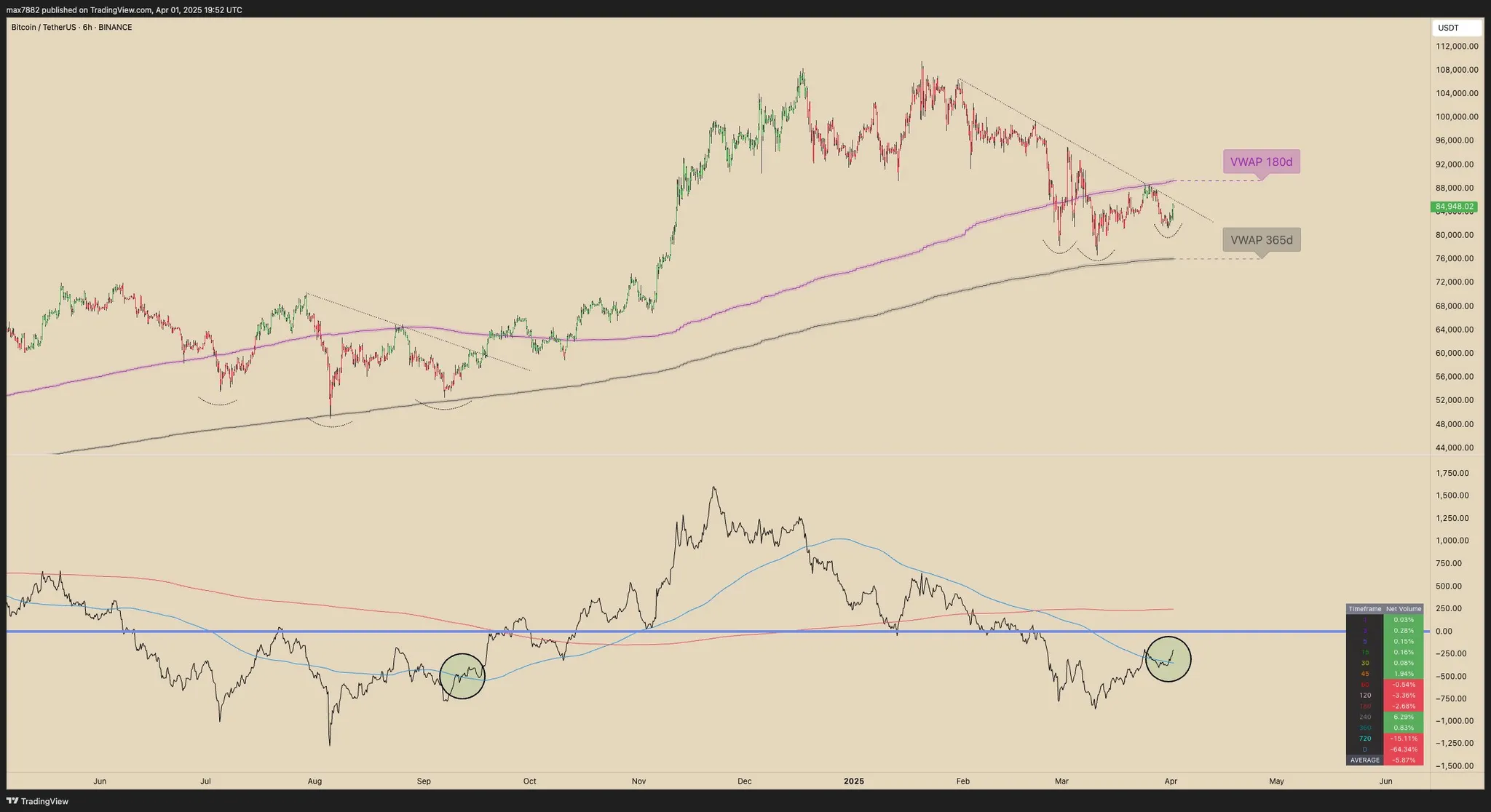
Сравнение реакции S&P 500 и Nasdaq на решение Трампа по тарифам. Источник: TradingView

Следом за фондовым рынком в зеленую зону перешла и крипта. Биткоин за 24 часа 9 апреля подорожал более чем на 12%. Следом за BTC позитивную динамику продемонстрировало большинство других криптовалют. Четверг биткоин начал с небольшой коррекции.
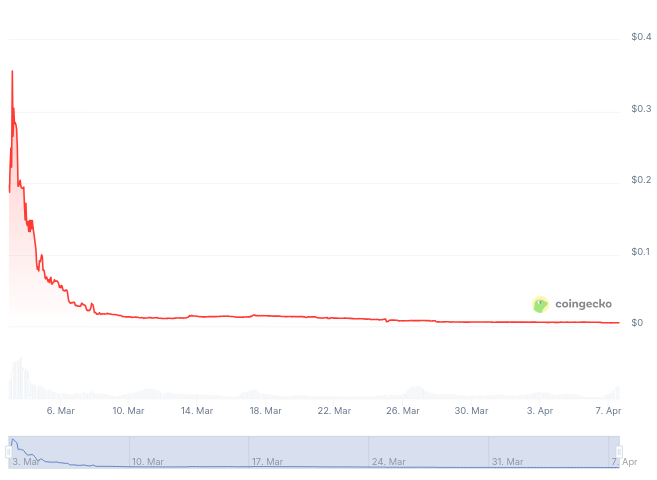
Реакция биткоина на очередные решения Тармпа по тарифам. Источник: TradingView

Рост рынков отражает позитивное восприятие действий Трампа инвесторами, которые искали какие-либо признаки смягчения жесткой тарифной политики. Приостановка тарифов на большинство стран, кроме Китая, придала рынкам уверенность.

Однако несмотря на позитивную реакцию рынков, не все вопросы были решены. В частности, рост тарифов для Китая остается актуальной проблемой, из-за которой сохраняется высокий уровень неопределенности для инвесторов. Эксперты отмечают, что хотя пауза в тарифах может ослабить краткосрочные опасения, долгосрочные риски для экономики и торговли сохраняются.

Реакция участников криптосообщества

Многие представители криптоиндустрии считают отскок биткоина от локальных минимумов началом новой волны роста. Оптимизма инвесторам добавляет вероятность скорого снижения ключевой процентной ставки ФРС. Инициативу лоббирует сам Трамп. Движение ФРС по пути снижения ставки может усилить инвестиционную привлекательность для таких высокорискованных активов как крипта.

К криптанам вернулась вера в возможность обновления абсолютного максимума BTC в обозримом будущем. При этом многие считают, что структура циклов, в основе которой халвинги, больше не работает. Поэтому буллран может продлиться дольше. Например, популярный в криптосообществе аналитик VirtualBacon предполагает, что новый максимум BTC может быть установлен в середине 2026 года. Если ранее он прогнозировал пик близ $200 000, то сейчас видит перспективы движения биткоина до $300 000.

«Этот цикл не завершен. Он просто идет с задержками», — объяснил поведение BTC VirtualBacon.

В перспективы продолжения роста биткоина также верит аналитик Doctor Profit. Он начал распродавать свои запасы BTC на фоне падения криптовалюты до $90 тыс. Аналитик возобновил покупки в момент снижения биткоина до $77 тыс. По его мнению, BTC готов вернуться к уровню в $100 000 за монету.

Многие инвесторы обратили внимание на то, что отскок крипты был ожидаемым. Наблюдения показывают корреляцию поведения BTC с показателями мировой ликвидности. Рост последней неоднократно запускал волны роста биткоина.

К потенциальному продолжению роста крипторынка также готовятся эмитенты стейблкоинов. Например, Tether на фоне позитивных новостей по тарифам из США заминтил 1 млрд USDT. Напомним, стейблкоины часто называют «топливом» буллрана.

Позитивный настрой инвесторов подкрепляют обещания Трампа. На фоне активного роста фондового рынка и крипты в своей социальной сети truthsocial он написал, что впереди много таких же замечательных дней.
Пост Дональда Трампа

Примечательно, что ранее команду криптопроекта Трампа обвинили в распродаже Ethereum.

Leituras Relacionadas

The "Impossible Triad" Is Fundamentally a Pseudo-Problem

The article argues that blockchain's fundamental limitation is not the scalability trilemma (decentralization, scalability, security), which has been largely solved, but the lack of **privacy** and, until recently, clear **legitimacy**. Blockchain is described as a slow, expensive, globally shared computer whose core value is censorship resistance and verifiability. While ideal for native digital assets like money (e.g., stablecoins), its default transparency acts as a **tax**, exposing all transactions and enabling MEV extraction, which deters serious institutional capital. Simultaneously, its permissionless nature created regulatory ambiguity. The piece contends that **privacy** is the missing critical feature. It rejects the false choice between total transparency and complete anonymity. Modern cryptography (like zero-knowledge proofs) enables **compliant privacy**: users can prove facts (solvency, KYC status, compliance) without revealing the underlying sensitive data (specific holdings, identities). This preserves auditability for regulators and eliminates the leak of financial information. With recent regulatory progress (e.g., the GENIUS Act) addressing legitimacy, adding default, provably compliant privacy becomes a pure upgrade. It transforms blockchain from a costly, public ledger into a confidential settlement layer, finally bridging the gap to mainstream institutional and individual adoption of on-chain finance.

链捕手Há 11h

The "Impossible Triad" Is Fundamentally a Pseudo-Problem

链捕手Há 11h

Optical Chips: Collective Capacity Expansion

The global optical chip industry is experiencing a massive wave of expansion driven by surging AI data center demand. Major players across the US, Japan, Europe, and China are aggressively investing to ramp up production capacity. In the US, Coherent is expanding its 6-inch Indium Phosphide (InP) semiconductor fab in Texas, supported by CHIPS Act funding and a $2 billion strategic investment from NVIDIA. Lumentum is building a new factory for InP optical devices, and Nokia is scaling its advanced photonic chip packaging and testing capabilities. NVIDIA's investments aim to secure future supply of critical lasers and optical interconnect products for AI infrastructure. Japan's JX Advanced Metals, a leading InP substrate supplier, plans a multi-billion yen investment to increase its capacity 7-10 times, strengthening its grip on the crucial upstream materials market. In Europe, IQE and Tower Semiconductor settled a patent dispute and signed a multi-year InP epitaxial wafer supply agreement, highlighting that next-generation silicon photonics platforms will integrate high-performance InP components. STMicroelectronics and Sivers Semiconductors are also expanding silicon photonics production and partnerships. China is rapidly building out its domestic supply chain. Dongshan Precision's subsidiary, Source Photonics, announced a $12 billion project to expand optical chip and module production. Companies like Sanan Optoelectronics and Yunnan Germanium are scaling up InP chip manufacturing and substrate production, moving towards vertical integration from materials to modules. While debate continues around the exact future architecture—whether CPO (Co-Packaged Optics), NPO, or pluggables will dominate—analysts like Morgan Stanley argue the underlying driver is unchangeable: the explosive growth in bandwidth demand. This will inevitably increase the volume of optical engines, lasers, and related content per GPU, regardless of the final technical path. The competition for "more light" in the AI era has intensified into a global, full-chain capacity race.

marsbitHá 13h

Optical Chips: Collective Capacity Expansion

marsbitHá 13h

Stablecoins Finally Find Real Yield: An In-Depth Look at On-Chain Reinsurance Re | A Conversation with Re Founder Karan Saroya

Stablecoin Real Yield Found: A Deep Dive into On-Chain Reinsurance with Re's Karan Saroya As stablecoin supply exceeds $170 billion, the search for sustainable, non-speculative yield intensifies. Re, an on-chain reinsurance platform, provides an answer: connecting stablecoin capital to the trillion-dollar traditional reinsurance market. Re operates as a regulated reinsurer, accepting stablecoin deposits as collateral to back US insurance companies. These insurers pay premiums, generating yield that flows back to on-chain depositors. Currently supporting 35 insurers and underwriting $500 million, Re projects scaling to over $1 billion soon. Key insights from a Bankless podcast with founder Karan Saroya and investor Avichal of Electric Capital: 1. **Uncorrelated, Real-World Yield:** Re offers stablecoin holders access to reinsurance returns (targeting 12-14%+), an asset class entirely separate from crypto or equity markets. 2. **Operational Efficiency via Smart Contracts:** Re replaces traditional, labor-intensive capital fundraising with smart contracts, allowing a ~12-person team to compete with industry giants. 3. **Regulatory Leverage:** For every $1 of collateral, regulations allow backing $5-7 in written premiums. This leverage amplifies returns from the underlying risk-free rate. 4. **DeFi Integration:** Depositors receive receipt tokens, which can be used in protocols like Morpho for "looping," potentially pushing yields to 18-20%+. 5. **The "DeFi Mullet" Model:** A compliant front-end (regulated reinsurer) paired with a decentralized back-end (smart contracts, DeFi capital markets). 6. **RE Governance Token:** Modeled on Lloyd's of London, the token governs the central capital pool's allocation, counterparty acceptance, and parameters. 7. **Real Economic Impact:** Capital funds real-world productivity (factories, clinics, businesses) via insurance, moving beyond crypto's internal loops. The discussion highlights a pivotal moment: DeFi's supply-side infrastructure is now met by real demand for productive yield, potentially kickstarting a flywheel where vast on-chain stablecoin capital seeks these real-world returns.

链捕手Há 14h

Stablecoins Finally Find Real Yield: An In-Depth Look at On-Chain Reinsurance Re | A Conversation with Re Founder Karan Saroya

链捕手Há 14h

Trading

Spot
Futuros
活动图片