Конгрессмен Максин Уотерс: Семья Трампа наживается на криптовалютах

cryptonews.ruPublicado em 2024-04-30Última atualização em 2025-03-31

Участник комитета по финансовым услугам Палаты представителей США Максин Уотерс (Maxine Waters) раскритиковала законопроект, который может разрешить президенту Дональду Трампу и членам его семьи «бесконтрольный выпуск стейблкоинов».

Семья президента США запустила новый криптовалютный проект — стейблкоин USD1 под брендом World Liberty Financial. Стейблкоин привязан к стоимости доллара США, обеспечен казначейскими облигациями и активами в национальной валюте Соединенных Штатов, что ведет к конфликту интересов, объяснила конгрессмен.

По мнению Уотерс, выпуск стейблкоина может принести неограниченную прибыль семье Трампа и поставит под угрозу планы Конгресса совершенствовать процедуры регулирования цифровых активов. Закон о регулировании стейблкоинов должен обсуждаться но комитете по финансовым услугам в среду, 2 апреля.

«Республиканцы хотят принять закон, который сделает правила для криптоиндустрии мягче и легализует стейблкоины, но им нужны голоса демократов. Активность семьи Трампа осложняет им задачу», — заявила Уотерс.

Максин Уотерс сказала, что благодаря лоббистским усилиям Республиканской партии в Конгрессе растет поддержка криптоиндустрии. Однако частный бизнес Трампов добавляет напряжения в этот непростой процесс, рискует оттолкнуть конгрессменов и подорвать двухпартийную поддержку, необходимую для принятия новых законов.

Помощник Уотерс на условиях анонимности сообщил журналистам, что политик будет голосовать против законопроекта, если в него не войдут положения, которые помешают Трампу и его семье выпускать стейблкоины.

Ранее Максин Уотерс выступила с критикой планов новой администрации Белого дома по созданию государственного криптовалютного резерва и назвала токены президента Трампа мошенничеством.

Leituras Relacionadas

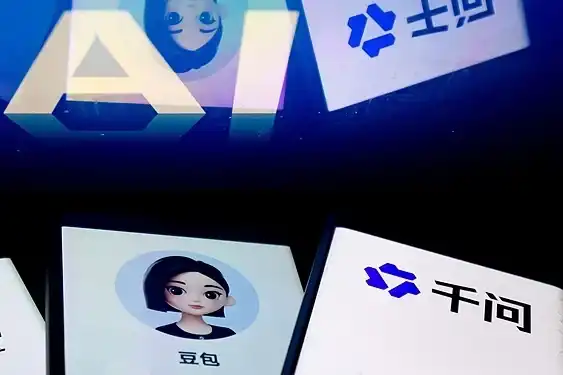
Doubao and Qwen Will Discontinue Agent Functionality on July 15

On July 4th, Doubao and Tongyi Qianwen announced the impending shutdown of their user-created "AI Agent" features. Doubao confirmed its agent feature will be taken offline on July 15, directing users to ByteDance's CatBox app for similar needs. On the same day, Tongyi Qianwen notified users, specifying that personalized interactive agents and user-built agent functions will cease on July 10, with all agent features and services completely deactivated by July 15. After this date, access to agent configurations and historical chat records will be lost. This adjustment impacts core user scenarios like role-playing, personal assistants, and vertical tool agents. The shutdown date coincides with the official implementation of China's "Interim Measures for the Administration of Artificial Intelligence Human-like Interactive Services" on July 15. The new regulations impose strict rules on "human-like emotional interaction services," requiring platforms to implement measures like anti-addiction systems, minor verification, and content moderation. This move is widely seen as a proactive step by the platforms to align with regulatory timelines and mitigate compliance risks. Additionally, commercial challenges are a key driver. Analysis suggests that casual, human-like chat agents generate high-frequency, low-value interactions, leading to high computational costs with poor monetization. As the AI application market shifts from user growth to proving value, sustaining such "high-cost, low-efficiency" user-generated content becomes difficult. Both platforms have outlined transition plans. Doubao will allow data viewing and self-backup for a period after shutdown, with data scheduled for permanent deletion by October 15. Tongyi Qianwen similarly advised users to save important content via copying or screenshots before the deadline. This strategic retreat from C-end agent features signals a broader market shift. Compliance capability and sustainable business models are replacing user scale and feature richness as the new core competitive dimensions. Tongyi Qianwen's recent move to fully open its Agent and Skill platforms to third-party enterprises and developers further underscores a strategic pivot from low-value C-end services to high-value B-end enterprise scenarios.

marsbitHá 1h

Doubao and Qwen Will Discontinue Agent Functionality on July 15

marsbitHá 1h

Why Did Codex and ChatGPT Merge? What's Next for Codex? OpenAI Core Leader Answers Everything

In 2026, OpenAI's Codex saw explosive growth, with weekly active users surging over 5x to 5 million since January, driven largely by the February launch of its desktop app. Codex desktop lead Andrew Ambrosino explains key shifts behind its evolution. A core change is the inversion of development costs: implementation is now cheap, while curation and taste—judging which of many AI-generated prototypes is valuable—have become the new scarcities. Ambrosino defines taste as a blend of aesthetics, systems thinking, direction, and semantic coherence in interaction. He notes AI still struggles with design because evaluating it requires human cultural context and abstract reasoning about how components relate—capabilities beyond current models. Timing is critical: the same Codex app would have failed months earlier; success hinges on the model's capabilities at launch. Roles are blurring within his team, with engineers, designers, and PMs overlapping significantly. However, Ambrosino cautions against eliminating specialized roles entirely, as each field retains deep expertise. On AI-assisted development, the focus has shifted from measuring code written by AI to distinguishing between supervised and unsupervised generation. A current challenge is teaching models to simplify code, not just add complexity. The merger of Codex and ChatGPT stems from observed user behavior: non-developers adopted Codex for general knowledge work despite its developer-centric interface. This revealed a collapsing boundary between specialized tools and universal assistants. The vision is a "home base" that orchestrates tasks across external professional tools (like Excel or Premiere Pro) via connectors, rather than rebuilding everything internally. An internal example showed Codex helping edit video by interacting with Premiere Pro's files and even writing a plugin for it. The future direction is a unified, extensible platform that serves as a central hub for automating and managing work across any specialized tool the user employs.

marsbitHá 1h

Why Did Codex and ChatGPT Merge? What's Next for Codex? OpenAI Core Leader Answers Everything

marsbitHá 1h

Trading

Spot
活动图片