Криптомошенничество станет самым масштабным в истории благодаря ИИ: Chainalysis

cryptonews.ruPublicado em 2024-10-14Última atualização em 2025-02-14

В 2025 году криптомошенничество может стать самым масштабным, чему будет способствовать рост искусственного интеллекта и профессиональных служб поддержки мошенничества, поскольку индустрия мошенничества становится все более изощренной.

Аналитическая компания Chainalysis, работающая в сфере блокчейна, заявила в своем отчете от 13 февраля Crypto Scam Revenue 2024, что генеративный ИИ делает «мошенничество более масштабируемым и доступным для злоумышленников».

«GenAI усиливает мошенничество, главную угрозу для финансовых учреждений, обеспечивая высокоточное, недорогое и масштабируемое мошенничество, которое использует уязвимости человека, — сказал Элад Фукс, руководитель отдела продуктов Chainalysis по борьбе с мошенничеством. — Он облегчает создание синтетических и поддельных удостоверений личности, позволяя мошенникам выдавать себя за реальных пользователей и обходить средства проверки личности».

Chainalysis обнаружила, что доход от криптомошенничества достиг около $9,9 млрд в 2024 году, в первую очередь, за счет мошенничества с “забоем свиней”. Ожидается, что эта цифра, вероятно, увеличится до более чем $12 млрд, поскольку будет выявлено больше адресов, связанных с мошенничеством и аферами.
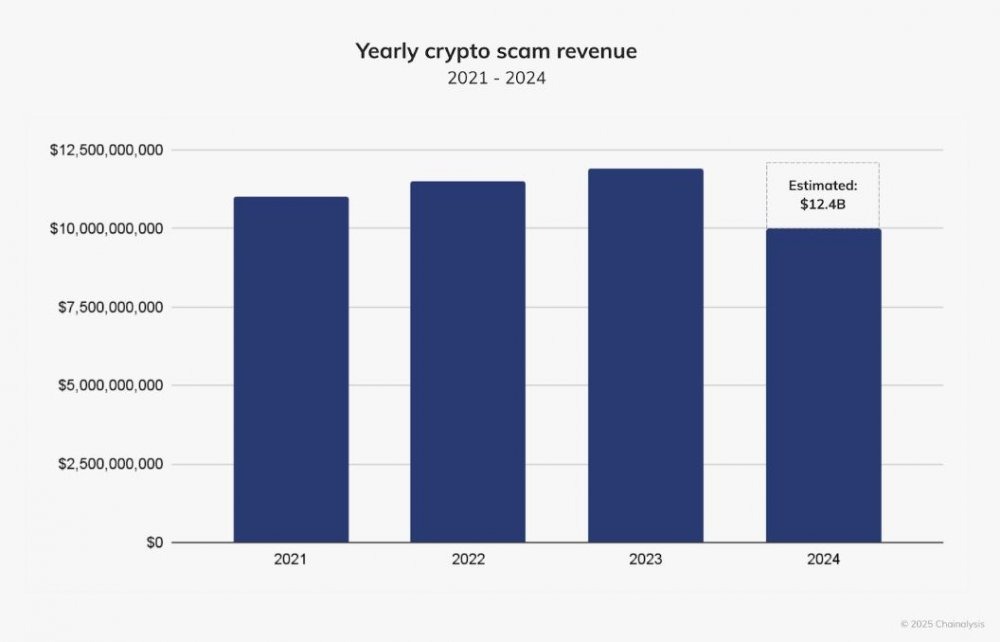
Доход от мошенничества был ниже в 2024 году, но Chainalysis ожидает, что эта цифра вырастет, поскольку компания выявляет больше адресов. Источник: Chainalysis.

Используя свой новый детектор мошенничества,приобретенный в прошлом месяце за 150 миллионов долларов, Chainalysis заявила, что обнаружила: 85% мошенничеств связаны с полностью проверенными учетными записями, которые обходят традиционные решения на основе идентификации, что, по словам Фукса, делается с помощью ИИ.

«GenAI позволяет генерировать реалистичный поддельный контент, включая веб-сайты и листинги, для поддержки инвестиционных мошенничеств, мошенничества с покупками и т. д., делая эти атаки более убедительными и более сложными для обнаружения», — сказал Фукс.

Центр финансовых услуг Deloitte оценивает, что генеративный ИИ и дипфейки обойдутся экономике США в 40 миллиардов долларов к 2027 году.

Chainalysis заявила, что криптомошенничество и мошенничество продолжают становиться все более изощренными, с такими операциями, как Huione Guarantee, одноранговая (P2P) торговая площадка, которая предлагает законные услуги, а также множество незаконных услуг, поддерживающих мошеннические операции.

«При сравнении потоков криптовалют с 2021 по 2024 год на основе совокупного годового темпа роста выручка поставщиков мошеннической инфраструктуры Huione увеличилась в геометрической прогрессии», — заявила аналитическая фирма.

В частности, выручка поставщиков услуг ИИ выросла на 1900%, что «указывает на взрывной рост использования технологии ИИ для содействия мошенничеству».
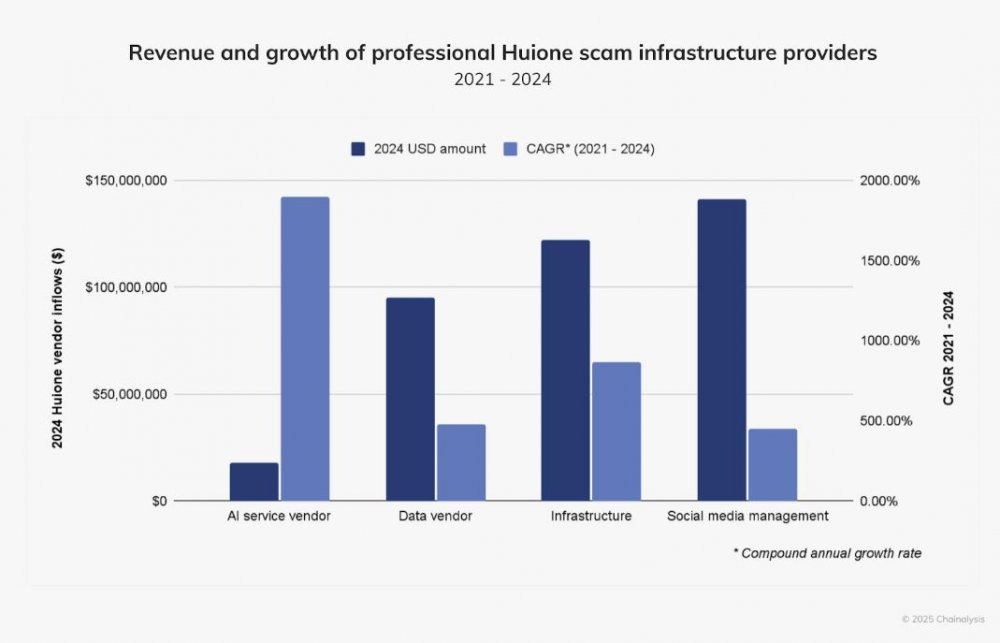
Поставщики мошеннических технологий Huione в совокупности получили не менее 375,9 млн долларов США в криптовалюте в 2024 году. Источник: Chainalysis.

В декабре прошлого года Федеральное бюро расследований США забило тревогу из-за мошенников, использующих генеративный ИИ для нацеливания на инвестиции в криптовалюту.

Chainalysis сообщает, что ее годовые оценки мошеннической активности выросли в среднем на 24% между годовыми отчетными периодами с 2020 года. Фирма ожидает, что общие потери от мошенничества будут еще выше после учета мошенничества с использованием ИИ.


Leituras Relacionadas

Tiger Research: Three Strategies for Financial Institutions to Keep Up with the Tokenization Wave

Tiger Research's in-depth report analyzes the strategic choices for financial institutions entering the rapidly growing Real-World Asset (RWA) tokenization market. With the market projected to be worth $25-36 billion and a lack of complete regulatory frameworks in many jurisdictions, institutions face three options: waiting for domestic legislation, using regulatory sandboxes for limited experiments, or moving first into established overseas markets to gain a competitive edge. Tokenization is not magic; it requires meticulous preparation. Before entry, institutions must strategically plan across six core areas: choosing a jurisdiction, obtaining necessary licenses, defining the asset type, targeting the appropriate investor base, selecting settlement currencies, and designing operational requirements like custody and governance. The report outlines two main operational paths. The first is a direct jurisdictional path, establishing a legal presence in mature markets like Hong Kong, Singapore, or the U.S., often leveraging local licensed platforms to accelerate market entry. The second is a chain-native path, using platforms like Ondo or Plume that are built with regulatory compliance embedded, allowing for faster, more flexible market access without being tied to a specific jurisdiction. Ultimately, the report advises against waiting for perfect regulation. The preparation process can take 6-12 months and requires thorough legal review. Using the example of a mid-sized securities firm, it details steps from evaluating existing entities to final execution. The core message is that accumulating real-world operational experience is paramount, as the market is moving ahead and will not wait for latecomers.

Foresight NewsHá 19m

Tiger Research: Three Strategies for Financial Institutions to Keep Up with the Tokenization Wave

Foresight NewsHá 19m

Unitree's IPO Frenzy: The Real Mystery is How It Will Spend the 42 Billion Raised

Unitree, a Chinese robotics company, is set for a public listing after its IPO registration was approved by regulators. The company, which started with quadruped robots and has expanded into humanoids, plans to raise approximately 4.2 billion yuan through its offering. The article traces Unitree's rapid growth from its founding in 2016 to its current status. It highlights key milestones like the 2021 CCTV Spring Festival Gala performance, the 2023 launch of its affordable Go2 robot dog and the H1 humanoid robot, and a series of subsequent product launches. By 2025, the company reported revenue of 1.71 billion yuan, profitability, and sales exceeding 5,500 humanoid robots. As the first publicly-listed humanoid robot company on China's STAR Market, Unitree's main challenges are sustaining growth and deploying its newly raised capital effectively. The humanoid robot sector in China is crowded, with over 140 companies. Competitors include UBTech (focusing on industrial and consumer markets), Fourier, and international players like Tesla Optimus and 1X NEO. The article outlines three critical challenges for Unitree: establishing a strong second product line beyond its quadruped robots, maintaining its price advantage while ensuring quality, and successfully advancing its embodied AI capabilities through partnerships like the one with NVIDIA for the H2 Plus platform. Unitree's likely strategy involves a "developer tools + industry benchmarks" approach: using low-cost models like the R1 and G1 to build developer adoption and volume, leveraging high-end platforms for AI training, and securing pilot projects in sectors like logistics and manufacturing to build case studies. The company's future success hinges on converting its current momentum in shipments and pilot programs into sustainable, large-scale commercial contracts as the broader market evolves.

marsbitHá 1h

Unitree's IPO Frenzy: The Real Mystery is How It Will Spend the 42 Billion Raised

marsbitHá 1h

Examining the Open USD Partner Lineup: Follow Who's Joining to See Where the Money Flows

**Title: Deciphering the Open USD Partner Roster: Following the Money** The launch of Open USD is notable less for the stablecoin itself and more for its expansive list of over 140 founding partners, which reads like a "who's who" of global finance and tech. This coalition, including asset managers like BlackRock, card networks Visa and Mastercard, banks (BNY Mellon, Standard Chartered, etc.), tech giants (Google, IBM), merchants (Shopify), and crypto firms (Coinbase, Ripple, Aave, MetaMask), signals a strategic shift. The diverse membership reveals that stablecoins are increasingly viewed not as products to compete over, but as shared infrastructure too critical to be left to any single entity. Each partner category has distinct motives. Asset managers like BlackRock seek to manage the large, sticky cash reserves, a lucrative fee-generating opportunity. Merchants like Shopify aim for lower-cost settlement and potential yield on balances. Banks join defensively to retain custody and settlement roles, fearing deposit outflows to stablecoins. Tech companies bet on programmable money for future machine-to-machine commerce. Crypto firms gain mainstream legitimacy and distribution channels. Remarkably, the consortium includes direct competitors (Visa vs. Mastercard, Coinbase vs. Ripple), indicating that the fear of exclusion from this emerging financial layer outweighs competitive rivalries. However, this shared governance could also lead to slow decision-making. The roster's composition is the real message: it represents a collective bet that a widely accepted, consortium-owned stablecoin is preferable to proprietary versions or having none at all. For incumbents like Circle and Tether, this alliance poses a significant threat, as potential clients have collectively chosen to build their own alternative. The absence of major U.S. retail banks (busy with their own tokenized deposit networks) is equally telling. In essence, the partner list maps where the industry believes value and risk will flow in a tokenized dollar future, marking stablecoin's evolution from a product to a utility.

Foresight NewsHá 2h

Examining the Open USD Partner Lineup: Follow Who's Joining to See Where the Money Flows

Foresight NewsHá 2h

Trading

Spot
活动图片