В блокчейне Aptos появился конкурент мемкоин-платформы Pump.fun

investing.ruPublicado em 2024-11-21Última atualização em 2024-11-21

Happycoin.club - Ажиотаж вокруг мемкоинов и успех платформы для их запуска Pump.fun на базе Solana не даёт покоя разработчикам других блокчейнов. Теперь и в сети Aptos появился сервис Emojicoin. Особенно примечательно, что этот проект поддерживает венчурный гигант компания Andreessen Horowitz.

Emojicoin, основанная на блокчейне Move и запущенная в Aptos, предлагает пользователям возможность запускать, торговать и обменивать токены с использованием эмодзи. Это, по словам представителей компании Econia Labs, стоящей за платформой, добавит «дополнительный уровень доступности и креативности в пространство мемкоинов».

Emojicoin — это результат многомесячных исследований и разработок, направленных на то, чтобы объединить финансовые возможности пользователей с их игровым опытом.

Наш интерес к моделям децентрализованной ликвидности начался с протокола книги заказов Econia, а благодаря emojicoin.fun эта концепция получила дальнейшее развитие, — заявил генеральный директор Econia Labs Алекс Кан.

Тем, кто хочет запустить эмоджикоин в Emojicoin на базе Aptos, нужно будет потратить 1 Aptos (APT). Ещё 1 токен будет использован в качестве возвратного депозита.

После объявления о запуске Emojicoin токен APT вырос на 9%, однако затем немного скорректировался. Вечером 20 ноября актив торговался на уровне $11,88.


Читайте оригинальную статью на сайте Happycoin.club

Criptomoedas em alta

Leituras Relacionadas

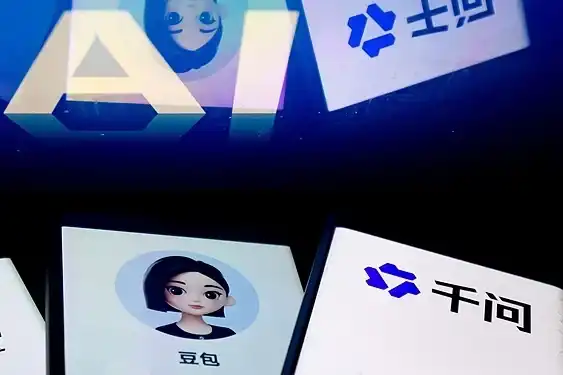
Doubao and Qwen Will Discontinue Agent Functionality on July 15

On July 4th, Doubao and Tongyi Qianwen announced the impending shutdown of their user-created "AI Agent" features. Doubao confirmed its agent feature will be taken offline on July 15, directing users to ByteDance's CatBox app for similar needs. On the same day, Tongyi Qianwen notified users, specifying that personalized interactive agents and user-built agent functions will cease on July 10, with all agent features and services completely deactivated by July 15. After this date, access to agent configurations and historical chat records will be lost. This adjustment impacts core user scenarios like role-playing, personal assistants, and vertical tool agents. The shutdown date coincides with the official implementation of China's "Interim Measures for the Administration of Artificial Intelligence Human-like Interactive Services" on July 15. The new regulations impose strict rules on "human-like emotional interaction services," requiring platforms to implement measures like anti-addiction systems, minor verification, and content moderation. This move is widely seen as a proactive step by the platforms to align with regulatory timelines and mitigate compliance risks. Additionally, commercial challenges are a key driver. Analysis suggests that casual, human-like chat agents generate high-frequency, low-value interactions, leading to high computational costs with poor monetization. As the AI application market shifts from user growth to proving value, sustaining such "high-cost, low-efficiency" user-generated content becomes difficult. Both platforms have outlined transition plans. Doubao will allow data viewing and self-backup for a period after shutdown, with data scheduled for permanent deletion by October 15. Tongyi Qianwen similarly advised users to save important content via copying or screenshots before the deadline. This strategic retreat from C-end agent features signals a broader market shift. Compliance capability and sustainable business models are replacing user scale and feature richness as the new core competitive dimensions. Tongyi Qianwen's recent move to fully open its Agent and Skill platforms to third-party enterprises and developers further underscores a strategic pivot from low-value C-end services to high-value B-end enterprise scenarios.

marsbitHá 3h

Doubao and Qwen Will Discontinue Agent Functionality on July 15

marsbitHá 3h

Why Did Codex and ChatGPT Merge? What's Next for Codex? OpenAI Core Leader Answers Everything

In 2026, OpenAI's Codex saw explosive growth, with weekly active users surging over 5x to 5 million since January, driven largely by the February launch of its desktop app. Codex desktop lead Andrew Ambrosino explains key shifts behind its evolution. A core change is the inversion of development costs: implementation is now cheap, while curation and taste—judging which of many AI-generated prototypes is valuable—have become the new scarcities. Ambrosino defines taste as a blend of aesthetics, systems thinking, direction, and semantic coherence in interaction. He notes AI still struggles with design because evaluating it requires human cultural context and abstract reasoning about how components relate—capabilities beyond current models. Timing is critical: the same Codex app would have failed months earlier; success hinges on the model's capabilities at launch. Roles are blurring within his team, with engineers, designers, and PMs overlapping significantly. However, Ambrosino cautions against eliminating specialized roles entirely, as each field retains deep expertise. On AI-assisted development, the focus has shifted from measuring code written by AI to distinguishing between supervised and unsupervised generation. A current challenge is teaching models to simplify code, not just add complexity. The merger of Codex and ChatGPT stems from observed user behavior: non-developers adopted Codex for general knowledge work despite its developer-centric interface. This revealed a collapsing boundary between specialized tools and universal assistants. The vision is a "home base" that orchestrates tasks across external professional tools (like Excel or Premiere Pro) via connectors, rather than rebuilding everything internally. An internal example showed Codex helping edit video by interacting with Premiere Pro's files and even writing a plugin for it. The future direction is a unified, extensible platform that serves as a central hub for automating and managing work across any specialized tool the user employs.

marsbitHá 3h

Why Did Codex and ChatGPT Merge? What's Next for Codex? OpenAI Core Leader Answers Everything

marsbitHá 3h

Trading

Spot

Artigos em Destaque

Como comprar PUMP

Bem-vindo à HTX.com!Tornámos a compra de Pump.fun (PUMP) simples e conveniente.Segue o nosso guia passo a passo para iniciar a tua jornada no mundo das criptos.Passo 1: cria a tua conta HTXUtiliza o teu e-mail ou número de telefone para te inscreveres numa conta gratuita na HTX.Desfruta de um processo de inscrição sem complicações e desbloqueia todas as funcionalidades.Obter a minha contaPasso 2: vai para Comprar Cripto e escolhe o teu método de pagamentoCartão de crédito/débito: usa o teu visa ou mastercard para comprar Pump.fun (PUMP) instantaneamente.Saldo: usa os fundos da tua conta HTX para transacionar sem problemas.Terceiros: adicionamos métodos de pagamento populares, como Google Pay e Apple Pay, para aumentar a conveniência.P2P: transaciona diretamente com outros utilizadores na HTX.Mercado de balcão (OTC): oferecemos serviços personalizados e taxas de câmbio competitivas para os traders.Passo 3: armazena teu Pump.fun (PUMP)Depois de comprar o teu Pump.fun (PUMP), armazena-o na tua conta HTX.Alternativamente, podes enviá-lo para outro lugar através de transferência blockchain ou usá-lo para transacionar outras criptomoedas.Passo 4: transaciona Pump.fun (PUMP)Transaciona facilmente Pump.fun (PUMP) no mercado à vista da HTX.Acede simplesmente à tua conta, seleciona o teu par de trading, executa as tuas transações e monitoriza em tempo real.Oferecemos uma experiência de fácil utilização tanto para principiantes como para traders experientes.

359 Visualizações TotaisPublicado em {updateTime}Atualizado em 2026.06.02

Como comprar PUMP

Discussões

Bem-vindo à Comunidade HTX. Aqui, pode manter-se informado sobre os mais recentes desenvolvimentos da plataforma e obter acesso a análises profissionais de mercado. As opiniões dos utilizadores sobre o preço de PUMP (PUMP) são apresentadas abaixo.

活动图片