Реакция крипторынка на выборы в США и прогнозы

cryptonews.ruPublicado em 2024-02-05Última atualização em 2024-11-05

5 ноября — официальный день голосования в США. Американцам предстоит выбрать нового президента. За кресло главы государства борются два кандидата: вице-президент США Камала Харрис и экс-президент Америки Дональд Трамп. Исход голосования может сильно повлиять на криптоиндустрию, поэтому к процессу приковано внимание участников криптосообщества

Рассказываем, как сейчас оценивают шансы на победу каждого из кандидатов, за кого голосуют представители криптоиндустрии и как рынок может отреагировать на результаты выборов.

Два кандидата, одна победа

Выборы президента США 2024 года во многом стали уникальными. Сначала из предвыборной гонки после неудачных дебатов выбыл действующий президент Америки Джо Байден. Его место заняла Камала Харрис. За несколько месяцев ей удалось практически сравнять свои шансы на победу с Трампом.

Перчинку в выборный процесс добавил акцент кандидатов на борьбе за криптосообщество. Причина в росте веса голосов криптоинвесторов. Исследование Consensys показало, что 19% американских избирателей инвестируют в крипту. В интересах представителей криптоиндустрии проголосовать за кандидата, который поддержит развитие рынка цифровых активов.

На фоне роста веса голосов участников криптосообщества оба кандидата представили свои криптоинициативы. Например, Камала Харрис пообещала поддержать развитие рынка цифровых активов в рамках своей программы. При этом вице-президента многие ассоциируют с инициативами ее сопартийца Байдена, который неоднократно лоббировал негативные для криптоиндустрии перемены. Например, действующий президент предлагал обложить майнеров 30% налогом.

Трамп в свою очередь неоднократно давал понять, что под его руководством США поддержит развитие криптоиндустрии. В том числе, он предлагает уволить действующего главу Комиссии по ценным бумагам и биржам США (SEC) Гэри Генслера, под руководством которого регулятор доставил массу проблем криптосообществу. А еще Трамп хочет сделать национальный биткоин-резерв. Инициатива подразумевает отказ США от продажи BTC, которые сегодня есть в распоряжении правительства.

К сожалению, искренность интереса Трампа к крипте вызывает вопросы. О том, что ставка на криптосообщество может быть исключительно пиар-ходом для привлечения дополнительных голосов свидетельствует его неосведомленность о том, как вообще работает крипта. Например, в сентябре 2024 года в заголовках СМИ появилась новость о том, что политик впервые публично провел биткоин-транзакцию. В истории есть один подводный камень — саму операцию за Трампа провели его помощники.

За кем перевес голосов

На рынке прогнозов Polymarket уверено лидирует Трамп. В его победу верят свыше 58% участников. Ранее редакция BeInCrypto писала о том, что по мнению экспертов платформа искусственно завышает шансы Трампа на победу.

Прогноз исхода выборов президента США. Источник: Polymarket

The New York Times пишет, что в лидеры — напротив вышла Харрис. Их данные опросов показывают, что у вице-президента перевес в 1%.

Опрос по теме победителя выборов президента США. Источник: The New York Times

Участники криптосообщества в большинстве своем поддерживают Трампа, так как верят в перспективы роста рынка в случае его победы. Один из инвесторов настолько уверен в силах экс-президента, что поставил на него $15 млн на Polymarket.

Как реагирует рынок

На фоне информации о возможном перевесе голосов в пользу Харрис по ряду опросов крипторынок вышел в падение. Участники криптосообщества считают, что так крипта реагирует на сомнительные перспективы, с которыми индустрия столкнется в случае победы вице-президента.
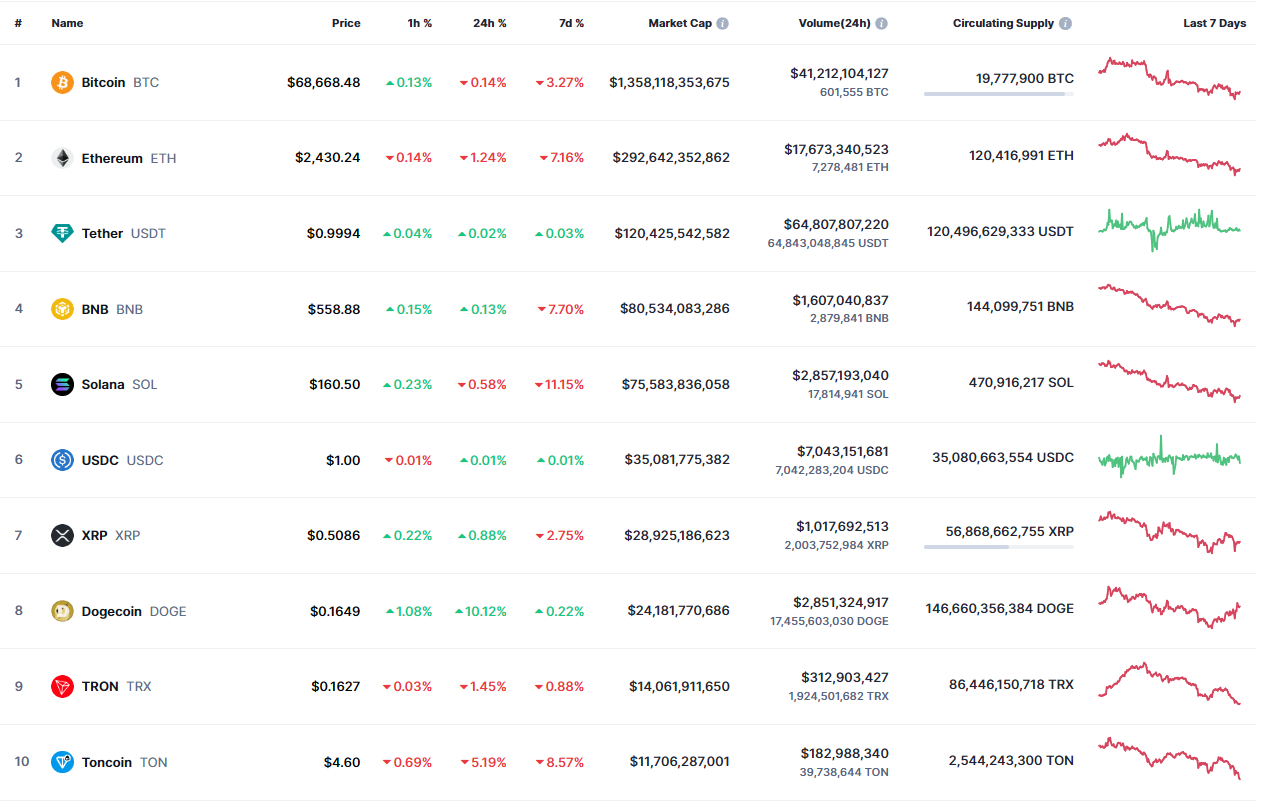
Топ-10 самых капитализированных криптовалют. Источник: CoinMarketCap

Напомним, 29 октября BTC предпринял попытку штурма абсолютного максимума, который зафиксирован 14 марта 2024 года на уровне $73 750. После криптовалюта вышла в коррекцию. По состоянию на момент написания обзора, биткоин торгуется по $68 668.

Читайте также: Ралли BTC выше $70 000 затормозили киты, ожидающие результатов выборов в США

Чего криптоинвесторы ждут от выборов

Участники криптосообщества возлагают большие надежды на победу Трампа. По их мнению, перевес голосов в пользу экс-президента США запустит рост рынка. Многие ждут переход биткоина в параболический рост. Например, трейдер Emperor не исключает памп до $100 000.

К тем, кто верит в победу Трампа, присоединился генеральный директор компании Jan3 и бывший руководитель блокчейн-фирмы Blockstream Самсон Моу. Он считает, что политик сдержит все данные им криптосообществу обещания.

Блогер Crypto Rover предупреждает подписчиков о том, что победа Харрис — напротив может обернуться падением BTC. При этом в долгосрочной перспективе он видит потенциал восстановления рынка.

Прогноз Crypto Rover реакции биткоина на победу Харрис и Трампа

Негативную реакцию BTC на победу Харрис также прогнозирует трейдер Ash Crypto. Похожим прогнозом поделился трейдер PROFIT BLUE. Он считает, что BTC стоит на пороге глубокой коррекции.
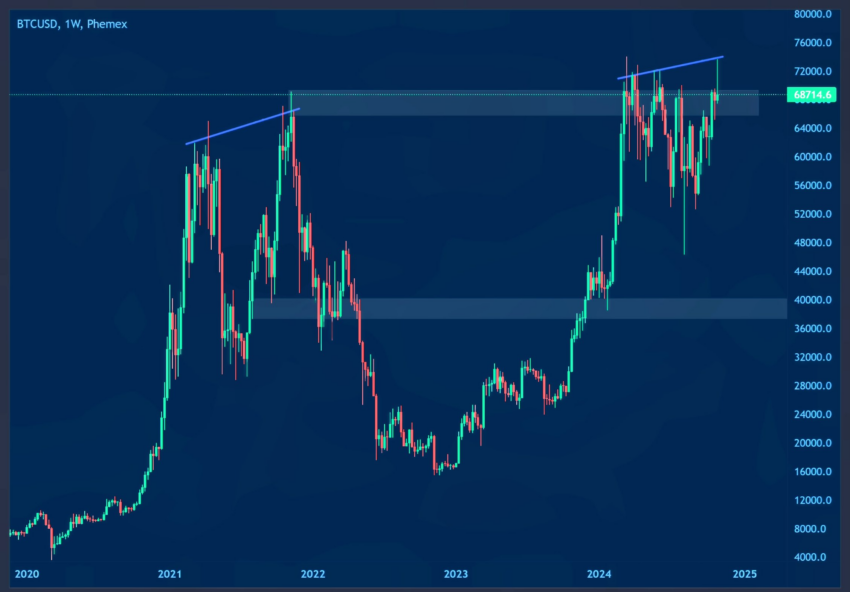
Популярный криптоблогер DonAlt в свою очередь считает, что исход выборов не отразится на долгосрочных перспективах BTC. Он поддерживает предположения о том, что победа Харрис в моменте может спровоцировать распродажу биткоинов. При этом DonAlt считает, что в итоге рынок оправится от паники и продолжит рост.
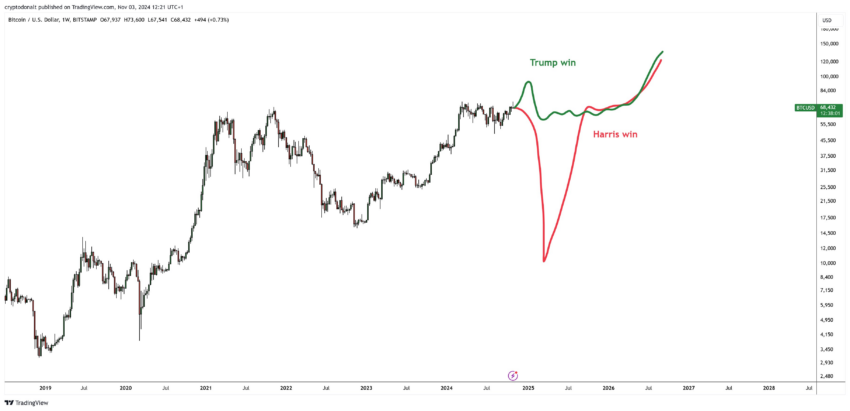
Прогноз движения биткоина от DonAlt в случае победы Харрис или Трампа

Напомним, ранее редакция BeInCrypto писала о том, что аналитики рекомендуют готовиться к коррекции на рынке альткоинов.

Leituras Relacionadas

A Year Consumes a Solid-State Drive: Codex Log Bug Slammed as 'Slopware'

OpenAI's flagship AI coding tool, Codex, was found to have a critical bug causing its feedback logging system to silently and rapidly wear out users' SSDs. A developer reported that Codex was writing approximately 640 TB of data per year to a local SQLite database (`logs_2.sqlite`) through a constant cycle of inserting and immediately deleting log entries, primarily at the verbose TRACE level. While the database file itself remained around 1 GB, the underlying write-amplification from SQLite's WAL mechanism meant the physical SSD endured the full write load. This was enough to exceed the typical 600 TBW endurance rating of a consumer SSD within a year. The root cause was a hardcoded default logging level (`Level::TRACE`) in the configuration, which overrode any user attempts to reduce logging via environment variables. Analysis showed that over 96% of the logged data—including noisy WebSocket packet dumps and repeated system file events—was useless debug information. The issue, which had at least nine related bug reports in the Codex repository, remained latent because it didn't visibly consume disk space, only silently accumulated write cycles. After the report gained traction on Hacker News, OpenAI merged fixes estimated to reduce writes by about 85%. However, even post-fix, the tool would still write an estimated 96 TB annually. The incident sparked broader criticism of "slopware" in AI-assisted development tools, highlighting a lack of resource budgeting for disk, CPU, and memory in always-on agent software, and a reliance on modern hardware to mask inefficient code. Competing tools like Claude Code were noted to have similar issues.

marsbitHá 11m

A Year Consumes a Solid-State Drive: Codex Log Bug Slammed as 'Slopware'

marsbitHá 11m

Robinhood Chain Mainnet Launch Ignites Industry Shockwaves: Rally of Top Protocols, but Leaves dYdX in a Deep Pit

Robinhood's launch of its Layer 2 blockchain, Robinhood Chain, and a suite of new crypto products has significantly impacted the market. The announcement, made ahead of its Q2 earnings, caused the company's stock to rise 8.35%. The chain, built on Arbitrum Orbit, aims to be an institutional-grade, AI-native infrastructure optimized for Real World Assets (RWA). Key product launches include tokenized stocks available globally via various DEXs, perpetual contracts with fee incentives, and a decentralized lending product called Robinhood Earn offering yields on USDG stablecoin. The company is also expanding its AI trading tools to crypto. The move has attracted major protocols like Uniswap and Chainlink to its ecosystem. However, a partnership with dYdX to launch a new DEX called Arcus on Robinhood Chain sparked controversy. The dYdX community expressed concerns that the core team's focus on this new, independent platform could divert resources and liquidity away from the existing dYdX Chain, potentially diluting the value of the DYDX token. Despite assurances from dYdX's founder about shared interests and potential future token allocations for the dYdX community, the DYDX token price dropped roughly 40.7% following the news. Amidst slowing crypto revenue growth, Robinhood is leveraging its large user base and financial expertise to expand globally and transform from an internet broker into a broader financial gateway through its new blockchain initiative.

链捕手Há 13m

Robinhood Chain Mainnet Launch Ignites Industry Shockwaves: Rally of Top Protocols, but Leaves dYdX in a Deep Pit

链捕手Há 13m

The Trillion-Dollar Credit Market Leveraged by Stablecoins, Stuck in Off-Chain Risk Control

**Stablecoins Fueling Trillion-Dollar Private Credit Market, Hampered by Off-Chain Risk Management** This article examines how interest-bearing stablecoins are replicating the business model of money market funds to democratize access to the $2 trillion private credit market, while highlighting the significant risks posed by inadequate off-chain risk controls. Historically, private credit investments had high minimums (e.g., $1 million+) due to costly due diligence and loan servicing. Stablecoins like Apollo's ACRED and Figure's YLDS are bridging this gap. They tokenize institutional credit funds, allowing small investors to gain exposure and enabling new functionalities like using these tokens as collateral in DeFi for leveraged yield. The on-chain private credit market has grown 15x in a year to $5.87 billion, yet remains a tiny fraction of the global total. However, the core challenge is not blockchain technology but managing the inherent risks of lending, which occur off-chain. The failure of Goldfinch, a pioneer in on-chain private credit, serves as a stark warning. It raised funds in crypto (USDC) to lend to small businesses in markets like Kenya and Nigeria. While smart contracts handled fund distribution, critical functions—local due diligence, monitoring loan use, and debt collection—relied on off-chain partners. A major breach, where a local partner misappropriated nearly 40% of funds, went undetected for months. When borrowers defaulted, crypto depositors had no effective legal recourse or means to seize assets, leaving $56 million trapped in non-performing loans with a projected 8-15 year recovery timeline. The article concludes that tokenization addresses only 10% of the credit business—the distribution. The remaining 90%—rigorous risk assessment and collection infrastructure—is expensive and localization-dependent. Without solving these fundamental off-chain challenges, the sector risks repeating Goldfinch's collapse.

Foresight NewsHá 56m

The Trillion-Dollar Credit Market Leveraged by Stablecoins, Stuck in Off-Chain Risk Control

Foresight NewsHá 56m

Solana Expands Validator Power With Launch of On-Chain Governance

Solana has formally launched its on-chain governance system, empowering token holders and validators with a more open and decentralized way to influence major protocol decisions. Governance debates and voting are now conducted entirely on-chain using the new Solana Governance Proposals (SGP) framework, supported by stake-weighted voting and cryptographic verification. Validators with at least 100,000 SOL in delegated stake can submit an SGP. To proceed to a formal vote, a proposal must first gain support from at least 15% of the network's total staked SOL, ensuring only ideas with significant backing move forward. SGPs serve a distinct purpose from the technical Solana Improvement Documents (SIMDs). While SIMDs focus on *how* to implement protocol upgrades, SGPs determine *whether* the broader ecosystem believes a proposal should proceed, via an on-chain, stake-weighted vote. This separation allows core developers to continue building effectively while reserving community-wide votes for impactful decisions. A key feature grants delegators greater control: they can now override their validator's governance vote. If a validator votes against a delegator's preference or abstains, the delegator can cast a vote directly using their own stake weight through Solana's governance portal. The voting process is secured using Merkle proofs to verify participant stakes against an on-chain consensus snapshot. With this implementation, Solana aims to broaden community participation in governance without hindering development, combining decentralized decision-making with efficient protocol evolution.

TheNewsCryptoHá 1h

Solana Expands Validator Power With Launch of On-Chain Governance

TheNewsCryptoHá 1h

Trading

Spot
活动图片